
An AMD computer, at its fundamental level, is a personal computer system built around core components manufactured by Advanced Micro Devices (AMD). While many computer brands exist, the designation “AMD computer” specifically refers to systems that utilize AMD’s central processing units (CPUs) and often, though not exclusively, their graphics processing units (GPUs). For decades, AMD has been a significant player in the semiconductor industry, competing directly with Intel in the CPU market and Nvidia in the GPU market. Understanding an AMD computer means delving into the specific technologies and architectural philosophies that differentiate AMD’s offerings and define the performance, capabilities, and value proposition of systems built around them.
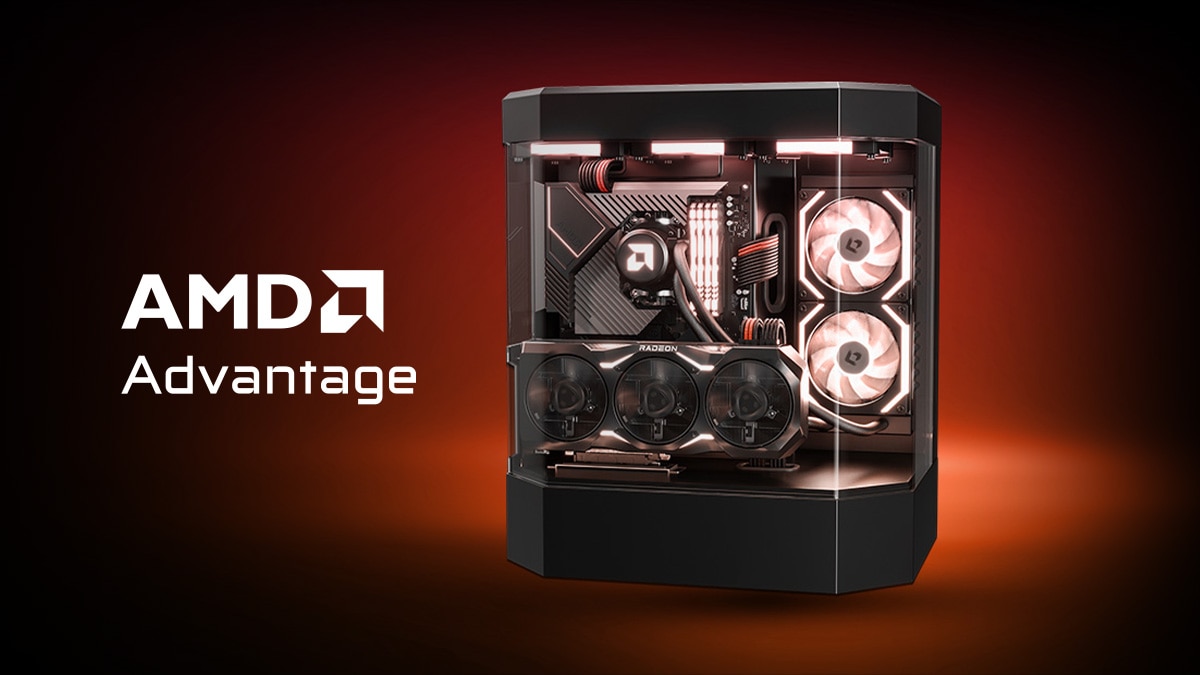
The Core of an AMD System: Processors (CPUs)
The CPU is the “brain” of any computer, executing instructions and performing calculations. In an AMD computer, this role is filled by an AMD processor. AMD’s CPU journey has seen significant evolution, leading to its current competitive standing.
A Legacy of Innovation and Competition
AMD’s history in processor manufacturing dates back to the early days of personal computing, often positioning itself as an alternative to Intel. Key architectural innovations, like the Athlon and Opteron series, challenged Intel’s dominance in various segments. However, it was the introduction of the Zen architecture in 2017 that truly revitalized AMD’s CPU line, bringing significant performance gains and multi-core advantages that reshaped the competitive landscape. This architectural shift marked a new era for AMD, enabling them to deliver compelling performance across a wide range of computing tasks.
Ryzen Series: Modern Desktop and Laptop Powerhouses
The Ryzen series is AMD’s flagship consumer CPU line, spanning various segments from budget-friendly options to high-performance gaming and content creation processors. Ryzen CPUs are characterized by their multi-core design, often offering more cores and threads than competitors at similar price points. This multi-core prowess makes them exceptionally well-suited for demanding workloads that can leverage parallel processing, such as video editing, 3D rendering, heavy multitasking, and modern gaming.
Ryzen processors are categorized into several tiers:
- Ryzen 3: Entry-level, ideal for everyday computing, web browsing, and light productivity.
- Ryzen 5: Mid-range, excellent for gaming, general productivity, and moderate content creation. These often provide a strong balance of performance and value.
- Ryzen 7: High-performance, geared towards serious gamers, streamers, and professional users requiring significant processing power for intensive applications.
- Ryzen 9: Enthusiast-grade, offering the highest core counts and clock speeds for users who demand uncompromised performance for extreme gaming, professional content creation, and scientific workloads.
The underlying Zen architecture has seen continuous refinement with subsequent generations (Zen+, Zen 2, Zen 3, Zen 4), each bringing improvements in instruction per cycle (IPC), clock speeds, and power efficiency.
Threadripper and EPYC: High-End and Server Solutions
Beyond the mainstream Ryzen series, AMD offers specialized CPU lines for professional and enterprise markets.
- Ryzen Threadripper: These processors are designed for the high-end desktop (HEDT) workstation market. Threadripper CPUs feature an even greater number of cores and threads than Ryzen 9, along with expanded memory channels and PCIe lanes. They are purpose-built for extreme multi-tasking, professional content creation (e.g., film production, architectural visualization), and scientific simulations where raw core count and massive I/O bandwidth are critical.
- EPYC: AMD’s EPYC processors target the server and data center markets. EPYC CPUs are engineered for maximum core density, high memory capacity, and robust security features. They provide scalable solutions for cloud computing, enterprise databases, virtualization, and high-performance computing (HPC), challenging long-standing paradigms in the server space with their impressive performance per dollar and advanced security capabilities.
Key Features and Technologies
AMD processors incorporate several proprietary technologies that contribute to their performance and user experience.
- Simultaneous Multi-threading (SMT): AMD’s equivalent of Intel’s Hyper-Threading, SMT allows each physical CPU core to handle two threads concurrently, improving efficiency and performance in multi-threaded applications.
- Precision Boost: Automatically adjusts CPU clock speeds based on workload, temperature, and power limits to maximize performance within safe operating parameters.
- XFR (Extended Frequency Range): An enhancement to Precision Boost, allowing certain Ryzen CPUs to boost beyond their standard maximum clock speeds if sufficient cooling is available.
- Infinity Fabric: A high-speed interconnect technology that links different components within the CPU (e.g., CPU core complexes, memory controllers) and even between multiple CPU dies, enabling scalable multi-chip designs and low-latency communication.
AMD Graphics: Radeon GPUs
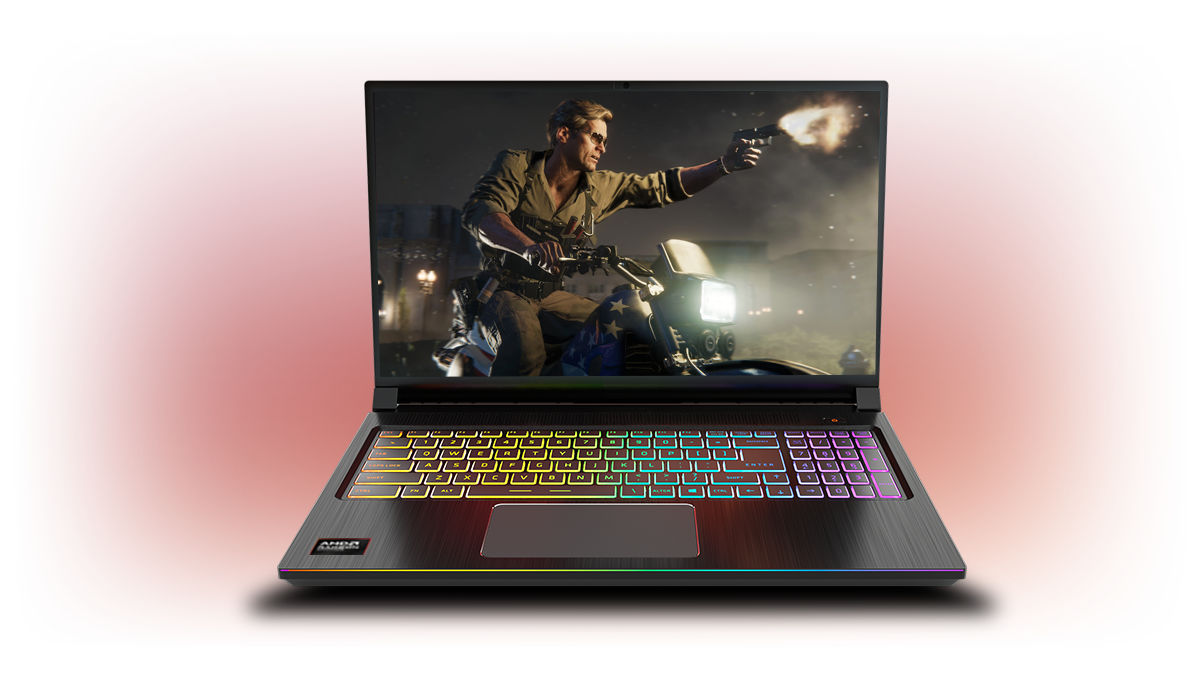
While not every AMD computer exclusively uses an AMD GPU, AMD’s graphics division, Radeon Technologies Group, is a major force in the discrete graphics card market. Many AMD computers, especially those aimed at gaming or content creation, feature Radeon GPUs.
From Integrated Graphics to Dedicated Power
AMD offers a spectrum of graphics solutions.
- Integrated Graphics (iGPUs): Many AMD CPUs, particularly the Ryzen APUs (Accelerated Processing Units), feature powerful integrated graphics capabilities. These are sufficient for everyday tasks, multimedia consumption, and even light gaming without the need for a separate graphics card, making them excellent choices for compact or budget-friendly systems.
- Dedicated Graphics Cards (dGPUs): For users demanding higher graphical performance, AMD offers a comprehensive range of discrete Radeon graphics cards. These cards have their own dedicated video memory (VRAM) and powerful graphics processors.
Radeon RX Series: Gaming and Content Creation
The Radeon RX series is AMD’s primary line of consumer dedicated graphics cards.
- Radeon RX 6000/7000 Series: These are the latest generations of AMD’s discrete GPUs, built on the RDNA (Radeon DNA) architecture. They compete directly with Nvidia’s GeForce series, offering competitive performance in gaming, ray tracing, and content creation workloads. The RX series spans from entry-level cards suitable for 1080p gaming to high-end cards capable of delivering fluid performance at 4K resolutions.
- Performance Tiers: Similar to CPUs, RX GPUs are tiered (e.g., RX 6600, RX 6700, RX 6800, RX 6900), with higher numbers generally indicating greater performance. The “XT” designation often signifies a slightly faster variant within a tier.
RDNA Architecture: Driving Performance
The RDNA architecture is the foundation for modern Radeon GPUs. Each iteration of RDNA (RDNA, RDNA 2, RDNA 3) introduces improvements in compute units, cache structures, power efficiency, and specialized hardware for features like ray tracing. RDNA 2, for example, introduced hardware-accelerated ray tracing cores and the innovative Infinity Cache, which significantly boosts effective memory bandwidth. RDNA 3 further refines these capabilities, introducing a chiplet design for the GPU die, enhancing performance and efficiency.
AMD Software Ecosystem
Beyond hardware, AMD provides a robust software suite to enhance the user experience.
- Radeon Software Adrenalin Edition: This unified software package provides drivers, performance tuning options, recording and streaming tools, and various game-enhancing features.
- AMD FidelityFX Super Resolution (FSR): An open-source upscaling technology that allows games to render at a lower resolution and then intelligently upscale to a higher resolution, boosting frame rates with minimal impact on image quality. FSR is a direct competitor to Nvidia’s DLSS and is gaining wide adoption across many titles.
- AMD FreeSync: A widely adopted adaptive synchronization technology that eliminates screen tearing and reduces stuttering by synchronizing the refresh rate of a FreeSync-compatible monitor with the frame rate of the GPU.
Integrated Platforms and Chipsets
An AMD computer is more than just a CPU and GPU; it’s a synergistic system built on a compatible platform.
Motherboards and Chipsets: The Foundation
AMD processors require specific motherboards that feature a compatible socket (e.g., AM4 for older Ryzen, AM5 for newer Ryzen) and a supporting chipset. The chipset acts as the communication hub for the motherboard, connecting the CPU to other components like RAM, storage devices (SSDs, HDDs), USB ports, and PCIe slots. AMD chipsets (e.g., B550, X570, B650, X670) determine the number of available features, such as PCIe lanes for graphics cards and NVMe SSDs, USB port speeds, and overclocking capabilities. Choosing the right chipset ensures optimal performance and expandability for an AMD system.
APUs: Combining CPU and GPU Power
AMD’s Accelerated Processing Units (APUs) are a unique offering that integrates both the CPU and a powerful GPU onto a single die. These are distinct from CPUs with basic integrated graphics as APUs are designed to deliver a more balanced and capable experience for systems without a discrete graphics card. APUs are excellent for budget-friendly builds, small form factor PCs, home theater PCs (HTPCs), and entry-level gaming machines, providing a single-chip solution that minimizes cost and power consumption while still offering decent graphical horsepower for many tasks.
Advantages and Disadvantages of AMD Systems
Choosing an AMD computer involves considering several factors that weigh into its overall value and performance.
Performance and Value Proposition
Historically, AMD has often been associated with providing excellent value, offering more cores or comparable performance at a lower price point than its competitors. This remains a strong differentiator, especially in the mid-range CPU and GPU markets. AMD systems often excel in multi-threaded applications due to their core-heavy designs, making them potent for professional workloads and heavy multitasking. Their APUs also offer compelling integrated graphics solutions, providing a capable gaming experience without the need for a separate GPU.
Ecosystem and Compatibility Considerations
AMD’s commitment to socket longevity (e.g., the AM4 platform supported multiple generations of Ryzen processors) has been a significant advantage, allowing users to upgrade their CPU without changing their motherboard. While AM5 brings a new socket, AMD aims to continue this tradition of platform longevity. The open nature of technologies like FreeSync and FidelityFX Super Resolution also contributes to a broader ecosystem of compatible hardware and software.
Target Audiences and Use Cases
AMD computers are highly versatile and cater to a wide range of users:
- Gamers: With powerful Ryzen CPUs and Radeon RX GPUs, AMD systems deliver competitive frame rates and immersive experiences across all gaming tiers.
- Content Creators: The high core and thread counts of Ryzen and Threadripper CPUs make them ideal for video editing, 3D rendering, graphic design, and music production.
- Budget-Conscious Builders: AMD’s APUs and mid-range components offer excellent performance-per-dollar, enabling the creation of capable systems without breaking the bank.
- Enterprise and Data Centers: EPYC processors provide leading core density, performance, and security features for critical server workloads and cloud infrastructure.
Building or Buying an AMD Computer
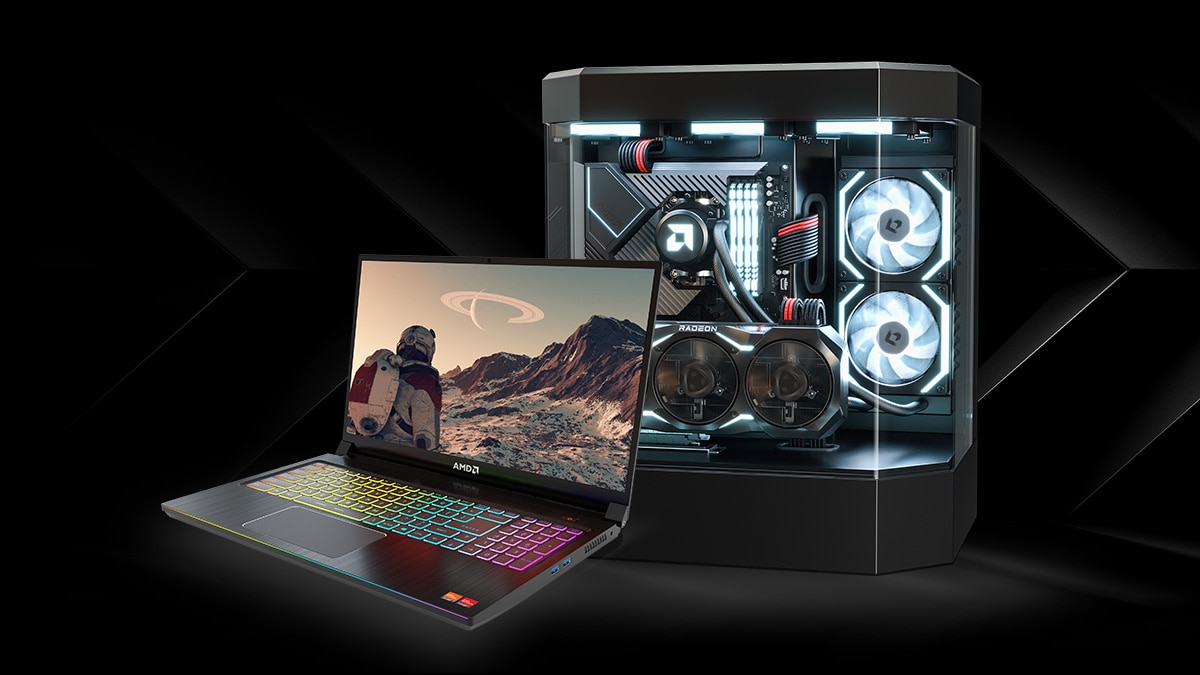
Whether assembling a custom PC or purchasing a pre-built system, understanding the components is key.
Custom Builds vs. Pre-built Systems
- Custom Builds: Offer maximum flexibility in component selection, allowing users to tailor every aspect of the PC to their specific needs and budget. This often provides the best value and performance for the money but requires technical knowledge for assembly and troubleshooting.
- Pre-built Systems: Convenient for users who prefer a plug-and-play experience. Reputable system integrators often offer well-balanced AMD configurations, complete with warranties and support. While potentially more expensive than a custom build, they save time and effort.
Key Components to Consider
When specifying an AMD computer, beyond the CPU and GPU, other components play a crucial role:
- RAM (Random Access Memory): AMD Ryzen CPUs benefit significantly from faster RAM (e.g., DDR4-3200MHz or DDR5-6000MHz and higher for newer platforms) due to the Infinity Fabric’s sensitivity to memory speed.
- Storage: NVMe SSDs offer superior speed compared to SATA SSDs or traditional HDDs, drastically improving boot times and application loading.
- Power Supply Unit (PSU): A high-quality PSU with sufficient wattage is essential to reliably power all components.
- Cooling: While AMD CPUs often come with capable stock coolers, aftermarket air or liquid coolers can provide better thermal performance, especially for overclocking or prolonged heavy workloads.
- Case: Ensures proper airflow and provides a home for all components.
An AMD computer is more than just a brand; it represents a commitment to high-performance, multi-core processing, competitive graphics, and often, compelling value. From mainstream desktops and laptops to high-end workstations and enterprise servers, AMD’s technological advancements have solidified its position as a dominant force in modern computing, offering diverse and powerful solutions for virtually every computing need.
aViewFromTheCave is a participant in the Amazon Services LLC Associates Program, an affiliate advertising program designed to provide a means for sites to earn advertising fees by advertising and linking to Amazon.com. Amazon, the Amazon logo, AmazonSupply, and the AmazonSupply logo are trademarks of Amazon.com, Inc. or its affiliates. As an Amazon Associate we earn affiliate commissions from qualifying purchases.