
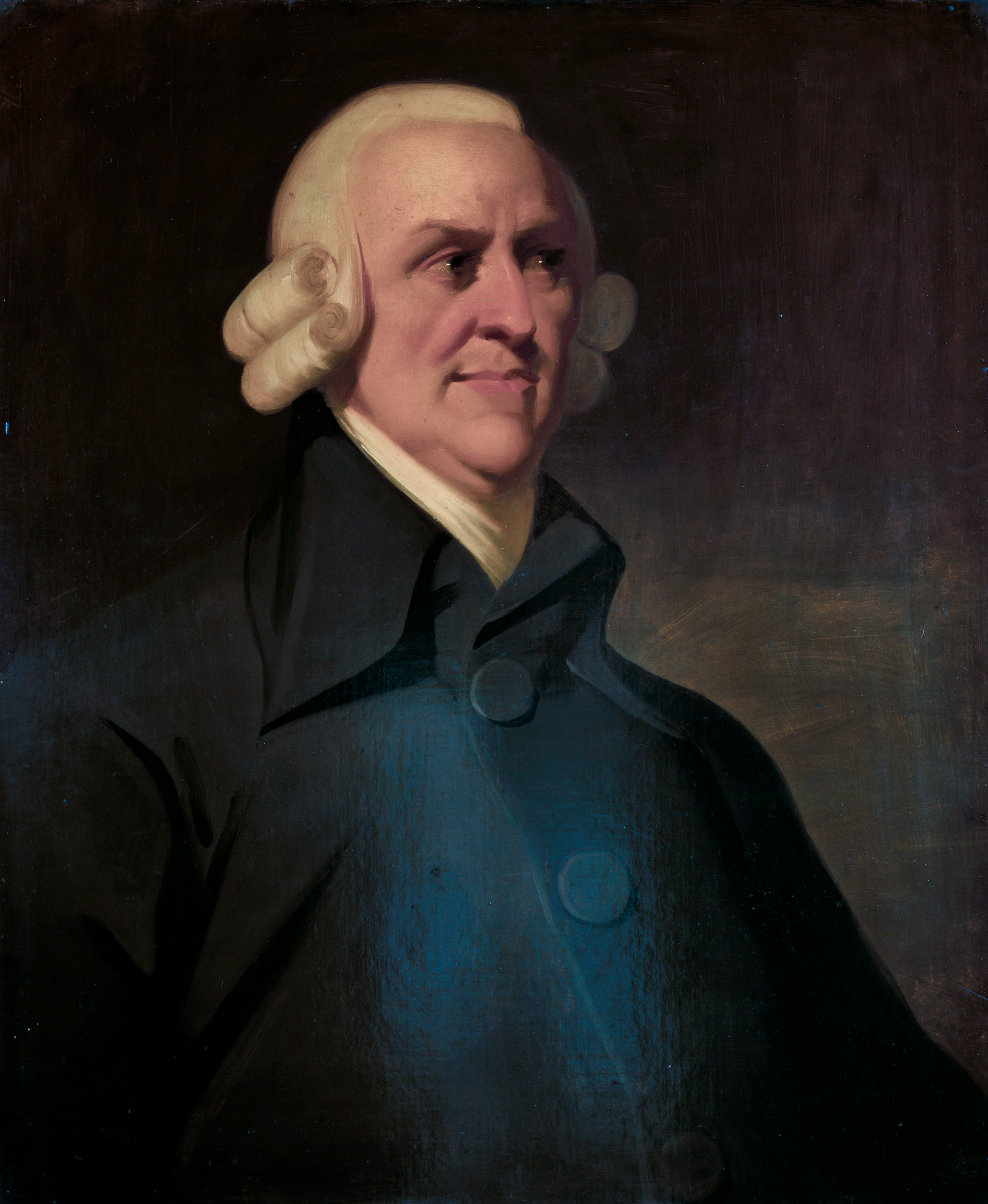
Adam Smith, an 18th-century Scottish economist and philosopher, is widely celebrated as the “Father of Modern Economics.” His groundbreaking work laid the theoretical foundations for capitalism, free markets, and the study of political economy. While often discussed in academic circles, Smith’s insights are profoundly relevant to understanding contemporary finance, investment, business strategy, and the very mechanisms by which wealth is created and managed today. His ideas offer an enduring framework for comprehending market behavior, economic growth, and the pursuit of financial prosperity.
The Architect of Modern Economics: The Invisible Hand
Perhaps Adam Smith’s most famous and enduring concept is the “invisible hand.” Introduced in his seminal work, The Wealth of Nations, this metaphor describes the unobservable market force that helps the demand and supply of goods in a free market to reach equilibrium automatically. Smith argued that individuals, in pursuing their own self-interest, inadvertently promote the welfare of society more effectively than if they had consciously intended to do so.
Self-Interest as a Public Good
Smith posited that when individuals strive to maximize their own economic gain—whether by working harder, investing wisely, or developing innovative products—they are compelled by market forces to produce goods and services that others desire. A baker, driven by the desire for profit, produces bread that satisfies the hunger of the community. A business owner, seeking to increase revenue, offers employment and creates products that improve consumers’ lives. This pursuit of self-interest, guided by the “invisible hand” of competition and market demand, leads to an efficient allocation of resources and an overall increase in societal wealth. For investors, this concept highlights how the aggregate actions of countless individuals, each pursuing their own financial goals, collectively shape market trends and investment opportunities.
Market Equilibrium and Price Mechanism
The invisible hand is intrinsically linked to the market’s ability to self-regulate through price mechanisms. When demand for a product is high, prices rise, signaling to producers to increase supply. Conversely, when supply exceeds demand, prices fall, prompting producers to reduce output. This constant adjustment, driven by the collective decisions of buyers and sellers, ensures that resources are directed to where they are most valued, minimizing waste and maximizing efficiency. Understanding this fundamental principle is crucial for anyone involved in finance, as it underpins how asset prices fluctuate, how markets correct themselves, and how investment strategies must adapt to changing economic signals.
Catalyzing Productivity: The Division of Labor
Another cornerstone of Smith’s economic thought is the concept of the division of labor. He famously illustrated this principle with the example of a pin factory, demonstrating how specialization dramatically increases productivity and, consequently, a nation’s wealth.
Specialization and Efficiency
Smith observed that if one worker were to perform all the steps necessary to make a pin, they might produce only a handful in a day. However, if the process were broken down into distinct, specialized tasks—one person drawing the wire, another straightening it, a third cutting it, and so on—the factory could produce tens of thousands of pins daily. This specialization leads to increased dexterity, saves time lost in moving between tasks, and encourages the invention of labor-saving machinery. For modern businesses, this insight remains critical: efficient production lines, specialized job roles, and outsourcing are all manifestations of Smith’s division of labor, directly impacting cost structures, profitability, and competitive advantage.
Driving Economic Growth
The increase in productivity fostered by the division of labor is a direct driver of economic growth. More goods and services can be produced with the same amount of effort, leading to lower prices, higher wages, and greater availability of products. This, in turn, fuels capital accumulation and investment, as businesses reinvest profits to expand production further, creating a virtuous cycle of economic expansion. Understanding this dynamic is fundamental for investors looking at long-term economic trends, industrial development, and the potential for companies to scale and generate consistent returns.
Advocating for Free Markets: Laissez-Faire Principles
Adam Smith was a staunch advocate for what is known as “laissez-faire” economics, a doctrine emphasizing minimal government intervention in the economy. He believed that the most prosperous societies were those where individuals and businesses had the freedom to operate with limited state interference.
Limited Government Intervention

Smith argued that while the government has essential roles—such as providing defense, administering justice, and funding public works like roads and education—it should generally refrain from interfering with the natural workings of the market. Excessive regulations, monopolies granted by the state, and protectionist tariffs, he contended, distort market signals, stifle competition, and hinder economic progress. His arguments for limited government intervention continue to influence debates on economic policy, deregulation, and the extent to which governments should regulate financial markets or support specific industries. For businesses, this translates to an environment where innovation and competition can flourish, dictating how they operate and strategize for growth.
Open Trade and International Wealth
Consistent with his free-market stance, Smith was a vocal critic of mercantilism, the prevailing economic theory of his time, which advocated for accumulating national wealth through strict trade protectionism and the accumulation of gold and silver. Smith argued that true wealth comes from a nation’s capacity to produce goods and services, and that free trade between nations benefits all parties involved. By allowing countries to specialize in what they produce most efficiently and then trade with others, overall global wealth increases. This principle underpins much of modern international finance, global supply chains, and the rationale for free trade agreements that shape cross-border investment and business expansion.
“The Wealth of Nations”: A Foundational Text for Business and Finance
Published in 1776, An Inquiry into the Nature and Causes of the Wealth of Nations is not merely an academic treatise; it is a practical guide to understanding how societies generate prosperity. It laid the groundwork for how we think about capital, value, and the true sources of economic power.
Understanding Capital and Accumulation
Smith dedicated significant attention to the concept of capital, distinguishing between fixed capital (such as machinery and buildings) and circulating capital (such as raw materials and finished goods held for sale). He emphasized that the accumulation of capital, derived from savings and reinvestment, is essential for economic growth. When profits are reinvested into productive assets, it expands a nation’s capacity to produce more goods and services, leading to greater wealth. This focus on capital accumulation is fundamental to modern business finance, venture capital, and investment strategies, where the strategic deployment of capital is key to generating future returns.
The Source of True Wealth
Before Smith, many believed a nation’s wealth was measured by its holdings of gold and silver. Smith radically shifted this perspective, arguing that the true wealth of a nation lies in the productive capacity of its labor and the total sum of goods and services produced. This redefinition of wealth has profound implications for financial markets, emphasizing that economic value is created through real production and exchange, rather than merely through monetary reserves. This understanding guides economic policy towards fostering productive industries and a robust workforce, which in turn creates a fertile ground for investment.
Adam Smith’s Enduring Legacy in Contemporary Finance and Business
Adam Smith’s ideas, articulated over two centuries ago, remain remarkably pertinent and influential in shaping our understanding of finance, business, and economic development today.
Informing Investment Strategies
Investors constantly grapple with market dynamics, competition, and the drivers of wealth creation. Smith’s insights into the invisible hand highlight the market’s self-correcting nature, while his analysis of the division of labor underscores the importance of efficiency and specialization in business success. His advocacy for free markets helps investors understand the benefits of open competition and reduced regulatory burdens. These principles provide a conceptual lens through which to evaluate industries, companies, and macro-economic trends, informing decisions about where to allocate capital for optimal returns.
The Entrepreneurial Spirit
Smith’s emphasis on individual self-interest as a driver of economic activity implicitly champions the entrepreneurial spirit. His work explains why individuals are motivated to innovate, take risks, and build businesses—not just for personal gain, but ultimately benefiting society through job creation, new products, and economic growth. This philosophical underpinning continues to inspire economic policies aimed at fostering entrepreneurship and innovation, which are crucial for creating new financial opportunities and driving market expansion.

Global Economic Order
The globalized economy, characterized by complex supply chains, international trade, and cross-border financial flows, is deeply rooted in Smith’s principles of free trade. His arguments for countries specializing in what they do best and engaging in mutually beneficial exchange are the bedrock of international economic cooperation and the formation of trading blocs. Understanding this global economic order, shaped by Smith’s foundational ideas, is essential for navigating international investments, currency markets, and the broader geopolitical landscape that impacts financial stability and growth.
In essence, Adam Smith is known for providing the intellectual framework that underpins the capitalist system, explaining how markets function, how wealth is generated, and how societies can prosper through individual economic freedom and efficient resource allocation. His contributions remain indispensable for anyone seeking to understand the intricate world of money, business, and finance.
aViewFromTheCave is a participant in the Amazon Services LLC Associates Program, an affiliate advertising program designed to provide a means for sites to earn advertising fees by advertising and linking to Amazon.com. Amazon, the Amazon logo, AmazonSupply, and the AmazonSupply logo are trademarks of Amazon.com, Inc. or its affiliates. As an Amazon Associate we earn affiliate commissions from qualifying purchases.