
Wind turbine blades are marvels of modern engineering, fusing complex aerodynamic principles with advanced material science to harness the planet’s kinetic energy. Far from being simple paddles, these sophisticated structures are meticulously designed and constructed from a carefully selected array of materials, each playing a critical role in the blade’s strength, lightness, durability, and ultimately, its efficiency and longevity. Understanding their composition is key to appreciating the technological innovation driving the renewable energy sector.
The Core Engineering Principles Guiding Blade Material Selection
The design and material selection for wind turbine blades are dictated by a rigorous set of engineering imperatives, primarily centered around aerodynamics, structural integrity, and resistance to environmental stressors.
Aerodynamic Imperatives and Structural Integrity
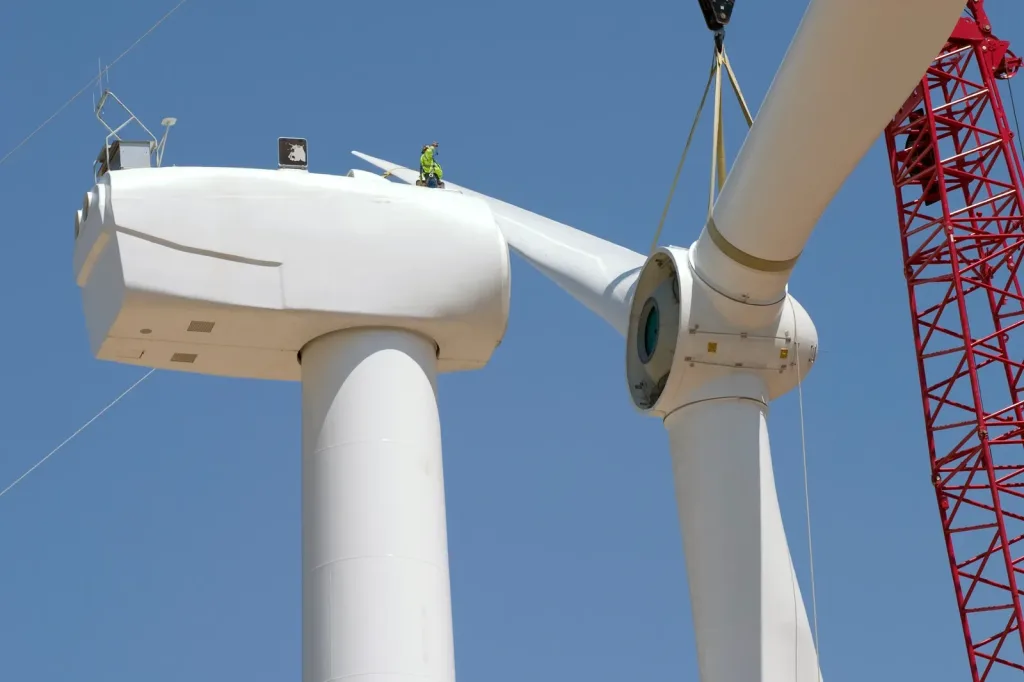
At its heart, a wind turbine blade must be an exceptional airfoil, efficiently converting wind into rotational energy. This demands a profile that is incredibly light to minimize inertia, yet robust enough to withstand immense and constantly varying loads. Blades encounter powerful bending moments from wind gusts, centrifugal forces as they rotate, and vibrational stresses. They must maintain their aerodynamic shape even under extreme conditions. The challenge is a delicate balance: achieving maximum stiffness and strength with the absolute minimum mass. This directly influences the choice of materials, favoring those with high strength-to-weight ratios. Furthermore, a blade’s operational lifespan is expected to be upwards of 20-25 years, meaning the materials must demonstrate exceptional fatigue resistance and durability against constant cyclic loading.
The Material Revolution in Renewable Energy
The evolution of wind turbine technology has been inextricably linked to advancements in materials science. Early designs might have utilized simpler metals or wood, but as turbines grew in size and power output, the limitations of these conventional materials became apparent. The demand for longer, lighter, and stronger blades, capable of capturing more wind energy at greater heights, propelled the industry towards advanced composite materials. This shift unlocked unprecedented design flexibility and performance gains, enabling the megawatt-scale turbines prevalent today.
Primary Composite Materials: The Backbone of Blade Construction
The vast majority of modern wind turbine blades are constructed from fiber-reinforced polymer (FRP) composites. These materials combine high-strength fibers embedded within a polymer matrix (resin) to create a material with superior properties compared to its individual components.
Fiberglass (Glass Fiber Reinforced Plastic – GFRP)
Fiberglass remains the predominant material for wind turbine blades due to its excellent balance of properties and cost-effectiveness. It offers a good strength-to-weight ratio, high stiffness, and is relatively inexpensive to produce. Glass fibers, typically E-glass, are arranged in various forms—rovings, woven fabrics, or chopped strands—and then impregnated with a resin. The manufacturing process often involves techniques such as vacuum infusion or hand lay-up, where resin is introduced into a mold containing the dry fibers, and then cured. This process allows for the creation of complex, aerodynamically optimized shapes. While fiberglass is strong, its properties are somewhat isotropic, meaning it performs similarly in all directions, which can be advantageous for certain load distributions.
Carbon Fiber (Carbon Fiber Reinforced Polymer – CFRP)
For larger, more advanced wind turbine blades, especially those exceeding 60 meters in length, carbon fiber is increasingly integrated. Carbon fiber boasts a significantly higher strength-to-weight ratio and greater stiffness compared to fiberglass. This allows for lighter blades that can be made longer without incurring excessive weight penalties, leading to increased swept area and improved energy capture. The enhanced stiffness also helps control blade deflection, preventing them from striking the tower during operation and maintaining optimal aerodynamic profiles. However, carbon fiber is considerably more expensive than fiberglass, which limits its use primarily to critical structural components like the spar caps (the main load-bearing elements) rather than the entire blade structure. Often, a hybrid approach using both carbon and glass fibers is employed to optimize cost and performance.
Resin Systems: The Binding Agent
The resin matrix is as crucial as the fibers themselves, acting as the binder that transfers loads between fibers and protects them from environmental degradation.
- Epoxy Resins: These are the most common choice for high-performance wind turbine blades dueating to their excellent mechanical properties, strong adhesion to fibers, good fatigue resistance, and low shrinkage during curing. They offer superior durability and can withstand harsh weather conditions.
- Polyester Resins: Historically used, polyester resins are cheaper and easier to process than epoxies, but generally offer lower mechanical performance and durability. They are still found in some smaller or older blades.
- Vinyl Ester Resins: Offering a performance bridge between polyesters and epoxies, vinyl esters provide better corrosion resistance and toughness than polyesters, making them suitable for certain applications where chemical resistance is important.
The choice of resin system depends on the desired mechanical properties, processing requirements, and cost considerations for a specific blade design.
Core Materials and Structural Enhancements
Beyond the fiber-reinforced skins, the internal structure of a wind turbine blade is equally complex, utilizing various core materials to provide thickness, stiffness, and stability without adding significant weight.
Balsa Wood: Nature’s Lightweight Champion
For decades, balsa wood has been a staple core material in wind turbine blades. Renowned for its exceptionally high strength-to-weight ratio, balsa provides excellent shear properties and offers a sustainable, renewable resource option. It is typically supplied in thin sheets or blocks that are bonded to the inner surfaces of the blade skins, forming a sandwich structure. This cellular core prevents buckling of the thin composite skins and provides overall structural integrity. However, balsa wood can be susceptible to moisture absorption if not properly sealed, potentially leading to degradation.
PET Foam: Synthetic Versatility
Polyethylene terephthalate (PET) foam, often derived from recycled plastic bottles, is an increasingly popular synthetic core material. It offers consistent mechanical properties, excellent fatigue resistance, and is less susceptible to moisture than balsa. PET foam is also more easily thermoformable, allowing for complex curves and shapes, which simplifies manufacturing processes. Its sustainable origin from recycled materials also aligns with the environmental goals of the renewable energy sector.

PVC and SAN Foams: Performance and Customization
Other synthetic foams like polyvinyl chloride (PVC) and styrene-acrylonitrile (SAN) are also utilized. PVC foams offer good mechanical properties and thermal insulation, while SAN foams provide higher temperature resistance and improved mechanical performance, making them suitable for specific applications or processing conditions within the blade. These foams come in various densities, allowing designers to select the optimal material for different sections of the blade based on local stress requirements.
Shear Webs and Spar Caps: Internal Load Bearers
Within the blade’s hollow interior, critical structural elements known as shear webs and spar caps are integral to its strength. The spar caps are thick laminates, usually made from unidirectional fiberglass or carbon fiber, running along the leading and trailing edges of the blade’s root section. These are the primary load-bearing components, designed to withstand the enormous bending forces exerted by the wind. Shear webs are internal panels, typically made from foam-cored fiberglass, that connect the top and bottom spar caps. They form a box-girder structure that prevents the blade from twisting (torsion) and helps distribute shear forces across the blade’s cross-section, ensuring the blade maintains its structural integrity and aerodynamic shape.
Surface Coatings and Protective Elements
The outer surfaces of a wind turbine blade are constantly exposed to the elements, making protective coatings crucial for their long-term performance and durability.
Leading Edge Protection (LEP)
The leading edge of a blade is highly vulnerable to erosion from rain, hail, sand, dust, and even insects, especially at high tip speeds (which can exceed 300 km/h). This erosion can degrade the aerodynamic profile, reduce efficiency, and shorten the blade’s lifespan. To combat this, specialized Leading Edge Protection (LEP) systems are applied. These often consist of durable polyurethane tapes, elastomeric coatings, or even metallic strips that provide a sacrificial layer against abrasion and impact.
Gelcoats and Topcoats
The entire blade surface is typically finished with a gelcoat layer during manufacturing, followed by additional topcoats. These coatings serve multiple purposes:
- UV Protection: Protecting the underlying composite materials from degradation due to ultraviolet radiation from sunlight.
- Smoothness: Providing a very smooth, low-friction surface for optimal aerodynamic performance.
- Aesthetic Finish: Giving the blade its characteristic white or off-white color and a clean appearance.
- Anti-Icing/De-Icing: Some advanced coatings incorporate properties to prevent ice accumulation or facilitate its removal, which is critical for cold-weather operation.
Lightning Protection Systems
Given their towering height and conductive materials, wind turbine blades are susceptible to lightning strikes. To prevent catastrophic damage, blades incorporate sophisticated lightning protection systems. These typically include metallic receptors (e.g., copper or aluminum spikes or strips) strategically placed on the blade surface, connected to internal conductors that channel the lightning current safely down through the blade, hub, tower, and into the ground. This system protects the structural integrity of the blade and the sensitive electronic components within the nacelle.
The Future of Blade Materials: Innovation and Sustainability
The pursuit of more efficient, durable, and environmentally friendly wind turbines continues to drive innovation in blade materials.
Thermoplastics vs. Thermosets
Traditional wind turbine blades use thermoset resins (like epoxy), which cure irreversibly and are extremely difficult to recycle. The industry is actively researching the use of thermoplastic resins, which can be melted and reformed. This would enable easier recycling of blade materials at the end of their life, moving towards a more circular economy. However, manufacturing large thermoplastic composite structures presents significant technical challenges, including processing speed and bonding issues.
Bio-based Composites and Recyclable Resins
Efforts are also underway to replace petroleum-based materials with more sustainable alternatives. This includes incorporating natural fibers like flax, hemp, or basalt into composites, and developing bio-based or recyclable thermoset resins that can be chemically broken down into their constituent monomers for reuse. These innovations aim to reduce the carbon footprint of blade manufacturing and address the growing concern about end-of-life disposal.
Smart Materials and Sensors
Future blades may incorporate “smart” materials with embedded sensors that can monitor structural health, detect damage in real-time, or even actively adapt their shape to optimize aerodynamic performance based on changing wind conditions. Technologies like strain gauges, fiber optics, and self-healing polymers could revolutionize blade maintenance and efficiency.
The Challenge of Blade Recycling and Circular Economy
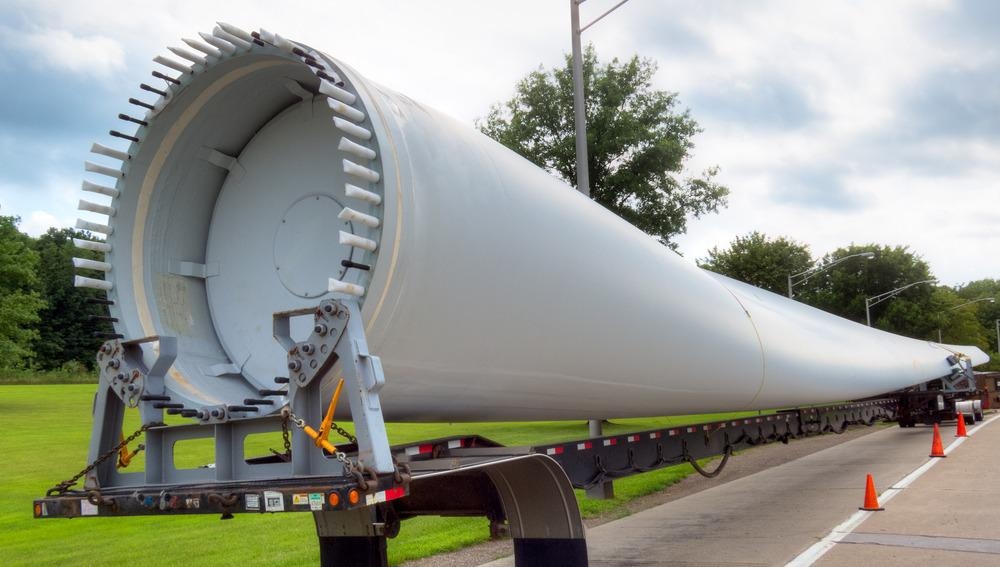
One of the most pressing challenges facing the wind industry is the recycling of decommissioned blades. Due to their composite nature and large size, current methods often involve landfilling or incineration. Developing economically viable and environmentally sound recycling solutions for composite materials is a major focus of research and development, involving mechanical grinding for use in construction materials, chemical solvolysis, or thermal decomposition. A truly circular economy for wind turbine blades is essential for the long-term sustainability and public acceptance of wind power.
In conclusion, a wind turbine blade is a complex assembly of advanced materials, each selected for specific performance characteristics. From the structural backbone of fiberglass and carbon fiber to the core materials like balsa and PET foam, and the protective layers that shield them from the elements, every component is critical. As the world pushes for greater renewable energy deployment, the evolution of these materials will continue to be a cornerstone of technological advancement in the wind power sector.
aViewFromTheCave is a participant in the Amazon Services LLC Associates Program, an affiliate advertising program designed to provide a means for sites to earn advertising fees by advertising and linking to Amazon.com. Amazon, the Amazon logo, AmazonSupply, and the AmazonSupply logo are trademarks of Amazon.com, Inc. or its affiliates. As an Amazon Associate we earn affiliate commissions from qualifying purchases.