
The Universal Product Code (UPC) symbol is more than just a ubiquitous pattern of black lines and numbers found on nearly every product package; it is a foundational technology that revolutionized retail, logistics, and data management. At its core, a UPC symbol is a machine-readable barcode that encodes specific product information, allowing for rapid and accurate identification during transactions and inventory tracking. Understanding the technology behind this deceptively simple graphic reveals its immense power in the modern digital economy.
The Anatomy of a UPC: A Data-Rich Design
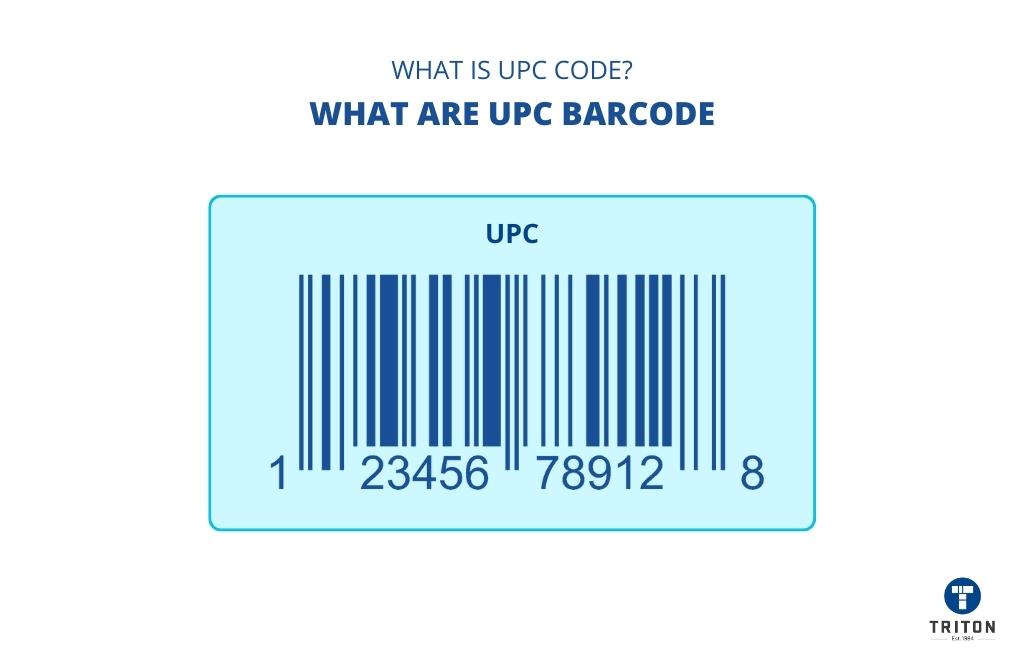
A standard UPC symbol, specifically the UPC-A format which is the most common in North America, consists of two primary components: a machine-readable barcode and a human-readable 12-digit number. Each element plays a crucial role in its functionality, ensuring both automated processing and manual verification.
The Barcode Itself: Binary in Black and White
The barcode portion is a series of parallel black bars and white spaces of varying widths. This pattern is not arbitrary; it represents binary code. Each digit of the 12-digit number is encoded by a unique pattern of two bars and two spaces. The scanner works by emitting a laser or LED light that detects the reflection differences between the black bars (which absorb light) and the white spaces (which reflect light).
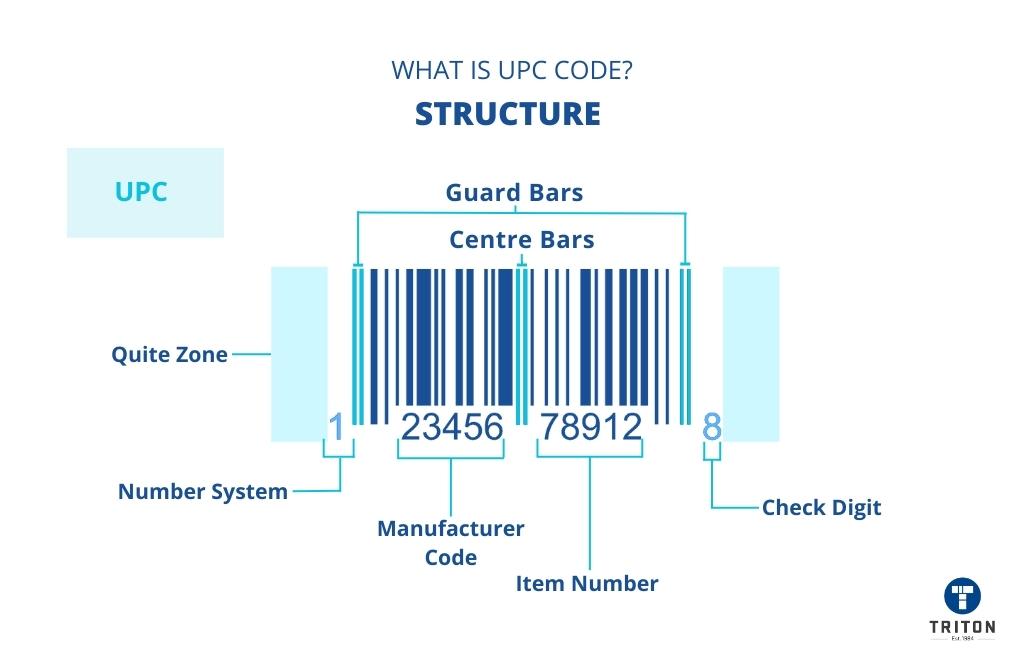
The UPC-A symbol is divided into specific sections:
- Guard Bars: Thin double bars at the beginning, middle, and end of the symbol act as “start,” “middle,” and “end” markers, signaling to the scanner where a code begins and ends, and indicating the direction of the scan. These ensure accurate decoding regardless of the scanner’s orientation.
- Left-Hand Data: The first six digits of the human-readable number are encoded on the left side of the middle guard bars.
- Right-Hand Data: The last five digits (excluding the check digit) are encoded on the right side.
- Number System Character: The very first digit of the 12-digit number, known as the Number System Character, determines the type of product (e.g., 0-7 for regular products, 2 for random weight items like meat, 3 for pharmaceuticals, 4 for in-store use, 5 for coupons). It is encoded in the parity pattern of the left-hand data.
The meticulous design of the bar and space widths, along combined with the specific encoding patterns, allows for high accuracy even with slight variations in printing or scanning conditions.
The Human-Readable Number: A Standardized Identifier
Below the barcode are 12 digits that correspond directly to the data encoded in the bars and spaces. This sequence serves multiple purposes:
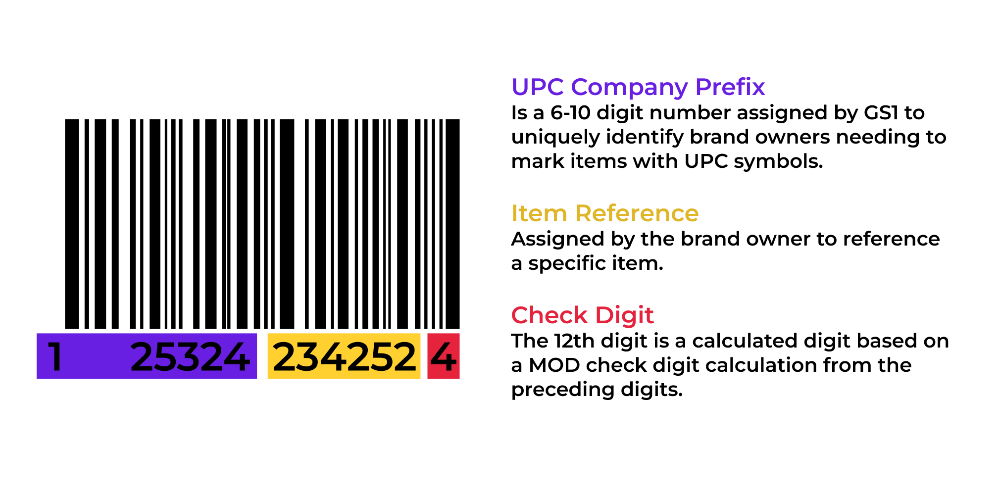
- Manufacturer Identification (Company Prefix): The first 6-10 digits identify the company that manufactures or packages the product. This prefix is assigned by GS1, the global organization responsible for barcode standards. A smaller company might have a longer company prefix (e.g., 9 digits) allowing for fewer product numbers, while a large company might have a shorter prefix (e.g., 6 digits) allowing for millions of product numbers.
- Product Item Number: The next series of digits (typically 2-5 digits, depending on the length of the company prefix) uniquely identifies the specific product. This is assigned by the manufacturer itself. For instance, a particular brand of soda in a 12oz can would have a different product item number than the same soda in a 2-liter bottle.
- Check Digit: The final, 12th digit is a crucial component for data integrity.
Check Digit Explained: Ensuring Accuracy
The check digit is not a random number; it is mathematically derived from the preceding 11 digits using a specific algorithm. Its sole purpose is error detection. When a UPC symbol is scanned, the scanner not only reads the 11 data digits but also independently calculates what the check digit should be based on those 11 digits. If the calculated check digit matches the one encoded in the barcode, the scan is considered accurate. If they don’t match, it indicates a scanning error or a corrupted code, prompting a re-scan or manual entry. This simple yet effective cryptographic-like mechanism significantly reduces errors in high-volume transaction environments.
How UPCs Work: From Scan to Sale
The true power of the UPC symbol lies in its seamless integration with modern technological systems. It acts as a digital key, unlocking product information stored in databases, streamlining everything from checkout to inventory management.
The Role of Barcode Scanners
Barcode scanners are the primary interface between the physical UPC symbol and digital systems. These devices come in various forms – handheld wands, laser guns, omnidirectional flatbed scanners, and even smartphone apps – but they all perform the same basic function: reading the optical pattern and converting it into electrical signals that represent the encoded data.
- Light Source: A laser or LED emits light onto the barcode.
- Photodetector: A sensor detects the reflected light, distinguishing between the low reflectivity of black bars and the high reflectivity of white spaces.
- Decoder: An internal or external decoder chip translates these light patterns into the 12-digit numeric code. This process involves complex algorithms that account for varying scan angles, speeds, and even minor print imperfections.
- Output: The decoded number is then transmitted, typically via USB, Ethernet, or wireless connection, to a point-of-sale (POS) system, inventory management software, or another database.
The speed and accuracy of modern barcode scanners are pivotal to the efficiency of retail and logistics operations, processing thousands of items per hour with minimal human intervention.
Integration with POS and Inventory Systems
Once the barcode scanner decodes the UPC number, it sends this data to the central database, usually linked to a POS system in retail or a Warehouse Management System (WMS) in logistics.
- Point-of-Sale (POS): At checkout, the UPC acts as a lookup key. The POS system receives the 12-digit code, queries its product database, and retrieves associated information such as item description, price, and current stock level. This instant data retrieval not only speeds up transactions but also ensures consistent pricing and accurate sales records.
- Inventory Management: Every time an item is sold or received, the UPC code is used to update inventory records. When a product is scanned at checkout, the system automatically decrements its quantity from the store’s inventory. Similarly, when new stock arrives at a warehouse or store, scanning the UPCs allows for quick and accurate updating of “stock on hand” figures. This real-time inventory tracking is critical for preventing stockouts, optimizing ordering, and reducing waste.
Data Transmission and Decoding
The journey of the UPC data doesn’t end at the scanner. The decoded 12-digit number is typically transmitted as a string of characters. Modern systems use standardized communication protocols (e.g., USB-HID, RS-232, TCP/IP for network scanners) to ensure seamless data flow between the scanner and the host computer or server. The software application receiving this data then performs the database lookup. This entire process, from scan to information display, often takes mere milliseconds, highlighting the efficiency of this integrated technological ecosystem.
The Technological Evolution and Impact of UPCs
The introduction of the UPC in the 1970s marked a significant technological leap, standardizing product identification and laying the groundwork for digital supply chains.
Standardization and Global Reach
Before UPCs, retailers relied on manual price tagging and inventory counting, a labor-intensive and error-prone process. The UPC provided a universal, non-ambiguous identifier for products. GS1 (formerly the Uniform Code Council in North America) developed and maintains these standards, ensuring that a UPC code for a product is unique globally, or at least regionally (UPC-A for North America, EAN-13 for most of the rest of the world, which is compatible). This standardization allowed for automated data exchange across different companies, from manufacturers to distributors to retailers, fostering unprecedented supply chain visibility and efficiency.
Driving Supply Chain Efficiency
The ability to rapidly and accurately track individual products using UPCs transformed logistics. Warehouses could automate sorting and shipping, reducing errors and processing times. Retailers could manage stock levels more precisely, reducing carrying costs and improving product availability. The UPC became a cornerstone of just-in-time inventory systems, minimizing waste and maximizing responsiveness to consumer demand. This technological backbone enables the complex global supply chains we rely on today, facilitating the movement of billions of products daily.
Beyond Retail: Applications in Healthcare and Logistics
While most commonly associated with retail, the underlying principle of the UPC – a standardized, machine-readable identifier – found applications in other sectors. In healthcare, similar barcode systems are used for tracking pharmaceuticals, patient samples, and medical devices, improving safety and reducing errors. In general logistics, barcodes identify parcels and pallets, optimizing sorting and delivery routes. The UPC paved the way for more complex data carriers like 2D barcodes (QR codes) and RFID tags, demonstrating the enduring value of simple, efficient identification technologies.
The Future of Product Identification: UPCs and Emerging Tech
While incredibly successful, the UPC is not the only product identification technology, and it continues to evolve alongside newer solutions.
QR Codes and 2D Barcodes
Unlike the linear, one-dimensional UPC, 2D barcodes like QR codes can store significantly more information, including URLs, text, and images. They are increasingly used on product packaging not just for identification but also for consumer engagement (e.g., linking to product details, recipes, or promotions). While not replacing the UPC for primary retail checkout, 2D barcodes often complement it by offering richer data capabilities and interactive experiences.
RFID and NFC Technologies
Radio-Frequency Identification (RFID) and Near Field Communication (NFC) represent another leap in identification technology. These systems use radio waves to communicate with tags embedded in products, allowing for reading multiple items simultaneously without line-of-sight. This offers advantages for bulk inventory scanning and anti-theft measures. While more expensive than barcodes, RFID is gaining traction in specific high-value or high-volume environments, particularly for supply chain tracking and asset management.
The Enduring Relevance of the UPC
Despite the emergence of these advanced technologies, the UPC symbol remains remarkably relevant. Its simplicity, low cost, and universal adoption ensure its continued dominance for basic product identification at the point of sale. The infrastructure built around UPC scanning is deeply ingrained in global retail and logistics. As technology evolves, the UPC might be supplemented by more data-rich identifiers, but its fundamental role as the primary, reliable machine-readable product key is likely to endure for the foreseeable future, a testament to its robust and effective technological design.
aViewFromTheCave is a participant in the Amazon Services LLC Associates Program, an affiliate advertising program designed to provide a means for sites to earn advertising fees by advertising and linking to Amazon.com. Amazon, the Amazon logo, AmazonSupply, and the AmazonSupply logo are trademarks of Amazon.com, Inc. or its affiliates. As an Amazon Associate we earn affiliate commissions from qualifying purchases.