
Purchasing real estate, whether a first home, an investment property, or commercial land, is typically the largest financial transaction an individual or business will undertake. Amidst the excitement and complex paperwork, one critical element often goes under-explained: the title insurance policy. Far from a mere formality, title insurance serves as a fundamental financial safeguard, protecting owners and lenders from unforeseen claims or defects against the property’s ownership. Understanding its purpose is not just an academic exercise; it’s a vital component of sound financial planning and risk management in real estate investment.
The Foundational Layer of Real Estate Security
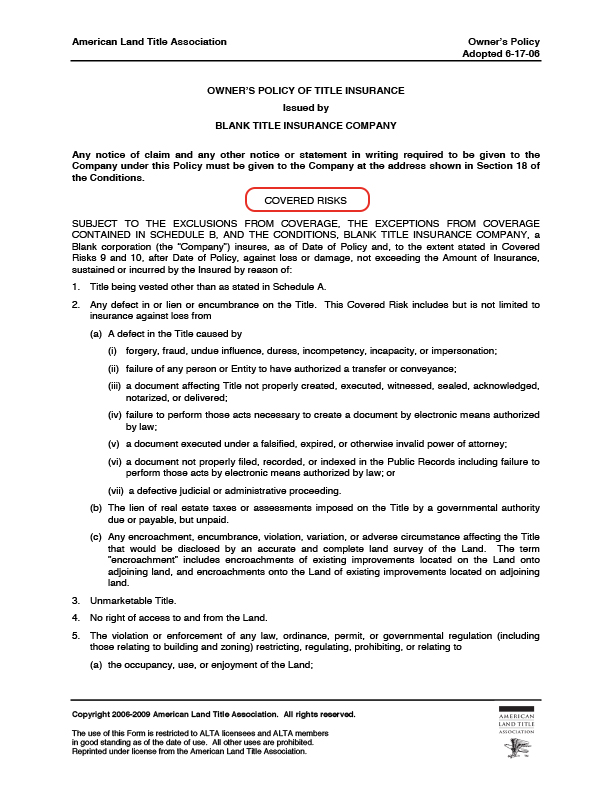
At its core, a title insurance policy is an indemnity contract designed to protect against financial loss arising from defects in a property’s title. While many assume that once a property transaction closes, the ownership is unequivocally clear, the reality can be far more intricate. A property’s title is essentially its legal history, a chronological record of ownership, transfers, liens, and other encumbrances. Issues in this history, often hidden deep within public records, can emerge years after a sale, jeopardizing an owner’s or lender’s financial stake. Title insurance provides a shield against such unwelcome surprises, covering legal costs to defend against claims and reimbursing for losses sustained due to covered title defects.
Beyond Homeowner’s Insurance: A Crucial Distinction
It’s common for new homeowners, and even seasoned investors, to confuse title insurance with homeowner’s insurance. While both are insurance products critical to property ownership, their functions are distinctly different. Homeowner’s insurance, often referred to as hazard insurance, protects against future events like fire, theft, or natural disasters that could damage the physical structure of the property or personal belongings. It covers future potential losses related to the physical asset itself.
Title insurance, by contrast, is a unique form of insurance that protects against past events. It’s a retrospective policy, safeguarding against financial losses due to defects or issues that existed in the property’s title before the date of purchase. It doesn’t protect the physical structure but rather the legal right to own the property, free and clear of unrecorded financial burdens or competing claims of ownership. This fundamental difference underscores its specialized role in the financial ecosystem of real estate. A one-time premium pays for protection that lasts as long as you or your heirs own the property (for an owner’s policy), providing a financial buffer against historical unknowns.
Why Your Lender Demands It: Protecting Their Investment
For virtually any real estate purchase involving a mortgage, your lender will mandate that you purchase a Lender’s Title Insurance Policy. This isn’t an arbitrary requirement; it’s a critical financial safeguard for their substantial investment. When a bank issues a loan, the property itself serves as collateral. The lender needs absolute assurance that their lien on the property is valid, enforceable, and has priority over any other potential claims. If a severe title defect were to surface post-closing, jeopardizing the borrower’s ownership or the lender’s lien position, the bank’s investment would be at significant risk.
The Lender’s Policy protects the financial institution up to the amount of the mortgage loan. Should a title defect lead to a loss, the policy compensates the lender, ensuring their capital is protected. This is distinct from an Owner’s Policy, which protects the buyer’s equity. While the buyer pays for both policies in most transactions, it’s vital to understand that the Lender’s Policy exclusively protects the lender’s financial interest, not the homeowner’s or investor’s. Ignoring the owner’s policy in an effort to save on closing costs can leave a buyer critically exposed to significant financial risk.
Delving Into Potential Title Defects
The necessity of title insurance becomes clearer when one considers the myriad potential issues that can lurk within a property’s title history. These aren’t just hypothetical scenarios; they are real-world problems that can lead to substantial financial distress, legal battles, and even the loss of the property itself.
Forged Documents and Fraudulent Conveyances
One of the most insidious title defects involves fraud. This can manifest in several ways, such as forged signatures on deeds, mortgage releases, or other transfer documents. A perpetrator might illegally assume someone else’s identity to sell a property they don’t legitimately own, or even to mortgage it. If such a fraudulent transaction is later discovered, the rightful owner could come forward to reclaim their property, leaving the current occupant facing significant legal costs and potential eviction, along with the loss of their investment. Title insurance provides protection against such fraudulent acts that can invalidate a prior transfer of ownership.
Undisclosed Heirs and Missing Wills
Property transfers following an owner’s death can be particularly complex. If an estate was improperly probated, or if a will was never discovered or was incorrectly interpreted, there could be undisclosed heirs who have a legal claim to the property. Years after a sale, a previously unknown family member might emerge with a legitimate claim to ownership, asserting their rights against the current owner. Without title insurance, the current owner would bear the full financial burden of defending their ownership and potentially compensating the heir or losing the property. This risk is especially prevalent in properties that have been passed down through generations or those with unclear familial histories.
Unpaid Liens, Taxes, and Judgments
A property’s title can be encumbered by various financial obligations, which if unpaid, can become liens. These include property taxes, unpaid contractor bills (mechanic’s liens), homeowners association (HOA) dues, or even court judgments against a previous owner that attach to the property. While a thorough title search aims to uncover these, some can be overlooked or not recorded until after a sale. If an unrecorded or undiscovered lien surfaces, the new owner could become responsible for paying it, sometimes thousands or even tens of thousands of dollars, or face foreclosure by the lienholder. Title insurance would step in to cover such unexpected financial burdens.
Errors in Public Records and Clerical Mistakes
Despite the digital age, manual errors in public record keeping still occur. Simple mistakes like misspellings, incorrect property descriptions, or faulty indexing in recording offices can create ambiguities or outright defects in a title. A deed might be recorded with an incorrect legal description, inadvertently suggesting a different piece of land or creating an overlap with an adjacent property. Such errors, though seemingly minor, can lead to significant legal disputes over boundaries or ownership, proving costly to rectify without the backing of a title insurance policy.
Survey Issues and Boundary Disputes
The precise boundaries of a property are critical to its value and usability. However, older surveys might be inaccurate, or there could be conflicting surveys from different eras. Encroachments, where a structure or improvement on one property illegally extends onto another, are common examples of survey issues. If a new owner discovers that part of their driveway or even a portion of their house is actually on a neighbor’s land, or vice-versa, it can lead to tense negotiations and expensive legal action. Title insurance can provide coverage for losses arising from boundary disputes or survey errors that were not discoverable prior to the policy’s issuance.
Types of Title Insurance Policies
Understanding the two primary types of title insurance policies is crucial for grasping how they function as distinct financial protections within a real estate transaction.
Owner’s Title Insurance: Protecting Your Equity
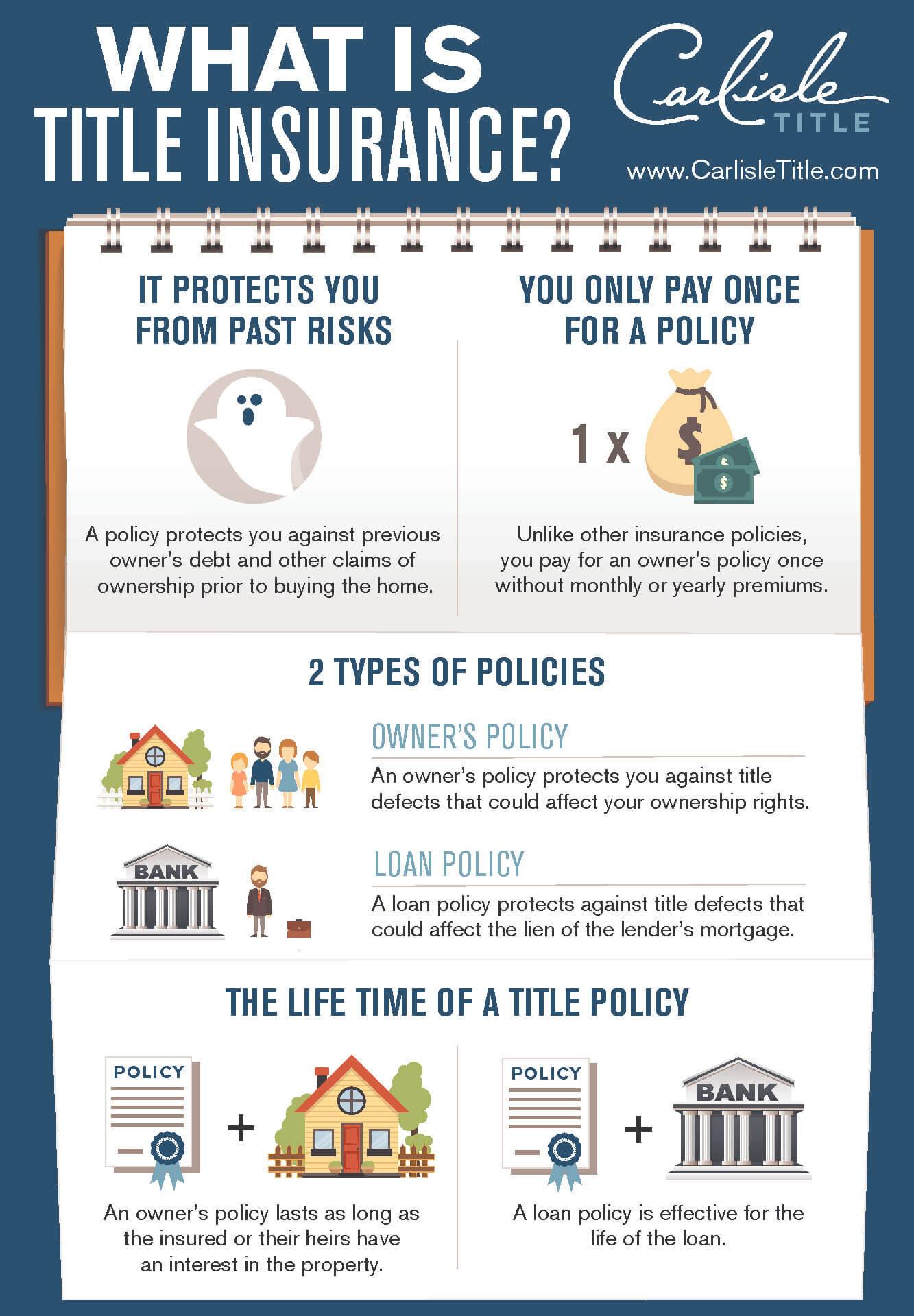
The Owner’s Title Insurance Policy is purchased by the buyer to protect their equity and ownership rights. It’s a single, one-time premium paid at closing that provides coverage for as long as the buyer or their heirs own the property. This policy covers financial losses and legal fees if a covered title defect, existing prior to the purchase, emerges and challenges the owner’s legal claim to the property. This could include issues like fraudulent deeds, undisclosed heirs, forged documents, unreleased liens, or errors in public records. The coverage amount is typically equal to the property’s purchase price, and it remains in effect, offering ongoing peace of mind and financial security for the life of the investment. For any property investor, this policy is non-negotiable, as it directly safeguards their capital and asset.
Lender’s Title Insurance: Safeguarding the Mortgage
The Lender’s Title Insurance Policy, sometimes referred to as a Loan Policy, protects the financial institution that provides the mortgage loan. As mentioned, it’s almost always a mandatory requirement for securing a loan. This policy assures the lender that their mortgage lien is valid and has priority over any other claims to the property, up to the amount of the loan. In the event of a title defect that affects the lender’s lien, the policy protects the lender from financial loss. The coverage typically decreases over time as the mortgage principal is paid down, eventually expiring when the loan is fully satisfied. While the buyer typically pays for this policy, its benefits accrue solely to the lender, highlighting the distinct financial interests protected by each type of policy.
The Title Search and Underwriting Process
The issuance of a title insurance policy is preceded by a meticulous investigative process designed to uncover potential risks. This is where the initial financial assessment and risk mitigation occur.
Unearthing the Past: What a Title Search Entails
Before a title insurance policy can be issued, a thorough title search is conducted. This involves a specialized team examining public records related to the property. These records include deeds, mortgages, liens, easements, wills, divorce decrees, court judgments, tax records, and other documents that can affect the property’s ownership. The goal is to create a complete historical chain of ownership and identify any existing encumbrances or defects that could impair the title. While title searches are exhaustive, they are not foolproof; some defects are “hidden” and not discoverable through public records alone, which is precisely why insurance is still necessary.
The Underwriter’s Role: Assessing and Mitigating Risk
Once the title search is complete, the findings are reviewed by a title underwriter. The underwriter evaluates the risks associated with the title, determines if any defects need to be resolved before closing, and decides what terms and conditions will apply to the policy. If potential defects are identified, the underwriter works with the parties involved (sellers, buyers, lenders) to clear these issues – for example, ensuring that an old mortgage is formally released or that unpaid taxes are settled. This proactive mitigation helps ensure a clear title at closing, reducing future financial disputes.
One-Time Premium, Lifelong Coverage
Unlike most insurance policies that require ongoing premiums, title insurance, particularly the Owner’s Policy, involves a single, one-time premium paid at the close of the transaction. This payment secures coverage for the entire duration of the policyholder’s ownership of the property, and in some cases, extends to their heirs. This “forever” coverage model makes it a financially savvy investment, as it eliminates the need for recurring payments while providing continuous protection against historical title issues that could surface at any point in the future. The cost of the premium is often regulated by the state and is a relatively small percentage of the total property value, especially when weighed against the potentially catastrophic financial losses it prevents.
The Value Proposition: Peace of Mind in Property Ownership
In the complex world of real estate finance, a title insurance policy stands as a fundamental pillar of security. Its value transcends the mere avoidance of loss, actively contributing to a more stable and predictable financial environment for property owners and investors.
Financial Protection Against Hidden Hazards
The most direct value of title insurance is its financial protection. It shields buyers from the potentially devastating costs associated with defending against title claims and reimburses them for actual financial losses up to the policy amount. Without it, even the most diligent buyer could find themselves embroiled in expensive legal battles or face total loss of their property and investment due due to an undiscovered historical defect. This protection is invaluable for personal finance and business finance alike, insulating an owner’s balance sheet from unexpected liabilities that could arise years after a purchase.
Facilitating Smooth Property Transactions
Title insurance plays a crucial role in enabling smooth and efficient real estate transactions. By conducting thorough title searches and providing insurance against undiscovered defects, it instills confidence in all parties involved—buyers, sellers, and lenders. Knowing that potential issues have been vetted and that an insurance policy stands ready to cover unforeseen problems minimizes hesitations and accelerates the closing process. This certainty simplifies the financial due diligence required for large asset transfers, making real estate markets more liquid and accessible.

An Investment in Your Future Asset
Considering the long-term nature of real estate ownership, an owner’s title insurance policy is not just an expense but an investment in the long-term security and transferability of your asset. It protects the integrity of your property’s title, which is fundamental to its value. When it comes time to sell or refinance, a clear and insurable title is paramount. Any unresolved title issues could derail a future sale or make it difficult to secure new financing. By addressing potential historical defects and providing continuous coverage, title insurance ensures that your property remains a liquid and viable asset, preserving its financial value and your investment for generations. It is a prudent financial decision that safeguards one of the most significant assets an individual or business may ever acquire.
aViewFromTheCave is a participant in the Amazon Services LLC Associates Program, an affiliate advertising program designed to provide a means for sites to earn advertising fees by advertising and linking to Amazon.com. Amazon, the Amazon logo, AmazonSupply, and the AmazonSupply logo are trademarks of Amazon.com, Inc. or its affiliates. As an Amazon Associate we earn affiliate commissions from qualifying purchases.