
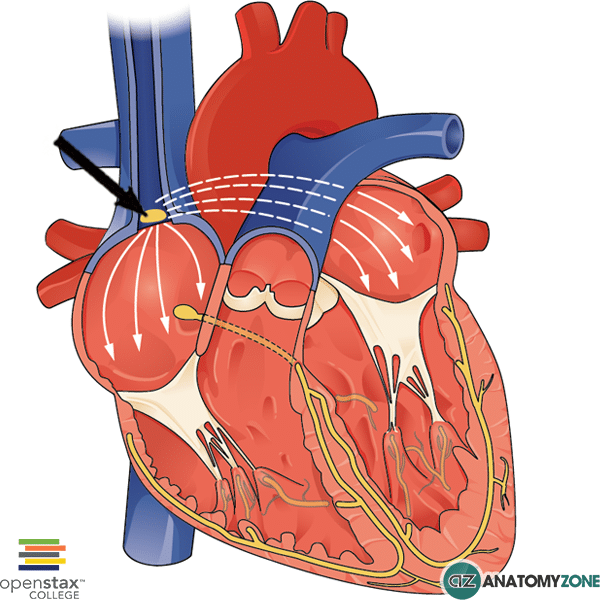
The human heart is an intricate biological machine, and at the core of its rhythmic operation lies a tiny, yet critically important, structure known as the Sinoatrial (SA) node. Often referred to as the heart’s natural pacemaker, the SA node is a specialized cluster of cells located in the upper part of the right atrium. While fundamentally biological, understanding the SA node’s function is paramount in the realm of medical technology, from diagnostic devices that monitor its activity to advanced interventional technologies that correct or augment its rhythm. In an increasingly digital health landscape, the SA node represents the foundational electrical impulse that much of our health tech seeks to capture, interpret, and manage.

The Heart’s Natural Digital Pulse Generator
At its core, the SA node initiates the electrical impulse that orchestrates every single heartbeat, dictating the rhythm and rate at which the heart pumps blood throughout the body. Its consistent, self-generating electrical signals are the very basis for life, and their disruption can have profound implications for overall health.
The Biological Mechanism and its Electrical Signal
The SA node is comprised of specialized pacemaker cells that possess the unique ability to spontaneously generate electrical impulses without external neurological stimulation. This inherent automaticity is what makes it the primary pacemaker. These cells fire at a regular rate, typically between 60 to 100 times per minute in a healthy adult at rest, setting the pace for the entire heart. Once an electrical impulse is generated by the SA node, it spreads rapidly across the atria, causing them to contract and pump blood into the ventricles. The signal then travels through another specialized pathway, the atrioventricular (AV) node, and subsequently down to the ventricles, prompting their contraction. This synchronized electrical activity ensures efficient blood circulation.
From Biological Signal to Digital Data
The electrical impulses generated by the SA node are not just confined to biological processes; they are measurable phenomena. These minute electrical currents, propagating through the heart muscle, create electrical potential differences that can be detected on the surface of the body. This conversion of a biological electrical event into a quantifiable signal is the bedrock of cardiac diagnostic technology. Every waveform on an electrocardiogram (ECG) directly or indirectly reflects the SA node’s initial command and the subsequent electrical cascade. For digital health, this means translating these raw electrical signals into actionable data points, enabling everything from simple heart rate tracking to complex arrhythmia detection algorithms.
Technological Advancement in Monitoring SA Node Activity
The ability to accurately monitor the SA node’s activity has been revolutionized by technological advancements, moving from bulky clinical equipment to sleek, wearable devices that provide continuous, real-time insights.
Electrocardiography (ECG/EKG): The Foundation
The electrocardiogram (ECG or EKG) remains the gold standard for assessing the heart’s electrical activity, providing a graphical representation of the SA node’s impulses and their propagation. Traditional 12-lead ECG machines found in hospitals offer a comprehensive view, allowing clinicians to detect subtle abnormalities in rhythm, rate, and conduction pathways originating from or affecting the SA node. More recently, portable and personal ECG devices have emerged, ranging from single-lead monitors that connect to smartphones to credit card-sized units. These innovations empower individuals and healthcare providers to capture clinically relevant ECG data outside the hospital setting, facilitating earlier detection of potential SA node dysfunctions, such as sinus bradycardia (slow SA node firing) or sinus tachycardia (fast SA node firing).
Wearable Tech: Continuous Heart Rate Monitoring
The proliferation of smartwatches and fitness trackers has brought continuous heart rate monitoring into the mainstream. These devices typically use photoplethysmography (PPG) sensors, which emit light onto the skin and measure the changes in light absorption caused by blood flow variations. While PPG doesn’t directly measure the SA node’s electrical impulses like an ECG, it accurately reflects the heart rate and rhythm dictated by the SA node. Advanced wearables now incorporate single-lead ECG capabilities, offering a higher fidelity snapshot of cardiac electrical activity. This continuous, passive monitoring allows users and, with consent, their healthcare providers to identify trends, detect irregular rhythms like atrial fibrillation (which can be triggered by SA node issues or other foci), and gain insight into the SA node’s response to exercise, stress, and sleep, all contributing to a more proactive approach to cardiovascular health.
Remote Patient Monitoring (RPM) Systems
Building upon the capabilities of personal and wearable tech, remote patient monitoring (RPM) systems integrate data from various devices—including smartwatches, wearable patches, and home ECG units—into centralized digital health platforms. These systems enable healthcare providers to continuously track a patient’s SA node-driven heart rate and rhythm patterns from a distance. RPM is particularly valuable for managing chronic conditions, post-operative care, and for patients at risk of SA node dysfunction, allowing for timely interventions based on real-time data analysis. This shift toward telemedicine and digital health significantly enhances patient engagement and streamlines the delivery of care, leveraging technology to extend clinical oversight beyond traditional settings.
AI and Advanced Diagnostics for SA Node Health

The sheer volume of physiological data generated by modern monitoring technologies necessitates sophisticated analytical tools. Artificial intelligence (AI) and machine learning (ML) are transforming how we interpret cardiac data, leading to more precise diagnoses and predictive insights related to the SA node.
Algorithmic Analysis of ECG Data
AI algorithms are now capable of analyzing vast datasets of ECG recordings with remarkable accuracy, often surpassing human capabilities in identifying subtle patterns indicative of cardiac abnormalities. For the SA node, AI can detect minute variations in P-wave morphology (the part of the ECG representing atrial depolarization initiated by the SA node) or rhythm irregularities that might suggest SA node dysfunction, such as sick sinus syndrome. These algorithms can differentiate between normal sinus rhythm and various arrhythmias, predict the likelihood of future cardiac events, and even help personalize treatment plans by identifying individual responses to therapies, all by meticulously dissecting the electrical signature of the SA node.
Electrophysiology Studies and Mapping Technology
For more complex SA node issues, advanced electrophysiology (EP) studies are employed. These invasive procedures involve threading thin, flexible catheters with electrodes into the heart to directly measure electrical activity from within. Coupled with sophisticated 3D mapping technology, electrophysiologists can create highly detailed, real-time electrical maps of the heart. This technology precisely locates the SA node, identifies abnormal electrical pathways, and pinpoints the exact origin of arrhythmias. These high-tech procedures are invaluable for diagnosing complex SA node-related conditions, guiding targeted therapies, and ensuring the accurate placement of interventional devices.
Interventional Technology: Supporting and Replacing the SA Node
When the SA node’s natural rhythm falters, advanced medical technologies step in to support or even replace its function, restoring normal heart rhythm and improving quality of life.
Artificial Pacemakers: A Technological Marvel
Perhaps the most direct technological intervention related to SA node dysfunction is the artificial pacemaker. When the SA node becomes too slow, unreliable, or completely fails to generate an adequate heart rate (a condition known as bradycardia), an implanted pacemaker takes over its role. Modern pacemakers are miniature, sophisticated electronic devices that deliver precisely timed electrical impulses to the heart muscle, mimicking the SA node’s natural function. Advances in pacemaker technology include leadless pacemakers (which are entirely contained within the heart), MRI-compatible devices, and “rate-responsive” pacemakers that adjust the heart rate based on the patient’s activity level, effectively acting as an intelligent, responsive artificial SA node. Further innovations include pacemakers with AI-driven algorithms that continuously optimize pacing parameters for individual patient needs.
Ablation Techniques: Precision Robotics and Imaging
Catheter ablation is another powerful interventional technology used to treat certain arrhythmias, some of which may be influenced by or originate near the SA node. This procedure involves using radiofrequency energy or cryotherapy to precisely destroy small areas of heart tissue that are causing abnormal electrical signals. High-resolution imaging, 3D mapping, and sometimes robotic assistance are integral to these procedures, allowing electrophysiologists to navigate catheters with extreme precision, avoiding damage to healthy tissue while effectively targeting the problematic electrical pathways. While often used for conditions like atrial fibrillation, ablation can also address ectopic foci (abnormal electrical generators) that compete with or override the SA node’s rhythm.
The Future of SA Node Management: Integrating Digital Health
The trajectory of technological innovation points towards an integrated and personalized approach to SA node health, leveraging data science, advanced sensors, and AI to move beyond reactive treatment toward proactive prevention and optimized management.
Personalized Digital Health Ecosystems
The future envisions a comprehensive digital health ecosystem where data from various sources—wearable sensors, genomic information, electronic health records, and even environmental factors—are aggregated and analyzed to create a highly personalized profile of an individual’s SA node health. AI-driven predictive models will be able to forecast the likelihood of SA node dysfunction long before symptoms appear, enabling proactive lifestyle modifications or early interventions. This ecosystem will empower individuals with continuous, actionable insights into their heart’s rhythm, allowing for collaborative decision-making with healthcare providers.
Bio-Digital Interface and Neural Networks
Looking further ahead, research into bio-digital interfaces and advanced neural networks holds promise for even more sophisticated SA node management. This could involve direct, non-invasive neural stimulation techniques to modulate SA node activity, or bio-integrated devices that seamlessly interact with the body’s physiological systems. The goal is to not just monitor or replace, but to potentially restore or enhance the SA node’s natural function through highly advanced, intelligent technologies, bridging the gap between biological rhythm and digital control for optimal cardiovascular health.
aViewFromTheCave is a participant in the Amazon Services LLC Associates Program, an affiliate advertising program designed to provide a means for sites to earn advertising fees by advertising and linking to Amazon.com. Amazon, the Amazon logo, AmazonSupply, and the AmazonSupply logo are trademarks of Amazon.com, Inc. or its affiliates. As an Amazon Associate we earn affiliate commissions from qualifying purchases.