
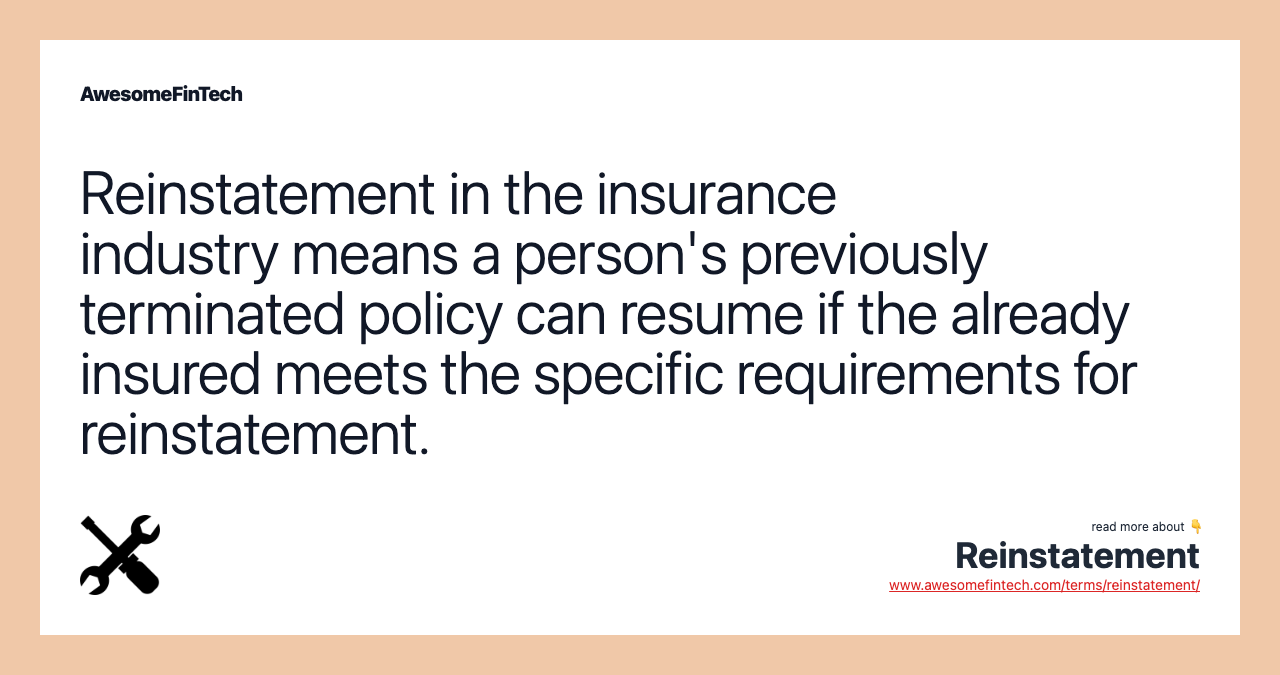
In the intricate world of finance, the term “reinstatement” carries significant weight, often serving as a critical lifeline for individuals and businesses facing a lapse in coverage, a default on a loan, or a pause in financial benefits. Far from a simple renewal, reinstatement is the act of restoring an agreement, a policy, or an account to its original, active status after it has been terminated, lapsed, or fallen into default. This process typically involves fulfilling specific conditions, often including payment of past-due amounts, fees, and sometimes demonstrating continued insurability or financial stability. Understanding the nuances of reinstatement is crucial for sound financial management, allowing individuals to navigate complex situations and protect their financial well-being.
Understanding Reinstatement in the Financial Sphere
At its core, reinstatement is about restoration—bringing something back to a previous, good standing. It’s a mechanism designed to offer a second chance, allowing parties to avoid the more severe consequences of complete termination or default. While the specific requirements and implications vary widely across different financial products, the underlying principle remains consistent: to reactivate an existing financial relationship rather than initiating an entirely new one.
The Core Concept of Restoration
The concept of restoration through reinstatement is particularly valuable because it often preserves the original terms, conditions, and benefits that might be lost if a new agreement were to be established. For instance, in insurance, reinstating an old policy can mean retaining the original issue age, premium rates, or accumulated cash value that would not be available with a new policy. In lending, reinstatement can prevent the irreversible loss of an asset through foreclosure or repossession. It’s a powerful tool that acknowledges life’s unforeseen challenges and provides a structured path back to stability.
Key Scenarios Where Reinstatement Applies
Reinstatement is most commonly encountered in several critical financial domains: insurance policies (life, health, property, casualty), loan agreements (mortgages, personal loans), and sometimes in the context of employment benefits or investment accounts. Each scenario presents its own set of rules, deadlines, and financial implications, making a detailed understanding of the specific context imperative for anyone considering this option.
Reinstatement in Insurance Policies
Insurance is perhaps the most frequent domain where reinstatement comes into play. When a policyholder misses premium payments, their policy can lapse, meaning coverage ceases. Reinstatement offers a pathway to restore that coverage, often with significant advantages over purchasing a new policy.
Life Insurance: Bringing a Lapsed Policy Back
A lapsed life insurance policy can be particularly distressing, as it jeopardizes the financial protection intended for beneficiaries. Many life insurance policies offer a reinstatement period, typically between three to five years, during which the policyholder can apply to reactivate their coverage.
Conditions and Requirements
To reinstate a life insurance policy, an individual typically must:
- Pay all overdue premiums, often with interest.
- Repay any policy loans and accrued interest, or ensure the loan amount falls within the policy’s cash value.
- Provide evidence of insurability, which might involve completing a new medical questionnaire, undergoing a medical exam, or submitting to blood tests. This is crucial because if the policyholder’s health has significantly deteriorated since the original policy was issued, the insurer may decline reinstatement.
- Submit a formal reinstatement application.
Financial Considerations
The financial implications of reinstating a life insurance policy can be substantial. While it requires a lump sum payment of back premiums and potentially interest, it preserves the original policy’s issue age. This is a significant benefit, as premiums for life insurance are largely determined by age at the time of policy issuance. A new policy would be issued at the policyholder’s current, older age, almost certainly resulting in higher premiums. Furthermore, the reinstated policy maintains any accumulated cash value and dividend participation, which would be lost with a new policy.
Property and Casualty Insurance (Auto, Home, Business)
For auto, home, or business insurance, a lapse in coverage can expose assets to significant risk. While some states have mandatory auto insurance laws that penalize lapses, the ability to reinstate can quickly restore protection.
Avoiding Coverage Gaps
Reinstating a property or casualty policy is often quicker than a life insurance policy and typically doesn’t require new underwriting based on health. The primary requirement is usually the payment of all past-due premiums and sometimes a reinstatement fee. The challenge lies in the period between the lapse and reinstatement: any incident occurring during this coverage gap would not be covered, leaving the policyholder financially vulnerable. Many insurers will process reinstatement quickly to minimize these gaps, sometimes backdating coverage to the lapse date if all conditions are met promptly.
The Reinstatement Process
The process usually involves contacting the insurer, confirming the outstanding balance, and making the necessary payment. Some insurers might impose a short waiting period before full coverage is restored. It’s vital to confirm the exact date and time coverage becomes effective again to avoid any uninsured exposures.
Health Insurance Reinstatement
Health insurance reinstatement can be complex, especially with the shifting landscape of healthcare laws. For employer-sponsored plans, reinstatement might occur after a leave of absence or re-employment, typically following company policy. For individual plans, particularly those purchased through marketplaces, reinstatement after a lapse due to non-payment might be possible within a grace period, but specific rules and timelines apply. Missing deadlines can lead to a complete loss of coverage, often requiring enrollment in a new plan during open enrollment periods or qualifying special enrollment periods.
Reinstatement in Lending and Debt Management
Beyond insurance, reinstatement plays a critical role in managing debt, particularly for secured loans like mortgages, where an asset is at risk.
Mortgage Reinstatement: A Path to Prevent Foreclosure
When a homeowner defaults on their mortgage payments, the lender can initiate foreclosure proceedings. Mortgage reinstatement is a common loss mitigation option that allows the homeowner to stop the foreclosure by paying all past-due amounts.

The Legal and Financial Framework
Mortgage reinstatement typically involves paying all missed mortgage payments, including principal, interest, taxes, and insurance (PITI), plus any late fees, penalties, and costs incurred by the lender during the default and foreclosure process (e.g., legal fees, property inspection fees). This lump sum payment brings the loan current, and the foreclosure process is halted. The mortgage then continues under its original terms. Many states have specific laws governing a borrower’s right to reinstate, often up to a certain point in the foreclosure process, such as a few days before a scheduled foreclosure sale.
Pros and Cons for Borrowers
The primary advantage of mortgage reinstatement is the ability to keep one’s home and avoid the severe credit damage associated with foreclosure. It preserves the original loan terms, which might be more favorable than current market rates. The main disadvantage is the significant lump sum required, which can be challenging for homeowners already struggling financially. However, compared to the long-term consequences of foreclosure, reinstatement is often the more financially prudent path if feasible.
Other Forms of Loan Reinstatement (Personal Loans, Student Loans)
While less common than mortgage reinstatement, the concept can apply to other loans. For personal loans, particularly those with collateral, a lender might offer reinstatement options after a default, usually involving paying past-due amounts and fees. For federal student loans, specific programs like loan rehabilitation or consolidation can effectively “reinstate” a defaulted loan by bringing it back into good standing, often restoring eligibility for benefits like deferment, forbearance, and access to new federal student aid.
Addressing Default Status
The goal is always to move the loan out of default, which carries severe consequences like damaged credit, wage garnishment, and seizure of tax refunds. Reinstatement-like processes for student loans aim to mitigate these impacts, providing a structured pathway for borrowers to regain control of their financial obligations.
Beyond Traditional Finance: Employment Benefits and Accounts
While less common, the principle of reinstatement can also apply to certain employment benefits and investment accounts.
Reinstating Employee Benefits and Retirement Contributions
When an employee takes a leave of absence (e.g., FMLA, sabbatical) or is re-hired after a period of separation, companies often have policies for reinstating benefits such as health insurance, retirement plan contributions (e.g., 401(k)), and vacation accrual.
Post-Leave or Re-employment Scenarios
The process typically involves the HR department ensuring that the employee’s benefits status is updated and that deductions for health insurance or contributions to retirement accounts resume according to the company’s established schedules and the employee’s elections. For retirement plans, reinstatement ensures that the employee can continue contributing towards their long-term financial goals without interruption, often maintaining previous vesting schedules.
Implications for Long-Term Financial Planning
Seamless reinstatement of these benefits is vital for an individual’s long-term financial planning, preventing gaps in health coverage or delays in retirement savings that could have cumulative negative effects.
Reinstating Investment Accounts or Trading Privileges
In some specific scenarios, a brokerage or investment account might be temporarily suspended or have certain privileges revoked due to inactivity, compliance issues, or specific trading violations. Reinstatement would involve fulfilling the requirements set by the brokerage—such as providing updated documentation, addressing compliance concerns, or paying any outstanding fees—to restore full access and trading capabilities.
Navigating the Reinstatement Process: Key Considerations
Understanding the general principles of reinstatement is one thing; successfully navigating the process requires attention to detail and awareness of potential pitfalls.
Common Requirements and Documentation
Regardless of the financial product, preparedness is key. Always be ready to provide:
- Proof of identity.
- The original policy or account number.
- Detailed financial statements or payment histories.
- Documentation related to any changes in circumstances (e.g., health status for life insurance).
- Completed application forms specific to reinstatement.
Financial Costs and Penalties Associated with Reinstatement
While reinstatement is often a beneficial option, it invariably comes with financial costs. These typically include:
- All missed payments (premiums, loan installments).
- Late fees and penalties.
- Interest on overdue amounts.
- Reinstatement fees charged by the institution.
- Any costs incurred by the institution during the lapse or default period (e.g., legal fees for foreclosure, inspection costs).
It’s crucial to obtain a detailed breakdown of all amounts due before proceeding.
The Benefits of Choosing Reinstatement Over New Agreements
The primary benefit of reinstatement is the preservation of existing terms, conditions, and historical advantages. For insurance, this means retaining original issue ages, lower premiums, and accumulated cash values. For loans, it means avoiding the drastic consequences of default and retaining the original loan structure, which might be difficult or impossible to replicate with a new agreement, especially if credit has been impacted. Reinstatement often offers a more direct, less disruptive path back to financial stability than starting fresh.

When Reinstatement Might Not Be the Best Option
While generally advantageous, there are scenarios where reinstatement might not be the optimal choice. If the financial burden of all back payments and fees is insurmountable, or if the underlying financial difficulties are chronic, a new, more affordable policy or a different debt restructuring strategy might be more appropriate. For life insurance, if your health has significantly declined and you are deemed uninsurable for reinstatement, exploring new, guaranteed-issue policies might be the only option, albeit often at higher premiums. Always assess your long-term financial capacity and explore all alternatives with a financial advisor or the relevant institution before committing to reinstatement.
aViewFromTheCave is a participant in the Amazon Services LLC Associates Program, an affiliate advertising program designed to provide a means for sites to earn advertising fees by advertising and linking to Amazon.com. Amazon, the Amazon logo, AmazonSupply, and the AmazonSupply logo are trademarks of Amazon.com, Inc. or its affiliates. As an Amazon Associate we earn affiliate commissions from qualifying purchases.