
A monthly premium for health insurance represents the fundamental financial commitment an individual or family makes to secure coverage against medical costs. It is the recurring payment, typically made each month, to an insurance provider in exchange for access to a network of healthcare services and financial protection against unexpected illness or injury. Understanding this core concept is paramount for effective personal financial planning and making informed healthcare decisions. Without consistent premium payments, health insurance coverage lapses, leaving individuals exposed to the full financial burden of medical care, which can be astronomically high.

Understanding the Core Concept of Health Insurance Premiums
At its essence, a health insurance premium is the price you pay for coverage. It’s the regular fee that keeps your health insurance policy active, allowing you to access medical services at negotiated rates, and providing financial assistance when significant medical expenses arise.
The Foundation of Coverage
The premium acts as the gateway to your health insurance benefits. By paying your monthly premium, you gain access to the services outlined in your specific health plan. This can include preventative care, doctor visits, prescription medications, hospital stays, emergency services, and more. It’s not a payment for a specific service you’ve received that month, but rather a payment for the option to receive those services when needed, and for the insurer to assume a portion of your financial risk. Think of it as a subscription service for your health, ensuring that a safety net is always in place.
Why Premiums Are Essential
Premiums are the lifeblood of the health insurance system. They pool resources from many policyholders, enabling insurers to pay out claims for medical services. This collective funding mechanism is what makes health insurance viable, spreading the risk of high medical costs across a large population. Without premiums, insurance companies would lack the capital to operate, process claims, or negotiate discounted rates with healthcare providers. Furthermore, premiums cover the operational costs of insurance companies, including administration, marketing, and the essential services of actuaries and claims processors.
Distinguishing Premiums from Other Costs
It’s crucial to differentiate premiums from other out-of-pocket costs associated with health insurance. While premiums are the regular, fixed payments to maintain coverage, other costs are incurred when you use that coverage:
- Deductible: The amount you must pay out-of-pocket for covered medical services before your insurance plan starts to pay. For example, if your deductible is $2,000, you pay the first $2,000 of covered medical expenses yourself each year before your insurer contributes.
- Copayment (Copay): A fixed amount you pay for a covered healthcare service after you’ve paid your deductible. For instance, a $30 copay for a doctor’s visit.
- Coinsurance: Your share of the cost of a covered healthcare service, calculated as a percentage (e.g., 20%) of the allowed amount for the service, after you’ve met your deductible. If your coinsurance is 20% and a service costs $100 after your deductible, you’d pay $20.
- Out-of-Pocket Maximum: The most you’ll have to pay for covered services in a plan year. Once you reach this limit, your health plan pays 100% of the cost of covered benefits for the remainder of the year.
The premium secures the policy; the deductible, copay, and coinsurance come into play when you actually utilize the benefits of that policy.
Factors Influencing Your Health Insurance Premium
Health insurance premiums are not static; they vary significantly based on a multitude of factors. Understanding these variables can help individuals anticipate costs and make more informed decisions when selecting a plan.
Age
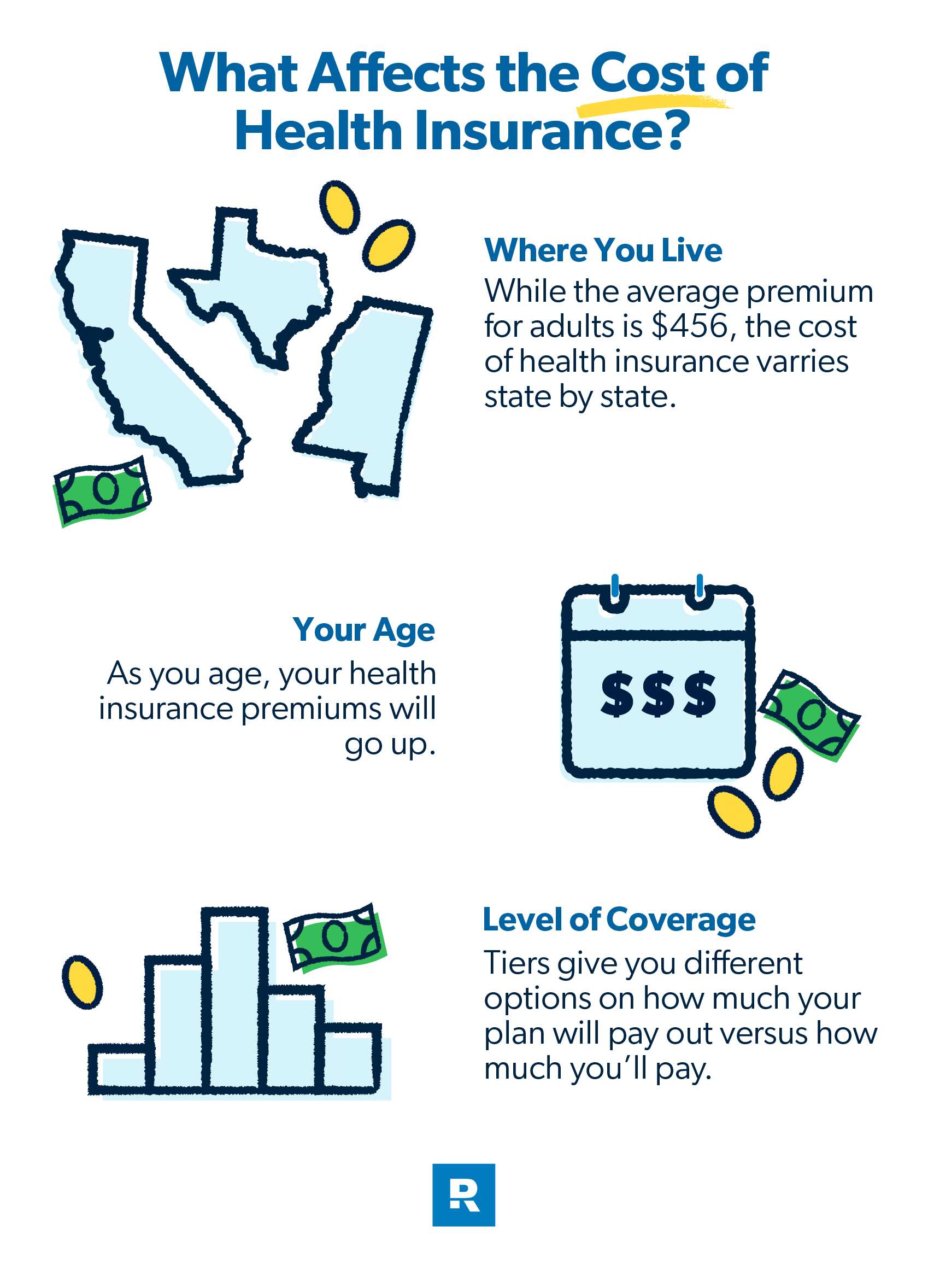
Generally, as individuals get older, their health insurance premiums tend to increase. This is because older populations are statistically more likely to require medical care, leading to higher healthcare costs. Under the Affordable Care Act (ACA), insurers are limited in how much they can charge older adults compared to younger ones, typically allowing a ratio of no more than 3:1.
Geographic Location
Where you live can have a substantial impact on your premium. Healthcare costs, competition among insurance providers, state regulations, and the overall health of the local population can all influence rates within a specific region, county, or state. Areas with higher costs of living or fewer competing insurers might see higher premiums.
Tobacco Use
Insurers are permitted to charge higher premiums for tobacco users. This surcharge, sometimes referred to as a “tobacco surtax,” reflects the increased health risks and associated medical costs linked to tobacco consumption. This can lead to premiums that are up to 50% higher than for non-smokers in some markets.
Plan Type and Level of Coverage
The specific type of health plan you choose and its level of coverage are major determinants of your premium.
- Plan Types: Health Maintenance Organizations (HMOs), Preferred Provider Organizations (PPOs), Exclusive Provider Organizations (EPOs), and Point of Service (POS) plans offer different network structures and flexibility, which can impact premiums. HMOs, for instance, often have lower premiums due to their more restricted network.
- Level of Coverage (Metal Tiers): Plans on the ACA marketplace are categorized into metal tiers: Bronze, Silver, Gold, and Platinum.
- Bronze plans typically have the lowest monthly premiums but the highest deductibles and out-of-pocket costs. They cover about 60% of average medical costs.
- Silver plans have moderate premiums, deductibles, and out-of-pocket costs, covering about 70% of average medical costs. These are often eligible for cost-sharing reductions.
- Gold plans have higher premiums but lower deductibles and out-of-pocket costs, covering about 80% of average medical costs.
- Platinum plans have the highest monthly premiums but the lowest deductibles and out-of-pocket costs, covering about 90% of average medical costs.
The higher the metal tier, the higher the premium, but the lower your out-of-pocket expenses when you use medical services.
Number of Individuals Covered
An individual policy will naturally cost less than a family plan. Adding a spouse, children, or other dependents to a policy will increase the monthly premium, as the insurer is assuming risk for more individuals.
Insurer and Network
Different insurance companies offer varying plans and pricing structures, even within the same geographic area and metal tier. The specific network of doctors, hospitals, and specialists associated with a plan can also influence its premium. Plans with broader, more extensive networks often command higher premiums.
Government Subsidies and Tax Credits
For many individuals and families, government subsidies, particularly Premium Tax Credits available through the Affordable Care Act (ACA) marketplace, can significantly reduce the actual amount they pay for their monthly premium. Eligibility for these subsidies is based on household income relative to the federal poverty level. These credits are paid directly to the insurer, effectively lowering the consumer’s out-of-pocket premium payment.
How Premiums Are Calculated and Utilized by Insurers
The calculation of health insurance premiums is a complex process driven by actuarial science, risk assessment, and regulatory frameworks. Insurers meticulously evaluate various data points to set rates that are both competitive and sufficient to cover their obligations.
Risk Pools and Actuarial Science
Insurance companies rely on actuaries to assess risk. They analyze vast amounts of data to predict the likelihood of individuals within a specific “risk pool” needing medical care and the potential cost of that care. A risk pool is a group of individuals whose medical costs are combined for calculating premiums. The goal is to set premiums high enough to cover the collective medical claims of the group, plus administrative costs and a reasonable profit margin, but low enough to attract policyholders. Factors like age, health status (within legal limits), and location contribute to this risk assessment.
Administrative Costs and Profit Margins
Beyond covering claims, premiums also fund the operational expenses of insurance companies. This includes salaries for employees, marketing and advertising, technology infrastructure, customer service, and regulatory compliance. A portion of the premium is also allocated as profit for the insurer, essential for their financial stability and ability to invest in new services or expand their offerings.
Medical Loss Ratio (MLR)
To ensure that a reasonable portion of premiums is spent on actual healthcare services rather than administrative overhead or profit, the Affordable Care Act introduced the Medical Loss Ratio (MLR). The MLR requires insurance companies to spend a certain percentage of premium revenue on medical care and quality improvement activities. For large group plans, the MLR is 85%, and for individual and small group plans, it’s 80%. If an insurer falls below these thresholds, they are generally required to issue rebates to policyholders, providing a mechanism for accountability and ensuring premiums are primarily used for their intended purpose: healthcare.
Regulatory Oversight
Health insurance premiums are not determined in a vacuum. State and federal regulations play a critical role in overseeing premium rates. State insurance departments often review proposed rate increases to ensure they are justified and not excessive. The ACA further imposed regulations on what factors insurers could use to set rates and capped age-based premium differences, aiming to make insurance more accessible and affordable.
Strategies for Managing and Reducing Your Monthly Health Insurance Premium
For many, health insurance premiums represent a significant recurring expense. Fortunately, several strategies can help individuals and families manage and potentially reduce this monthly outlay.
Exploring Different Plan Tiers
When selecting a health plan, carefully consider the metal tiers (Bronze, Silver, Gold, Platinum). If you anticipate minimal medical needs or prefer lower monthly payments, a Bronze plan might offer the lowest premium. However, be prepared for higher out-of-pocket costs if you do need care. Conversely, if you expect frequent medical visits or have chronic conditions, a Gold or Platinum plan, despite a higher premium, might save you money overall due to lower deductibles, copays, and coinsurance. The key is to balance premium cost with potential out-of-pocket expenses based on your expected healthcare utilization.
Utilizing Employer-Sponsored Plans
If available, employer-sponsored health insurance plans are often the most cost-effective option. Employers typically contribute a significant portion of the premium, substantially reducing the employee’s share. These plans often come with a wider range of choices and may offer better benefits compared to plans purchased on the individual market.
Investigating Government Subsidies
Many individuals and families qualify for government subsidies, particularly Premium Tax Credits, which can dramatically lower their monthly premium payments. Eligibility is based on income and household size, relative to the Federal Poverty Level. These credits are available through the Health Insurance Marketplace (Healthcare.gov or state exchanges). Even if you think your income is too high, it’s always worth checking your eligibility during open enrollment or if you experience a qualifying life event.
High-Deductible Health Plans (HDHPs) with HSAs
High-Deductible Health Plans (HDHPs) typically feature lower monthly premiums in exchange for higher deductibles. When paired with a Health Savings Account (HSA), HDHPs can be a powerful financial tool. An HSA allows you to save money on a tax-advantaged basis (tax-deductible contributions, tax-free growth, and tax-free withdrawals for qualified medical expenses) to cover your high deductible. This strategy can reduce both your premium and your taxable income, while providing a dedicated fund for healthcare costs.
Shopping Around During Open Enrollment
Health insurance plans and their associated premiums can change annually. It is crucial to re-evaluate your options during the annual Open Enrollment Period. Compare plans from different insurers, review changes to your current plan, and assess whether your healthcare needs have evolved. Even slight differences in premiums can add up over a year.
Maintaining a Healthy Lifestyle
While not a direct, immediate premium reducer for individual policies (due to community rating rules under the ACA that prevent insurers from factoring individual health status into premiums), maintaining a healthy lifestyle can indirectly benefit your long-term financial health related to medical costs. Reduced illness and fewer medical interventions mean lower overall healthcare expenditures, which can contribute to more stable premium rates across the wider insurance market over time. Additionally, avoiding tobacco use can prevent premium surcharges.
The Financial Impact of Health Insurance Premiums on Personal Budgets
Health insurance premiums are a consistent line item in many household budgets, representing a significant financial commitment that offers vital protection. Understanding its financial impact is crucial for comprehensive personal finance management.
Budgeting for Healthcare Costs
Integrating health insurance premiums into your monthly budget is a fundamental step in responsible financial planning. Unlike variable expenses, premiums are a fixed cost, making them easier to account for. Neglecting to budget for these payments can lead to lapsed coverage, which can have catastrophic financial consequences if a medical emergency arises. Beyond the premium, it’s also wise to budget for potential out-of-pocket costs like deductibles, copays, and coinsurance, perhaps by setting aside funds in a dedicated savings account.
The Cost-Benefit Analysis
Paying a monthly premium can sometimes feel like an expense without an immediate return, especially for healthy individuals. However, the true value of a premium becomes evident when considering the potential alternative: facing exorbitant medical bills without coverage. A single unexpected hospitalization, surgery, or chronic illness treatment can quickly accumulate costs ranging from thousands to hundreds of thousands of dollars, far exceeding years of premium payments. The premium, therefore, acts as a relatively small, predictable cost that mitigates the risk of an unmanageable financial catastrophe.

Long-Term Financial Security
Consistent payment of health insurance premiums contributes significantly to long-term financial security. It provides peace of mind, knowing that a safety net is in place for unforeseen health events. It protects assets from being depleted by medical debt, safeguards savings intended for retirement or other life goals, and prevents individuals from having to make impossible choices between medical care and other essential living expenses. In essence, the monthly premium is an investment in your health and, by extension, your financial stability and future.
aViewFromTheCave is a participant in the Amazon Services LLC Associates Program, an affiliate advertising program designed to provide a means for sites to earn advertising fees by advertising and linking to Amazon.com. Amazon, the Amazon logo, AmazonSupply, and the AmazonSupply logo are trademarks of Amazon.com, Inc. or its affiliates. As an Amazon Associate we earn affiliate commissions from qualifying purchases.