
Excavators, those formidable machines commonly seen on construction sites, mining operations, and large-scale landscaping projects, are far more than just powerful digging tools. They represent a sophisticated convergence of mechanical engineering, hydraulic power, and increasingly, advanced digital technology. At their core, excavators are designed to manipulate earth and various other materials with immense force and precision, performing a wide array of tasks that are foundational to modern infrastructure and development. Understanding their functions requires delving into the technological systems that enable their diverse capabilities, from basic digging to complex, automated operations.
The Core Technological Marvel: Hydraulics and Mechanical Power
The fundamental ability of an excavator stems from its powerful hydraulic system and robust mechanical design. These integrated technologies work in concert to deliver the raw force and precise control necessary for demanding tasks.

The Hydraulic System: Precision and Power
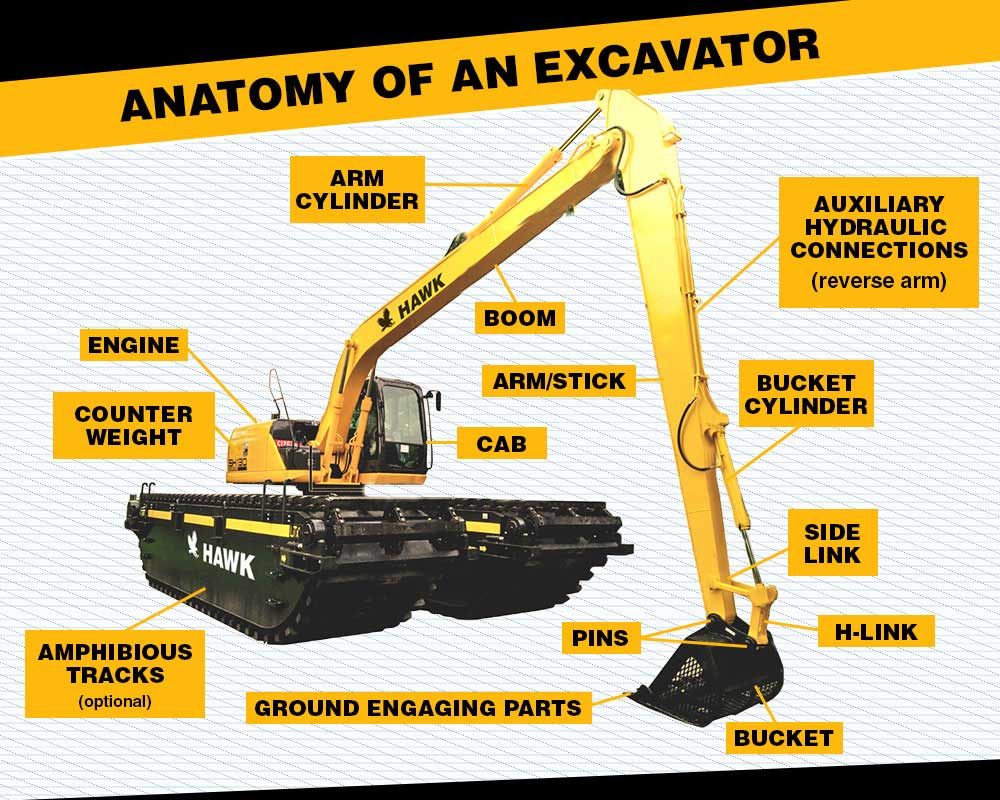
The heart of an excavator’s operational prowess lies in its hydraulic system. This complex network of pumps, valves, cylinders, and hoses transmits fluid under high pressure to actuate the machine’s various components. Hydraulic pumps, driven by the engine, pressurize a non-compressible fluid (hydraulic oil), which is then directed by control valves to hydraulic cylinders and motors.
When an operator moves a joystick, it sends a signal—increasingly, an electronic signal—to the control valves. These valves precisely regulate the flow and pressure of hydraulic fluid to specific cylinders, causing them to extend or retract. This action translates into the movement of the excavator’s boom, arm, and bucket, as well as the rotation of the superstructure (cabin and boom assembly) and the drive of the tracks or wheels. The beauty of hydraulics lies in its ability to generate enormous linear force and rotary torque from relatively small inputs, allowing for the precise lifting, pushing, pulling, and digging of heavy loads with remarkable responsiveness. Modern hydraulic systems also incorporate features like load-sensing capabilities, which adjust pump output to match the immediate demand, enhancing fuel efficiency and operational smoothness.
Engine and Drivetrain: The Heart of Operation
Powering this intricate hydraulic system and the machine’s overall movement is a robust internal combustion engine, typically a diesel unit, though electric and hybrid options are gaining traction. These engines are designed for high torque output at relatively low RPMs, providing consistent power under heavy loads. The engine not only drives the hydraulic pumps but also powers the drivetrain, which enables the excavator’s mobility.
For tracked excavators, the engine powers hydraulic motors connected to the track sprockets, allowing the machine to traverse rough terrain, climb inclines, and pivot in place. Wheeled excavators, or “diggers,” use a more conventional drivetrain to power their wheels, offering greater speed and maneuverability on paved surfaces. The coordination between the engine’s power output and the hydraulic system’s demands is managed by sophisticated electronic control units (ECUs), optimizing performance, fuel consumption, and emissions in real-time.
Versatility Through Advanced Attachments and Digital Integration
What truly broadens the scope of an excavator’s utility is its capacity to integrate with a vast array of specialized attachments and its increasing reliance on digital technologies for enhanced operation.
Beyond the Bucket: A Range of Specialized Tools
While the standard digging bucket is the most iconic attachment, excavators are engineered with quick coupler systems that allow for rapid changes between a multitude of specialized tools. This modularity transforms the machine for specific tasks, vastly expanding its functional range:
- Hydraulic Breakers (Hammers): Used for demolishing concrete, breaking rock, and removing asphalt, these attachments deliver powerful percussive blows.
- Grapples: Designed for handling irregularly shaped objects like logs, scrap metal, or demolition debris, grapples come in various configurations, including orange peel and sorting grapples.
- Shears: These powerful cutting tools are used in demolition for processing steel structures, rebar, and other metallic materials.
- Augers: For drilling precise holes in the ground for fence posts, foundations, or tree planting.
- Compactors: Vibratory plate compactors attach to the boom to consolidate soil and aggregate in trenches or restricted areas.
- Rippers: A single, sharp tooth designed to tear through hard soil, frozen ground, or soft rock, making excavation easier.
- Tilting Buckets and Rotators: These advanced attachments allow the bucket to tilt and rotate, providing unparalleled flexibility for grading, sloping, and fine-tuning operations without constantly repositioning the entire machine.
The quick coupler technology, often hydraulically actuated, significantly reduces downtime associated with changing attachments, boosting productivity on diverse job sites.
GPS, Telematics, and Automation: Smart Excavation
Modern excavators are increasingly becoming intelligent machines, integrating advanced digital technologies to improve efficiency, accuracy, and safety.

- GPS and Machine Control Systems: High-precision GPS (Global Positioning System) and GNSS (Global Navigation Satellite System) technologies are integrated into excavators to provide real-time positioning and elevation data. Machine control systems guide the operator, displaying target depths, slopes, and designs on in-cab monitors. Some systems offer semi-automatic capabilities, where the machine controls the boom and bucket to achieve the desired grade, significantly reducing human error and rework. This “grade control” technology ensures that trenches are dug to exact specifications and foundations are prepared with pinpoint accuracy.
- Telematics: Telematics systems use cellular or satellite communication to transmit operational data from the excavator to a remote server. This data includes location tracking, engine hours, fuel consumption, idle time, fault codes, and maintenance alerts. Fleet managers can monitor machine performance, optimize schedules, track asset utilization, and proactively plan maintenance, reducing operational costs and maximizing uptime. Telematics also provides security features like geofencing and remote disabling.
- Automation and Robotics: While fully autonomous excavators are still emerging, advancements in robotics are leading to machines capable of performing repetitive tasks with minimal human intervention. Remote-controlled excavators are used in hazardous environments, while concept machines showcase self-learning algorithms and AI for optimizing digging cycles and material handling. These technologies promise to revolutionize excavation, particularly in dangerous or inaccessible areas.
Modern Excavator Innovations: Efficiency and Sustainability
The drive for greater efficiency, reduced environmental impact, and enhanced operator comfort has spurred significant innovation in excavator technology.
Electric and Hybrid Models: Powering the Future
Addressing concerns about emissions and noise pollution, manufacturers are rapidly developing and deploying electric and hybrid excavators.
- Electric Excavators: These machines are powered by large battery packs, eliminating direct emissions and significantly reducing noise levels. They are ideal for indoor demolition, urban construction sites, and noise-sensitive areas. Charging infrastructure and battery life remain key considerations, but advancements are continually improving their viability.
- Hybrid Excavators: Hybrid models typically combine a smaller diesel engine with an electric motor and a capacitor or battery bank. They capture energy generated during boom-down operations or slew braking, converting it into electricity to assist the engine during peak demand. This recuperation technology leads to substantial fuel savings and lower emissions compared to conventional diesel excavators, offering a balance between sustained power and environmental responsibility.
Operator-Assist Technologies: Enhancing Safety and Productivity
Beyond automation, a suite of technologies is being developed to assist operators, making their jobs safer, less fatiguing, and more productive.
- Vision Systems: Multi-camera systems provide 360-degree views around the machine, eliminating blind spots and improving situational awareness. Object detection and proximity sensors alert operators to obstacles or personnel near the machine, preventing accidents.
- Load Weighing Systems: Integrated sensors can accurately weigh the material in the bucket, preventing overloading of trucks, ensuring compliance with weight limits, and optimizing material transport.
- Fatigue Monitoring: Advanced systems can monitor operator alertness through eye-tracking and facial recognition, issuing alerts if signs of fatigue are detected, thereby enhancing job site safety.
- Advanced Ergonomics and Cab Design: Modern excavator cabs are veritable control centers, featuring intuitive joystick controls, fully adjustable air-suspension seats, climate control, and digital displays that provide comprehensive machine data and integrate with machine control systems. The design aims to reduce operator strain and improve focus over long shifts.
Specialized Applications and Their Technological Demands
The “what” an excavator does is ultimately defined by the industry and specific task it’s deployed for, each leveraging different technological aspects of the machine.
Construction and Demolition: Building and Breaking Down
In construction, excavators are indispensable for site preparation, trenching for utilities, digging foundations, and backfilling. Their precision hydraulic control, coupled with GPS machine control, allows for accurate grading and shaping of the landscape. In demolition, powerful hydraulic breakers and shears enable the efficient dismantling of structures, processing materials for recycling, and clearing sites for new development. The agility to switch between a digging bucket and a breaker attachment is crucial here.
Mining and Quarrying: Extracting Resources
In mining, particularly surface mining and quarrying, larger excavators (often referred to as hydraulic shovels or mining excavators) are used for high-volume excavation of overburden (the soil and rock above an ore deposit) and the primary extraction of minerals or aggregate. These machines are engineered for extreme durability, massive lifting capacities, and continuous operation in harsh environments. Telematics data is vital in mining for optimizing production cycles and predictive maintenance to minimize costly downtime.
Landscaping and Infrastructure: Shaping the Environment
For landscaping and infrastructure projects like road building or pipeline installation, excavators offer the versatility to dig precise trenches, shape earth for aesthetic or functional purposes, load materials onto trucks, and even place heavy objects like large rocks or prefabricated concrete elements. The availability of tilt rotators greatly enhances the fine motor control needed for intricate landscaping, allowing complex contours and precise placement of materials without constantly moving the machine. Mini excavators, a smaller variant, are frequently employed in residential landscaping and utility trenching due to their compact size and maneuverability in confined spaces, often featuring retractable tracks and zero-tail swing for even greater access.
In essence, excavators are the workhorses of the modern world, embodying a continuous evolution of mechanical, hydraulic, and digital technologies. From their foundational role in earthmoving to their advanced capabilities in automated grading and sustainable operation, they remain critical tools for shaping our built environment and extracting the resources necessary for progress.
aViewFromTheCave is a participant in the Amazon Services LLC Associates Program, an affiliate advertising program designed to provide a means for sites to earn advertising fees by advertising and linking to Amazon.com. Amazon, the Amazon logo, AmazonSupply, and the AmazonSupply logo are trademarks of Amazon.com, Inc. or its affiliates. As an Amazon Associate we earn affiliate commissions from qualifying purchases.