
Unearthing the Past: The Role of Forensic Technology
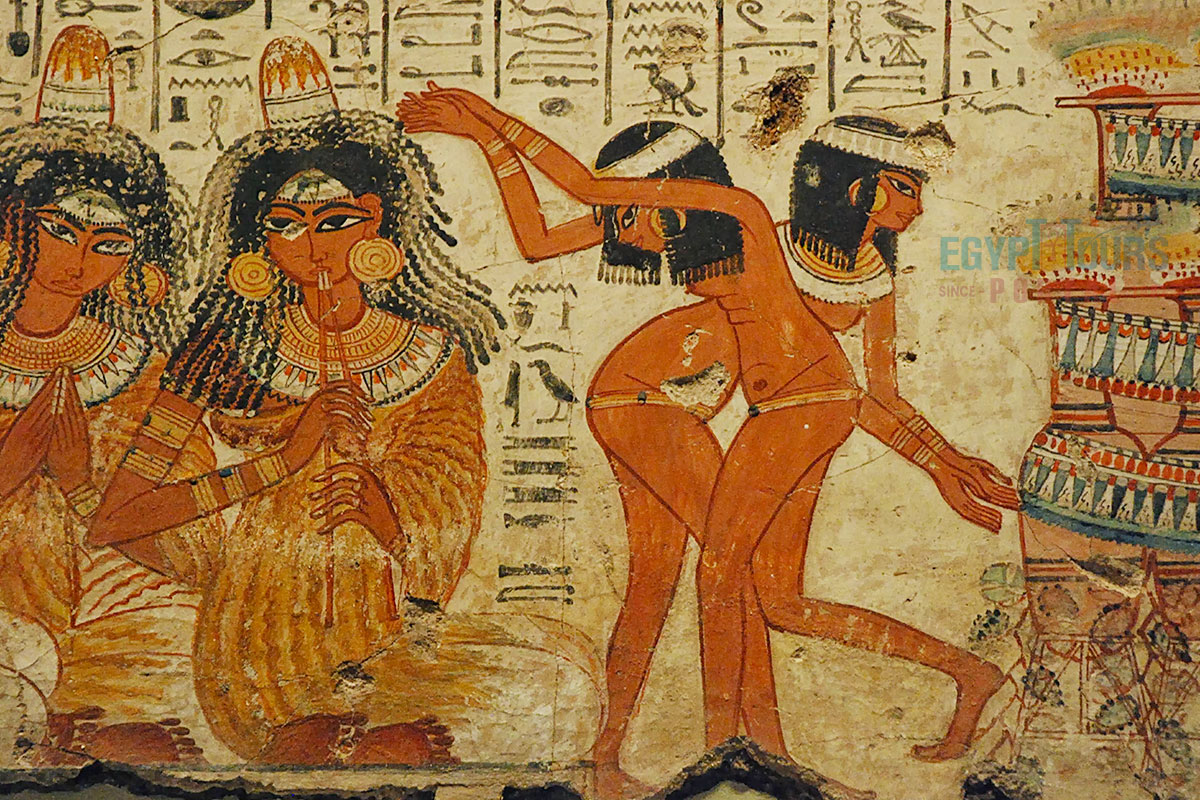
For centuries, our understanding of what the ancient Egyptians looked like was largely confined to artistic representations – tomb paintings, statues, and reliefs. While invaluable, these depictions often conformed to artistic conventions, idealized forms, or specific religious iconography, leaving much to interpretation regarding the actual physical appearance of the general populace, or even the pharaohs themselves. Today, a new era of scientific inquiry, powered by cutting-edge forensic technology, is revolutionizing our ability to reconstruct and visualize these historical figures with unprecedented accuracy. This technological shift moves beyond speculative imagination, offering concrete, data-driven insights into the physical attributes, genetic heritage, and overall appearance of a civilization that has long fascinated humanity.
Advanced DNA Sequencing: Decoding Ancestry
One of the most profound technological advancements in recent decades for historical anthropology is advanced DNA sequencing. Applied to ancient human remains, particularly mummified individuals, this technology provides a direct window into the genetic makeup of ancient Egyptian populations. While the degradation of ancient DNA (aDNA) presents significant challenges – fragmentation, chemical modification, and environmental contamination – specialized extraction protocols and next-generation sequencing (NGS) techniques have made it possible to retrieve viable genetic material even from samples thousands of years old.
Mitochondrial DNA (mtDNA) and Y-chromosome analysis have been instrumental in tracing maternal and paternal lineages, respectively, revealing the complex ancestral origins of ancient Egyptians. Studies have indicated a strong genetic affinity with ancient Near Eastern populations, particularly from the Levant, and to a lesser extent, sub-Saharan African populations. This genetic data directly informs our understanding of potential skin tones, hair textures, and eye colors, moving beyond artistic stylizations to genetically predicted phenotypes. Furthermore, bioinformatics tools play a crucial role in analyzing vast amounts of sequencing data, identifying genetic markers associated with physical traits, and differentiating genuine ancient sequences from modern contaminants, thus ensuring the reliability of the genetic insights gained. The ability to peer into the ancient genome provides an undeniable scientific foundation for understanding their appearance, offering a level of precision impossible through traditional archaeological methods alone.
Craniofacial Reconstruction Software: Bringing Faces to Life
Beyond genetic data, the physical structure of the skull is a primary source for facial reconstruction. Modern craniofacial reconstruction software has transformed the process of digitally “rebuilding” a face from skeletal remains. This intricate process begins with high-resolution imaging of the skull, typically obtained through CT scans. These digital scans provide a precise 3D model of the bone structure, which is then imported into specialized 3D modeling software, such as ZBrush, Blender, or bespoke forensic anthropology applications.
The software allows forensic artists and anthropologists to digitally sculpt muscle, fat, and skin layers onto the bone structure. This process is informed by extensive databases detailing average tissue depths at various anatomical landmarks, which vary by age, sex, and ancestral group. Advanced algorithms within these programs aid in predicting the curvature of the nose, the shape of the mouth, and the placement of the eyes, taking into account the underlying bone structure. For example, the precise angles of the nasal aperture and the orbital sockets provide crucial clues. The output is a highly accurate 2D or 3D digital facial reconstruction that offers a compelling visual representation of the individual. Notable examples include the widely publicized reconstructions of Tutankhamun, Ramesses II, and Hatshepsut, which provide a tangible connection to figures previously only known through their idealized artistic portraits. Continuous development in these software suites focuses on enhancing realism and incorporating more nuanced biological variation, making each new reconstruction progressively more lifelike and scientifically grounded.
Digital Imaging and 3D Modeling: Visualizing Ancient Features
Digital imaging and 3D modeling technologies extend our ability to understand ancient Egyptian appearance beyond skeletal reconstruction, offering non-invasive ways to analyze mummies and artifacts, and to create immersive visual experiences. These tools facilitate unprecedented levels of detail and interaction, allowing researchers and the public alike to explore the past in new dimensions.
CT Scans and Photogrammetry: Peering Beneath the Wraps
Computed Tomography (CT) scanning has revolutionized mummy research, providing a non-invasive method to examine the contents beneath the ancient wrappings. Instead of damaging the delicate remains through unwrapping, CT scans generate detailed cross-sectional images that can be compiled into a full 3D model of the body. This allows researchers to study skeletal structure, identify soft tissues, detect pathologies, and even locate artifacts buried within the wraps, all without disturbing the mummy’s integrity. For understanding appearance, CT scans are invaluable for capturing the precise morphology of the skull, providing the foundational data for craniofacial reconstruction software discussed earlier. They can also reveal details about the individual’s build, age at death, and even signs of disease or injury that might have affected their appearance, such as facial trauma or skeletal abnormalities.
Photogrammetry, another powerful digital imaging technique, involves taking numerous overlapping photographs of an object from different angles and then using specialized software (e.g., Agisoft Metashape, RealityCapture) to stitch them together into a high-resolution 3D model. This technique is applied to mummies, sarcophagi, and even entire archaeological sites. For understanding appearance, photogrammetry can capture the intricate details of mummified skin (if exposed), hair remnants, textiles, and adornments. The resulting 3D models allow for virtual manipulation, detailed measurement, and close examination of surface textures and colors, preserving these fragile details digitally for endless study and public display. The level of detail captured can reveal aspects of ancient Egyptian fashion, hairstyles, and grooming practices that contribute to our holistic understanding of their visual identity.
Virtual Reality and Augmented Reality: Immersive Historical Experiences

The digital models created through CT scans and photogrammetry, combined with forensic reconstructions, become powerful assets when integrated into Virtual Reality (VR) and Augmented Reality (AR) platforms. These immersive technologies enable unprecedented engagement with ancient Egyptian history and the people who lived it.
VR applications can transport users into meticulously recreated ancient Egyptian environments, where they can “meet” and interact with digitally reconstructed pharaohs, queens, and common people. Imagine standing in a virtual ancient Egyptian marketplace, surrounded by accurately rendered figures whose faces are based on scientific reconstructions. This offers an unparalleled sense of presence and helps to contextualize the appearance of ancient Egyptians within their daily lives. Sophisticated rendering engines and haptic feedback systems are continuously improving the realism and interactivity of these experiences.
Augmented Reality (AR), often accessed via smartphones or tablets, overlays digital information onto the real world. In a museum setting, AR apps can allow visitors to point their device at a mummy or a bust and see an overlay of its digitally reconstructed face, or even a full animated representation of what the person might have looked like in life. At an archaeological site, AR can superimpose 3D models of ancient structures and inhabitants onto the current ruins, giving a dynamic visual representation of the past. These technologies are not just educational tools; they are vital for democratizing access to complex archaeological data, making the ancient Egyptians more relatable and tangible to a global audience, and fostering a deeper appreciation for their visual heritage.
AI and Machine Learning: Interpreting Complex Data Sets
The sheer volume of data generated by modern forensic and imaging technologies—from terabytes of genetic sequencing results to gigabytes of 3D scan data—necessitates equally advanced analytical tools. Artificial Intelligence (AI) and Machine Learning (ML) are emerging as critical technologies for interpreting these complex datasets, refining reconstructions, and drawing new insights into ancient Egyptian appearance.
Pattern Recognition in Archaeological Data
AI algorithms excel at identifying patterns and correlations within vast and diverse datasets that would be impossible for human analysis alone. In the context of ancient Egypt, AI can be trained on extensive databases comprising thousands of ancient Egyptian artifacts, tomb paintings, sculptures, and textual descriptions. By analyzing commonalities in facial features, body proportions, hairstyles, skin tones (as depicted by ancient artists, albeit conventionally), and attire across different periods and social strata, AI can help researchers discern trends, identify regional variations, and even detect artistic biases.
For instance, machine learning models can process and categorize stylistic elements in ancient art, helping to differentiate how pharaohs, nobility, and commoners were depicted, and what physical traits were emphasized. This can provide a statistical basis for understanding the represented appearance, which, when combined with scientific reconstructions from remains, offers a richer, multi-faceted perspective. AI can also assist in mapping demographic movements and population mixtures by analyzing genetic data in conjunction with archaeological findings, contributing to a more nuanced understanding of ancient Egyptian diversity.
AI-Driven Facial Feature Analysis and Prediction
One of the most exciting applications of AI is its potential to refine facial reconstruction and predict soft tissue characteristics from genetic data. Deep learning models, particularly neural networks trained on extensive modern human population datasets, are being developed to infer phenotypic traits such as skin tone, eye color, and hair texture directly from ancient DNA markers. While still an evolving field, this AI-driven approach can augment traditional forensic reconstructions by providing probabilistic predictions for these highly variable features.
Furthermore, AI can enhance the accuracy of craniofacial reconstruction by learning complex relationships between subtle skeletal markers and corresponding soft tissue forms. By analyzing thousands of high-resolution CT scans of modern individuals with known facial features, AI algorithms can predict more realistic tissue depths and facial contours, addressing some of the inherent variability and subjectivity in traditional manual reconstruction. Ethical considerations are paramount here, ensuring that AI models are trained on diverse and unbiased datasets to avoid perpetuating modern biases in historical reconstructions. The continuous refinement of these AI algorithms promises to make future reconstructions even more precise and truly reflective of the ancient individuals.

The Evolving Digital Atlas of Ancient Egyptian Appearance
The confluence of advanced DNA sequencing, sophisticated craniofacial reconstruction software, high-resolution digital imaging, immersive VR/AR experiences, and intelligent AI analysis is collectively building an unprecedented “digital atlas” of ancient Egyptian appearance. This integrated approach transcends previous limitations, offering a dynamic and ever-refining picture of a civilization that has captivated imaginations for millennia.
This evolving digital atlas is not merely a collection of individual reconstructions; it’s a comprehensive, multi-modal database. It allows researchers to cross-reference genetic profiles with skeletal data, artistic representations, and archaeological contexts, revealing intricate details about health, diet, ancestry, and even social status as reflected in physical appearance. For example, AI can analyze dietary markers from bone composition and link them to potential health impacts that might have visibly affected an individual, then integrate this information into a digital reconstruction.
The ongoing research and development in these technological domains promise even greater fidelity. Future advancements may include more robust methods for reconstructing soft tissues directly from highly degraded ancient proteins, or AI models capable of simulating aging and environmental effects on appearance from early-life data. Moreover, the increasing accessibility of these digital tools and platforms—from open-source software to museum VR exhibits—is democratizing knowledge. It allows not just specialists, but students, enthusiasts, and the general public to engage directly with the scientific process of historical reconstruction, fostering a deeper, more personal connection with the ancient Egyptians.
In essence, understanding what the ancient Egyptians looked like is no longer a static conclusion based on artistic interpretation, but a continuous, technologically driven journey of scientific discovery. Each innovation brings us closer to a vibrant, data-informed visualization of the people who shaped one of history’s most enduring civilizations, transforming our perception from stylized icons to tangible, recognizable human beings.
aViewFromTheCave is a participant in the Amazon Services LLC Associates Program, an affiliate advertising program designed to provide a means for sites to earn advertising fees by advertising and linking to Amazon.com. Amazon, the Amazon logo, AmazonSupply, and the AmazonSupply logo are trademarks of Amazon.com, Inc. or its affiliates. As an Amazon Associate we earn affiliate commissions from qualifying purchases.