
George Carlin, the legendary comedian and social critic, wielded language like a surgeon’s scalpel, dissecting the absurdities and hypocrisies of modern society. While his raw comedic genius often targeted broad cultural phenomena, his observations on newscasters—and by extension, the entire edifice of news media—offer profound insights when viewed through the lens of brand strategy, corporate identity, and personal branding. Carlin wasn’t just telling jokes; he was conducting a rigorous, albeit comedic, brand audit of an industry critical to public perception.
The Carlin Brand: A Master of Social Critique
Carlin himself was a master of personal branding. His brand was authenticity, an unyielding commitment to questioning authority, and an unapologetic articulation of inconvenient truths. He cultivated an image of the truth-teller, the outsider who saw through the collective illusions society embraced. This self-styled brand enabled him to speak with a credibility that many mainstream figures lacked, precisely because he rejected the sanitized, corporate personas prevalent in media.
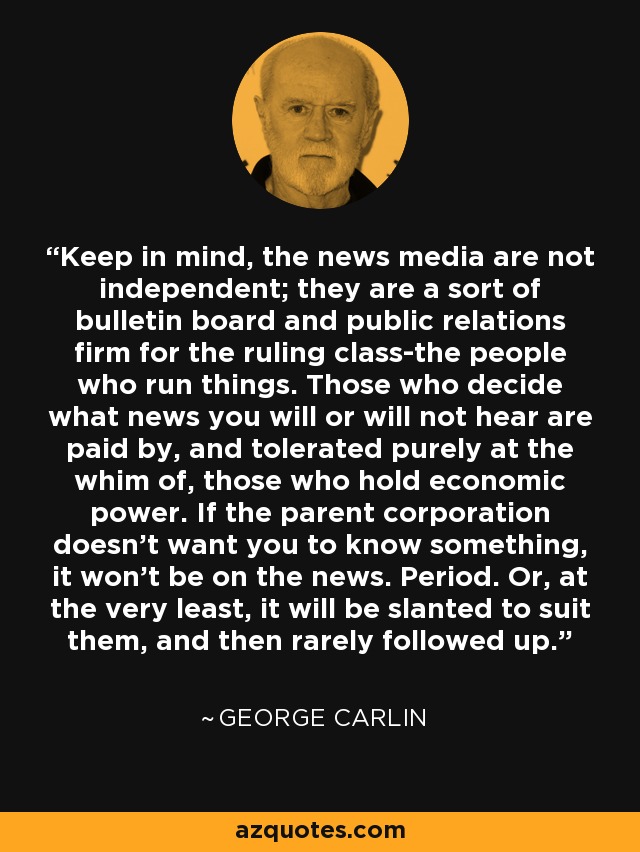
Building an Authentic Voice
Carlin’s brand evolved from mainstream comic to counter-culture icon, always anchored by his unique voice. His choice of language, his directness, and his refusal to pander shaped a brand identity that resonated with those suspicious of established narratives. In an era where media brands strive for “authenticity,” Carlin epitomized it, not by trying to fit in, but by defiantly standing out. His material, often perceived as controversial, was consistently on-brand, reinforcing his reputation as a fearless commentator. For any individual or organization seeking to build a strong personal or corporate brand, Carlin’s journey underscores the power of a distinct, consistent, and authentic voice, even if that voice challenges the status quo.
The Power of Observation in Brand Analysis
Carlin’s genius lay in his meticulous observation. He didn’t just critique; he analyzed. He paid attention to the subtle cues, the verbal tics, and the structural devices that defined public communication. This observational rigor allowed him to unmask the hidden agendas and manufactured realities he perceived within news broadcasting. From a branding perspective, Carlin demonstrated the critical importance of scrutinizing not just the overt messaging but also the non-verbal cues, the tonality, and the repetitive patterns that contribute to a brand’s overall impression and public trust. His comedy was, in essence, a continuous, biting feedback loop for the media industry.
Deconstructing the Newscaster Persona as a Brand
Carlin frequently lampooned the archetypal newscaster, treating their on-screen presence as a carefully constructed performance designed to project authority and trustworthiness, yet often ringing hollow. He saw newscasters not as objective conduits of information, but as performers embodying a specific corporate identity, their personal brands meticulously aligned with their network’s overarching brand strategy.
The Uniformity of Presentation: A Brand Homogenization
One of Carlin’s recurring critiques was the striking uniformity among newscasters. He often pointed out their similar demeanors, speaking styles, and even physical appearance—a calculated homogenization. From a branding perspective, this uniformity can be seen as an attempt to create a consistent, reliable brand image across an organization. However, Carlin argued it resulted in a lack of genuine individuality, leading to a sterile and interchangeable ‘product’. This quest for a unified brand voice, while intended to build trust through consistency, paradoxically stripped away the unique human element that often underpins true connection and credibility. Carlin observed that this sameness could lead to a brand that felt artificial, rather than authentically authoritative.
The Illusion of Objectivity: Brand Trust Under Scrutiny

Carlin was deeply skeptical of the media’s claims of objectivity, viewing it as a thinly veiled component of their brand identity. He argued that newscasters, by virtue of their position and presentation, projected an image of impartial authority, yet often delivered information filtered through specific editorial biases. This dissonance between the brand promise of objectivity and the perceived reality of biased reporting was a constant source of his frustration. For corporate brands, this highlights a crucial lesson: brand trust is fragile. If the public perceives a gap between a brand’s stated values (like objectivity or integrity) and its actions or output, the entire brand architecture can crumble, leading to widespread skepticism and a loss of credibility. Carlin’s observations underscore the vulnerability of media brands that fail to live up to their own espoused principles.
Language as a Branding Tool: Carlin’s Linguistic Scrutiny
Perhaps Carlin’s most profound insights into newscasters and media brands stemmed from his unparalleled mastery and deconstruction of language. He understood that words are not neutral; they are powerful branding tools, capable of shaping perception, controlling narratives, and subtly influencing public opinion. He meticulously cataloged the euphemisms, clichés, and rhetorical devices employed by news organizations, seeing them as deliberate choices in brand messaging.
The Semantic Games of News Broadcasting
Carlin was acutely aware of how newscasters used language to frame events, soften blows, or inject a particular slant. He critiqued the use of jargon, the sanitization of harsh realities through linguistic manipulation, and the reliance on predictable, often emotionally sterile, phrasing. These semantic choices, in a branding context, are akin to a company carefully crafting its tagline, mission statement, or product descriptions. Carlin exposed these as conscious branding decisions designed to manage public sentiment and maintain a certain corporate image, rather than purely convey information. He saw the news desk as a factory producing carefully branded narratives, not just facts.
Shaping Perception Through Controlled Narratives
Through his analysis of linguistic patterns, Carlin argued that news organizations were not just reporting the news, but actively constructing a particular version of reality. The choice of words, the emphasis on certain stories over others, and the way events were contextualized all contributed to a controlled narrative—a powerful form of brand storytelling. He observed how the news industry’s consistent messaging created a monolithic brand presence that often discouraged independent thought. This aspect of his critique is highly relevant to modern brand strategy, where narrative control and consistent messaging are paramount. However, Carlin’s work serves as a warning: when brand storytelling becomes manipulative or obscures truth, it risks alienating a discerning audience and fostering deep-seated mistrust.
Implications for Modern Media Brands and Personal Branding
Carlin’s prescient observations, delivered decades ago, hold remarkable relevance for today’s media landscape and the broader concept of personal branding. In an age of digital saturation and fractured audiences, his insights into authenticity, language, and perceived trustworthiness are more critical than ever.
Authenticity vs. Artifice in Media Branding
Carlin consistently championed authenticity, a trait he found lacking in many news personas. Today, as media organizations and individual content creators vie for attention, the demand for genuine connection remains high. Brands that lean into transparency, embrace their unique voice, and avoid the homogenized, corporate-speak Carlin despised, are often those that resonate most deeply with audiences. Carlin’s critique serves as a timeless reminder that while a polished image can attract initial attention, sustained brand loyalty is built on perceived authenticity and integrity, not artifice. Brands, both corporate and personal, must continually audit themselves to ensure their outward presentation aligns with their internal values and operational reality.

Consumer Skepticism and Brand Vulnerability
The public’s trust in media has significantly eroded since Carlin’s heyday. His critiques, which highlighted the performative nature of newscasting and the potential for linguistic manipulation, can be seen as an early indicator of this trend. For any brand, operating in a climate of high consumer skepticism presents significant challenges. Carlin’s insights urge brands to be hyper-vigilant about their messaging, to prioritize clear and unambiguous communication, and to actively work to rebuild and maintain trust. His legacy challenges media brands to move beyond mere presentation and to genuinely embody the values they claim, understanding that a strong brand is not just about what you say, but fundamentally about what you consistently are and do in the public eye.
aViewFromTheCave is a participant in the Amazon Services LLC Associates Program, an affiliate advertising program designed to provide a means for sites to earn advertising fees by advertising and linking to Amazon.com. Amazon, the Amazon logo, AmazonSupply, and the AmazonSupply logo are trademarks of Amazon.com, Inc. or its affiliates. As an Amazon Associate we earn affiliate commissions from qualifying purchases.