
The question “what car does Donald Trump drive?” transcends a simple inquiry into automotive preference; for a figure of his prominence, it delves deeply into the realm of personal branding, status projection, and the complex interplay between individual identity and the exigencies of high office. For public figures, particularly those who have held the highest office, a vehicle is far more than just a mode of transport; it is a meticulously chosen, or in many cases, a federally mandated, extension of their personal and political brand.
The Presidential Motorcade: A Brand Beyond Personal Choice
When Donald Trump was President of the United States, the concept of him driving a personal car was an impossibility. The security protocols governing the nation’s commander-in-chief are absolute, placing the responsibility for transportation squarely in the hands of the U.S. Secret Service. This shift from personal autonomy to institutional control offers a fascinating case study in how a brand — that of the presidency itself — can subsume and redefine an individual’s personal branding regarding mobility.
Cadillac One: The Ultimate Statement of Office
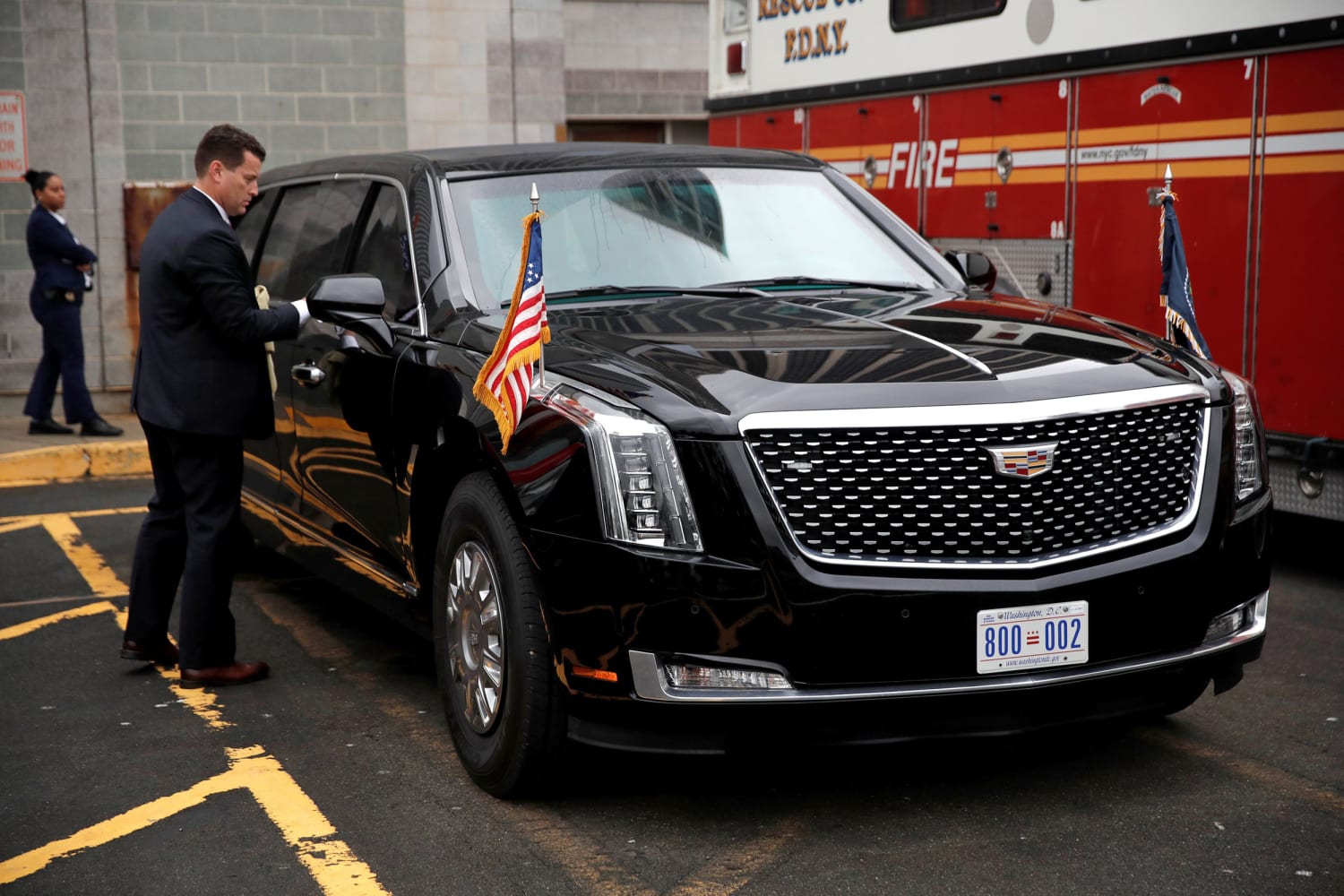
The vehicle synonymous with the American presidency is “Cadillac One,” more famously known as “The Beast.” This custom-built, armored limousine is a marvel of engineering and security, designed not for comfort or luxury in the conventional sense, but for impenetrable protection. It’s a mobile bunker, equipped with advanced defensive measures, communications systems, and life-sustaining equipment, all designed to safeguard the President against any conceivable threat.
From a branding perspective, “The Beast” is not merely Donald Trump’s car; it is the car of the President of the United States. Its massive, imposing presence, its opaque windows, and its designation as an American-made Cadillac, all contribute to a powerful brand image that transcends the occupant. It symbolizes American power, technological prowess, resilience, and the immense responsibility of the office. The brand message here is one of strength, security, and national pride, projecting an image of an institution that is steadfast and protected, irrespective of the individual leader. While Trump, known for his personal brand of opulent luxury, might have personally preferred a flashier, less utilitarian vehicle, the requirements of his office dictated a brand statement far grander and more critical than individual taste.
Security Dictates Branding
The lack of personal choice in presidential transportation highlights a crucial aspect of high-level personal branding: sometimes, the brand is dictated by external factors. For a sitting president, the need for absolute security overrides any personal preference for vehicle make, model, or even color. This isn’t a limitation but rather an intrinsic part of the presidential brand narrative. The security measures surrounding the president’s transportation communicate a powerful, albeit implicit, message: the office is of paramount importance, worth protecting with every resource available. This message reinforces the gravitas and authority of the presidential brand, extending to the leader who occupies it. The vehicle chosen for a president effectively becomes a symbol not of personal wealth or taste, but of national significance and the unwavering commitment to protecting its leadership.
Pre-Presidential Preferences: Crafting the Trump Persona
Before assuming the presidency, Donald Trump was a titan of industry, a real estate mogul, and a media personality renowned for a brand built on opulence, success, and a distinctive flamboyant style. His vehicle choices during this period were meticulously aligned with this personal brand, serving as mobile extensions of his larger-than-life persona.
The Iconography of Luxury and Status
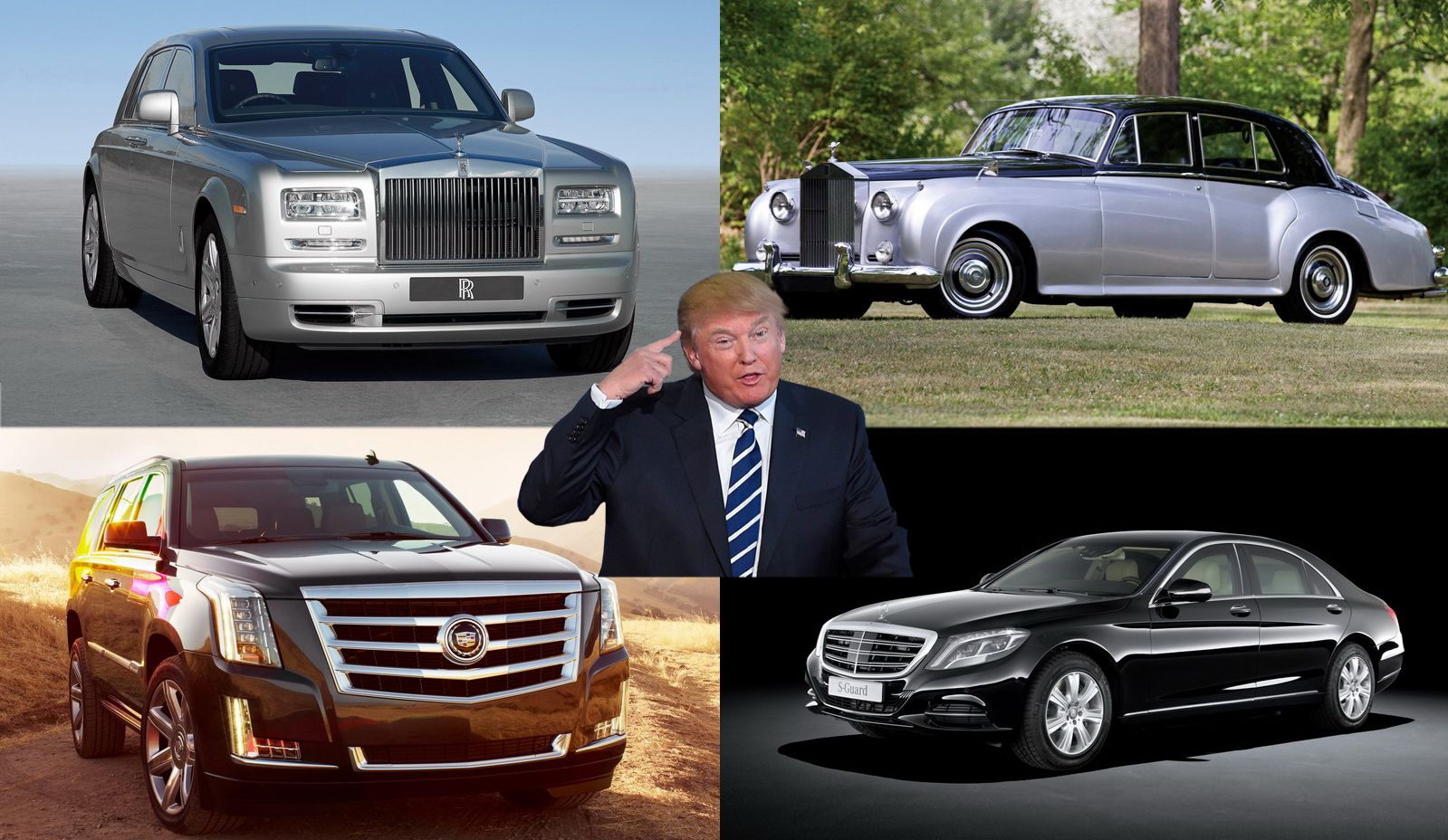
Prior to his political career, Trump was consistently associated with high-end luxury vehicles that mirrored his public image of wealth and power. He was known to favor prestigious marques such as Rolls-Royce, Mercedes-Benz, and Maybach. A Rolls-Royce Phantom, for instance, is not just a car; it is a statement of ultimate luxury, bespoke craftsmanship, and undisputed status. For Trump, owning such a vehicle reinforced his narrative as a successful businessman who not only achieved the American Dream but lived it on an extraordinary scale. These cars were not merely means of transportation; they were props in the meticulously constructed theater of his personal brand, signaling affluence and an uncompromising taste for the finest things.
The choice of a Mercedes-Benz S-Class or a Maybach further underscored this branding. These vehicles represent the pinnacle of German automotive engineering, blending unparalleled comfort, advanced technology, and understated elegance with overt luxury. They project an image of discerning taste and substantial financial capability, aligning perfectly with Trump’s self-portrayal as a shrewd and successful entrepreneur. These vehicle choices were consistent with his other visible assets, from his private jet emblazoned with his name to his lavish properties, all working in concert to create a cohesive and aspirational “Trump” brand.
Consistency in High-End Taste
The consistency of Trump’s pre-presidential automotive preferences was key to reinforcing his brand. He didn’t just occasionally drive a luxury car; he was associated with a lifestyle defined by them. This consistency sent a clear message: his success was not fleeting, and his appreciation for luxury was genuine and deeply ingrained. This aspect of his personal branding appealed to a segment of the public that admired overt displays of success and aspired to a similar level of prosperity. His cars, therefore, became more than just personal possessions; they were tangible proof points for his “make America great” philosophy, demonstrating a personal understanding of what “greatness” looked like in material terms.
Post-Presidency: The Shifting Sands of Personal Branding and Mobility
After leaving the Oval Office, former presidents, while no longer confined to “The Beast,” still operate under significant security protocols. However, the post-presidency period allows for a nuanced return to more personalized transportation choices, which continue to contribute to their evolving personal brand.
Reclaiming Personal Choice (Within Limits)
For a former president like Donald Trump, the transition away from the absolute control of the Secret Service over daily transportation means a partial return to personal vehicle selection. While security remains paramount, dictating armored vehicles and professional drivers, there is likely more room for brand-aligned choices. One might expect him to gravitate towards high-end, perhaps even custom-built, luxury sedans or SUVs that align with his established image of power and affluence. These choices would likely still emphasize security features, but with a greater emphasis on personalized luxury and comfort, reflecting a return to private citizen status, albeit one with immense public scrutiny.
The brand messaging post-presidency might focus on continuity – the idea that despite no longer holding office, the individual’s status and success endure. A return to a bespoke Rolls-Royce or a top-tier Mercedes-Benz could subtly communicate this continued influence and wealth, distinguishing him from ordinary citizens and maintaining the aspirational aspect of his personal brand.
The Enduring Narrative of Affluence and Power
Regardless of the specific model, the type of car Donald Trump is seen in continues to contribute to his post-presidency brand. It reinforces his image of continued influence and success, distinguishing him from ordinary citizens. Whether it’s an armored Cadillac Escalade or a specially modified Rolls-Royce, the sheer scale and expense of the vehicle communicate an enduring narrative of affluence and power. These vehicles serve as a constant reminder that even out of office, he remains a figure of considerable importance and means. Furthermore, these choices can be leveraged to send subtle messages about his ongoing political endeavors or business interests, symbolizing strength, resilience, and a return to his core identity as a successful and independent leader. The automotive choices, even under security constraints, continue to be an important, non-verbal communication tool for his personal brand.
Vehicles as Brand Messaging Tools: More Than Just Transport
For public figures, especially one as brand-conscious as Donald Trump, every visible element of their public life contributes to their personal brand. Automobiles are particularly potent tools in this regard, communicating complex messages without uttering a single word.
Signifiers of Status and Identity
Vehicle choices are powerful signifiers of status, wealth, and identity. A high-end luxury car immediately communicates a certain economic standing and an appreciation for quality and prestige. For Donald Trump, such vehicles have always been integral to projecting an image of undisputed success and a “winner” mentality. The brand of car he chooses aligns with the overall brand persona he cultivates – one of unapologetic luxury, self-made wealth, and uncompromising standards. This isn’t just about showing off; it’s about reinforcing a specific identity that resonates with his followers and differentiates him from others. Different car brands evoke distinct perceptions: a Rolls-Royce speaks of old-world grandeur, a Maybach of exclusive modern luxury, and an armored SUV of robust security and commanding presence. Each choice, whether active or passive, plays into the broader narrative of his brand.
The Strategic Use of Association
Public figures strategically align themselves with certain brands or types of products, including automobiles, to resonate with their target audience or reinforce their image. For Trump, aligning with top-tier luxury brands has consistently served to bolster his image as a successful businessman and a figure who embodies aspiration and achievement. Even the absence of a personally chosen car during his presidency, due to security requirements, became part of his brand narrative – underscoring the gravity and importance of the office he held, and by extension, his own significance. The vehicles associated with him, whether personally chosen or mandated, are never just about getting from point A to point B; they are carefully considered elements in the sophisticated architecture of his personal brand.
Conclusion: The Unspoken Language of Automotive Branding
The question of “what car does Donald Trump drive?” reveals a compelling narrative about the power of personal branding, particularly for public figures. Whether it’s the impenetrable “Beast” of his presidential tenure or the opulent, bespoke luxury vehicles of his pre- and post-presidency, the vehicle is never a mere mode of transport. For Donald Trump, it is a vital, often unspoken, element of his personal brand. It reflects or projects aspects of wealth, power, security, and influence, contributing to a meticulously crafted public persona.
From symbolizing the absolute authority of the presidency to embodying personal success and aspiration, the cars associated with Donald Trump serve as potent brand messaging tools. They communicate status, reinforce identity, and play a crucial role in shaping public perception. In the world of high-profile personal branding, every visible facet of a public figure’s life, down to the vehicle they are seen in, is a strategic opportunity to solidify and communicate their enduring brand narrative.
aViewFromTheCave is a participant in the Amazon Services LLC Associates Program, an affiliate advertising program designed to provide a means for sites to earn advertising fees by advertising and linking to Amazon.com. Amazon, the Amazon logo, AmazonSupply, and the AmazonSupply logo are trademarks of Amazon.com, Inc. or its affiliates. As an Amazon Associate we earn affiliate commissions from qualifying purchases.