
The Scarcity Premium: Understanding Value in Earth’s Rarest Finds
The allure of the rare is a fundamental human fascination, but in the world of minerals, rarity translates directly into extraordinary financial value. Unlike stocks or traditional commodities, the intrinsic worth of ultra-rare minerals is underpinned by an unparalleled scarcity, driven by unique geological conditions that conspire to produce them in infinitesimal quantities. This scarcity, coupled with often breathtaking beauty or unique properties, creates a potent investment proposition, attracting discerning collectors, strategic investors, and specialized industries willing to pay a premium.
At its core, the economic principle at play is a straightforward dynamic of supply and demand. For minerals that are literally found in only a handful of specimens globally, or whose deposits are so small and geographically isolated they defy conventional mining, the supply side is almost non-existent. This creates a hyper-exclusive market where demand, even from a small segment of ultra-high-net-worth individuals or highly specialized research institutions, can drive prices to astronomical levels per carat or gram.

Geological uniqueness is the primary engine of this scarcity. The formation of many rare minerals requires a precise alchemy of specific elements, immense pressure, extreme temperatures, and often, particular host rocks that only occur in very limited geological contexts. For instance, some minerals form only under conditions found deep within the Earth’s mantle and are brought to the surface through rare volcanic events, while others crystallize in highly specific hydrothermal veins or metamorphic environments. This makes their discovery akin to finding a needle in an impossibly vast haystack, transforming each verified specimen into a geological marvel with an inherent scarcity premium. Investing in these tangible, unique assets offers a distinct diversification opportunity, often serving as a hedge against market volatility due to their non-correlation with conventional financial instruments and their potential for significant appreciation over time.
Ultra-Rare Gemstones: A Niche Investment Frontier
While diamonds, rubies, and sapphires command significant market value, a pantheon of ultra-rare gemstones exists, whose extreme scarcity and often unparalleled beauty place them in a league of their own as investment-grade assets. These are not merely decorative stones; they represent geological anomalies, often valued far beyond their weight in gold, offering a compelling niche for astute investors and collectors seeking assets with significant potential for appreciation and exclusivity.
Painite: The Gemological Unicorn
For decades, Painite held the uncontested title of the world’s rarest mineral, with only two known specimens in existence by the late 1950s. While more have been discovered since, primarily in Myanmar, it remains exceptionally rare. Discovered in 1950 by British gemologist Arthur C.D. Pain, this boron-rich mineral typically presents as a reddish-brown to orange-brown hexagonal crystal. Its extreme scarcity dictates an equally extreme price point, with high-quality, faceted stones fetching upwards of tens of thousands of dollars per carat. The allure of Painite lies not just in its beauty but in its historical significance as a symbol of ultimate rarity, making it a highly coveted investment for serious gemological collectors and those aiming for a portfolio of unique, high-value tangible assets. Its market is driven by exclusivity and the sheer difficulty of obtaining a verifiable specimen, ensuring its continued status as a top-tier rarity investment.
Red Beryl: The Crimson Phantom
Known colloquially as ‘Bixbite,’ Red Beryl is an astounding mineral found in only a handful of locations worldwide, primarily the Wah Wah Mountains of Utah and the Thomas Range of Juab County, Utah. Unlike its more common cousins, emerald and aquamarine, the formation of Red Beryl requires a precise confluence of extremely rare geological conditions involving high fluorine activity and specific trace elements. The crystals are typically small, often less than 1 carat, and large, clean, faceted specimens are almost mythical. Its intense crimson hue is captivating, immediately distinguishing it from other beryls. Due to its extreme scarcity—it is estimated to be many thousands of times rarer than gold and hundreds of times rarer than diamonds—a high-quality, faceted Red Beryl can command prices exceeding $10,000 per carat, often rivaling or even surpassing the per-carat value of the finest rubies and emeralds. For investors, Red Beryl represents an opportunity to acquire an asset of singular rarity with a proven track record of value retention and appreciation, driven by its almost non-existent supply.
Grandidierite & Musgravite: The Aesthetic Investment
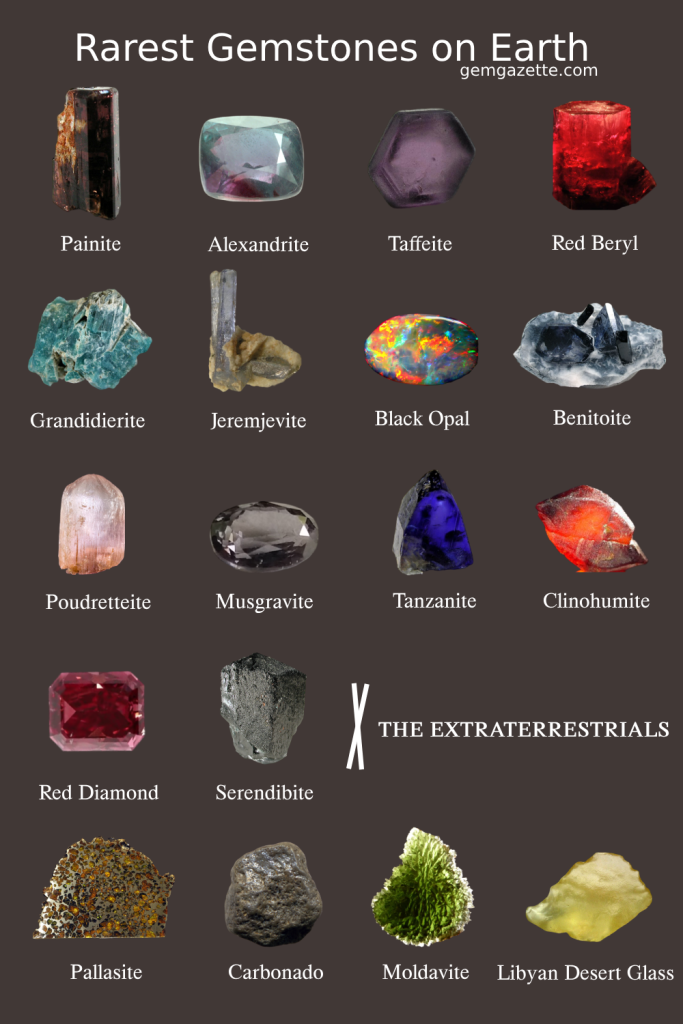
Grandidierite is a stunningly rare bluish-green to greenish-blue mineral first discovered in Madagascar, and subsequently found in very few other locations. Its striking pleochroism (appearing different colors from different angles) and limited availability make it highly sought after. Similarly, Musgravite, initially discovered in the Musgrave Ranges of South Australia, is another incredibly rare gemstone, closely related to Taaffeite. It typically presents in shades of grey-green to violet. Both Grandidierite and Musgravite are characterized by their extreme scarcity, with high-quality, faceted stones being exceptionally rare and commanding prices in the range of $20,000 to $60,000+ per carat, depending on size, clarity, and color. These gems appeal to an elite segment of collectors and investors who prioritize not only rarity but also unique aesthetic appeal. The market for these stones is thinly traded but highly specialized, offering substantial appreciation potential for those with the patience to acquire and hold such unique treasures. As global wealth increases, demand for such distinct and limited luxury assets is likely to grow, bolstering their investment narrative.
Beyond Aesthetics: Strategic Value and Scientific Rarity
Not all financially valuable rare minerals derive their worth solely from their gemological appeal. A significant portion of the rare mineral market is driven by strategic importance, scientific curiosity, or unique industrial applications. These minerals, often too small, unstable, or simply not aesthetically pleasing enough for jewelry, command high prices due to their singular properties or the geopolitical leverage their scarcity creates.
Poudretteite & Benitoite: Geographic Exclusivity and High Returns
Some minerals gain their stratospheric value not just from universal scarcity, but from being found almost exclusively in one specific geographic location. Poudretteite, for instance, was initially identified in the Poudrette quarry at Mont Saint-Hilaire, Quebec, Canada, and for decades, only a handful of specimens were known. Its rarity, often exhibiting a delicate pink hue, can push prices for a single faceted carat into the tens of thousands of dollars. Similarly, Benitoite, California’s official state gemstone, is almost exclusively found in the San Benito River headwaters in California. Its unusual blue color and strong dispersion (fire) make it a striking gem, but its extreme localization ensures its rarity and high value, with top-tier stones fetching over $5,000 per carat. For investors, these minerals represent highly concentrated value derived from their geological “fingerprint” — a single, irreplaceable source that defines their market. Acquiring well-documented specimens from these finite deposits provides exposure to an asset class whose supply is inherently capped by geography, making them excellent long-term holdings with predictable scarcity-driven appreciation.
Tanzanite: A Finite Resource with Predictable Upside
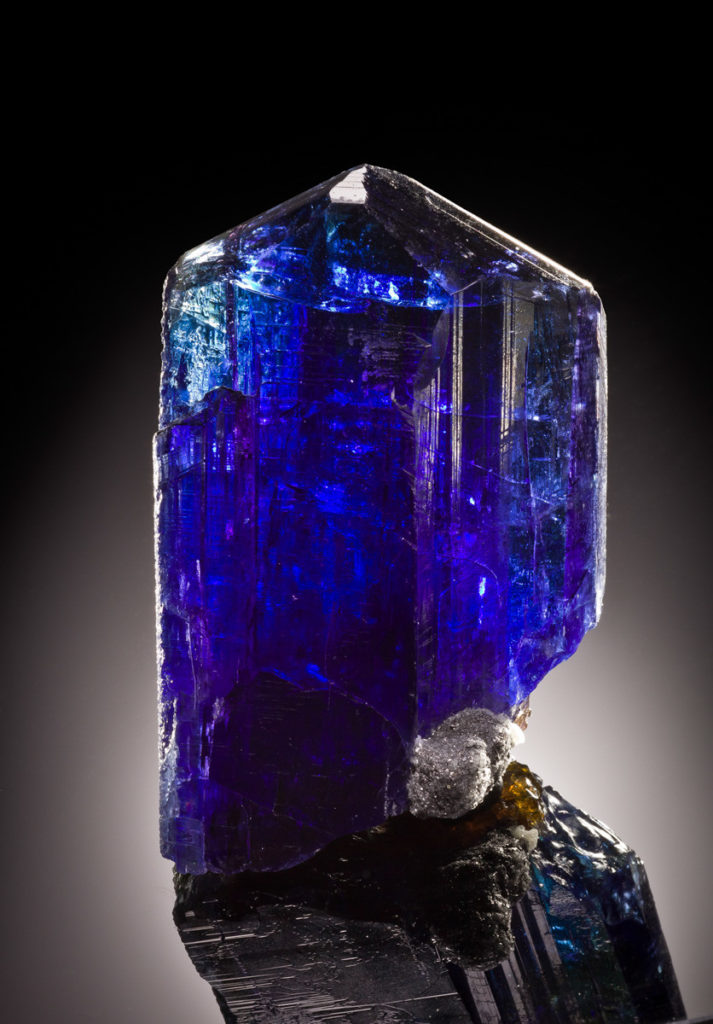
While perhaps not as astronomically rare as Painite or Red Beryl in terms of total known specimens, Tanzanite presents a compelling and unique investment case due to its single-source origin and finite lifespan. Discovered in 1967 in the Merelani Hills of northern Tanzania, it is exclusively found there. Its mesmerizing violet-blue to indigo hues, often enhanced through heat treatment, have made it incredibly popular worldwide. However, geological assessments indicate that the known deposits are projected to be depleted within the next few decades, possibly much sooner. This creates a powerful investment narrative: a beautiful, highly demanded gemstone with a clearly defined, and rapidly approaching, end to its supply. As the mines become exhausted, the value of existing, high-quality Tanzanite is expected to surge dramatically, driven by classic supply-side economics. Investors and collectors who acquire fine Tanzanite now are essentially buying into a future scarcity, positioning themselves for potentially significant capital gains as the resource dwindles and then disappears from new production entirely. It’s a tangible asset with a built-in appreciation catalyst, making it a favorite among forward-thinking gem investors.
Investing in the Ultra-Rare: Considerations for the Astute Collector
Venturing into the market for ultra-rare minerals is a specialist pursuit, distinct from mainstream financial investments, offering unique rewards alongside particular challenges. For the astute collector or investor, a strategic approach is paramount.
Market dynamics for these rarest of Earth’s treasures are characterized by extreme illiquidity and a highly fragmented structure. Unlike public stocks or commonly traded commodities, there is no centralized exchange for Painite or Red Beryl. Transactions often occur through private sales, specialized auctions, or through a limited network of highly reputable dealers and brokers. This necessitates deep due diligence and strong relationships within the gemological community.
Provenance and certification are non-negotiable pillars of value verification. Each high-value specimen must be accompanied by impeccable documentation tracing its origin, demonstrating ethical sourcing, and crucially, independent laboratory certification from world-renowned gemological institutes (e.g., GIA, Gubelin, SSEF). These reports not only confirm the mineral’s identity and natural origin but also grade its quality, color, clarity, and carat weight, directly influencing its market value. Without robust certification, even a visually stunning specimen carries significant risk, as counterfeits or misidentifications can severely erode investment value.
Liquidity challenges mean that these are primarily long-term investments. Selling a multi-million-dollar Painite or Grandidierite specimen may not happen overnight. Investors must be prepared for extended holding periods, viewing these assets as wealth preservation tools or generational transfers rather than quick trades. This requires significant capital that can be comfortably tied up for years, if not decades.
Finally, understanding the ethical considerations and maintaining market integrity is crucial. The rare mineral trade, like all high-value extractive industries, can be susceptible to issues of illicit mining or conflict minerals. Reputable dealers and certifications provide assurance that investments contribute to a responsible supply chain. For those willing to navigate these complexities, ultra-rare minerals offer not just an investment in tangible beauty and geological wonder, but also a unique opportunity to diversify a portfolio with assets whose value is intrinsically tied to the Earth’s most exceptional and finite treasures.
aViewFromTheCave is a participant in the Amazon Services LLC Associates Program, an affiliate advertising program designed to provide a means for sites to earn advertising fees by advertising and linking to Amazon.com. Amazon, the Amazon logo, AmazonSupply, and the AmazonSupply logo are trademarks of Amazon.com, Inc. or its affiliates. As an Amazon Associate we earn affiliate commissions from qualifying purchases.