
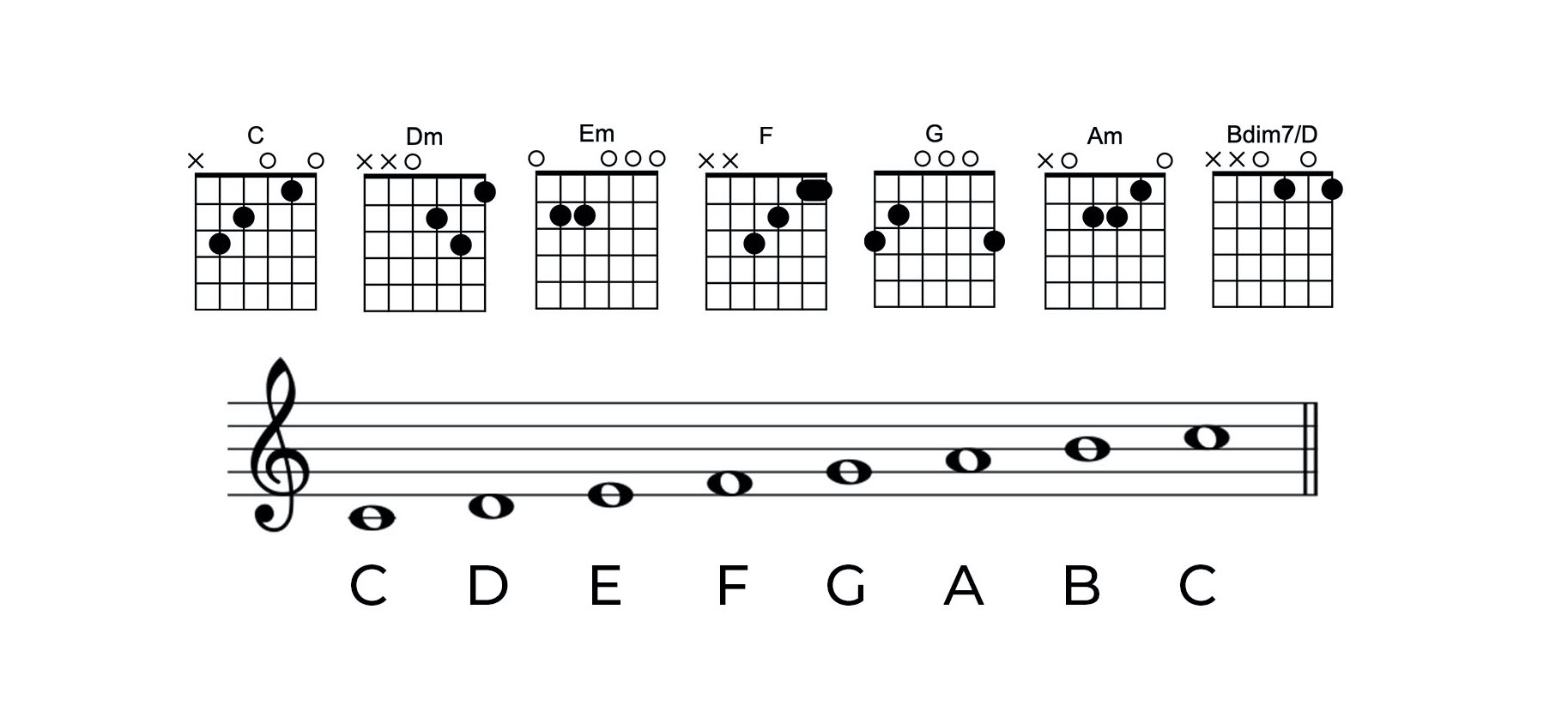
The key of C Major, often considered the foundational key in Western music theory, is a gateway for countless aspiring musicians. Understanding its diatonic chords is a critical first step for anyone learning to play an instrument, compose music, or delve deeper into harmony. The key of C Major consists of the notes C, D, E, F, G, A, and B. From this scale, seven diatonic chords are derived: C Major (C-E-G), D minor (D-F-A), E minor (E-G-B), F Major (F-A-C), G Major (G-B-D), A minor (A-C-E), and B diminished (B-D-F). While these fundamental harmonies have remained constant for centuries, the methods and tools for learning, practicing, and applying them have been revolutionized by modern technology. From interactive apps to sophisticated digital audio workstations (DAWs) and AI-powered compositional aids, technology now offers unprecedented access and efficiency for mastering the chords of C Major and beyond.
Digital Tools for Music Theory Mastery
Accessing and understanding music theory, especially foundational concepts like diatonic chords in a key such as C Major, has been significantly streamlined by a diverse array of digital tools. These software solutions transform abstract theoretical concepts into engaging, interactive experiences, accelerating the learning curve for musicians of all levels.
Interactive Music Theory Applications
Modern music theory apps serve as dynamic digital tutors, offering comprehensive lessons on scales, intervals, and chords. For the key of C Major, these applications typically feature interactive keyboards and fretboards, allowing users to visually construct and hear the C Major scale and its corresponding diatonic chords (C, Dm, Em, F, G, Am, Bdim). Features often include:
- Visual Representation: Graphic display of notes on a staff, piano roll, or guitar fretboard, making it easy to see the relationship between C, E, G for a C Major chord, for instance.
- Auditory Feedback: Instant playback of chords, enabling ear training and helping users internalize the sound of each harmony.
- Gamified Learning: Quizzes and challenges that test knowledge of chord identification, construction, and progressions, often incorporating a scoring system or progress tracking. Some apps even employ adaptive learning algorithms to tailor content based on a user’s performance.
- MIDI Integration: Many apps can connect to MIDI controllers, allowing users to play chords on a physical instrument and receive real-time feedback on accuracy and theory. This bridges the gap between digital learning and practical application.
Online Chord Libraries and Generators
The internet hosts an extensive ecosystem of online chord libraries and interactive chord generators, providing instant access to virtually any chord structure, including all voicings and inversions for the C Major diatonic chords. These platforms are invaluable for quick reference and exploration:
- Comprehensive Databases: Users can input “C major” and receive detailed diagrams for piano, guitar, ukulele, and other instruments, showing finger placements and notation. This extends to D minor, E minor, and the rest of the C Major chords.
- Transposition Capabilities: A key technological advantage is the ability to instantly transpose an entire chord progression into any key. While the focus here is C Major, understanding how to instantly see the equivalent chords in G Major or F Major, for example, is a powerful feature enabled by these digital tools.
- Chord Progression Builders: Some advanced generators allow users to drag and drop chords to create progressions, offering suggestions for harmonic movement within a specified key, ensuring musical coherence and adherence to theory principles for keys like C Major. These tools can even analyze uploaded melodies and suggest diatonic chord accompaniments.
- Export Options: Many online tools provide options to export generated chords or progressions as MIDI files, which can then be directly imported into a DAW for further manipulation and arrangement.
Composing and Arranging with Tech in C Major
Beyond foundational learning, technology dramatically enhances the creative process of composing and arranging music using chords from the key of C Major. Digital Audio Workstations (DAWs) and emerging AI-powered tools have become indispensable for modern producers and composers.
Visualizing Chords in Digital Audio Workstations (DAWs)
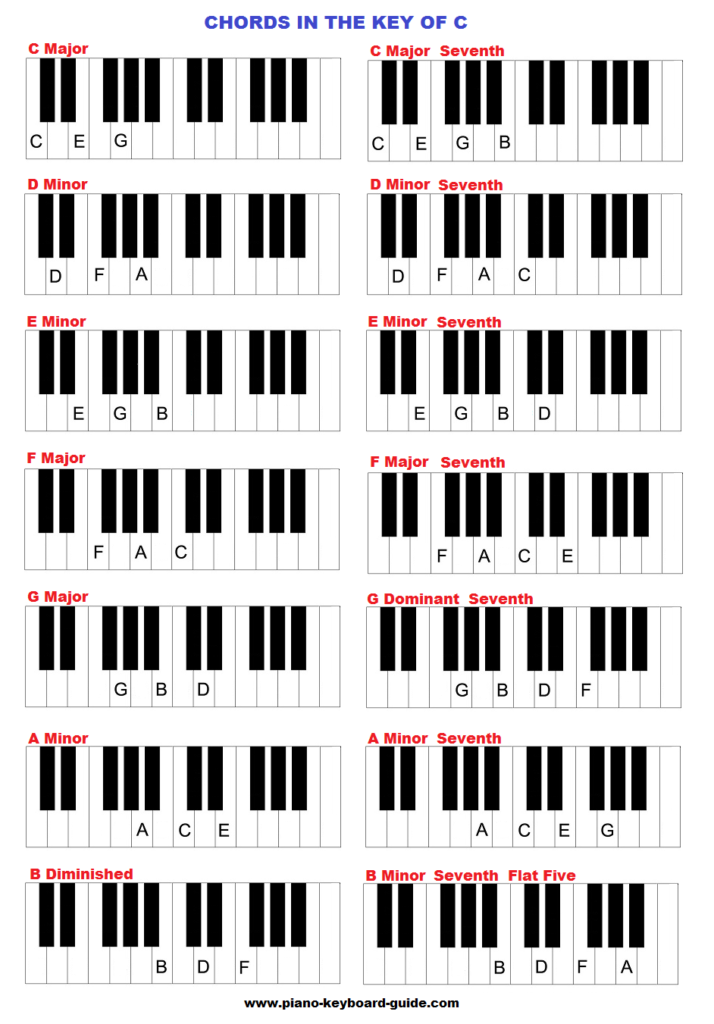
DAWs like Ableton Live, Logic Pro X, FL Studio, and GarageBand provide powerful visual and auditory environments for working with chords. Understanding how C Major, D minor, E minor, F Major, G Major, A minor, and B diminished are represented in these interfaces is crucial for efficient workflow.
- Piano Roll Editor: The piano roll is a visual representation of MIDI data, where each note (e.g., C3, E3, G3 for a C Major chord) appears as a rectangular block. Users can easily drag, resize, and quantize these blocks to experiment with chord voicings, inversions, and rhythmic placements within the C Major key. The visual feedback makes it intuitive to see if a chord is diatonic to C Major or if it introduces an accidental.
- MIDI Effects and Generators: Many DAWs offer built-in MIDI effects that can instantly transform single notes into full chords. For instance, a “Chord” MIDI effect can be configured to automatically generate a C Major triad (C-E-G) from a single C note input, or an E minor triad (E-G-B) from an E note, facilitating rapid prototyping of progressions within the C Major framework. Advanced plugins can even suggest diatonic chords based on the key signature set within the project.
- Session View and Arranger View: These dual views in DAWs like Ableton Live allow composers to loop chord progressions (e.g., C-F-G-C) in real-time, experiment with different instrument sounds, and quickly arrange sections of a song built around the C Major key. The non-linear workflow encourages creative exploration without committing to a linear timeline immediately.
AI-Powered Chord Progression Tools
Artificial intelligence is rapidly transforming music composition, offering sophisticated assistance for generating and refining chord progressions, particularly within specific key constraints like C Major.
- Algorithmic Harmony Generation: AI tools can analyze existing melodies or user-defined parameters (e.g., desired mood, genre, and key of C Major) to suggest musically appropriate diatonic chord progressions. These algorithms leverage vast databases of existing music to identify common and effective harmonic movements, providing fresh ideas or refining conventional patterns.
- Automated Accompaniment: Some AI platforms can automatically generate full backing tracks, including bass lines, drums, and pads, based on a simple chord input sequence in C Major. This allows solo musicians or producers to quickly create a rich musical context for their melodies without extensive manual programming.
- Creative Inspiration and Overcoming Blocks: For composers struggling with writer’s block, AI tools can offer novel harmonic interpretations of a simple theme, suggesting variations of C Major, D minor, or F Major chords, or guiding users toward less obvious but still diatonic progressions. This collaborative approach between human creativity and algorithmic power accelerates the compositional process.
Enhancing Practice and Performance of C Major Chords
Technology extends its utility to the practical aspects of learning and performing the chords in C Major, offering tools that enhance precision, foster good habits, and provide accessible practice environments.
Virtual Instruments and Practice Platforms
The availability of high-quality virtual instruments and comprehensive online practice platforms has made learning chords in C Major more accessible than ever before, irrespective of access to physical instruments.
- Software Synthesizers and Pianos: Countless software synthesizers and virtual pianos offer realistic sounds and visual interfaces that mirror physical instruments. These tools allow users to practice C Major chords, their voicings, and inversions on a computer or tablet, providing immediate auditory feedback without the need for an acoustic piano or guitar.
- Interactive Learning Platforms: Services like Yousician, Flowkey, and Simply Piano provide guided lessons that teach chords in C Major through interactive exercises. These platforms often use microphone input or MIDI connections to detect notes played on an actual instrument, offering real-time feedback on accuracy, timing, and finger placement for each chord. This “gamified” approach keeps learners engaged and motivated.
- Augmented Reality (AR) Tools: Some innovative platforms are beginning to integrate AR to overlay visual cues directly onto a physical instrument (e.g., highlighting which keys to press for a C Major chord on a piano keyboard), providing an immersive and intuitive learning experience.
Smart Metronomes and Tuners
While seemingly simple, digital metronomes and tuners are fundamental technological aids for mastering the chords of C Major with precision.
- Advanced Metronomes: Digital metronomes offer far more than just a click track. Many apps provide visual cues, customizable rhythm patterns, tap tempo functions, and even the ability to gradually increase tempo over time. This is invaluable for practicing smooth and accurate chord changes between C, F, and G, for example, building rhythmic consistency.
- Precision Tuners: Accurate tuning is paramount for chords to sound harmonious. Digital tuners, whether standalone gadgets or smartphone apps, use sophisticated algorithms to analyze pitch with extreme precision, ensuring that an instrument is perfectly in tune before playing any of the C Major chords. This eliminates external variables and allows the musician to focus solely on their playing technique and chord quality.

Beyond C Major: Scaling Your Tech-Enhanced Learning
The technological advancements applied to learning and utilizing chords in the key of C Major are not isolated to this single key. The same digital tools and methodologies provide a robust framework for understanding and mastering music theory across the entire spectrum of keys and harmonic concepts. Interactive apps designed for C Major effortlessly adapt to D Major, Eb minor, or any other key, offering instantaneous transposition, visual guides, and auditory examples for diatonic chords, scales, and modes.
DAWs, with their powerful MIDI capabilities and AI integration, allow composers to transpose entire compositions with a few clicks, instantly rendering a C Major progression into G Major or A minor while preserving the harmonic relationships. This efficient manipulation of musical data is a hallmark of digital music production. Furthermore, the practice habits cultivated with smart metronomes, virtual instruments, and feedback-driven platforms for C Major translate directly to the challenges of other keys, building a consistent and effective learning regimen. Ultimately, technology serves as an indispensable accelerator, democratizing access to complex musical knowledge and empowering musicians to explore the vast landscape of harmony with unprecedented ease and insight.
aViewFromTheCave is a participant in the Amazon Services LLC Associates Program, an affiliate advertising program designed to provide a means for sites to earn advertising fees by advertising and linking to Amazon.com. Amazon, the Amazon logo, AmazonSupply, and the AmazonSupply logo are trademarks of Amazon.com, Inc. or its affiliates. As an Amazon Associate we earn affiliate commissions from qualifying purchases.