
In an increasingly connected and technologically advanced world, the infrastructure that underpins our digital lives often goes unnoticed. From towering cellular masts to critical broadcasting antennas, many of these structures rely on fundamental engineering principles to stand tall and function reliably. Among the most crucial, yet often overlooked, components in this physical architecture are guy wires. These tensioned cables are not merely supporting elements; they are integral to the stability, safety, and operational longevity of a vast array of technological installations, ensuring the seamless flow of data and communication that defines modern society.
The Unsung Heroes of Structural Stability in Tech Infrastructure
Guy wires are essentially tensioned cables designed to provide additional stability to a free-standing structure, preventing it from toppling, swaying, or experiencing excessive deformation under load. While their application extends across various industries, their role in supporting critical technology infrastructure is paramount. Without them, many of the communication systems we depend on daily would be impractical, unsafe, or impossible to construct at the required heights.

Defining Guy Wires
At their core, a guy wire is a strand of cable, typically made from high-strength steel (galvanized, stainless, or aluminized for corrosion resistance), that is anchored at one end to the ground or a stable structure and attached at the other end to the mast, tower, or pole it supports. The “guy” in guy wire comes from the historical use of “guy” as a verb meaning to guide or steady with a rope. These wires are always under tension, pulling against the structure in multiple directions to counteract forces such as wind, seismic activity, and the inherent instability of tall, slender objects. The interplay of multiple guy wires, often arranged in radial patterns around the base of a structure at different heights, creates a triangulated system that distributes external loads and maintains the structure’s vertical alignment.
The Core Principle: Tension and Triangulation
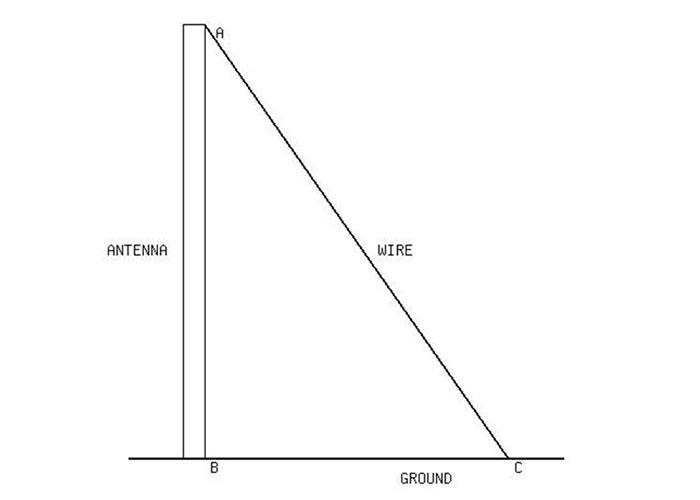
The effectiveness of guy wires stems from the engineering principles of tension and triangulation. When a structure like a radio mast is subjected to lateral forces (e.g., strong winds), it tends to bend or sway. Guy wires, being pre-tensioned, resist this movement by transferring these lateral forces into tensile loads along their length, down to their anchor points. This forms a series of rigid triangles between the mast, the guy wire, and the ground, significantly increasing the structure’s stiffness and stability.
The number of guy wires, their angle of attachment, their material properties, and their initial tension are all meticulously calculated by engineers. A single guy wire provides stability in only one direction; therefore, structures are typically supported by multiple sets of guys, often in groups of three or four, spaced symmetrically around the mast at various elevations. This multi-directional tensioning system creates an incredibly robust and stable framework, essential for maintaining the precise alignment of antennas and sensors that require minimal deviation from their intended orientation.
Where Technology Meets Engineering: Applications in the Digital Age
The omnipresent nature of guy wires in tech infrastructure highlights their critical role in enabling the digital age. From our mobile phones to global positioning systems, countless technologies rely on the stable structures that guy wires help maintain.
Telecommunications and Broadcast Infrastructure
Perhaps the most visible application of guy wires in technology is in supporting telecommunication towers and broadcast masts. These towering structures, often hundreds of feet high, are designed to extend the reach of cellular networks, radio, and television signals. The antennas mounted at their pinnacles must remain remarkably stable and precisely oriented to ensure optimal signal transmission and reception.
- Cellular Masts: While many modern cellular towers are self-supporting lattice structures, countless monopole and guyed mast designs are still in active use, especially in rural areas or for specific frequency bands. Guy wires keep these masts vertical, counteracting wind loads that could otherwise cause swaying and disrupt service or even lead to catastrophic failure.
- Radio and Television Broadcast Towers: These are often among the tallest structures in the world, requiring extensive guy wire systems. The immense height is crucial for maximizing broadcast range. Guy wires manage the considerable forces acting on these structures, ensuring uninterrupted broadcasting and safeguarding multi-million dollar transmitting equipment.
- Microwave Relays: Point-to-point microwave communication often uses dishes mounted on tall masts. Precise alignment is critical for these directional links, making guy wire stability indispensable for reliable data transmission over long distances.
Renewable Energy Support Systems

While less common for the main turbine structures themselves, guy wires play a significant role in meteorological (met) masts used in wind energy projects. Before a wind farm is built, met masts are erected to gather crucial wind data at various heights. These slender, temporary structures are often heavily guyed to withstand high winds and provide accurate readings, which inform the design and placement of actual wind turbines. Accurate data collection is a technological imperative for efficient renewable energy development.
Temporary and Expeditionary Tech Deployments
In scenarios requiring rapid deployment of communication or sensing technologies, guy wires are invaluable. Disaster relief efforts, military operations, and scientific expeditions often utilize portable mast systems for satellite communication, local area networks, or specialized sensor arrays. These systems frequently incorporate guy wires for quick and secure setup in diverse environments.
- Emergency Communication: After natural disasters, existing infrastructure may be compromised. Guyed portable masts can quickly establish temporary communication hubs, allowing first responders to coordinate efforts and affected communities to connect.
- Field Research: Scientists conducting environmental monitoring or astronomical observations in remote locations rely on guyed masts to support sensors, cameras, or small telescopes, ensuring stability for accurate data collection without the need for heavy, permanent foundations.
Key Engineering Considerations for Tech Infrastructure
The design, installation, and maintenance of guy wire systems for technological infrastructure are governed by stringent engineering principles to ensure maximum safety, reliability, and longevity. The stakes are high: failure of a guy wire system can lead to the collapse of an entire tower, resulting in significant economic loss, disruption of critical services, and potential danger to life.
Material Science and Durability
The choice of material for guy wires is paramount. High-strength steel is the standard, often galvanized with zinc, aluminized, or coated with other corrosion-resistant materials to withstand harsh environmental conditions (rain, ice, salt spray, UV radiation) over decades. For extremely long lifespans or specific environments, stainless steel is sometimes used, though at a higher cost. The cables themselves are constructed from multiple strands twisted together, providing both strength and some degree of flexibility. The end fittings, thimbles, and clamps used to attach the guy wires to the mast and anchor points are equally critical, designed to match or exceed the strength of the wire itself and resist fatigue over time.
Load Bearing and Environmental Factors
Engineers must account for a wide range of forces that guy wire systems will encounter:
- Wind Loads: This is often the most significant external force. Calculations consider wind speed, direction, the height and shape of the structure, and the local terrain. Icing can drastically increase the surface area and weight, amplifying wind load.
- Weight of the Structure and Equipment: The dead load of the mast, antennas, cables, and other mounted equipment must be factored into the overall stability analysis.
- Seismic Activity: In earthquake-prone regions, guy wire systems must be designed to absorb and distribute seismic energy, preventing resonant frequencies that could destabilize the tower.
- Ice and Snow Loading: Accumulation of ice and heavy snow can add considerable weight and increase the surface area exposed to wind, demanding robust design.
- Tensioning: Proper initial tensioning is critical. Too little tension can lead to excessive sway; too much can overstress the wires and the mast. Specialized tensioning devices and procedures are used during installation to achieve precise force distribution.
Installation Precision and Maintenance
The integrity of a guy wire system is heavily dependent on precise installation and ongoing maintenance. Anchor points, typically concrete foundations embedded deep into the ground, must be meticulously engineered to resist pull-out forces. The attachment points on the mast must be robust and free from sharp edges that could damage the cables.
Regular inspections are mandatory for guyed structures. Maintenance crews check for:
- Corrosion: Rust and degradation of the guy wires, turnbuckles, and anchor components.
- Strand Damage: Broken or frayed strands in the cable.
- Proper Tension: Using specialized tools to verify that guy wires maintain their engineered tension. Adjustments are often necessary due to temperature changes, settlement of foundations, or material creep.
- Fatigue: Wear and tear at attachment points, especially where the guy wire flexes.
- Grounding and Lightning Protection: Ensuring that guy wires are properly integrated into the tower’s lightning protection and grounding system, vital for safeguarding sensitive electronic equipment.
The continuous vigilance in maintaining these systems is a testament to their critical role in the reliability of our modern technological infrastructure, reminding us that even the most advanced digital networks rely on robust physical foundations.
aViewFromTheCave is a participant in the Amazon Services LLC Associates Program, an affiliate advertising program designed to provide a means for sites to earn advertising fees by advertising and linking to Amazon.com. Amazon, the Amazon logo, AmazonSupply, and the AmazonSupply logo are trademarks of Amazon.com, Inc. or its affiliates. As an Amazon Associate we earn affiliate commissions from qualifying purchases.