
In the intricate world of molecular engineering and chemical synthesis, certain foundational concepts underpin vast areas of technological innovation. Among these, the “alpha hydrogen” stands out as a deceptively simple yet profoundly significant structural element. While the term itself might sound like a relic from a chemistry textbook, understanding and manipulating alpha hydrogens is not merely an academic exercise; it is a critical leverage point for developing new pharmaceuticals, designing advanced materials, improving industrial catalysts, and even advancing artificial intelligence in chemical research. Far from being a niche chemical detail, the reactivity of alpha hydrogens is a cornerstone for numerous technologies that shape our modern world.
The Fundamental Chemical Reactivity Driving Technological Advancement
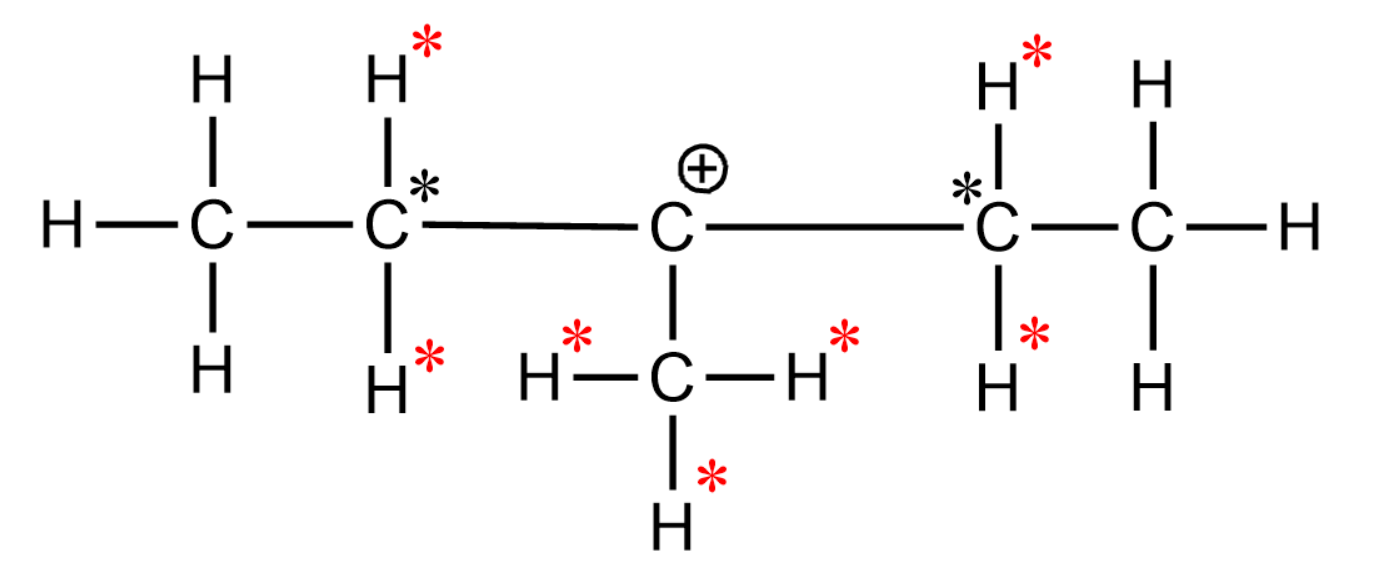
At its core, an alpha hydrogen refers to a hydrogen atom bonded to an “alpha carbon.” An alpha carbon is defined as the carbon atom directly adjacent to a functional group, such as a carbonyl group (C=O), a nitrile (C≡N), or an imine (C=N). The proximity of this alpha carbon to an electron-withdrawing functional group significantly influences the properties of the attached alpha hydrogens. They become notably more acidic and, consequently, more reactive than other hydrogen atoms in the molecule. This heightened reactivity makes alpha hydrogens prime targets for abstraction, leading to the formation of carbanions or enolates – highly versatile intermediates in organic synthesis.
Defining Alpha Hydrogens and Their Significance
The enhanced acidity and reactivity of alpha hydrogens stem from the ability of the adjacent functional group to stabilize the negative charge that forms when the alpha hydrogen is removed. For instance, in a ketone or aldehyde, the carbonyl oxygen draws electron density, making the alpha-carbon slightly positive. When an alpha hydrogen is removed by a base, the resulting carbanion can be stabilized through resonance with the carbonyl group, forming an enolate. This enolate is a nucleophile, meaning it seeks positive centers, making it highly valuable in forming new carbon-carbon bonds. This fundamental principle is exploited across a spectrum of technological applications, enabling the controlled construction of complex molecular architectures.
Role in Core Organic Reactions for Industrial Synthesis
The unique reactivity of alpha hydrogens drives a host of named reactions crucial for industrial-scale synthesis. Reactions like the aldol condensation, Claisen condensation, malonic ester synthesis, and acetoacetic ester synthesis all rely on the precise manipulation of alpha hydrogens to form new carbon-carbon bonds and create complex molecules from simpler precursors. These reactions are not just laboratory curiosities; they are the workhorses of chemical manufacturing, producing everything from bulk chemicals and specialty polymers to flavorings and fragrances. The efficiency and selectivity of these processes, often dictated by how alpha hydrogens are engaged, directly impact manufacturing costs and environmental footprints, pushing the boundaries of sustainable industrial technology.
Computational Chemistry: Unlocking Alpha Hydrogen Insights with AI and Software
The complexity of organic reactions, particularly those involving intricate molecular structures and multiple potential reaction pathways, often surpasses the capabilities of traditional experimental methods alone. This is where advanced computational chemistry, powered by artificial intelligence (AI) and sophisticated software, plays a transformative role in understanding and exploiting alpha hydrogen chemistry.
Predictive Modeling of Reaction Pathways
AI and machine learning algorithms are now being trained on vast datasets of chemical reactions, enabling them to predict reaction outcomes, identify optimal catalysts, and even suggest novel synthetic routes with unprecedented accuracy. For reactions involving alpha hydrogens, these computational tools can model transition states, calculate activation energies, and evaluate steric and electronic factors that influence reactivity and selectivity. By simulating how different bases interact with alpha hydrogens, or how various substituents affect their acidity, researchers can virtually screen countless reaction conditions, drastically reducing the time and resources required for experimental trial-and-error. This predictive power is a game-changer for process optimization and the discovery of entirely new chemical transformations.
Accelerating Drug Discovery and Material Design
In pharmaceutical development, the precise construction of complex organic molecules is paramount. Many active pharmaceutical ingredients (APIs) feature intricate stereochemistry and multiple functional groups, making their synthesis a significant challenge. Computational modeling of alpha hydrogen reactivity helps medicinal chemists design synthetic routes that are not only efficient but also highly selective, producing the desired enantiomer (mirror-image form) of a drug molecule. Similarly, in materials science, understanding how alpha hydrogens participate in polymerization or cross-linking reactions is vital. AI-driven simulations can predict the properties of novel polymers or composite materials based on their molecular structure, accelerating the design of everything from high-performance plastics to advanced electronic components.
Alpha Hydrogens in Advanced Materials and Nanotechnology
The ability to precisely control molecular architecture is fundamental to engineering advanced materials with specific functionalities. Alpha hydrogens, through their versatile reactivity, are integral to this control, influencing everything from the strength of polymers to the efficiency of catalytic systems.
Tailoring Polymer Properties and Performance
Polymers, the backbone of countless modern technologies, derive their diverse properties from their molecular structure. Alpha hydrogens play a role in several key areas of polymer science. In some polymerization processes, the abstraction of alpha hydrogens can lead to branching or cross-linking, significantly altering the material’s mechanical strength, thermal stability, and flexibility. For instance, in the development of advanced elastomers or hydrogels, controlled cross-linking via alpha-carbon chemistry is essential for achieving desired elasticity and water absorption capabilities. Furthermore, alpha hydrogen reactivity can be exploited to graft functional groups onto polymer backbones, creating smart materials that respond to external stimuli or possess enhanced surface properties for applications in biomedicine or electronics.
Enhancing Catalysis for Sustainable Technologies
Catalysis is the engine of modern chemical industry, enabling faster, more efficient, and often more selective reactions. Alpha hydrogens are central to many catalytic cycles, particularly in processes aimed at green chemistry and sustainable energy. For example, in biomass conversion, the controlled cleavage and formation of carbon-carbon bonds, often involving alpha hydrogen chemistry, are critical for transforming renewable plant matter into biofuels or platform chemicals. In heterogeneous catalysis, where reactions occur on the surface of solid catalysts, the interaction of alpha hydrogens with catalytic sites can dictate reaction pathways, selectivity, and overall efficiency. Designing catalysts that precisely activate or abstract alpha hydrogens is a significant area of research aimed at developing more energy-efficient and environmentally friendly industrial processes, including those for hydrogen production and carbon capture.
Biotechnology and the Precision of Molecular Engineering
The natural world, through enzymatic processes, showcases an exquisite level of control over chemical reactions, often mirroring the principles of alpha hydrogen reactivity but with unparalleled precision and specificity.
Enzymatic Reactions and Bio-Based Synthesis
Enzymes, nature’s catalysts, frequently employ mechanisms that mimic the abstraction and subsequent reactions of alpha hydrogens. Many biochemical pathways involve the formation of enolate-like intermediates, facilitated by enzyme active sites that precisely orient and activate specific alpha hydrogens. This bio-based approach to synthesis offers tremendous potential for green chemistry, allowing for reactions to occur under mild conditions (aqueous solutions, ambient temperatures) with high stereo- and regioselectivity. Biotechnologists are leveraging this understanding to engineer enzymes with enhanced or novel reactivities, enabling the sustainable production of fine chemicals, pharmaceuticals, and biofuels, minimizing waste and energy consumption compared to traditional synthetic routes.
The Future of Alpha Hydrogen Manipulation in Life Sciences
The ability to precisely control molecular transformations involving alpha hydrogens is also vital for emerging areas in life sciences. This includes targeted drug delivery systems, where the degradation or activation of a drug molecule might be triggered by specific pH changes or enzymatic activity designed to interact with particular alpha hydrogen sites. Furthermore, in the field of synthetic biology, the construction of novel metabolic pathways or the development of bio-inspired materials often relies on mimicking or engineering reactions that harness the inherent reactivity of alpha hydrogens. As our understanding deepens, so too will our capacity to engineer life at the molecular level, unlocking new frontiers in medicine, diagnostics, and sustainable biomanufacturing.
The Economic and Innovative Impact of Alpha Hydrogen Mastery
The sophisticated understanding and technological application of alpha hydrogens translate directly into significant economic impact and continuous innovation across diverse industries. From the initial stages of research to large-scale production, mastery over this fundamental chemical concept fuels progress and creates value.
Driving Pharmaceutical Innovation
The pharmaceutical industry, a multi-trillion-dollar sector, heavily relies on the precise synthesis of complex organic molecules. Alpha hydrogen chemistry is central to the development and manufacturing of a vast array of life-saving drugs. Efficient, selective, and scalable synthetic routes, often leveraging alpha hydrogen reactivity, directly influence drug development costs, time-to-market, and ultimately, patient access to essential medicines. Breakthroughs in understanding and manipulating alpha hydrogens enable the creation of novel drug candidates and more effective production methods for existing ones, driving sustained innovation and competitiveness in this critical sector.

Advancing Sustainable Manufacturing Processes
Beyond pharmaceuticals, the principles governing alpha hydrogens are pivotal for advancing sustainable manufacturing across the chemical industry. By enabling more selective reactions, reducing byproduct formation, and facilitating lower energy consumption in synthesis, the optimized use of alpha hydrogen chemistry contributes directly to green chemistry initiatives. This translates into reduced environmental impact, lower waste disposal costs, and increased resource efficiency, aligning technological advancement with global sustainability goals. The continuous pursuit of cleaner, more efficient synthesis routes rooted in fundamental reactivity such as that of alpha hydrogens ensures that technology not only progresses but does so responsibly.
aViewFromTheCave is a participant in the Amazon Services LLC Associates Program, an affiliate advertising program designed to provide a means for sites to earn advertising fees by advertising and linking to Amazon.com. Amazon, the Amazon logo, AmazonSupply, and the AmazonSupply logo are trademarks of Amazon.com, Inc. or its affiliates. As an Amazon Associate we earn affiliate commissions from qualifying purchases.