
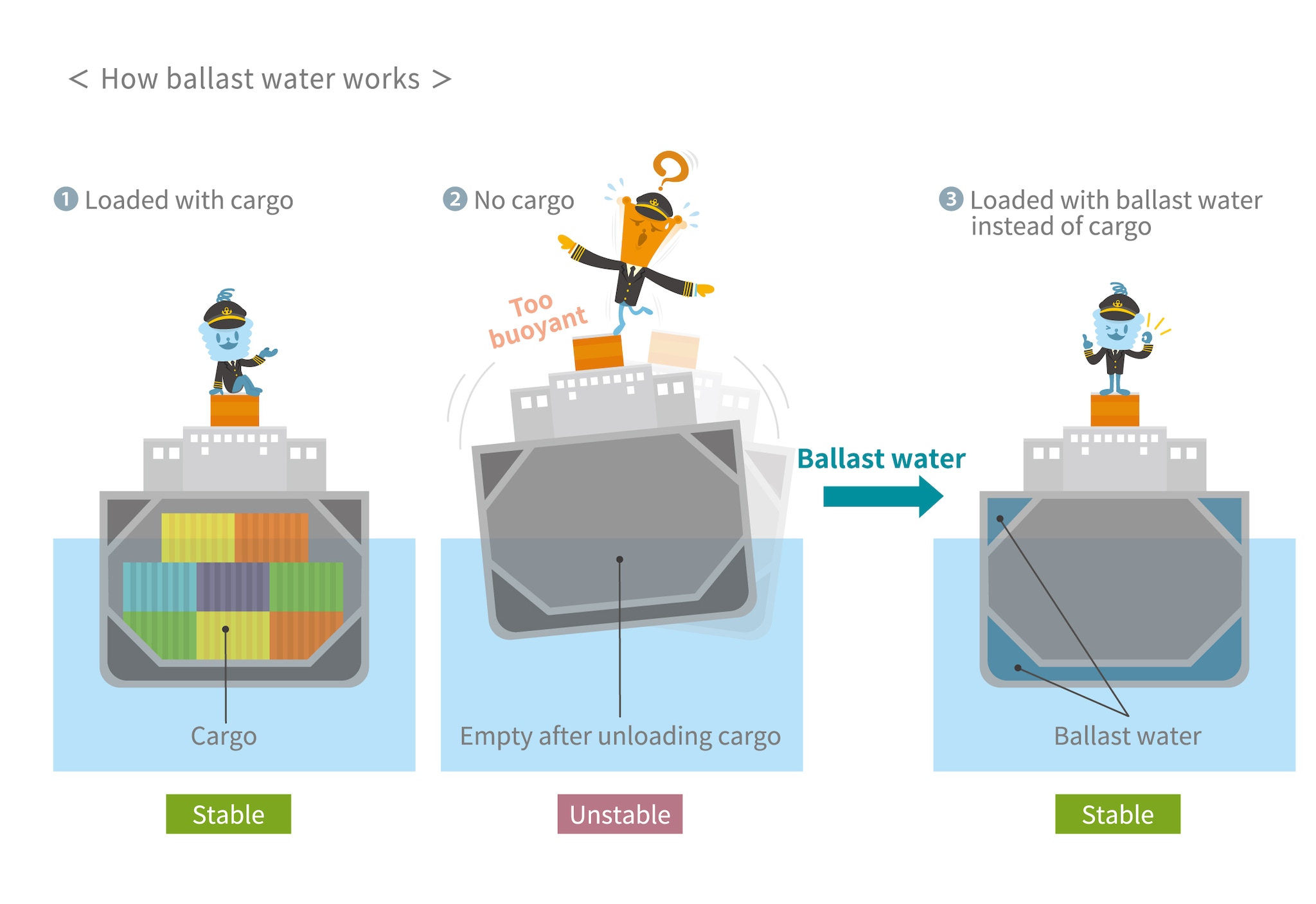
In its most literal sense, a ballast is a heavy material carried by a ship or other vehicle to improve stability. It counteracts external forces, ensuring balance and preventing capsizing or excessive sway. While the image of a ship’s keel laden with stone or iron is potent, the concept of ballast extends far beyond maritime engineering, finding a crucial, often underestimated, role in the realm of personal and business finance. Here, a ballast serves an equally vital function: to provide stability, mitigate risk, and anchor a financial portfolio against the turbulent waves of market volatility and economic uncertainty.

The Concept of Ballast in Finance
The financial world, much like the open sea, is inherently unpredictable. Markets fluctuate, economic tides shift, and unforeseen events can rock even the most robust investment strategies. This is precisely where the principle of financial ballast becomes indispensable.
Beyond the Maritime Metaphor
While the visual of a ship’s ballast is helpful, its application in finance is more nuanced. It’s not about dead weight; rather, it’s about strategically allocated assets designed to absorb shocks, preserve capital, and provide a stable foundation. These assets typically exhibit lower volatility, offer consistent (albeit often modest) returns, and tend to perform defensively when other parts of a portfolio—like growth stocks—are experiencing declines. They are the financial stabilizers that prevent your portfolio from being tossed uncontrollably by market storms.
The Core Purpose: Stability and Resilience
The primary objective of financial ballast is two-fold: stability and resilience. Stability implies a reduced propensity for dramatic swings in value, providing a sense of security and predictability. Resilience refers to the ability of the portfolio to withstand significant downturns, limiting losses and enabling a quicker recovery once market conditions improve. Without adequate ballast, a portfolio might chase high returns during booms but risk devastating losses during busts, jeopardizing long-term financial goals.
Identifying Your Financial Ballast Assets
Building a financially stable portfolio requires a clear understanding of which assets serve as effective ballast. These are not always the most exciting or highest-returning investments, but their value lies in their foundational strength and risk-mitigation properties.
Fixed-Income Securities: Bonds as Bedrock
One of the most classic forms of financial ballast is fixed-income securities, predominantly bonds. Government bonds (like U.S. Treasuries) and high-quality corporate bonds are renowned for their relative safety and predictable income streams. While their returns might be lower than equities, their principal stability and inverse relationship with stock markets during downturns make them excellent shock absorbers. When stocks plunge, investors often flock to bonds, driving up their prices and offering a counterbalance to equity losses. The longer the bond’s duration, the more sensitive it is to interest rate changes, so a blend of short- to medium-duration high-quality bonds often provides the optimal balance of stability and liquidity.
Cash and Cash Equivalents: Immediate Stability
While not typically considered an “investment” in the growth sense, a prudent allocation to cash and cash equivalents (such as money market accounts, high-yield savings accounts, or short-term certificates of deposit) serves as immediate ballast. This liquid reserve offers several benefits: it provides emergency funds, prevents forced selling of other assets during market downturns, and positions an investor to capitalize on opportunities when asset prices become attractive. It acts as a ready reserve, ensuring that short-term needs don’t disrupt long-term strategies.
Real Estate and Tangible Assets: Long-Term Anchors
For some investors, certain forms of real estate or tangible assets can also function as long-term ballast. Investment properties, particularly those generating consistent rental income, can offer diversification away from financial markets and provide a hedge against inflation. While less liquid than bonds or cash, well-chosen real estate can represent a significant, relatively stable asset class that appreciates over the long term, adding a heavy, grounded component to a broader portfolio. Other tangible assets, like precious metals (gold), are often seen as safe havens during extreme economic uncertainty, offering a different kind of ballast against systemic risks.
Diversified Defensive Equities: Stability Within Growth
Even within the equity market, certain sectors or types of stocks can offer a degree of ballast. These are often referred to as defensive stocks or “value” stocks—companies that provide essential goods and services (utilities, consumer staples, healthcare) and tend to perform more consistently regardless of the economic cycle. While still subject to market fluctuations, they typically exhibit lower volatility than growth stocks and often pay dividends, providing a small but steady income stream that contributes to overall portfolio stability. Diversification across these sectors, possibly through ETFs or mutual funds, can embed a layer of stability within the equity portion of a portfolio.
The Strategic Role of Ballast in Portfolio Construction
The presence of ballast isn’t merely about having certain assets; it’s about the strategic role they play in the overall architecture of a financial plan. It influences risk management, capital preservation, and the ability to pursue growth opportunities effectively.
Mitigating Volatility and Downside Risk
The most evident function of ballast is its ability to temper the overall volatility of a portfolio. By including assets that are less correlated with, or even inversely correlated to, more volatile assets like growth stocks, the overall portfolio experiences smoother returns. During a market downturn, the ballast assets help cushion the fall, reducing the percentage loss and providing psychological comfort to investors. This mitigation of downside risk is crucial for long-term compounding, as avoiding large losses is often more impactful than chasing exceptionally high gains.
Facilitating Rebalancing and Opportunity Seizure
Ballast assets enable a disciplined rebalancing strategy. When growth assets perform well, their proportion in the portfolio increases. A strategic rebalance involves selling some of the outperforming growth assets and buying more of the underperforming ballast assets, bringing the portfolio back to its target allocation. Conversely, during a market correction when growth assets are cheap, the ballast can be trimmed to buy more growth, effectively buying low. This systematic approach, facilitated by the stability of ballast, forces investors to “sell high and buy low,” a cornerstone of successful long-term investing.
Supporting Long-Term Financial Goals
Ultimately, the goal of financial ballast is to help investors achieve their long-term financial objectives. Whether saving for retirement, a child’s education, or a significant purchase, a stable portfolio reduces the risk of derailing these plans due to unforeseen market events. It ensures that capital is preserved, allowing for consistent progress towards goals rather than suffering setbacks that require years to recover from. This foundational stability provides peace of mind and the confidence to stay invested through various market cycles.
Tailoring Your Ballast to Your Financial Journey
The optimal amount and type of financial ballast are not one-size-fits-all. They depend heavily on an individual’s unique circumstances, risk tolerance, and time horizon.
Age and Time Horizon
Generally, younger investors with a longer time horizon until retirement might require less ballast, as they have more time to recover from market downturns and can afford to take on more risk for higher growth potential. Conversely, investors nearing or in retirement typically require a significantly higher allocation to ballast assets. Their shorter time horizon means less capacity to absorb large losses, making capital preservation and income generation paramount.
Risk Tolerance and Investment Philosophy
An individual’s psychological comfort with market fluctuations plays a critical role. Those with a low risk tolerance will naturally lean towards a higher proportion of ballast assets to minimize stress and prevent impulsive, detrimental decisions during volatile periods. Even investors with a high risk tolerance benefit from some ballast, as it helps prevent “portfolio anxiety” and ensures a smoother journey, even if they are fundamentally aggressive in their pursuit of growth. Your personal investment philosophy—whether you prioritize capital preservation, aggressive growth, or a balanced approach—will also dictate your ballast allocation.
Economic Conditions and Market Cycles
While core allocations remain relatively stable, savvy investors might make tactical adjustments to their ballast based on prevailing economic conditions and market cycles. During periods of high inflation, for example, certain real estate or inflation-protected bonds might become more attractive ballast. When interest rates are low, the appeal of traditional bonds might diminish slightly, leading investors to seek ballast in dividend-paying defensive equities or other low-volatility alternatives. Flexibility and a keen awareness of the macroeconomic landscape are key to optimizing ballast.
Maintaining and Adjusting Your Financial Ballast
Building a portfolio with appropriate ballast is an ongoing process, not a one-time event. Regular review and adjustment are crucial to ensure it continues to serve its purpose effectively.
Regular Review and Assessment
Periodically reviewing your portfolio’s allocation, at least annually or when significant life events occur (e.g., career change, marriage, new child), is essential. Assess whether your ballast allocation still aligns with your goals, risk tolerance, and time horizon. Have market shifts significantly altered your asset allocation? Are there new financial products that could serve as more effective ballast? This proactive approach ensures your financial ship remains balanced.

The Dynamic Nature of Stability
The concept of ballast in finance is dynamic. What provides stability today might be less effective tomorrow. Interest rate environments change, inflation risks evolve, and the correlation between different asset classes can shift. Staying informed about economic trends and consulting with financial advisors can help you adapt your ballast strategy. The goal is not to eliminate all risk—which is impossible and undesirable for growth—but to maintain a consistent level of strategic stability that supports your financial journey through all market conditions. A well-constructed and regularly maintained financial ballast ensures your portfolio remains resilient, allowing you to weather financial storms and stay course towards your long-term prosperity.
aViewFromTheCave is a participant in the Amazon Services LLC Associates Program, an affiliate advertising program designed to provide a means for sites to earn advertising fees by advertising and linking to Amazon.com. Amazon, the Amazon logo, AmazonSupply, and the AmazonSupply logo are trademarks of Amazon.com, Inc. or its affiliates. As an Amazon Associate we earn affiliate commissions from qualifying purchases.