
The 2017 Cummins engine, predominantly the 6.7L turbo diesel found in Ram heavy-duty trucks, represents a pinnacle of diesel engineering for its era, renowned for its power, torque, and reliability. When faced with a transmission issue or considering an upgrade, understanding the interchangeability of transmissions is crucial for maintaining performance, ensuring longevity, and avoiding costly compatibility pitfalls. This exploration delves into the technical specifics of integrating different transmission models with a 2017 Cummins, focusing on both direct OEM swaps and the complexities of adapting alternative units.
Understanding the 2017 Cummins Powertrain Landscape
To properly assess transmission interchangeability, it’s essential to first understand the factory configurations and design philosophies surrounding the 2017 Cummins 6.7L engine.

The 2017 Cummins 6.7L Engine Characteristics
In 2017, the Cummins 6.7L inline-six turbo diesel was a stalwart in the heavy-duty pickup and chassis cab market, most notably paired with Ram 2500, 3500, 4500, and 5500 trucks. This engine produced impressive power figures, typically ranging from 370-385 horsepower and a substantial 800-930 lb-ft of torque, depending on the specific application and calibration. Such immense torque output places significant demands on the transmission, requiring robust engineering and precise electronic control to manage power delivery effectively and ensure durability. The engine’s architecture, including its bellhousing bolt pattern, crankshaft flange, and sensor outputs, dictates the primary physical and electronic requirements for any compatible transmission.
OEM Transmission Partnerships for the 6.7L Cummins
From the factory, the 2017 Cummins 6.7L in Ram trucks was predominantly mated to two automatic transmission options and one manual transmission:
- Aisin Seiki AS69RC Automatic: This heavy-duty, electronically controlled six-speed automatic was typically found in higher GVWR (Gross Vehicle Weight Rating) applications, such as Ram 3500, 4500, and 5500 Chassis Cab trucks, as well as some high-output Ram 3500 pickup configurations. It’s known for its robust construction, deep first gear, and ability to handle extreme loads and torque. The AS69RC is designed for continuous heavy-duty use, making it a desirable transmission for those pushing their trucks to the limit.
- Chrysler 68RFE Automatic: The more common transmission across the Ram 2500 and 3500 pickup range, the 68RFE is also a six-speed automatic designed specifically for the Cummins 6.7L. While not as heavy-duty rated as the Aisin, it is a capable transmission for most towing and hauling needs. The 68RFE evolved significantly over its production run, with internal revisions and software updates aimed at improving durability and shift quality.
- G56 Manual Transmission: Although less common by 2017, a six-speed manual option, the Mercedes-Benz G56, was still available for certain configurations. This robust manual transmission offered direct mechanical control, appealing to a niche segment of buyers who preferred a more engaging driving experience and felt it offered superior control for specific heavy-hauling scenarios.
These OEM transmissions were not only physically matched to the Cummins engine but also electronically integrated, with their Transmission Control Modules (TCMs) designed to communicate seamlessly with the engine’s Electronic Control Module (ECM) and the vehicle’s broader network.
Direct Interchangeability: OEM Matches
For the most straightforward and reliable transmission swap, focusing on direct OEM replacements from compatible model years is the recommended approach. This minimizes compatibility issues related to physical fitment, electronic communication, and drivetrain specifics.
The Aisin AS69RC: A Robust Option
The Aisin AS69RC is highly sought after for its durability. For a 2017 Cummins, a direct interchange typically involves finding an AS69RC from another 6.7L Cummins-equipped Ram truck within the 2013-2018 model year range. While the AS69RC itself is stout, electronic compatibility is paramount. The Transmission Control Module (TCM) integrated into or communicating with the transmission must be compatible with the 2017 Cummins ECM. Minor internal revisions or software updates might exist between model years, but a unit from this range generally offers the best chance of a plug-and-play scenario, often requiring only a basic “quick learn” procedure or a reflash of the TCM to the vehicle’s VIN by a dealership or a capable independent shop. Be aware of the specific application, as Chassis Cab versions might have different calibrations or minor mechanical differences from pickup truck versions.
The 68RFE Automatic Transmission: Widespread and Evolving
The 68RFE is the more common transmission in the 2017 Cummins landscape. Like the Aisin, direct interchangeability is best achieved with a 68RFE from a 6.7L Cummins Ram in a similar model year range, typically 2013-2018. The 68RFE underwent continuous revisions, particularly in its valve body and internal clutch packs. For a 2017 Cummins, a 68RFE from a 2013-2018 model year is likely to be the most compatible. However, even within this range, differences in valve body designs, sensor types, and TCM software can exist. Using a unit from an earlier 68RFE (e.g., pre-2013) with a 2017 Cummins is strongly discouraged due to significant internal and electronic differences that make direct compatibility unlikely without substantial modifications and custom tuning. When sourcing a used unit, it’s advisable to match the production date as closely as possible to minimize potential issues.
Manual Transmission Options: The G56
While manual transmissions were less prevalent in 2017, the G56 six-speed manual was still an option. If replacing a G56, a unit from a 2007.5-2018 6.7L Cummins-equipped Ram is generally interchangeable from a physical standpoint. Manual transmissions inherently bypass many electronic compatibility issues present with automatics. However, ensuring the correct flywheel, clutch, and hydraulics are used is vital. The G56 itself remained largely consistent across the 6.7L Cummins production run in terms of its core mechanics.
Factors Affecting Transmission Interchangeability
Beyond simply finding the right model name, several critical factors dictate true interchangeability. Ignoring these can lead to installation headaches, electronic gremlins, or even catastrophic failure.
Physical Fitment and Bolt Patterns
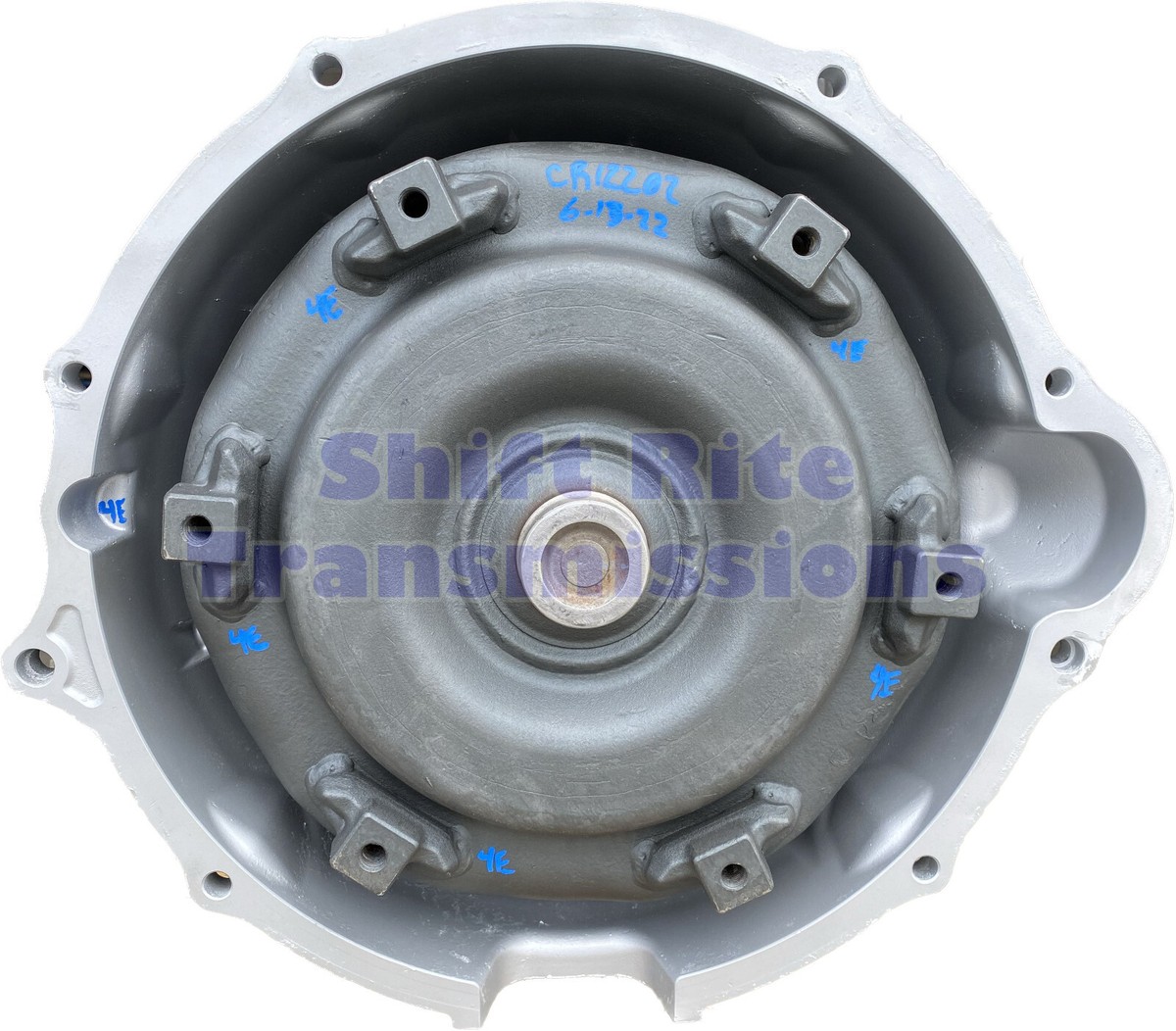
The most basic requirement is that the transmission physically bolts up to the engine. The 6.7L Cummins utilizes a specific bellhousing bolt pattern. All OEM transmissions (Aisin AS69RC, 68RFE, G56) designed for this engine share this pattern, ensuring a direct fit. However, when considering non-OEM or highly customized swaps, an adapter plate may be required, which adds complexity and cost. Input shaft spline count and length must also match the engine’s crankshaft or pilot bearing for proper engagement. The overall dimensions of the transmission case, including mounting points for the crossmember and clearance for the frame, are also important, particularly in a conversion scenario.
Electronic Compatibility (TCM and ECM/PCM)
This is arguably the most critical factor for modern automatic transmissions. The Transmission Control Module (TCM) manages shift points, line pressure, torque converter lock-up, and diagnostic functions. It must communicate flawlessly with the Engine Control Module (ECM) and, in some cases, the Powertrain Control Module (PCM) via the vehicle’s Controller Area Network (CAN bus).
- Sensor Inputs: Different year models or even different variants of the same transmission might use different sensor types or have different signal outputs (e.g., input speed, output speed, temperature sensors).
- Communication Protocols: While the 2017 Cummins uses standard CAN bus protocols, the specific messages and data interpretations between a non-matching TCM and the ECM can lead to “limp mode,” incorrect shifting, diagnostic trouble codes (DTCs), or a complete failure to operate.
- Calibration and Flashing: Even with physically identical components, a transmission from a different year or vehicle type may require specific calibration or a software flash to be recognized and controlled correctly by the 2017 Cummins ECM. This often requires specialized diagnostic tools available to dealerships or advanced independent shops.
Drivetrain Configuration
A crucial mechanical consideration is whether the vehicle is 2-wheel drive (2WD) or 4-wheel drive (4WD). The output shaft and tailhousing of the transmission differ significantly between these configurations. A 4WD transmission will have a shorter output shaft designed to directly interface with a transfer case, while a 2WD unit will have a longer output shaft and typically a slip yoke for the driveshaft. Attempting to install a 2WD transmission into a 4WD vehicle (or vice-versa) without significant and often cost-prohibitive modifications is generally not feasible or advisable.
Torque Converter and Flexplate Compatibility
For automatic transmissions, the torque converter must be matched precisely to the specific transmission and, to some extent, the engine’s characteristics. Different torque converters have varying stall speeds, lock-up clutches, and bolt patterns to the flexplate. The flexplate, which bolts to the engine’s crankshaft and connects to the torque converter (or flywheel for manuals), must also have the correct bolt pattern for the converter and be properly balanced for the Cummins engine. Using an mismatched torque converter can lead to inefficient power transfer, overheating, or component failure.
Vehicle Specifics (GVWR, Gearing, and Application)
Ram trucks with the 6.7L Cummins come in various configurations, from 2500 pickups to 5500 Chassis Cabs. These different applications often have different Gross Vehicle Weight Ratings (GVWRs) and factory axle gear ratios. While an Aisin transmission from a 4500 Chassis Cab might physically fit a 3500 pickup, its original calibration might be optimized for heavier loads or specific gearing, which could affect shifting performance or fuel economy if not recalibrated for the new application.
Beyond Direct Swaps: Adapters and Aftermarket Solutions
While direct OEM swaps offer the highest compatibility and lowest risk, sometimes the desire or need arises to consider a transmission not originally offered with the 2017 Cummins. This pathway is significantly more complex and resource-intensive.
Adapter Plates and Customization
For those looking to install a different heavy-duty automatic, such as an Allison 1000 series transmission (commonly found in GM trucks) behind a Cummins engine, adapter plates are necessary. Companies like Destroked or Phoenix Transmission Products offer kits that include adapter plates, custom flexplates, and sometimes modified input shafts or torque converters to bridge the gap. This type of conversion is extensive, often requiring custom driveshafts, modified crossmembers, and significant wiring modifications. It is not a beginner-level project and typically demands professional fabrication and mechanical expertise.
Aftermarket Control Systems
When introducing a transmission not electronically designed for the 2017 Cummins, a standalone aftermarket transmission controller becomes a necessity. Brands like Compushift (PCS), US Shift (Baumann), or similar systems can take sensor inputs from the engine and transmission, process them, and output the necessary signals to control the transmission’s solenoids. These controllers allow for highly customizable shift schedules, torque converter lock-up strategies, and line pressure adjustments. However, setting up and tuning these systems requires specialized knowledge and can be a significant undertaking to achieve optimal performance and reliability. They essentially bypass the OEM TCM entirely, needing to be programmed to communicate with the 2017 Cummins ECM for engine speed and load data.
Professional Installation and Tuning
Any transmission swap beyond a direct, year-for-year OEM replacement should be undertaken by highly experienced professionals. This includes specialized diesel mechanics, transmission shops, or custom fabrication facilities. The intricacies of physical fitment, electronic integration, and proper tuning are critical for safety, reliability, and satisfactory performance. DIY attempts without profound knowledge of modern diesel powertrains and electronic control systems often lead to expensive mistakes, persistent diagnostic issues, or even damage to the engine or transmission itself.

Key Takeaways for Successful Interchangeability
Navigating transmission interchangeability for a 2017 Cummins requires a meticulous approach and a deep understanding of both mechanical and electronic compatibility.
- Prioritize Direct OEM Replacements: For maximum compatibility and minimal headaches, source an Aisin AS69RC or 68RFE from a 6.7L Cummins-equipped Ram truck manufactured between 2013 and 2018. This model year range offers the highest likelihood of a successful, relatively straightforward swap.
- Verify Electronic Compatibility Above All Else: Ensure the Transmission Control Module (TCM) can communicate seamlessly with your 2017 Cummins ECM. Be prepared for potential software flashes or programming from a dealership or specialist.
- Match Drivetrain Configuration: Confirm whether the replacement transmission is for 2WD or 4WD to avoid incompatible output shafts and tailhousing designs.
- Consider All Supporting Components: Account for the torque converter, flexplate, driveshafts, and crossmembers. These elements must also be compatible or adapted.
- Consult Experts: When in doubt, or for any non-OEM swaps, consult with experienced diesel mechanics, transmission specialists, or reputable aftermarket integrators. Their expertise can save significant time, money, and frustration.
By adhering to these guidelines, owners can make informed decisions regarding transmission replacements or upgrades, ensuring the continued robust performance and longevity of their 2017 Cummins-powered vehicle.
aViewFromTheCave is a participant in the Amazon Services LLC Associates Program, an affiliate advertising program designed to provide a means for sites to earn advertising fees by advertising and linking to Amazon.com. Amazon, the Amazon logo, AmazonSupply, and the AmazonSupply logo are trademarks of Amazon.com, Inc. or its affiliates. As an Amazon Associate we earn affiliate commissions from qualifying purchases.