
The Economic Fallout of Seeking Unsanctioned Counsel
In the intricate landscape of personal finance, decisions are constantly made regarding resource allocation, investment strategies, and the pursuit of guidance. While often discussed in terms of market trends or economic indicators, the foundational principles governing these choices can sometimes extend into unexpected territories, including spiritual or ethical frameworks. The Bible offers a clear and unequivocal stance on the practice of attempting to communicate with the dead, categorizing it as necromancy and explicitly prohibiting it. From a purely financial perspective, understanding and adhering to this biblical prohibition presents a distinct set of implications for personal wealth management, resource protection, and the avoidance of economic pitfalls.

The act of seeking counsel from spiritual mediums, psychics, or those claiming to channel the deceased frequently involves significant monetary transactions. Individuals, often in states of grief, desperation, or uncertainty about their future, can become vulnerable targets for exploitation. The biblical narrative, far from being a mere spiritual decree, can thus be interpreted as a practical guide for financial prudence, steering individuals away from potentially costly and ultimately unfulfilling endeavors.
The Costly Illusion: Investing in Psychic Mediums and Spiritualism
The marketplace for spiritual services, including psychic readings, mediumship, and purported communication with the deceased, is a multi-billion-dollar industry globally. These services often come with substantial fees, ranging from hundreds to thousands of dollars for individual sessions, courses, or events. For those adhering to biblical principles, engaging in such practices is not only considered a spiritual transgression but also represents a direct financial outlay on an enterprise deemed illegitimate and deceptive by scriptural standards.
Deuteronomy 18:10-12 explicitly warns against anyone among the Israelites who “practices divination or tells fortunes or interprets omens, or a sorcerer or one who casts spells or a medium or a necromancer or one who inquires of the dead.” It further states that “whoever does these things is an abomination to the Lord.” This strong prohibition carries significant weight for those who look to the Bible for guidance in all areas of life, including financial conduct. From a financial perspective, adherence to this prohibition means avoiding the expenditure of hard-earned money on services that are considered religiously condemned and potentially fraudulent.
Consider the economic impact on an individual who, seeking closure or guidance, repeatedly invests in these services. The funds diverted to mediums could otherwise be allocated to savings, debt reduction, legitimate financial planning, or investment in tangible assets. The allure of a quick answer or a comforting message from a departed loved one can obscure sound financial judgment, leading to a continuous drain on personal resources without any verifiable or biblically sanctioned return. The cost isn’t just the direct fee; it’s the opportunity cost of what that money could have achieved in a financially prudent portfolio.
Diversion of Resources: When Spiritual Searches Impair Financial Growth
Beyond direct payments, the pursuit of communication with the dead can lead to broader financial mismanagement. Individuals might make significant life decisions—such as career changes, major investments, or relationship choices—based on “advice” received through these channels. If such guidance is, as the Bible suggests, deceptive or originating from sources contrary to divine truth, these decisions could lead to severe financial repercussions. An ill-advised investment, a poorly timed business venture, or a misguided expenditure based on a psychic’s prediction can result in substantial financial losses that undermine an individual’s long-term financial stability.
Leviticus 20:6 states, “If a person turns to mediums and necromancers, whoring after them, I will set my face against that person and will cut him off from among his people.” This strong condemnation underscores the severity of the practice within the biblical framework. From a financial viewpoint, the “whoring after them” can be interpreted as a diversion of allegiance and resources away from sound, biblically aligned principles of financial stewardship. It implies a misplaced trust that ultimately yields no genuine benefit and instead fosters dependence on potentially misleading sources, jeopardizing both spiritual well-being and material assets.
The Bible consistently advocates for wisdom, discernment, and seeking guidance from God through prayer, scripture, and trusted counsel. These avenues are not only spiritually sanctioned but also carry no direct monetary cost, standing in stark contrast to the paid services of mediums. By avoiding the forbidden paths, individuals preserve their financial capital and redirect their focus towards resource management grounded in established principles of foresight and integrity.
Biblical Wisdom as a Foundation for Financial Prudence
The biblical prohibitions against necromancy and similar practices are not arbitrary rules; they are rooted in a theology that emphasizes God as the sole source of ultimate truth and guidance. For those who embrace this framework, adherence to divine counsel becomes a cornerstone for all aspects of life, including financial management. Approaching financial decisions through the lens of biblical wisdom naturally leads to principles that promote prudence, integrity, and long-term stability, directly contrasting the risks associated with seeking supernatural counsel outside of God’s prescribed ways.
Prioritizing Divine Guidance: A Strategy for Sound Decision-Making
The Bible champions a model of decision-making that involves prayer, meditation on scripture, and seeking advice from wise, trusted individuals within a community of faith. This approach emphasizes clarity, patience, and reliance on principles rather than fleeting predictions or unverified spiritual messages. From a financial perspective, this translates into a strategic advantage. When individuals base their investment choices, budgeting strategies, or career moves on sound research, ethical considerations, and prayerful discernment, they are less likely to fall prey to speculative ventures or manipulative schemes.
Proverbs 3:5-6 encourages, “Trust in the Lord with all your heart, and do not lean on your own understanding. In all your ways acknowledge him, and he will make straight your paths.” This proverb, while spiritual in nature, has profound implications for financial guidance. It suggests that leaning on sources outside of God’s wisdom, such as those who claim to communicate with the dead, introduces instability and potential for error in decision-making. In finance, where informed and rational choices are paramount, relying on dubious spiritual claims instead of objective data and prayerful consideration can be economically devastating.
By contrast, an individual who prioritizes divine guidance is encouraged to cultivate financial literacy, seek professional advice when necessary (e.g., from financial planners), and exercise diligence in their financial dealings. This method reduces susceptibility to scams, avoids impulsive decisions driven by fear or misplaced hope, and fosters a disciplined approach to wealth building and preservation.
Stewardship and the Avoidance of Exploitative Practices
A core tenet of biblical finance is the concept of stewardship – the understanding that all resources are ultimately from God and are to be managed wisely and responsibly. This perspective mandates careful consideration of how money is spent, earned, and invested. When viewed through this lens, engaging with mediums or psychics for financial advice represents a fundamental failure of stewardship. It diverts resources from productive, biblically sanctioned uses (such as supporting one’s family, charitable giving, or wise investment) toward practices explicitly forbidden.
The Bible frequently warns against those who exploit others, particularly the vulnerable. 2 Peter 2:3, speaking of false teachers, notes, “And in their greed these teachers will exploit you with fabricated stories.” While not directly referencing necromancy, the principle applies: practices that are deceptive and prey on vulnerability for monetary gain are condemned. The financial services offered by many mediums often fit this description, capitalizing on human emotion and offering unverifiable outcomes for a fee.
By adhering to the biblical prohibition against communicating with the dead, individuals are implicitly protecting themselves from potentially exploitative financial arrangements. They are empowered to maintain control over their financial resources, allocating them according to a framework of ethical responsibility and long-term strategic planning, rather than being swayed by promises of supernatural insight that come with a price tag.
Safeguarding Your Financial Future from Spiritual Deception
The biblical stance on communication with the dead serves not only as a spiritual directive but also as a protective measure for an individual’s financial well-being. In an era where information is abundant and spiritual services are readily available online and offline, discernment is a critical asset. For those seeking to align their financial lives with biblical principles, understanding these prohibitions provides a clear boundary that helps safeguard assets and promotes sustainable financial health.
Identifying and Avoiding Financially Exploitative Spiritual Services
The key to financial security, from a biblical perspective, is to apply wisdom and discernment to all areas of life, including potential spiritual influences on financial decisions. This means being vigilant against services that promise spiritual shortcuts or exclusive insights at a significant cost. Any service that demands payment for communication with the deceased, or claims to provide future financial predictions through prohibited means, should immediately trigger a red flag for individuals committed to biblical financial prudence.
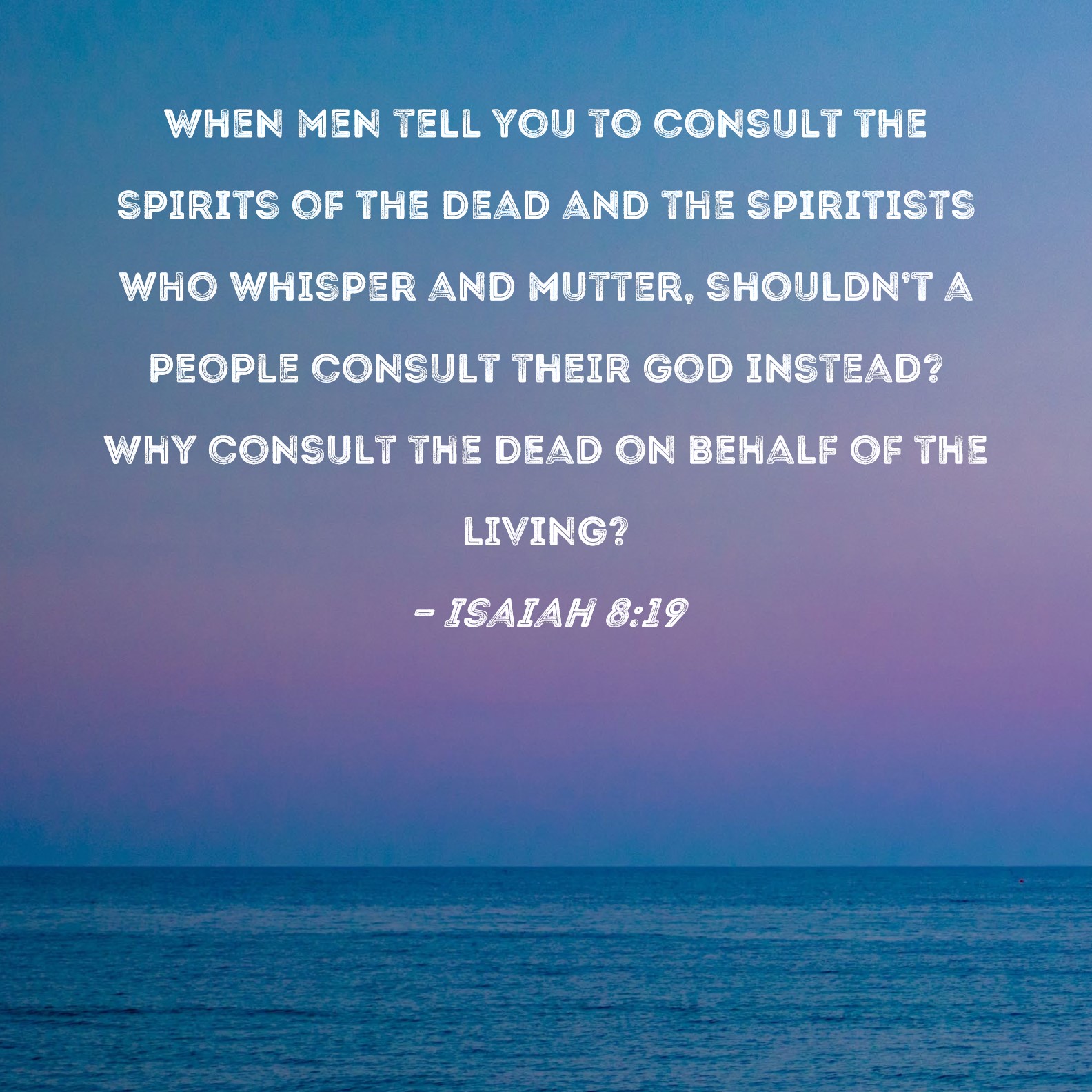
Isaiah 8:19 states, “When people tell you to consult mediums and spiritists, who whisper and mutter, should not a people inquire of their God? Why consult the dead on behalf of the living?” This verse not only reiterates the prohibition but also points to the alternative: inquiring of God. From a financial perspective, this translates into seeking guidance from reputable financial advisors, engaging in sound research, and making decisions based on rational analysis and prayerful wisdom, rather than falling prey to expensive, biblically condemned spiritual services. The financial marketplace is rife with opportunities and risks, and a clear, biblically informed ethical framework can help filter out deceptive practices that drain resources without genuine benefit.

Long-Term Financial Security Through Adherence to Biblical Precepts
Ultimately, the biblical perspective on talking to the dead, when integrated into a comprehensive financial strategy, contributes to long-term financial security. By avoiding the significant monetary expenditure associated with prohibited spiritual practices, individuals retain their capital for productive investments, savings, and responsible spending. Furthermore, by fostering a reliance on divine wisdom and sound human judgment, rather than speculative or deceptive spiritual counsel, individuals cultivate decision-making skills that serve them well across all financial endeavors.
The peace of mind that comes from knowing one is operating within biblically approved boundaries, free from the entanglements of forbidden spiritual practices, also has an intangible but valuable impact on financial well-being. Reduced anxiety, clearer focus, and the ability to make rational decisions unclouded by spiritual confusion are powerful assets in navigating the complexities of personal finance. Thus, the biblical injunction against talking to the dead extends its protective reach into the realm of financial management, guiding adherents toward a path of prudence, discernment, and lasting economic stability.
aViewFromTheCave is a participant in the Amazon Services LLC Associates Program, an affiliate advertising program designed to provide a means for sites to earn advertising fees by advertising and linking to Amazon.com. Amazon, the Amazon logo, AmazonSupply, and the AmazonSupply logo are trademarks of Amazon.com, Inc. or its affiliates. As an Amazon Associate we earn affiliate commissions from qualifying purchases.