
Defining Its Core Identity: The Ultimate Brand Origin Story
When examining any successful entity, understanding its self-perception and how it communicates its essence is paramount to grasping its enduring appeal. For an entity like “the Bible,” which has shaped cultures, philosophies, and individual lives for millennia, its internal discourse on its own nature provides a compelling case study in brand identity. What the Bible says about itself isn’t merely a collection of theological claims; it represents a meticulously crafted, internally consistent brand architecture that defines its unique selling proposition (USP), authority, and purpose.

The Bible establishes its brand identity primarily through its unequivocal claim of divine origin. It repeatedly asserts that it is “God-breathed” or “inspired by God” (2 Timothy 3:16). This isn’t merely a tagline; it’s the foundational premise that underpins its entire message and legitimizes its authority. In branding terms, this is the ultimate origin story, setting it apart from any human-authored text. It positions the Bible not as a product of human ingenuity or cultural evolution, but as a direct communication from the ultimate source of truth and existence. This divine authorship serves as an unassailable USP, establishing a level of authenticity and intrinsic value that no other historical or literary work can claim. It elevates the text beyond mere historical document or philosophical treatise, positioning it as an immutable, sacred directive.
This claim of divine inspiration isn’t a peripheral detail but is central to its brand identity. It dictates how the text should be received, understood, and applied. If the Bible is truly God’s word, then its pronouncements carry ultimate weight and authority. This self-attestation creates an inherent credibility loop, where the text’s own statements about its origin reinforce its brand promise of infallibility and truth. This is akin to a luxury brand asserting its unique heritage and artisanal craftsmanship – it’s a claim that elevates its perceived value and distinguishes it decisively from competitors.
Divine Inspiration as a Unique Selling Proposition
The concept of “divine inspiration” functions as the Bible’s supreme Unique Selling Proposition (USP). In a crowded marketplace of ideas, philosophies, and spiritual paths, the Bible’s self-declaration as supernaturally authored provides an unparalleled competitive advantage. It posits that its content is not subject to human error, cultural biases, or the limitations of mortal understanding. This attribute establishes an immediate differentiator, positioning the Bible as the definitive guide, the ultimate authority on matters of faith, morality, and life purpose.
This USP isn’t just about origin; it implies inherent perfection and completeness. The Bible presents itself as “sufficient” for all matters of life and godliness, needing no external validation or supplementary texts to fulfill its purpose. This self-contained sufficiency reinforces its brand strength, suggesting a comprehensive solution rather than a partial offering. For adherents, this means a singular focus on the text itself, trusting in its inherent power and truthfulness derived directly from its divine source.
Unwavering Authority and Authenticity
Beyond its origin, the Bible consistently asserts its unwavering authority and authenticity. Passages like “Your word, Lord, is eternal; it stands firm in the heavens” (Psalm 119:89) underscore its timelessness and immutability. This is critical for brand trust and longevity. A brand that constantly shifts its core message or lacks consistency will fail to build lasting loyalty. The Bible, by contrast, projects an image of unchanging truth, a constant in a world of flux. This provides immense psychological comfort and reliability for its audience, reinforcing its position as a steadfast guide.
Its authenticity is further bolstered by its internal consistency, despite being penned by dozens of authors over more than a millennium. The seamless narrative, recurring themes, and unified message—from creation to redemption—are often cited as evidence of a singular guiding intelligence. From a brand perspective, this represents an unparalleled level of brand governance and message control, ensuring that its core identity remains coherent and robust across diverse contributors and contexts. This internal harmony creates a powerful testimonial to its authenticity, resonating deeply with those seeking foundational truths.
Its Purpose and Promise: Crafting the Value Proposition
A robust brand identity must be accompanied by a clear value proposition—what does the product or service offer its audience? The Bible is explicit about its intended purpose and the benefits it delivers. It frames itself as more than just information; it is a dynamic tool designed for specific, transformative outcomes. This clarity in purpose strengthens its brand appeal by articulating direct, tangible (albeit spiritual) benefits.
The Bible positions itself as a practical guide for living, directly addressing the human condition and offering solutions. It states its purpose is “for teaching, rebuking, correcting and training in righteousness” (2 Timothy 3:16). These are explicit functionalities, demonstrating a comprehensive suite of “features” aimed at moral and spiritual development. In a consumer context, this would be akin to a product listing its multifaceted capabilities: it doesn’t just inform; it also refines, redirects, and educates, all with the goal of improving the “user.” This detailed articulation of purpose moves beyond mere claims of origin to practical applications that yield personal growth and positive behavioral change.
Guidance and Illumination: The Transformative User Experience
A key aspect of the Bible’s value proposition is its promise of guidance and illumination. “Your word is a lamp for my feet, a light on my path” (Psalm 119:105) vividly describes its functional utility. It’s not a static document but an active agent providing direction in times of uncertainty and clarity in confusion. This speaks directly to the user experience (UX) it aims to provide: a transformative encounter that empowers individuals to navigate life’s complexities with wisdom and confidence.
This imagery of light suggests relief from darkness, a clear path forward. It communicates a direct benefit to the user: safety, direction, and understanding. This positions the Bible as an indispensable tool for personal development and decision-making, offering a framework through which to interpret the world and one’s place within it. The transformative potential is a core part of its brand promise, distinguishing it from passive historical texts.
The Promise of Truth and Unchanging Relevance
Central to the Bible’s value proposition is its steadfast promise of truth. Jesus declares, “Your word is truth” (John 17:17). This is a bold and unequivocal claim, establishing the text as the ultimate arbiter of reality and morality. In a world grappling with relativism and conflicting narratives, the Bible offers itself as an anchor of objective truth, a reliable standard against which all other claims can be measured. This “truth guarantee” is a powerful brand differentiator, appealing to a fundamental human desire for certainty and meaning.
Furthermore, the Bible asserts its unchanging relevance, stating that “the grass withers and the flowers fall, but the word of our God endures forever” (Isaiah 40:8). This promise of perpetual applicability ensures its brand remains potent across generations and cultural shifts. Unlike trends that fade or technologies that become obsolete, the Bible positions its message as eternally pertinent, addressing universal human struggles and aspirations regardless of historical context. This enduring relevance is crucial for maintaining long-term market share in the domain of human thought and belief.
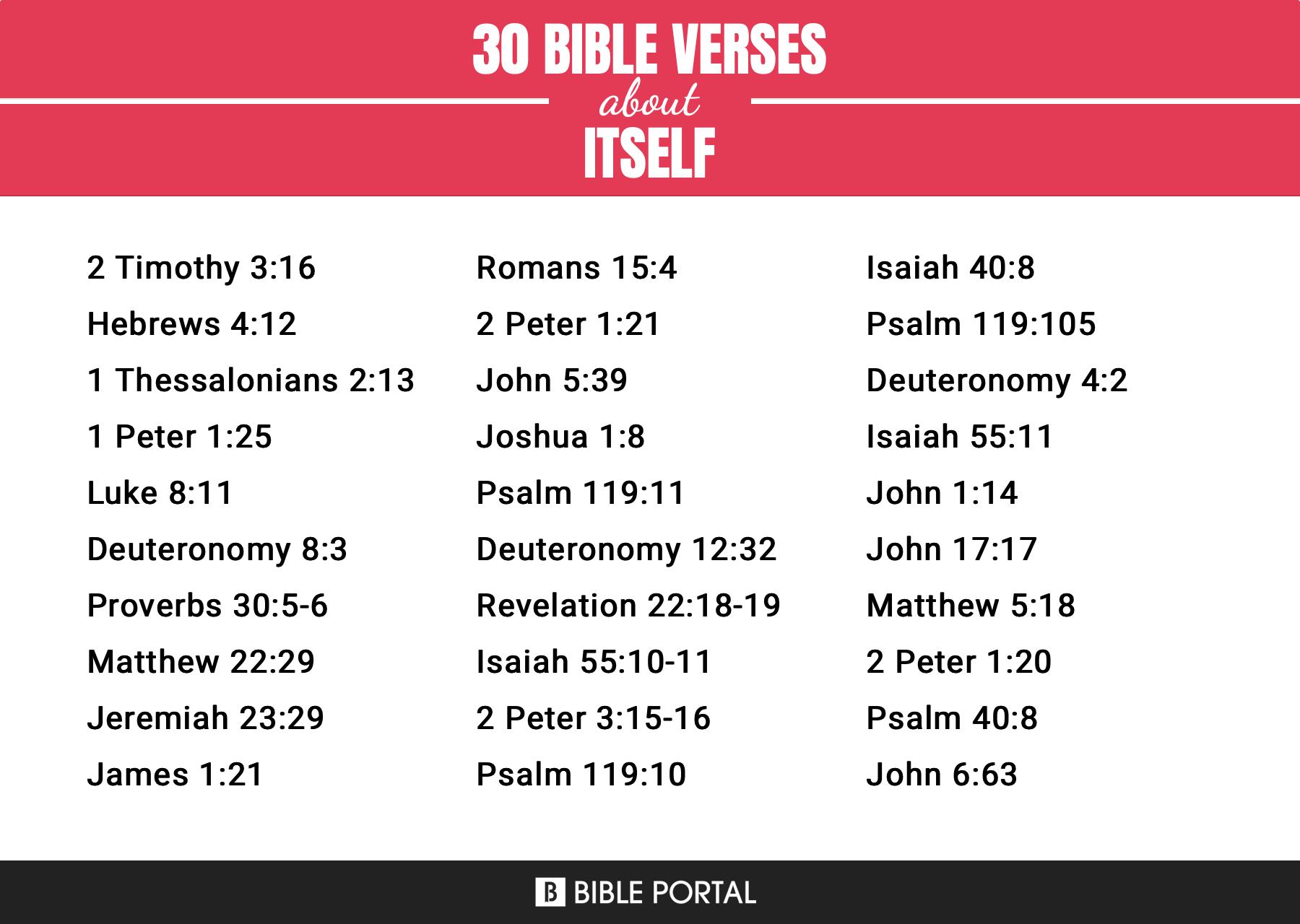
Brand Longevity and Market Penetration: An Enduring Legacy
The Bible’s self-assessment speaks not just to its intrinsic qualities but also to its intended impact and staying power. It frames itself as a message with global reach and an eternal shelf life, a testament to its strategic vision for brand longevity and market penetration.
It declares its own words “will not return to me empty, but will accomplish what I desire and achieve the purpose for which I sent it” (Isaiah 55:11). This is a powerful statement of guaranteed efficacy and outcome, akin to a brand confidently asserting the success rate of its product. It implies that the message is inherently potent and will invariably achieve its objectives, regardless of obstacles. This self-assurance fuels its enduring influence and encourages persistent dissemination of its contents.
Sustaining the Message Across Millennia
The Bible’s claims about its own permanence are a key factor in its remarkable longevity. “Heaven and earth will pass away, but my words will never pass away” (Matthew 24:35). This audacious statement positions the Bible’s message as more enduring than the physical universe itself. Such a declaration imbues the text with an extraordinary sense of significance and permanence, encouraging meticulous preservation and transmission across generations. This vision of eternal endurance has directly contributed to its meticulous copying, translation, and safeguarding throughout history, ensuring its survival against countless attempts at suppression or obsolescence.
This commitment to permanence reflects a deep understanding of long-term brand building. By claiming eternal validity, the Bible compels its adherents to ensure its continuous presence and accessibility. The very act of reading, studying, and teaching its contents becomes an act of brand reinforcement, perpetuating its message and influence.
Global Reach and Cultural Impact
Implicit in the Bible’s self-description is an aspiration for universal reach. While not explicitly stating “global market penetration” in modern terms, its universal applicability and divine mandate suggest a boundless audience. The Great Commission, for instance, implies a directive to disseminate its message “to all nations” (Matthew 28:19). This demonstrates an inherent drive for widespread adoption and cultural permeation, which has indeed been borne out by history, making it the most translated and widely distributed book globally.
Its impact on law, art, literature, philosophy, and societal ethics across diverse cultures is unparalleled. This pervasive influence serves as a powerful testament to its own claims of efficacy and enduring relevance. The Bible’s ability to transcend cultural barriers and adapt its message to new contexts, while maintaining its core identity, showcases a masterful execution of global brand strategy, demonstrating adaptability without dilution of its core values.
Strategic Messaging and Audience Engagement
The Bible’s self-referential statements also reveal its strategic approach to messaging and how it seeks to engage its audience. It doesn’t just present information; it actively seeks to transform the reader through its content, establishing a dynamic relationship.
It characterizes itself as “living and active and sharper than any double-edged sword, it penetrates even to dividing soul and spirit, joints and marrow; it judges the thoughts and attitudes of the heart” (Hebrews 4:12). This vivid description portrays the Bible not as a passive artifact, but as an intensely personal and impactful force. It describes a deep level of engagement, where the “product” actively interacts with and dissects the “user’s” internal state. This is a claim of profound and intimate efficacy, promising a level of self-discovery and transformation that goes far beyond superficial interaction. It’s an assertion of its power to fundamentally alter perception and behavior.
Guiding Principles for Engagement and Action
The Bible sets clear expectations for how its message should be received and acted upon. It emphasizes not just hearing but doing its words, warning against being “hearers only, deceiving yourselves” (James 1:22). This implies a call to action integral to its brand experience. The message is not simply for intellectual assent but for practical application, driving behavioral change and spiritual growth. This active engagement model means the “user” becomes a participant in the brand’s narrative, embodying its principles and perpetuating its values through their life choices.
This directive for active engagement creates a feedback loop: as individuals apply its teachings, they experience the promised transformation, which in turn reinforces their belief in the Bible’s authenticity and power. This personal testimony then becomes part of the ongoing brand story, contributing to its organic growth and wider acceptance.
The Self-Reinforcing Nature of Its Brand Narrative
The Bible’s internal narrative about its own power and truth creates a self-reinforcing brand ecosystem. Every declaration of divine origin, eternal relevance, and transformative power serves to strengthen its perceived value and authority. This cyclical reinforcement is a hallmark of highly successful brands that manage to create a compelling story that customers want to believe in and be part of. The more its adherents live by its principles, the more they find its claims to be true, thus validating its brand identity within their personal experience.
This self-attestation is not mere self-promotion; it’s a strategic framework that ensures the brand message is consistently understood, valued, and propagated. It lays out the intrinsic characteristics and expected outcomes, shaping user expectations and fostering deep loyalty.

A Case Study in Enduring Brand Architecture
Ultimately, “what the Bible says about itself” reveals a masterclass in establishing and maintaining an enduring brand. Its self-definitions lay out a robust brand architecture: a unique origin story (divine inspiration), a clear value proposition (guidance, truth, transformation), an ambitious vision for market penetration (global reach), and an explicit strategy for engagement (active application).
By consistently articulating its divine source, its immutable truth, its transformative power, and its eternal relevance, the Bible has meticulously crafted a brand identity that has transcended time, culture, and technological advancements. Its internal claims about its nature and purpose have provided the foundational framework for its unparalleled longevity, global dissemination, and profound impact on human civilization, making it a powerful case study in the dynamics of persistent messaging and community formation on an epic scale.
aViewFromTheCave is a participant in the Amazon Services LLC Associates Program, an affiliate advertising program designed to provide a means for sites to earn advertising fees by advertising and linking to Amazon.com. Amazon, the Amazon logo, AmazonSupply, and the AmazonSupply logo are trademarks of Amazon.com, Inc. or its affiliates. As an Amazon Associate we earn affiliate commissions from qualifying purchases.