
In the intricate ecosystems of technology, parallels can often be drawn to the biological world to better understand complex system behaviors and design philosophies. Just as animals are categorized by their thermoregulation strategies, enterprise technology stacks, software architectures, and data management paradigms can be metaphorically understood through the lens of “cold-blooded” and “warm-blooded” principles. This comparative framework offers profound insights into resource management, responsiveness, scalability, and resilience in the digital realm.
Metabolic Efficiency in System Architectures
At its core, the distinction between cold-blooded and warm-blooded animals lies in their approach to maintaining body temperature and metabolic rate. Translating this to technology, we can examine how different system architectures manage their operational state, energy consumption, and readiness.
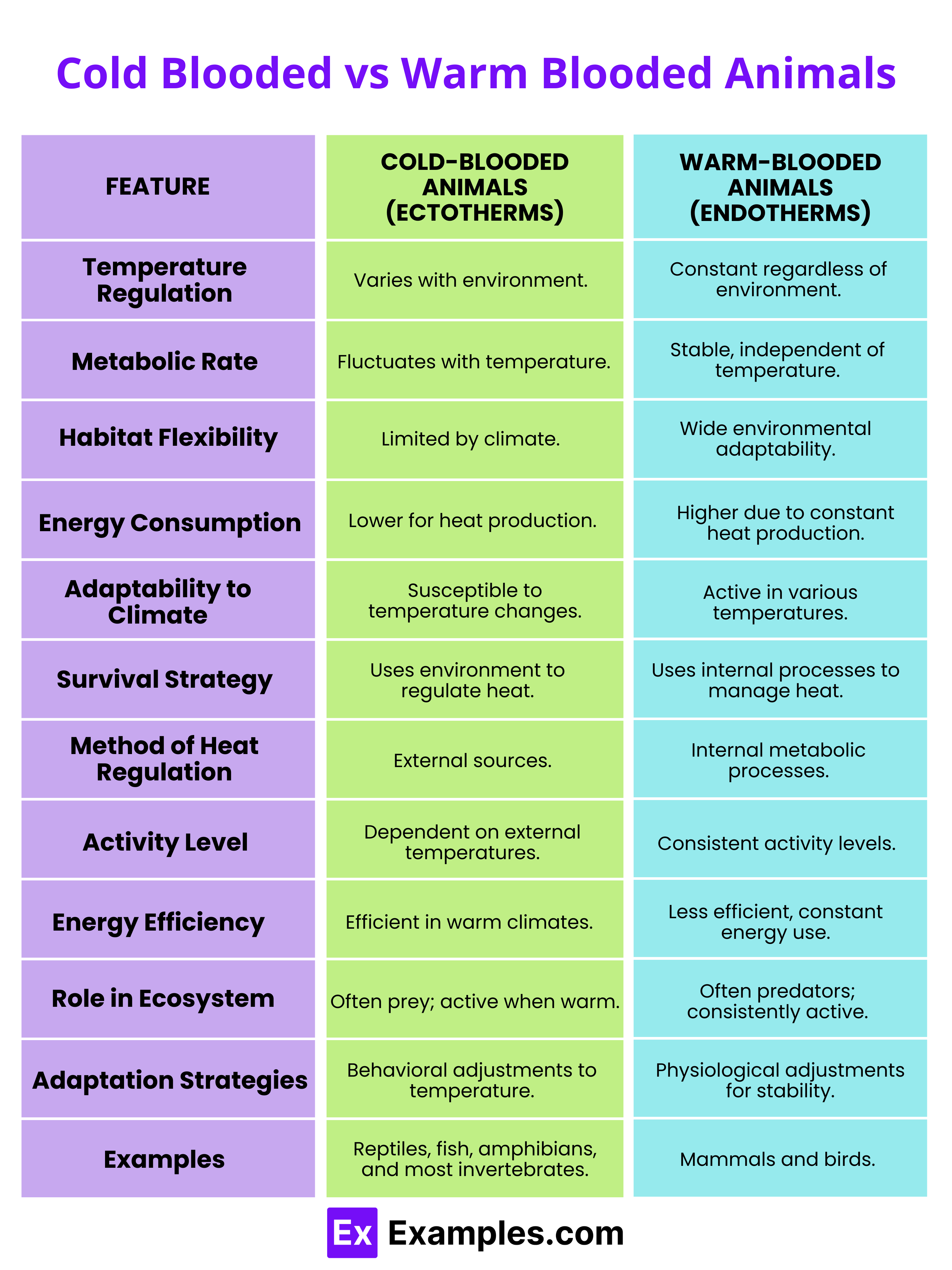
The “Cold-Blooded” Approach: Resource Conservation and External Triggers
Consider the “cold-blooded” paradigm in technology. These systems operate with a focus on resource conservation, often remaining in a low-power or dormant state until an external stimulus necessitates activation. Their “metabolism” is highly dependent on environmental conditions or explicit requests, conserving significant computational and energy resources during periods of inactivity.
Serverless Computing: A prime example is serverless architecture. Functions-as-a-Service (FaaS) platforms only provision compute resources when a specific event (e.g., an API call, a database trigger, a file upload) occurs. In their “cold” state, these functions consume virtually no resources, incurring costs only during execution. This mirrors a reptile basking in the sun to gain energy – it’s active only when conditions are right or explicitly triggered. While offering immense cost efficiency and scalability, serverless functions can experience “cold starts,” a latency hit as the environment initializes, analogous to a cold-blooded animal needing time to warm up before becoming fully agile.
Cold Data Storage: Another clear manifestation is cold data storage. Archival solutions like Amazon S3 Glacier or Google Cloud Storage Archive are designed for data that is infrequently accessed but must be retained for compliance, historical analysis, or disaster recovery. These storage tiers prioritize cost-effectiveness and durability over immediate retrieval speed. Accessing data from cold storage often involves a retrieval time ranging from minutes to hours, reflecting the “slow to respond” nature of a cold-blooded system. The data is preserved efficiently, but immediate action isn’t its primary design goal.
Batch Processing: Large-scale batch processing operations, common in data warehousing and analytics, also fit this model. Tasks are accumulated over a period and then processed in bulk during off-peak hours or scheduled intervals. These systems aren’t constantly active, waiting for individual data points. Instead, they activate, process a large workload, and then return to a low-activity state, optimizing resource use by concentrating effort.
The “Warm-Blooded” Approach: Constant Readiness and Internal Regulation
In contrast, “warm-blooded” technological systems are designed for constant readiness and internal regulation, much like mammals maintaining a consistent internal body temperature regardless of external fluctuations. These systems aim to provide immediate responsiveness and consistent performance, often at the cost of higher continuous resource consumption.
Always-On Servers and Microservices: Traditional always-on servers and highly available microservices epitomize the warm-blooded approach. They are continuously running, consuming compute resources to be instantly ready to handle requests. Modern cloud services offering auto-scaling and load balancing work to maintain this “internal temperature” (performance and availability) by dynamically adjusting resources. These systems are crucial for real-time applications, interactive user experiences, and critical infrastructure where even momentary delays are unacceptable.
Real-Time Analytics and In-Memory Databases: Systems built for real-time analytics or those leveraging in-memory databases fall squarely into the warm-blooded category. They maintain data and computational states in high-speed memory, allowing for instantaneous queries, immediate data processing, and rapid decision-making. The inherent cost of keeping large datasets in RAM is justified by the imperative for zero-latency insights, akin to the metabolic cost a warm-blooded animal pays to maintain constant activity and responsiveness.
Event-Driven Architectures (Active Listeners): While serverless functions can be cold-blooded, the event listeners and message queues that trigger them are often warm-blooded. They are constantly monitoring for events, maintaining an active state to ensure no incoming message or trigger is missed. This continuous vigilance allows for rapid propagation of information and ensures that downstream systems, whether cold or warm, are promptly notified.
Adaptability and Responsiveness in Software Development
Beyond architecture, the cold-blooded versus warm-blooded metaphor extends to how software development paradigms and system designs adapt and respond to changing environments and user demands.
Static Design vs. Dynamic Adaptation: From Fixed Architectures to Microservices
Historically, many large enterprise applications adopted a “cold-blooded” or static design approach. Monolithic architectures, while robust, were often slow to change. Introducing new features or adapting to market shifts required extensive planning, lengthy development cycles, and substantial redeployments, akin to a cold-blooded animal needing time to adjust its behavior to a new environment.
Modern software development, particularly with methodologies like Agile and DevOps, increasingly embraces a “warm-blooded” dynamic adaptation. Microservices architectures, containerization, and continuous delivery pipelines enable rapid iteration, independent deployment of services, and quick responses to evolving requirements. This agility allows organizations to “thermoregulate” their software more effectively, pushing out updates and adapting to user feedback with speed and precision, maintaining a competitive “body temperature” in a fast-paced market.
Resilience and Self-Healing: Mimicking Biological Homeostasis

Warm-blooded systems in biology are excellent at maintaining homeostasis – a stable internal environment despite external changes. In technology, this translates to resilience and self-healing capabilities. Systems designed with this principle can detect failures, automatically recover, reroute traffic, and maintain operational stability without manual intervention.
Technologies like Kubernetes orchestrators, fault-tolerant distributed systems, and self-healing infrastructure are examples. They constantly monitor the “health” of components, automatically replacing failed instances, load balancing requests, and preventing cascading failures. This proactive, internal regulation ensures consistent availability and performance, much like a warm-blooded organism’s immune system or metabolic processes work continuously to maintain health and function. Cold-blooded systems, by contrast, might rely more on external recovery mechanisms or human intervention to regain stability after an environmental shock.
Data Management: From Cold Storage to Hot Analytics
One of the most direct applications of this metaphor is in data management strategies, where data “temperature” is a well-established concept.
Archival Prowess: The Cost-Effectiveness of Cold Data Storage
Cold data storage is the digital equivalent of a hibernating animal. It’s about efficiently storing vast quantities of data that are not frequently accessed but must be retained. This includes historical archives, regulatory compliance data, backup snapshots, and long-term research datasets. The primary drivers here are cost-efficiency and durability.
Such storage solutions are optimized for minimal retrieval costs and maximum data integrity over long periods. While retrieving data might take longer, the total cost of ownership is significantly lower than keeping it in high-performance, immediately accessible storage. This strategy is crucial for managing the exponential growth of data without prohibitive expenses. Companies often leverage policy-driven tiering to automatically move data from warmer to colder storage tiers as it ages or its access frequency decreases.
Real-time Insights: The Imperative of Hot Data and Warm Caches
Hot data, on the other hand, is constantly active, frequently accessed, and critical for real-time operations and immediate decision-making. This includes transactional data, active user sessions, streaming sensor data, and data used for operational dashboards. The imperative for hot data is speed of access and low latency.
Technologies supporting hot data include in-memory databases, high-performance solid-state drives (SSDs), and content delivery networks (CDNs) for static assets. These systems are designed to deliver data in milliseconds, enabling instant user experiences, fraud detection, real-time personalization, and critical operational monitoring.
Between hot and cold lies “warm” data, which is accessed less frequently than hot but more often than cold. This might include data for daily reports, recent historical data for trending, or frequently queried lookup tables. Databases and caching layers optimized for warm data balance retrieval speed with cost, offering a middle ground that provides good performance without the premium cost of hot data storage.
Security Paradigms: Proactive Defense vs. Reactive Measures
The cold-blooded/warm-blooded analogy also provides an interesting lens through which to view cybersecurity strategies.
“Cold” Security: The Principle of Least Privilege and Isolation
“Cold” security principles emphasize minimizing exposure and isolating critical assets. This includes the principle of least privilege, where users and systems are granted only the minimum necessary access to perform their functions. It also encompasses network segmentation, air-gapped systems (completely isolated networks), and robust access controls.
Similar to a cold-blooded animal being less active and therefore less exposed to immediate threats, cold security aims to reduce the attack surface by limiting interactions and maintaining a low profile. While effective in preventing widespread breaches, such systems might be slower to react to emerging threats that manage to penetrate their perimeter, requiring more deliberate activation of response protocols.

“Warm” Security: Continuous Monitoring and Adaptive Threat Response
“Warm” security, conversely, is characterized by continuous vigilance and adaptive threat response. This includes real-time monitoring, Security Information and Event Management (SIEM) systems, Intrusion Detection/Prevention Systems (IDPS), Endpoint Detection and Response (EDR), and active threat intelligence feeds. These systems are “warm-blooded” in their constant state of readiness, continuously scanning for anomalies, identifying potential threats, and often automating responses.
This proactive and dynamic approach aims to detect and neutralize threats as they emerge, maintaining a “stable internal environment” of security even as external attack vectors evolve. The trade-off can be higher operational complexity and resource consumption, but the benefit is a significantly reduced window of compromise and quicker recovery times. Just as warm-blooded animals actively maintain their internal state, warm security postures actively defend and adapt to the ever-changing threat landscape.
In conclusion, viewing technological systems through the metaphor of cold-blooded and warm-blooded “animals” provides a compelling framework for understanding diverse design philosophies. Whether prioritizing resource efficiency and controlled activation (cold-blooded) or continuous readiness and dynamic adaptation (warm-blooded), organizations must strategically choose and combine these approaches to build resilient, scalable, and cost-effective technology ecosystems tailored to their specific operational needs and performance requirements.
aViewFromTheCave is a participant in the Amazon Services LLC Associates Program, an affiliate advertising program designed to provide a means for sites to earn advertising fees by advertising and linking to Amazon.com. Amazon, the Amazon logo, AmazonSupply, and the AmazonSupply logo are trademarks of Amazon.com, Inc. or its affiliates. As an Amazon Associate we earn affiliate commissions from qualifying purchases.