
In the intricate world of mathematics, particularly trigonometry, understanding fundamental concepts is paramount. Among these, the cotangent function holds a significant place, and exploring its value at specific angles, such as zero, reveals crucial insights into its behavior and broader implications in technological applications. While “cot 0” might seem like a purely academic query, its underlying principles inform how we design software, handle data, and build robust AI systems. At its core, cot 0 represents an undefined mathematical state, a concept that programmers, data scientists, and engineers must grapple with to ensure the reliability and stability of their computational models and applications.
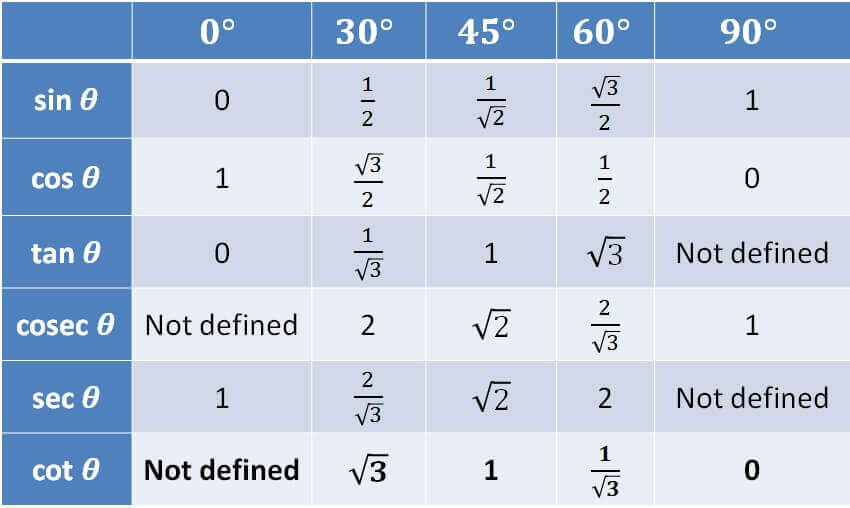
The Mathematical Foundation of Cotangent and Zero
To fully appreciate the significance of “cot 0,” we must first establish a clear understanding of the cotangent function and its relationship with other trigonometric functions at the angle of zero.
Defining Cotangent in Trigonometry
The cotangent of an angle in a right-angled triangle is defined as the ratio of the length of the adjacent side to the length of the opposite side. Symbolically, cot(θ) = adjacent / opposite. Alternatively, and more universally applicable, cotangent is the reciprocal of the tangent function, meaning cot(θ) = 1 / tan(θ). Furthermore, it can be expressed in terms of sine and cosine as cot(θ) = cos(θ) / sin(θ). This last definition is particularly useful when analyzing the behavior of cotangent at specific angles, especially those that might lead to division by zero.
Understanding Tan 0 and its Implications
Before evaluating cot 0, let’s consider tan 0. The tangent of an angle θ is defined as sin(θ) / cos(θ). At θ = 0 radians (or 0 degrees):
sin(0) = 0cos(0) = 1
Therefore, tan(0) = sin(0) / cos(0) = 0 / 1 = 0. The tangent of zero is a well-defined value, equal to zero. This seemingly simple result sets the stage for understanding its reciprocal.
Deriving Cot 0: The Undefined Nature
Now, applying the reciprocal definition or the sine-cosine ratio to cot 0:
- Using
cot(θ) = 1 / tan(θ): Sincetan(0) = 0, thencot(0) = 1 / 0. - Using
cot(θ) = cos(θ) / sin(θ): Sincecos(0) = 1andsin(0) = 0, thencot(0) = 1 / 0.
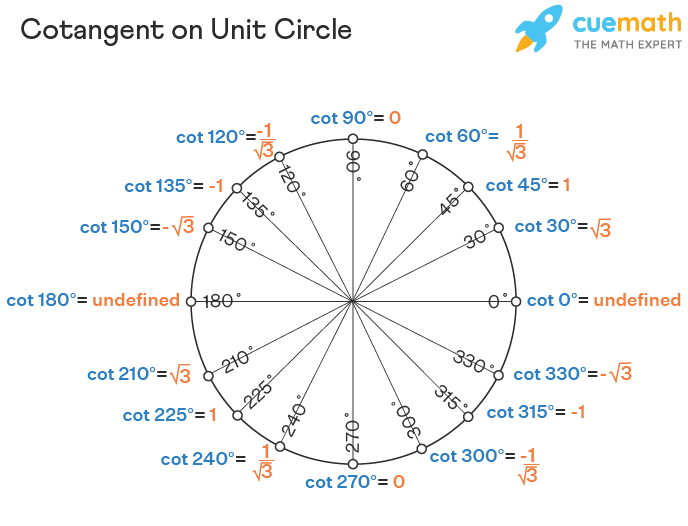
In both cases, we encounter division by zero. In mathematics, division by zero is undefined. It does not yield a finite real number. From a graphical perspective, the cotangent function has vertical asymptotes at angles where sin(θ) = 0, which occurs at θ = nπ (where n is an integer), including θ = 0. As θ approaches 0 from the positive side, cot(θ) approaches positive infinity; as θ approaches 0 from the negative side, cot(θ) approaches negative infinity. Thus, at precisely θ = 0, the function is undefined.
Computational Challenges and Handling Undefined Values in Software
The mathematical reality that cot 0 is undefined translates directly into significant challenges for software development, numerical analysis, and any computational system that might encounter such an operation. Robust software must anticipate and properly handle these edge cases to prevent crashes, incorrect calculations, or security vulnerabilities.
Error Handling in Programming Languages
Modern programming languages and their standard libraries are designed to handle division by zero. Instead of crashing, they often produce specific sentinel values or raise exceptions.
- Floating-Point Standards: Most computing systems adhere to the IEEE 754 standard for floating-point arithmetic. According to this standard,
1.0 / 0.0(for floating-point numbers) typically results inInfinity(or-Infinitydepending on the sign of the numerator), while0.0 / 0.0orInfinity / Infinityresults inNaN(Not a Number).cot 0falls into the1/0category, leading toInfinityin many floating-point contexts. WhileInfinityandNaNare special floating-point values that can be propagated through calculations, they are not standard real numbers and must be treated with caution. - Exceptions: Some languages or environments might throw an
ArithmeticExceptionorZeroDivisionErrorwhen an integer division by zero occurs. For trigonometric functions, mathematical libraries are usually designed to returnInfinityorNaNrather than raising an immediate exception for floating-point calculations, allowing developers to handle these values explicitly downstream.
Numerical Stability and Algorithm Design
The presence of undefined or infinite values poses a direct threat to the numerical stability of algorithms. An unexpected Infinity or NaN can propagate through a complex series of calculations, rendering the final result meaningless.
- Avoiding Division by Zero: Software engineers must design algorithms to explicitly check for conditions that would lead to division by zero, particularly when dealing with denominators that could theoretically evaluate to zero. For
cot(x), this means checking ifsin(x)is zero or very close to zero. - Floating-Point Arithmetic Considerations: Due to the inherent imprecision of floating-point numbers, an angle that is mathematically
0might be represented as a tiny non-zero number (e.g.,1e-20). Whilecot(1e-20)will yield a very large number, it won’t be strictlyInfinityor an error. Developers must decide whether such large finite numbers are acceptable or if they indicate an edge case that should be treated asInfinityorNaN. - Approximation vs. Exactness: In many simulations or modeling tasks, perfect mathematical exactness isn’t achievable or necessary. However, distinguishing between a value that is computationally “very large” and one that is truly “undefined” is critical for the integrity of the model.

Scientific Computing and Engineering Applications
In fields like physics simulations, computer graphics, signal processing, and control systems, trigonometric functions are ubiquitous.
- CAD and Design: In CAD software, geometric calculations involving angles and transformations rely heavily on trigonometry. An unexpected
NaNfrom an undefinedcot 0could corrupt a model or cause rendering errors. - Data Processing: When processing sensor data or measurements, a
cot 0scenario might arise from faulty sensor readings or specific physical conditions. Robust data pipelines must identify and flag or impute these values rather than letting them propagate errors. - Robotics and Control: Calculating orientations, inverse kinematics, or control signals often involves trigonometric functions. An undefined value could lead to erratic robot movements or system failure.
Implications for AI, Machine Learning, and Data Science
The concepts underlying “cot 0” extend beyond traditional software engineering into the cutting-edge domains of artificial intelligence and machine learning. Here, the challenge shifts from merely preventing errors to ensuring model robustness and accurate learning from data.
Activation Functions and Gradient Calculations
While cot(x) isn’t a common direct activation function, trigonometric functions and their derivatives can appear in specialized neural network architectures or in the underlying mathematical models.
- Gradient Descent: Machine learning models are often optimized using gradient descent, which relies on calculating derivatives of loss functions. If these derivatives involve expressions that become undefined (like
cot 0or similar divisions by zero) for certain input values or model parameters, the optimization process can destabilize or fail to converge. - Custom Layers and Operations: Developers creating custom layers or mathematical operations for deep learning frameworks must be acutely aware of potential numerical instabilities arising from undefined points. Careful implementation is needed to handle these gracefully.
Robustness of Models
The ability of an AI model to perform consistently and reliably even when faced with unusual or problematic inputs is known as robustness. Undefined mathematical operations directly challenge this.
- Input Data: If input data contains features that, when processed through a model’s mathematical transformations, lead to
cot 0type scenarios, the model might produceNaNoutputs. This can break predictions, downstream processing, or even corrupt the model’s internal state during training. - Edge Cases: Models trained on vast datasets might still encounter “edge cases” in real-world deployment. Understanding and anticipating how undefined mathematical operations manifest in these scenarios is crucial for building resilient AI systems. A model that returns
NaNfor a critical input is effectively failing its purpose.
Data Preprocessing and Feature Engineering
Data preparation is a critical phase in machine learning, and it’s where “cot 0”-like issues must often be preemptively addressed.
- Handling Missing or Extreme Values: If features involve ratios or inverse trigonometric operations, and certain data points cause the denominator to be zero, these will result in undefined values. Data scientists must employ strategies like imputation (replacing
NaNorInfinitywith a mean, median, or a predicted value), transformation, or removal of problematic features/samples. - Feature Scaling and Normalization: While not directly related to
cot 0, the general principle of handling extreme values during scaling is relevant. Features that could theoretically become infinite require careful normalization or non-linear transformations to prevent them from dominating the learning process or causing numerical overflow. - Preventing Information Loss: Simply dropping data points containing undefined values might lead to loss of valuable information. Sophisticated preprocessing techniques are required to manage these without compromising data integrity.
Practical Strategies for Tech Professionals
For anyone working with technology where mathematical computation is involved, proactive strategies are essential to manage undefined values like cot 0.
Input Validation and Sanitization
The first line of defense is to prevent problematic inputs from reaching the core computation.
- Pre-computation Checks: Before calling a trigonometric function like
cot(x), check the value ofx. Ifxis0(ornπfor other multiples), handle it explicitly. - Range Constraints: Ensure input values are within valid ranges. For
cot(x), this meansxshould not benπ. Ifxis derived from sensor data or user input, apply robust validation rules.
Using Specialized Libraries
Leverage well-tested mathematical and scientific computing libraries.
- NumPy and SciPy (Python): These libraries are designed for numerical stability. They often return
np.infornp.nanfor undefined operations, which can then be explicitly handled using functions likenp.isinf(),np.isnan(),np.nan_to_num(). - MATLAB/Octave: These environments are built with numerical computation in mind and provide mechanisms for handling
InfandNaN. - Other Language Libraries: Most programming languages have robust mathematical libraries that adhere to IEEE 754 standards for floating-point arithmetic. Understand how these libraries manage edge cases.
Debugging and Error Tracing
When undefined values manifest as errors or unexpected behavior, effective debugging is paramount.
- Log
NaNandInfinity: Instrument code to log occurrences ofNaNorInfinity. This helps trace where these values originate in a computational pipeline. - Conditional Breakpoints: Use debuggers to set breakpoints that trigger when a variable takes on
NaNorInfinityvalues, allowing precise inspection of the program state at the point of failure. - Unit and Integration Testing: Write comprehensive tests that specifically target edge cases, including inputs that might lead to
cot 0scenarios. This ensures that the handling mechanisms are working as expected.
In conclusion, “what is cot 0” transcends a simple mathematical question. It serves as a potent reminder of the critical importance of understanding fundamental mathematical principles in the realm of technology. Properly addressing such undefined states is not merely an academic exercise but a practical necessity for building reliable, stable, and robust software, data systems, and intelligent machines that can navigate the complexities of real-world data and computation.
aViewFromTheCave is a participant in the Amazon Services LLC Associates Program, an affiliate advertising program designed to provide a means for sites to earn advertising fees by advertising and linking to Amazon.com. Amazon, the Amazon logo, AmazonSupply, and the AmazonSupply logo are trademarks of Amazon.com, Inc. or its affiliates. As an Amazon Associate we earn affiliate commissions from qualifying purchases.