
For decades, the phrase “banker’s hours” was synonymous with a relaxed, abbreviated work schedule, typically spanning from 10:00 AM to 3:00 PM. In the contemporary financial landscape, however, the answer to “what time does the bank close” has become significantly more complex. While the physical doors of a branch may swing shut at a specific hour, the machinery of personal and business finance continues to grind 24/7.
Understanding the nuances of banking hours is no longer just about beating the Friday afternoon rush to deposit a paycheck. It is about understanding liquidity, transaction cycles, and the strategic management of your capital. This guide explores the traditional constraints of physical banking, the digital shift that has redefined “closing time,” and how savvy consumers and business owners can navigate these schedules to optimize their financial health.
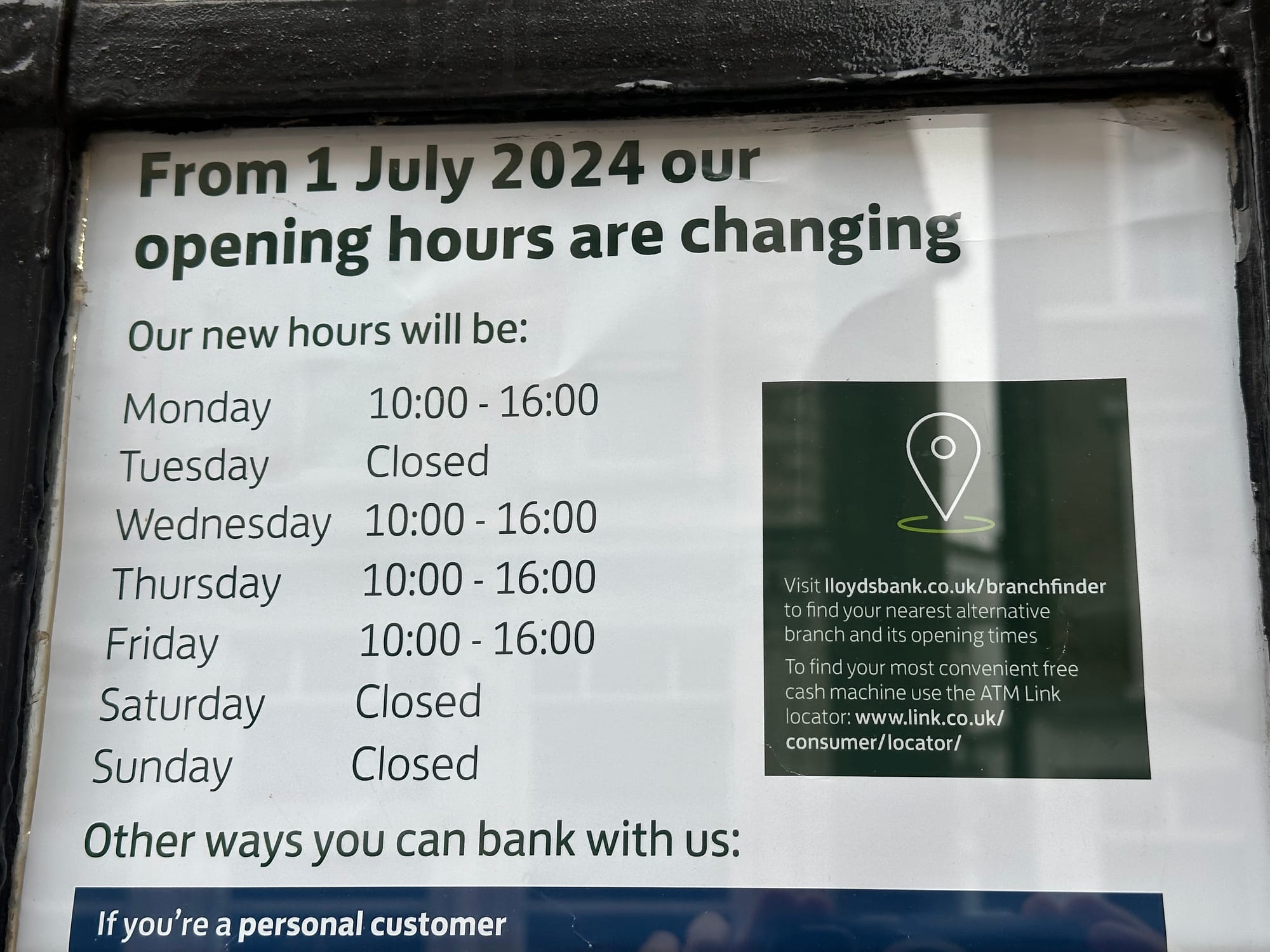
Understanding Standard Banking Hours and Regional Variations
Despite the rise of digital-first institutions, physical branch locations remains a cornerstone for many consumers. Whether it is for notarizing documents, accessing a safe deposit box, or managing large cash transactions, knowing when a branch is accessible is a fundamental aspect of personal finance management.
The Evolution of the Traditional 9-to-5 Model
Most major retail banks in the United States, such as JPMorgan Chase, Bank of America, and Wells Fargo, generally follow a standard operating schedule. Typically, these branches open between 8:00 AM and 9:00 AM and close between 4:00 PM and 6:00 PM on weekdays.
However, “closing time” is often subject to the specific services required. For example, while the lobby might close at 5:00 PM, many branches offer drive-thru windows that remain open until 6:00 PM. In urban centers, banks may extend their hours to accommodate the after-work crowd, whereas rural branches might maintain shorter schedules. This variation necessitates that consumers check their specific branch’s hours via a mobile app or official website before making a trip.
Weekend Operations and the Saturday Shift
Saturday banking has become a standard offering for major institutions, though hours are usually truncated, often running from 9:00 AM to 1:00 PM or 2:00 PM. Sundays remain the universal day of rest for the vast majority of physical banking locations. For individuals working traditional Monday-through-Friday jobs, these Saturday windows are critical for high-touch financial tasks, such as meeting with a loan officer or opening a new investment account. Credit unions, in particular, are known for having more flexible Saturday hours to serve their member-owners more effectively than some commercial giants.
The Impact of Federal and Bank Holidays
One of the most significant hurdles in financial planning is the federal holiday schedule. Because the Federal Reserve observes standard holidays, the “plumbing” of the banking system—the mechanisms that move money between institutions—shuts down. On days like Labor Day, Veterans Day, or Juneteenth, physical branches are closed, and electronic transfers like ACH (Automated Clearing House) may be delayed by a full business day. Understanding this calendar is vital for avoiding late fees on bills or ensuring that payroll is processed on time.
The Digital Revolution: Why “Bank Closing Time” is Becoming Obsolete
While physical doors have locks, the digital portal to your wealth never closes. The shift toward digital banking has fundamentally changed the consumer’s relationship with time. In the modern era, “closing time” refers less to the building and more to the “cut-off time” for processing transactions.
24/7 Access via Mobile and Online Banking
The advent of mobile banking apps has moved the teller window into the consumer’s pocket. You can check balances, move money between savings and checking, and even freeze a lost debit card at 3:00 AM on a Sunday. This constant access has reduced the urgency of visiting a branch. For the modern investor, the ability to respond to market fluctuations or personal emergencies in real-time is a powerful tool for maintaining financial stability.
The Role of ATMs and ITMs (Interactive Teller Machines)
Automated Teller Machines (ATMs) were the first step in breaking the 9-to-5 barrier. Today, we are seeing the rise of Interactive Teller Machines (ITMs). These devices allow customers to speak with a live teller via video link, often well after the lobby has closed. ITMs can handle more complex transactions than a standard ATM, such as cashing checks to the penny or making loan payments. For many, the ITM represents the perfect middle ground: the human touch of a traditional bank with the extended hours of the digital age.
Managing Transfers Outside of Business Hours
It is a common misconception that an online transfer happens “instantly.” While your app may show a balance change immediately, the actual movement of funds often depends on the bank’s internal processing cycle. Transfers initiated on a Saturday night may not “post” until Monday morning. For high-stakes financial moves—such as a down payment on a home—understanding these digital delays is just as important as knowing the physical closing time of the branch.

Strategic Financial Planning Around Bank Schedules
Effective money management requires an understanding of how time impacts the movement of capital. If you wait until the bank “closes” to handle a critical transaction, you may find your funds in “limbo” for several days.
Navigating Federal Reserve Cut-off Times
The Federal Reserve processes transactions in batches. For a deposit or transfer to be credited on the same business day, it usually must be submitted before a specific cut-off time—often between 2:00 PM and 4:00 PM local time. If you deposit a check at an ATM at 7:00 PM on a Friday, that money may not be “available” until Tuesday, considering the weekend and the Monday processing cycle. Strategic planners schedule their largest transactions for Tuesday or Wednesday mornings to ensure maximum liquidity before the weekend.
Understanding Clearing Cycles and Fund Availability
The “closing time” of a bank also dictates the beginning of the “clearing cycle.” Regulation CC governs how long a bank can hold a check before making the funds available. When you deposit a check just before the branch closes, you are essentially racing against the bank’s daily ledger balancing. Knowing these cycles helps in managing “float”—the time between writing a check and the funds leaving your account—and prevents the risk of overdrawing an account due to delayed deposits.
Emergency Access to Funds
Financial emergencies do not wait for business hours. Having a strategy for “after-hours” liquidity is a hallmark of sound personal finance. This includes maintaining an emergency fund in a high-yield savings account that offers instant transfers to a linked checking account, or keeping a credit card with an available balance for immediate needs. Relying solely on a physical branch for emergency cash is a risky strategy in a world where those branches are becoming fewer and farther between.
Business Banking vs. Personal Banking Constraints
For business owners, the question “what time does the bank close” carries significantly more weight. Business finance is often dictated by cash flow cycles, payroll deadlines, and vendor payment terms.
Cash Management for Small Businesses
Retailers and small business owners who deal in high volumes of cash face a unique challenge when the bank closes. Holding large amounts of cash overnight presents a security risk. Most banks offer a “Night Drop” service, allowing business owners to deposit cash and checks into a secure vault after hours. While this solves the security issue, the funds are not typically processed until the next business morning, meaning they cannot be used for immediate electronic payments.
Wire Transfers and International Transactions
In the world of business finance, wire transfers are the gold standard for large, secure payments. However, wire desks at most banks close earlier than the branch itself—often as early as 3:00 PM or 4:00 PM EST to align with the Federal Reserve’s Wire Network (Fedwire) hours. For businesses engaging in international trade, time zone differences further complicate these “closing times,” requiring meticulous scheduling to ensure that capital arrives in a foreign account on the intended date.
Building a Relationship with Your Local Branch Manager
Despite the digital shift, the “human” element of banking remains vital for business finance. Knowing your branch manager and their specific operating quirks can be a competitive advantage. A manager might be able to push through a late-day wire or provide temporary credit if they know your business’s history. In this context, the bank’s closing time is less of a rigid wall and more of a deadline for a collaborative partnership.
The Future of Physical Branches in a Cashless Society
The trend of “closing times” is trending toward “all the time.” As the world moves toward a cashless society, the role of the physical bank branch is being reimagined.
The Rise of Neobanks and Digital-Only Institutions
Institutions like Ally, Chime, and SoFi do not have physical branches, meaning they never “close.” Their overhead is lower, which often translates to higher interest rates for savers. For a generation of consumers who have never stepped foot inside a bank lobby, the concept of a “closing time” is an archaic remnant of the past. These neobanks rely on robust 24/7 customer support and seamless app interfaces to replace the traditional brick-and-mortar experience.

When You Still Need a Physical Person
Even with the rise of AI and digital banking, certain financial milestones still require a physical location. Complex estate planning, medallion signature guarantees, and large-scale commercial lending often necessitate in-person meetings. However, these services are increasingly moving toward an “appointment-only” model. In the future, “what time does the bank close” may be replaced by “when is my scheduled consultation?” This shift allows banks to optimize their staff while providing high-value services to clients on a more personalized schedule.
In conclusion, while the physical clock on the bank wall still matters for certain tasks, the modern financial world operates on a 24-hour cycle. By understanding the interplay between branch hours, digital cut-off times, and federal processing cycles, you can move from being a passive observer of “banker’s hours” to an active, strategic manager of your personal and business wealth. Whether you are racing to the teller window or clicking “send” on a mobile transfer, timing is—and always will be—a critical component of financial success.
aViewFromTheCave is a participant in the Amazon Services LLC Associates Program, an affiliate advertising program designed to provide a means for sites to earn advertising fees by advertising and linking to Amazon.com. Amazon, the Amazon logo, AmazonSupply, and the AmazonSupply logo are trademarks of Amazon.com, Inc. or its affiliates. As an Amazon Associate we earn affiliate commissions from qualifying purchases.