
The notion of a “second moon” orbiting Earth might seem like the stuff of science fiction, yet in the realm of advanced astrophysics and space technology, it’s a concept that holds surprising scientific validity and considerable technological intrigue. Far from being a stable, permanent celestial body akin to Earth’s familiar Moon, a “second moon” typically refers to a diverse class of objects that are temporarily captured by Earth’s gravity, share its orbit around the Sun, or are even theoretically constructed by humanity. The identification, tracking, and potential future interaction with these objects represent significant challenges and opportunities for technological innovation, computational astrophysics, and space engineering. Understanding what constitutes a “second moon” invariably leads to an exploration of cutting-edge observational techniques, orbital mechanics simulations, and ambitious spacefaring concepts.
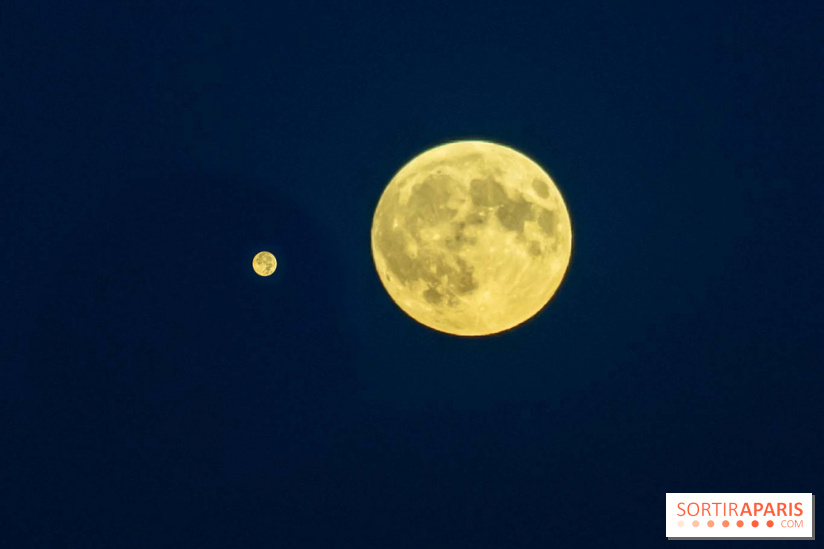
Unpacking the Definitions: Natural Quasi-Satellites and Mini-Moons
When astronomers discuss natural “second moons,” they are generally referring to two primary categories: quasi-satellites and temporarily captured orbiters, often termed “mini-moons.” These objects are not in stable orbits around Earth in the same way the Moon is, but their interactions with our planet’s gravitational field are significant enough to warrant unique study.
Quasi-Satellites: Earth’s Orbital Dance Partners
Quasi-satellites are asteroids or other celestial bodies that orbit the Sun, but their orbital period is very similar to Earth’s, and their paths are intricately linked to our planet. They appear to orbit Earth from our perspective, even though they are technically orbiting the Sun. This complex dance is a dynamic interaction governed by the combined gravitational forces of the Sun and Earth. An excellent example is 3753 Cruithne, an asteroid discovered in 1986, which is sometimes inaccurately described as a second moon due to its horseshoe orbit that periodically brings it close to Earth. While not gravitationally bound to Earth, its orbital resonance creates a co-orbital relationship that makes it behave like a distant, unconventional companion. Tracking such objects requires sophisticated astrometry and precise orbital mechanics calculations, relying heavily on advanced computational models to predict their complex trajectories and long-term stability. The ability to identify and model these orbits demonstrates the incredible power of modern numerical simulation and data processing in astronomy.
Mini-Moons: Transient Visitors
Mini-moons are perhaps the closest real-world phenomenon to the popular conception of a “second moon.” These are small asteroids (typically just a few meters in diameter) that are temporarily captured by Earth’s gravity, entering a short-lived orbit around our planet before eventually escaping or burning up in the atmosphere. The first confirmed mini-moon, 2006 RH120, was discovered in 2006 and orbited Earth for about a year before departing. More recently, 2020 CD3 was another such transient capture, orbiting Earth for several months in 2020. The detection of these fleeting objects is a testament to the advancements in automated sky surveys and rapid data processing pipelines. Telescopes like the Catalina Sky Survey or Pan-STARRS continually scan the heavens, and their data is fed into algorithms designed to identify moving objects and flag potential Earth-crossing or Earth-orbiting bodies. These systems leverage machine learning and pattern recognition to sift through vast quantities of astronomical data, a technological feat that has transformed our ability to monitor near-Earth space. The short duration of these captures makes timely detection and follow-up observations critical, demanding highly responsive robotic telescope networks and real-time data analysis capabilities.
The Technological Frontier of Discovery and Analysis
The identification and characterization of natural “second moons” are heavily reliant on cutting-edge technological advancements in observational astronomy and computational science. Without these tools, most mini-moons and quasi-satellites would remain undetected or misunderstood.
Advanced Observational Systems
High-resolution ground-based telescopes, equipped with sensitive CCD cameras and adaptive optics, play a crucial role in the initial detection and subsequent tracking of these faint, fast-moving objects. Their ability to compensate for atmospheric distortion allows for sharper images and more precise astrometric measurements. Furthermore, space-based telescopes, free from atmospheric interference, offer unparalleled clarity and can detect objects that are too dim or too small for ground-based instruments. The increasing volume of data generated by these observatories necessitates robust data storage, transmission, and processing infrastructures.
Computational Astrophysics and AI
Once observational data is collected, computational astrophysics takes center stage. Sophisticated orbital mechanics software is used to calculate the trajectories of these objects, predict their future paths, and determine their gravitational interactions with Earth and other celestial bodies. These simulations require immense computational power, often running on supercomputers. The application of artificial intelligence (AI) and machine learning (ML) is rapidly transforming this field. AI algorithms can autonomously analyze telescope data to identify potential “second moons,” classify their orbital characteristics, and even flag anomalies that might indicate an unknown phenomenon. This automation significantly reduces the time from observation to discovery and enables astronomers to process the ever-growing torrent of data more efficiently and accurately. For instance, AI can differentiate between instrument artifacts, cosmic rays, and genuine astronomical objects, dramatically streamlining the discovery process.
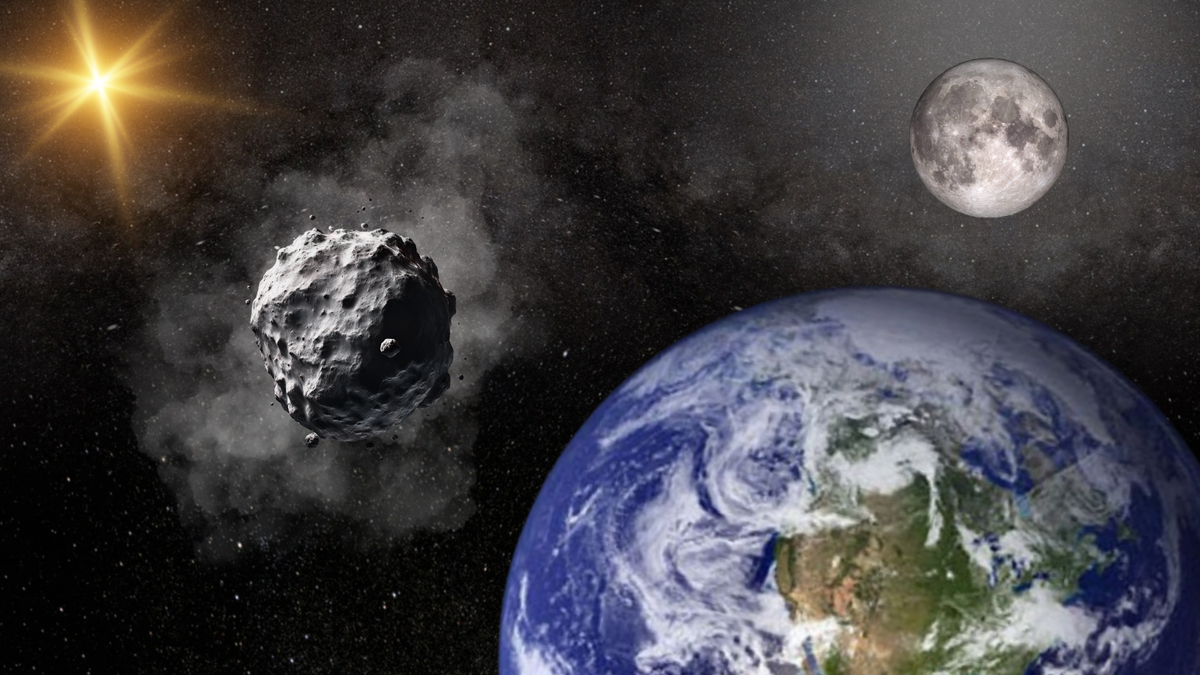
Beyond Natural: The Prospect of Artificial Second Moons
While natural “second moons” are fascinating, the concept of an artificial “second moon” pushes the boundaries of future space technology and engineering. This vision often encompasses large-scale orbital structures or manipulated celestial bodies designed to serve specific human purposes.
Orbital Habitats and Space Stations
The most immediate interpretation of an artificial “second moon” could be a massive, permanently inhabited orbital habitat or a colossal space station. Projects like the International Space Station are nascent examples, but future iterations envision structures many orders of magnitude larger, capable of supporting self-sustaining populations. Building such structures would require revolutionary advancements in materials science (e.g., ultralight, high-strength composites), autonomous robotics for construction and maintenance, advanced life support systems, and sophisticated power generation technologies (e.g., orbital solar arrays, small modular nuclear reactors). The engineering challenges include maintaining orbital stability, radiation shielding, and creating closed-loop ecological systems. These “artificial moons” would serve as research outposts, manufacturing centers, or even staging points for deeper space exploration.
Geoengineering and Planetary-Scale Manipulation
A more audacious, and purely theoretical, concept involves the manipulation of existing celestial bodies or the deployment of mega-structures for geoengineering purposes. Imagine a captured asteroid, engineered and propelled into a stable orbit to serve as a resource hub, a counter-balance for planetary stability, or even a large-scale mirror to reflect sunlight and mitigate climate change. This level of technological capability is far beyond current human reach, requiring breakthroughs in propulsion (e.g., fusion drives, solar sails capable of moving large masses), asteroid mining and construction, and potentially even terraforming technologies. The ethical and practical implications are immense, but the very notion stimulates research into fundamental limits of space engineering.
Implications for Space Exploration and Resource Utilization
The study and potential interaction with “second moons” have profound implications for the future of space exploration, resource acquisition, and planetary defense.
Stepping Stones for Deep Space Missions
Natural mini-moons and captured asteroids could serve as invaluable targets for robotic missions. Their temporary orbits around Earth make them relatively accessible, offering unique opportunities to study primitive solar system material without the high energy cost of traveling to the asteroid belt. These missions could test new propulsion systems, autonomous navigation, and in-situ resource utilization (ISRU) technologies. The ability to “rendezvous and grab” a mini-moon could provide crucial experience for future asteroid mining operations or sample return missions from more distant bodies. An artificial “second moon” could also act as a crucial waystation, allowing for refueling, resupply, and staging of longer duration missions to Mars or beyond, significantly reducing the logistical hurdles of interplanetary travel.
Resource Utilization and Economic Potential
Many asteroids, including those that might become mini-moons or quasi-satellites, are rich in valuable resources like water ice, rare earth metals, and precious metals. Technologies for asteroid mining, such as robotic extractors and refining processes in zero-gravity environments, are actively being developed. If a stable artificial “second moon” could be established and stocked with resources from captured asteroids, it could revolutionize the space economy, providing materials for orbital construction or even for consumption back on Earth. This vision hinges on mature technologies for asteroid rendezvous, capture, processing, and transportation—areas where significant research and development are currently underway.
Planetary Defense Strategies
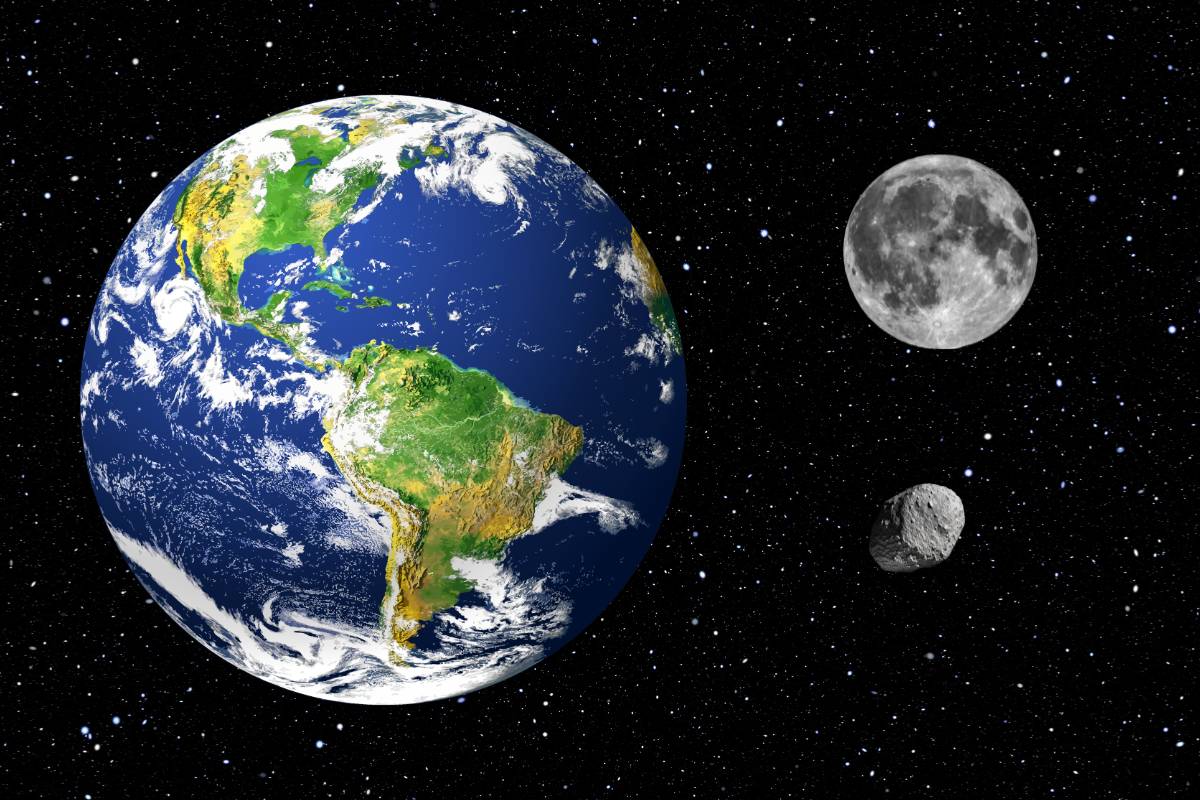
Understanding the orbital dynamics of quasi-satellites and mini-moons is also critical for planetary defense. These objects, by their very nature, demonstrate close interactions with Earth’s gravitational field. While most are small, the knowledge gained from tracking them informs our understanding of how larger, potentially hazardous asteroids might behave if they were to approach or be temporarily captured by Earth. Developing technologies to detect, track, and potentially alter the trajectories of such objects is a high-priority area, integrating advanced sensor arrays, predictive modeling, and potential kinetic impactors or gravity tractor systems. Each “second moon” discovery, natural or theoretical, adds a layer to our technological readiness for safeguarding our planet.
aViewFromTheCave is a participant in the Amazon Services LLC Associates Program, an affiliate advertising program designed to provide a means for sites to earn advertising fees by advertising and linking to Amazon.com. Amazon, the Amazon logo, AmazonSupply, and the AmazonSupply logo are trademarks of Amazon.com, Inc. or its affiliates. As an Amazon Associate we earn affiliate commissions from qualifying purchases.