
A nailer, commonly known as a nail gun, stands as a cornerstone of modern construction and carpentry, representing a significant technological leap over traditional hammering methods. It is an advanced power tool engineered to drive nails into various materials with unparalleled speed, precision, and significantly reduced manual effort. Far from being a mere convenience, the sophisticated design and diverse operational mechanisms of contemporary nailers make them indispensable across a wide spectrum of professional and DIY applications, ranging from heavy-duty framing to delicate finish carpentry.
The Core Functionality and Engineering Principles of a Nailer
At its fundamental level, a nailer automates the repetitive and labor-intensive process of fastening. Instead of relying on manual force to strike a nail, which can be slow, physically demanding, and prone to inconsistency, a nailer harnesses a power source to rapidly propel a nail from a magazine into a workpiece. This mechanism drastically enhances both efficiency and the consistency of fastener placement, especially critical when dealing with large volumes of fastening.
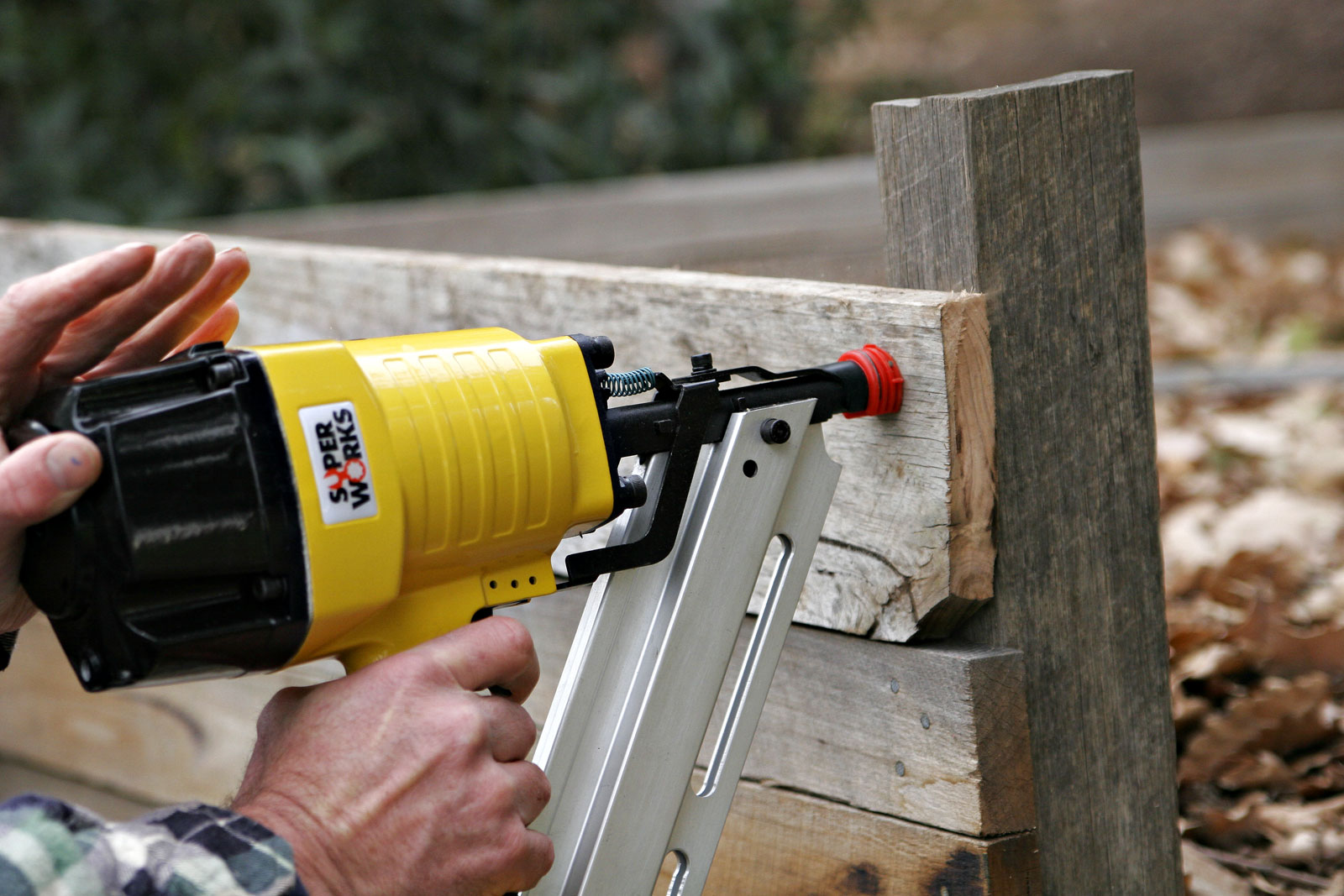
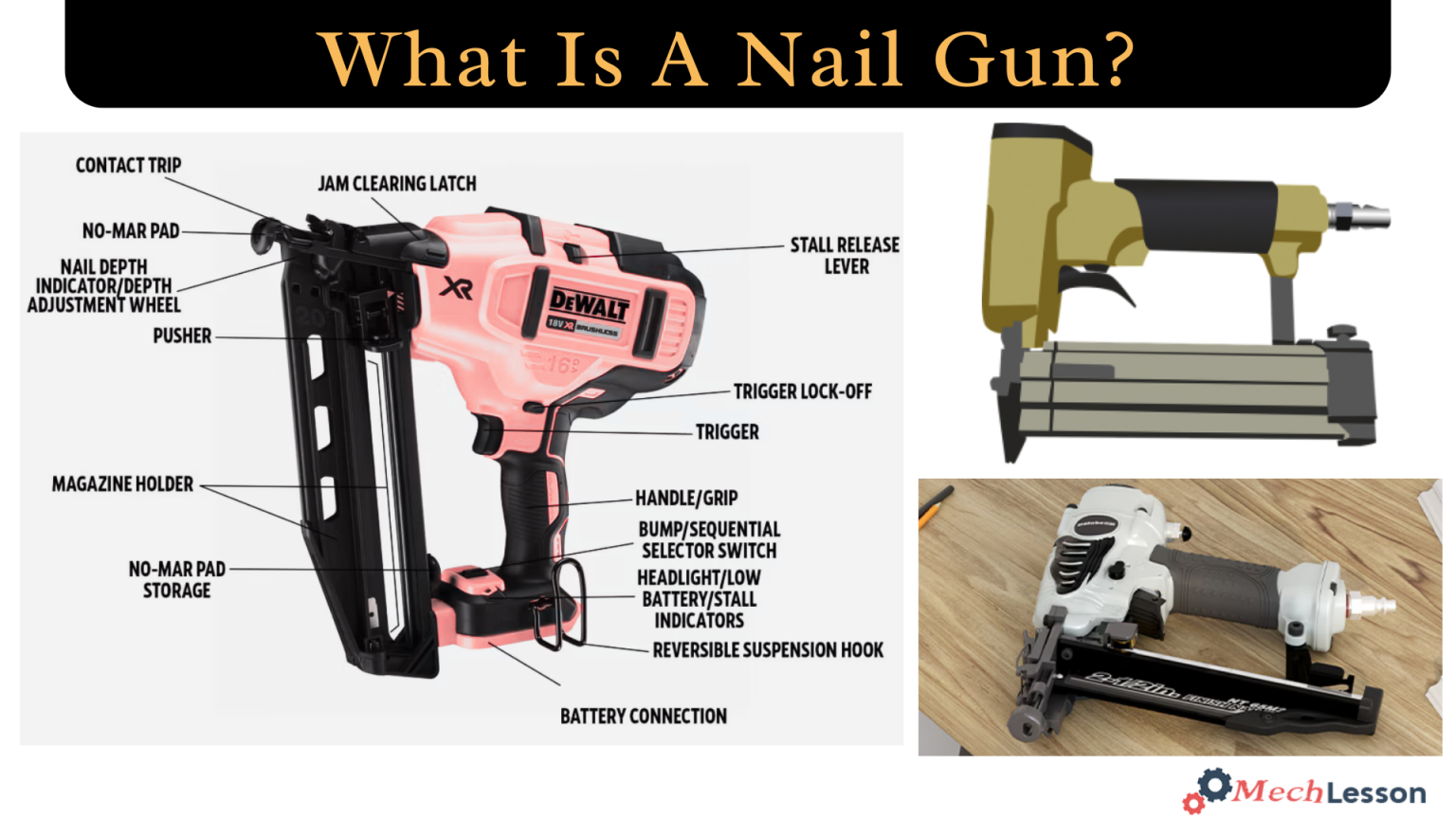
The essential components found in most nailers include:
- The Magazine: This integrated reservoir holds a strip or coil of nails, sequentially feeding them into the firing mechanism. Magazine capacity is a critical design variable, ranging from small strips for precision finishing tasks to large coils for high-volume framing.
- The Firing Mechanism: This constitutes the core operational engine of the tool. It can manifest as a piston driven by compressed air, a motor-driven flywheel, or even a miniature combustion chamber. Upon activation, this mechanism generates the precise kinetic energy required to drive the nail.
- The Trigger System: A safety-interlocked switch that initiates the firing sequence. Modern nailers integrate multiple layers of safety features, such as contact tips that must be firmly pressed against the workpiece before the trigger can activate, thereby preventing accidental discharge and enhancing user safety.
- The Nosepiece/Contact Tip: This part physically engages with the material surface and frequently doubles as a primary safety interlock, ensuring the tool is positioned correctly before firing.
- The Handle and Housing: Designed with ergonomic principles in mind, the housing encases all internal components, providing a comfortable grip for user control and often utilizing durable materials to withstand rigorous industrial environments.
The continuous evolution of the nailer highlights a relentless pursuit of technological improvement in construction and fabrication tools. Early models were simplistic, but contemporary designs integrate advanced electronics, specialized material science, and sophisticated safety engineering to produce tools that are not only powerful and efficient but also precise, reliable, and user-centric.
Types of Nailers and Their Power Technologies
The vast array of nailers available today is a testament to specialized engineering, with each type leveraging distinct power technologies to cater to specific fastening requirements. These technological differences dictate a nailer’s performance characteristics, mobility, and suitability for various tasks.
Pneumatic Nailers
These are perhaps the most ubiquitous and are often regarded as the industrial workhorses of the construction sector. Pneumatic nailers operate by utilizing compressed air, which is supplied by an external air compressor and delivered to the tool via a high-pressure hose.
- Technology: Within the nailer, a piston is rapidly driven forward by a sudden release of compressed air, impacting the nail and embedding it into the material. The residual air pressure then typically assists in retracting the piston, preparing the tool for the subsequent shot.
- Advantages: They boast an exceptional power-to-weight ratio, delivering consistent driving force with a relatively lighter tool body (as the power source is external). They do not require battery charging or fuel cell replacement, ensuring continuous operation. Pneumatic tools are generally characterized by robust durability and extended operational lifespans due to fewer complex electronic components.
- Disadvantages: Their reliance on an air compressor and connecting hose restricts mobility and can introduce trip hazards. The noise generated by the compressor can also be a significant consideration in certain environments.
- Applications: Ideal for framing, roofing, siding, subflooring, and heavy-duty carpentry where continuous, high-volume fastening is a primary requirement.
Cordless Nailers (Battery-Powered)
Representing a significant leap in convenience and portability, cordless nailers eliminate the reliance on air compressors or external power cords. These tools are predominantly powered by rechargeable lithium-ion battery packs, often shared across broader tool platforms.
- Technology: Cordless nailers generally employ two primary drive mechanisms:
- Brushless Motor/Flywheel System: A high-speed electric brushless motor rapidly spins an internal flywheel, which efficiently stores kinetic energy. When the trigger is activated, a ram is propelled by the flywheel, driving the nail. These systems frequently incorporate advanced electronic controls to ensure consistent power delivery and efficient thermal management.
- Sealed Nitrogen Gas Spring (Gas Piston): In this design, a brushless motor works to compress a sealed nitrogen gas spring. Upon trigger pull, the stored energy within the spring is instantaneously released, driving the nail. This mechanism closely mimics the operational feel of a pneumatic tool but with self-contained power.
- Fuel Cell (Combustion) Hybrid: Some professional cordless models augment battery power with a small, replaceable fuel cell (typically containing butane or propane gas). The battery ignites the gas, creating a micro-explosion that generates the force to drive the nail. The battery powers the fan, electronics, and recharges the tool’s internal mechanism for subsequent firing.
- Advantages: Offer unparalleled portability, rapid setup times, and freedom from hoses or cords, making them exceptionally suited for job sites lacking power access or for quick, intermittent fastening tasks. Many share battery platforms with other power tools, enhancing system versatility and reducing overall battery investment.
- Disadvantages: Typically heavier than their pneumatic counterparts due to the integrated battery and motor. Battery life management is crucial for high-volume work, and fuel cells require periodic replacement. Generally carry a higher initial purchase cost.
- Applications: Excellently suited for trim and finish carpentry, decking, light framing, fencing, and any application where mobility, rapid deployment, and minimal setup time are paramount.
Powder-Actuated Nailers
These are highly specialized and extremely powerful tools engineered to drive fasteners into exceptionally hard materials such as concrete, steel, and solid masonry.
- Technology: They utilize a small explosive charge, akin to a blank firearm cartridge, to generate the immense force necessary to drive a hardened pin or stud. A firing pin within the tool strikes the primer of the cartridge, igniting the propellant and creating a powerful burst of energy.
- Advantages: Capable of fastening in applications where conventional methods would be entirely ineffective.
- Disadvantages: Require stringent safety protocols due to the use of explosive charges. Regulations often mandate certified operators, and their application is highly specialized, limiting versatility for general carpentry.
- Applications: Anchoring wooden framing to concrete slabs, securing electrical conduit, and fastening various fireproofing materials to structural steel.
Key Technological Features and Advancements
Modern nailers are replete with innovative features that significantly enhance performance, user safety, and overall operational efficiency, reflecting the continuous pursuit of excellence in power tool technology.
Depth Adjustment and Sequential Firing
- Depth Adjustment: This crucial feature empowers users to precisely control the depth to which a nail is driven. Adjustable depth of drive is critical for achieving consistent countersinking in delicate finish work or ensuring optimal penetration without over-driving in structural framing. This adjustment is typically managed via an intuitive dial or lever mechanism that alters the contact tip’s position relative to the fastener.
- Sequential Firing: A paramount safety and precision feature, requiring the user to firmly press the contact tip against the workpiece before the trigger can be pulled. This dual-action mechanism virtually eliminates accidental discharge and ensures controlled placement of each fastener. Some advanced tools also offer “bump fire” or “contact actuation” modes, where the trigger is held down and nails are fired simply by repeatedly pressing the contact tip against the material, ideal for high-speed, non-precision tasks. Sophisticated electronic controls manage these firing sequences, guaranteeing consistency and safety across various modes.
Jam Clearing Mechanisms
Nail jams are an unavoidable operational reality, particularly when dealing with bent fasteners or material inconsistencies. Modern nailers are engineered with sophisticated, tool-free jam clearing mechanisms. These designs allow users to quickly and easily open the nosepiece, clear any obstruction, and resume work with minimal downtime, reflecting a deep understanding of real-world usage scenarios and a commitment to maximizing operational efficiency.
Brushless Motors and Battery Innovation
In the realm of cordless nailers, the widespread adoption of brushless motors has been a transformative development. Unlike older brushed motors, brushless variants leverage electronic commutators, offering several distinct advantages:
- Increased Efficiency: Less energy is dissipated as wasteful heat, translating directly into significantly longer battery runtimes per charge.
- Enhanced Power and Torque: More power is effectively transferred to the drive mechanism, leading to greater driving force.
- Extended Tool Life: The absence of physical brushes, which are prone to wear, results in reduced maintenance requirements and a substantially longer operational lifespan for the tool.
- Compact Design: Brushless technology often facilitates smaller, lighter, and more ergonomically balanced tool designs.
These motor advancements, coupled with continuous improvements in lithium-ion battery technology (including higher energy density, faster charging cycles, and intelligent thermal management systems), have propelled cordless nailers into a highly competitive position against their pneumatic counterparts for a vast array of applications.
Smart Features and Connectivity
The convergence of power tools with the “internet of things” (IoT) is an emerging trend. Select high-end professional nailers are beginning to integrate smart features, enhancing their utility beyond mere fastening:
- Advanced Battery Status Indicators: Beyond simple lights, these indicators can provide precise estimates of remaining shots or operational time.
- Tool Tracking and Management: Bluetooth connectivity enables tools to be tracked across vast job sites, assisting in theft prevention, inventory management, and asset utilization.
- Diagnostic Feedback: Companion mobile applications can provide invaluable data on tool usage patterns, proactive maintenance alerts, and guided troubleshooting steps.
While not yet universally adopted, these features signify a future where nailers evolve beyond purely mechanical devices, becoming intelligent components within a broader, interconnected construction management ecosystem.
Applications and Industry Impact
The invention and continuous refinement of the nailer have irrevocably transformed numerous industries, leading to dramatic improvements in productivity, worker safety, and overall project quality.
- Construction: From the rapid erection of residential homes to the assembly of intricate commercial structures, nailers are essential for the speed and consistency required in framing and structural assembly. Specialized roofing nailers efficiently secure shingles, while siding nailers handle various exterior cladding materials with precision.
- Carpentry and Woodworking: Finish nailers and brad nailers are indispensable for delicate trim work, cabinetry fabrication, furniture assembly, and decorative molding installations, where precision, minimal material marring, and aesthetically pleasing results are paramount.
- Manufacturing: Production lines for prefabricated components, such as roof trusses, industrial pallets, and bespoke furniture units, heavily rely on automated or semi-automated nailer systems for high-speed, repetitive assembly tasks.
- Flooring Installation: Specialized flooring nailers (which often use cleats or staples) significantly accelerate the installation of hardwood and engineered wood flooring, ensuring tight, secure, and visually appealing fastenings.
- DIY and Home Renovation: The increasing accessibility, affordability, and user-friendliness of smaller, battery-powered nailers have empowered homeowners to confidently undertake projects that previously demanded professional expertise or tedious, time-consuming manual labor.
The ability to complete fastening tasks substantially faster, with greater accuracy, and with significantly reduced physical strain has directly contributed to accelerated project completion rates, improved ergonomic conditions for workers, and a reduction in work-related injuries. This technological leap has also enabled more consistent quality in fastened materials, minimizing costly rework and enhancing overall structural integrity.
Choosing the Right Nailer for Your Needs
Selecting the optimal nailer requires a careful consideration of the specific application, power requirements, desired mobility, and budgetary constraints.
- Task Specificity: Different nailers are engineered to handle particular fastener types and sizes (e.g., large framing nails, medium finish nails, tiny brads). It is crucial to match the nailer to the material and the precise fastener size required for the job.
- Power Source: Pneumatic nailers offer continuous, robust power and generally lighter tools, making them ideal for heavy-duty, high-volume, continuous work. Cordless options provide unparalleled mobility and convenience for smaller jobs, remote sites, or areas without readily available air access. Powder-actuated nailers are strictly reserved for fastening into concrete and steel.
- Ergonomics and Weight: For tasks involving extended periods of use, the tool’s weight, balance, and ergonomic design are critical factors in preventing user fatigue and enhancing control. Cordless tools, due to integrated power sources, tend to be heavier than their pneumatic counterparts.
- Safety Features: Always prioritize nailers equipped with robust safety mechanisms, such as multi-stage sequential firing and responsive contact tips, to minimize the risk of accidental discharge and ensure safe operation.
- System Compatibility: For cordless tools, consider investing in a nailer that shares a battery platform with other power tools you already own. This strategy can lead to significant cost savings on batteries and chargers, while also enhancing overall convenience and tool interchangeability.
In essence, a nailer transcends the definition of a mere hammer replacement; it is a sophisticated power tool that embodies decades of dedicated engineering innovation. From its fundamental mechanical principles to the seamless integration of advanced electronics, efficient brushless motors, and intelligent smart features, the nailer continues its trajectory of evolution, consistently pushing the boundaries of efficiency, safety, and versatility in fastening technology. A thorough understanding of its various types and sophisticated features is therefore paramount to fully leveraging its immense potential in any modern construction or woodworking endeavor.
aViewFromTheCave is a participant in the Amazon Services LLC Associates Program, an affiliate advertising program designed to provide a means for sites to earn advertising fees by advertising and linking to Amazon.com. Amazon, the Amazon logo, AmazonSupply, and the AmazonSupply logo are trademarks of Amazon.com, Inc. or its affiliates. As an Amazon Associate we earn affiliate commissions from qualifying purchases.