
In an era dominated by cloud storage, terabyte hard drives, and instant digital access, the concept of storing vast amounts of information on a small sheet of film might seem an anachronism. Yet, microfiche, a technology developed in the mid-20th century, stands as a testament to ingenuity in data preservation and retrieval, bridging the gap between paper documents and the digital revolution. Understanding what a microfiche is involves delving into its technical specifications, its operational mechanics, and its pivotal role in information management before the widespread adoption of digital systems.
The Technical Foundations of Microfiche Technology
Microfiche is a flat sheet of photographic film, typically 105 mm x 148 mm (approximately 4 x 6 inches), upon which miniature images of document pages are stored. It is one of several microforms, alongside microfilm rolls and aperture cards, designed to store documents in a highly compressed format, significantly reducing the physical space required for archives.

Definition and Physical Characteristics
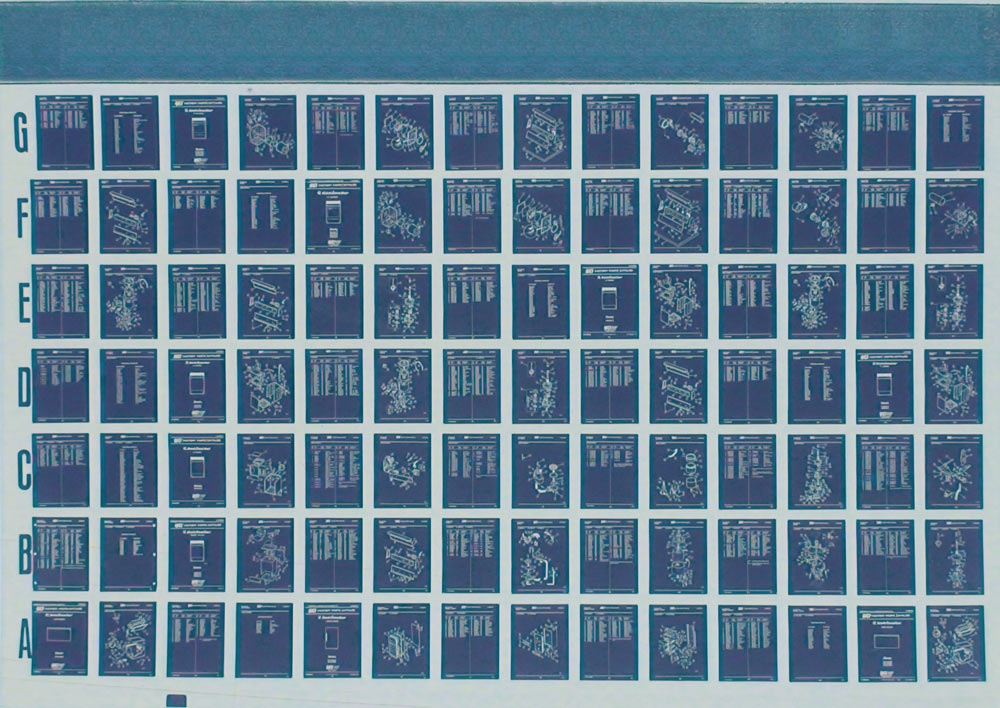
At its core, a microfiche is a sophisticated form of photography. Documents, whether text, images, or technical drawings, are photographed at greatly reduced sizes and arranged in a grid pattern on the film sheet. These reductions can be substantial, ranging from 24x to 48x, meaning an entire standard letter-sized page might occupy less than a millimeter on the film. A single sheet of microfiche can therefore hold anywhere from 98 pages to several hundred pages of information, depending on the reduction ratio and the layout used.
The film itself is typically made of polyester or acetate base coated with a photographic emulsion. It can be produced as “positive” images, where text appears dark against a light background, mimicking a printed page, or “negative” images, where light text appears against a dark background. Negative images are often preferred for their readability on microfiche readers and their resistance to dust and scratches appearing prominently.
How Information is Stored and Indexed
The process of creating microfiche involves specialized cameras that precisely miniaturize documents onto the film. These cameras are designed to maintain image quality and resolution even at extreme reduction ratios. Each image is systematically placed in a predetermined grid on the microfiche sheet. For ease of access, a human-readable title strip is typically printed along the top edge of the fiche, containing identifying information such as the document title, date, and sometimes an index range.
Beyond the title strip, indexing on microfiche is inherently manual. Users must visually locate the desired section based on a conceptual understanding of the fiche’s content or external indexes. Some microfiche systems, particularly those generated by computers (Computer Output Microfiche or COM), might include internal indexes at the beginning of the fiche, mapping page numbers to grid coordinates, enhancing navigability within the limited search capabilities of the medium.
The Role of the Microfiche Reader
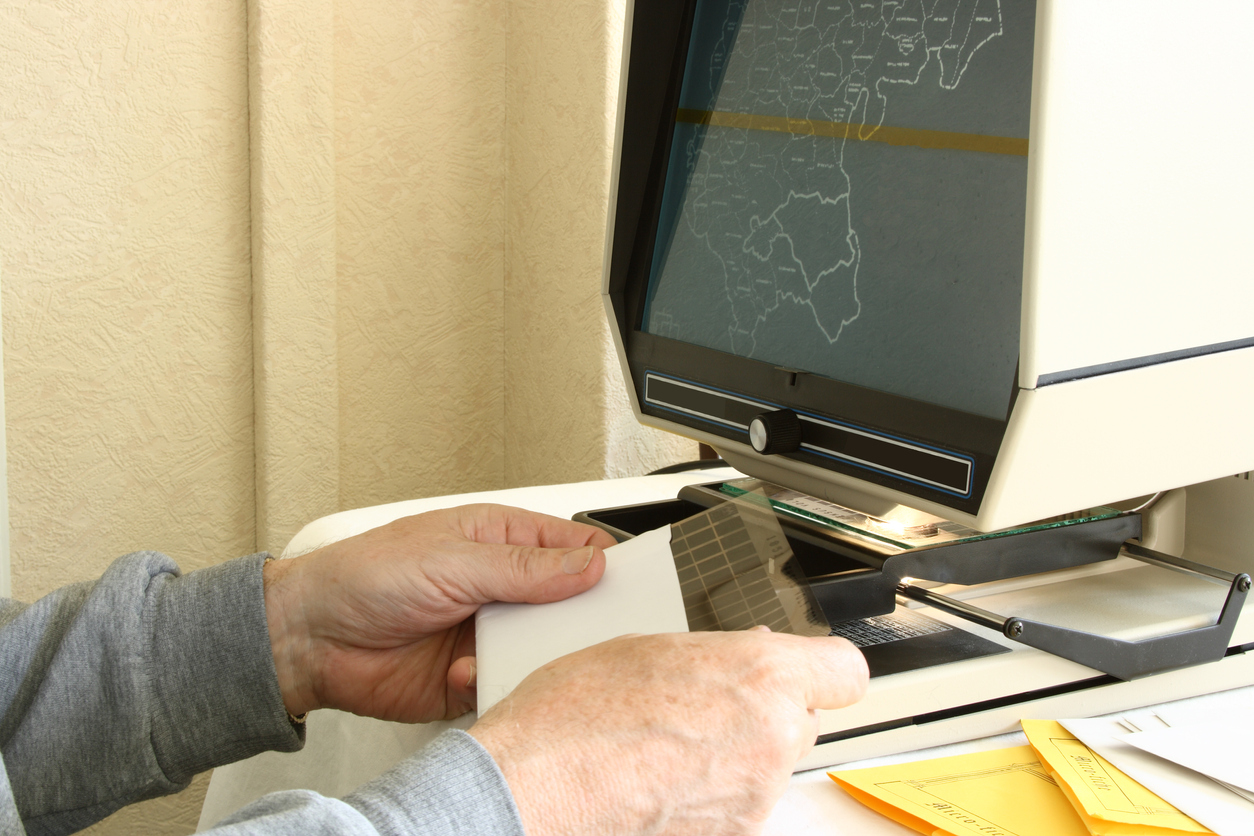
Accessing the information stored on microfiche necessitates a dedicated piece of equipment: the microfiche reader. This device uses a powerful light source to project the miniaturized image from the film through a lens system onto a viewing screen, re-enlarging it to a readable size, often larger than the original document.
Microfiche readers vary in sophistication. Basic models are purely optical, requiring manual manipulation of the fiche and focus adjustments. More advanced readers might include motorized fiche carriers for easier navigation, multiple lens options for different reduction ratios, and even built-in printers (reader-printers) to produce hard copies of selected pages. The optics of the reader are critical; a high-quality lens system is essential to resolve the fine details of the miniaturized text and images, ensuring legibility and preserving the integrity of the original document.
Historical Significance and Applications in Information Management
Before the advent of widespread digital computing and the internet, microfiche represented a revolutionary leap in information storage and distribution technology. Its impact on various sectors was profound, addressing critical challenges related to physical storage space, document preservation, and efficient information dissemination.
Archival Preservation and Longevity
One of the most compelling advantages of microfiche, particularly in its heyday, was its exceptional archival quality. Unlike paper, which is susceptible to degradation from acid, insects, and environmental factors, properly processed and stored silver-halide microfiche can last for 500 years or more. This incredible longevity made it an ideal medium for preserving critical historical records, rare manuscripts, academic research, and government documents for future generations. The physical nature of the medium also provided inherent security against data corruption, obsolescence of file formats, or cyber threats—challenges that plague purely digital archives.
Business and Government Records Management
In the corporate and governmental spheres, microfiche offered practical solutions for managing ever-growing mountains of paperwork. Businesses used it to archive invoices, legal documents, human resources records, and financial statements, significantly reducing the need for sprawling physical file cabinets and warehouses. Government agencies similarly adopted microfiche for storing census data, patent applications, legislative records, and land deeds. The reduction in physical volume translated directly into cost savings on real estate, as well as improved efficiency in locating specific records compared to sifting through countless paper folders.
Library and Research Usage
Libraries, in particular, embraced microfiche as a core technology for extending their collections and preserving fragile materials. Research institutions could acquire microfiche copies of rare books, historical newspapers, and extensive scholarly journals, making previously inaccessible resources available to a wider audience without the risks associated with handling original documents. For researchers, microfiche provided a compact and relatively uniform format for accessing vast bodies of literature and primary sources, fostering academic inquiry and historical study on an unprecedented scale.
Advantages and Limitations in the Digital Age
While microfiche played a crucial role for decades, the rise of digital technologies has highlighted both its enduring strengths and its inherent limitations, leading to a complex relationship with modern information management practices.
Enduring Strengths: Durability, Security, and Cost-Effectiveness
Microfiche maintains several distinct advantages even in a digitally saturated world. Its remarkable durability and longevity, as previously noted, make it invaluable for “cold storage” of data that needs to survive centuries. Being an analog, physical medium, it is immune to digital obsolescence, electromagnetic pulse (EMP) attacks, and cybersecurity breaches. There’s no file format to become outdated, no operating system to fail, and no network to compromise. Retrieval, while slower, is entirely self-contained, requiring only a light source and lenses, making it resilient in scenarios where digital infrastructure is compromised or unavailable. For extremely large volumes of static data, the initial cost of generating microfiche and the ongoing cost of storing it (in terms of space and environmental controls) can be surprisingly competitive compared to the recurring expenses of digital storage, backup, and migration strategies.
Operational Challenges: Access, Searchability, and Interoperability
Despite its archival prowess, the operational limitations of microfiche are stark when compared to digital data. Accessing information is inherently manual and sequential; there’s no “Ctrl+F” for full-text searching, no hyperlinks, and no quick keyword queries. Users must know approximately where the information resides or rely on external indexes. Sharing microfiche requires physical distribution, and collaboration is cumbersome. Furthermore, the optical resolution of readers can sometimes be a limiting factor, and producing high-quality copies from reader-printers can be slow and expensive. Integrating microfiche content into modern digital workflows or databases is practically impossible without an intermediary conversion process, severely limiting interoperability with contemporary information systems.
The Transition to Digital: Microfiche Conversion
The inherent limitations of microfiche regarding access and integration in a digital world have driven a significant industry around microfiche conversion, transforming analog film into searchable, sharable digital files.
The Digitization Process
Microfiche digitization involves specialized high-resolution scanners designed to capture images directly from the film. These scanners differ from typical document scanners in their ability to illuminate transparent film, correct for film imperfections, and precisely frame individual pages from the micro-images. The process typically involves:
- Preparation: Cleaning the microfiche to remove dust and fingerprints, which would otherwise appear as flaws in the digital image.
- Scanning: The microfiche is fed into a specialized scanner that captures each miniature image at a high optical resolution (e.g., 300-600 dpi or higher) in grayscale or color.
- Image Processing: Raw scans undergo a series of digital enhancements. This includes de-skewing (correcting for misaligned images), de-speckling (removing dust artifacts), cropping to individual page boundaries, and adjusting contrast and brightness for optimal readability.
- Optical Character Recognition (OCR): For text-based documents, OCR software is applied to convert the image-based text into machine-readable text. This step is crucial as it enables full-text searchability within the digitized documents.
- Indexing and Metadata Creation: Digital files are indexed with relevant metadata (e.g., title, date, author, original fiche number, page range) to facilitate retrieval within digital archives.
- File Format Conversion: The final digital images are saved in standard archival formats like TIFF or PDF/A (for long-term preservation), or more accessible formats like JPEG or searchable PDF.
Benefits of Digital Conversion
Digitizing microfiche unlocks a multitude of benefits, fundamentally transforming access and utility:
- Enhanced Accessibility: Information becomes available globally, 24/7, from any device with an internet connection.
- Advanced Searchability: OCR technology allows for full-text keyword searches, drastically speeding up information retrieval.
- Improved Preservation: While microfiche has physical longevity, digital copies protect against loss from physical damage to the original film and enable creation of multiple backups.
- Easier Sharing and Collaboration: Digital files can be instantly shared via email, cloud platforms, or integrated into document management systems.
- Space Savings (Physical): Eliminates the need for physical microfiche storage and readers.
- Integration with Modern Systems: Digital files can be incorporated into databases, enterprise content management (ECM) systems, and other digital workflows.
Modern Archival Strategies
Today, organizations often adopt hybrid archival strategies. While new documents are typically “born digital,” vast legacy archives on microfiche necessitate conversion. In some critical applications, such as ultra-long-term government archives or situations requiring immunity to electromagnetic interference, microfiche might still be generated as a secondary, physically secure backup to digital records. This approach combines the accessibility and functionality of digital data with the unparalleled longevity and resilience of microform technology, providing a robust, multi-layered preservation strategy.
The Enduring Legacy of Micrographics
The journey of information storage technology has moved rapidly from clay tablets to paper, from microform to magnetic tape, optical discs, and now sophisticated cloud architectures. Microfiche, though largely superseded for active information management, remains a fascinating and critical chapter in this evolution. It solved a monumental problem of its time: how to store and access an ever-increasing volume of information efficiently and durably.
Its continued presence in the form of historical archives being actively digitized underscores its enduring impact. Understanding microfiche is not just about appreciating a past technology; it’s about recognizing the fundamental challenges of data preservation that persist, and how technological innovations, whether analog or digital, continue to address them in different ways. The legacy of micrographics is a reminder that while the mediums change, the imperative to capture, preserve, and access knowledge remains constant.
aViewFromTheCave is a participant in the Amazon Services LLC Associates Program, an affiliate advertising program designed to provide a means for sites to earn advertising fees by advertising and linking to Amazon.com. Amazon, the Amazon logo, AmazonSupply, and the AmazonSupply logo are trademarks of Amazon.com, Inc. or its affiliates. As an Amazon Associate we earn affiliate commissions from qualifying purchases.