
In the fast-evolving landscape of technology, from developing intuitive software to refining complex AI algorithms, understanding the impact of individual changes is paramount. This quest for clarity often leads developers, product managers, and data scientists to statistical methods that dissect how different factors contribute to an outcome. Among these foundational concepts, the “main effect” stands out as a critical tool for isolating and interpreting the singular influence of a variable.
The Core Concept in Tech Experimentation
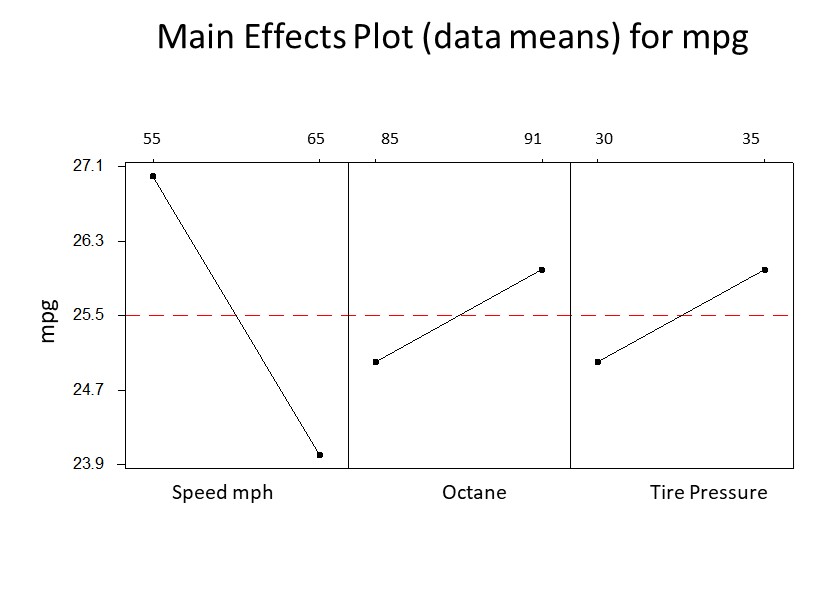
At its heart, a main effect refers to the direct and independent influence of an independent variable on a dependent variable, averaged across all levels of other independent variables in an experimental design. In simpler terms, it answers the question: “What is the primary impact of this specific factor on the outcome, regardless of other factors?” This concept is indispensable in technology for creating robust products, optimizing user experiences, and validating AI model performance.
Defining the Main Effect
Imagine you are testing a new feature for a mobile application. You want to know if changing the color of a “Buy Now” button from blue to green increases conversions. The button color is your independent variable, and the conversion rate is your dependent variable. If, on average, changing the button color to green consistently leads to a higher conversion rate, irrespective of, say, the product image displayed or the time of day, then button color has a main effect on conversions.
This isolation of impact is crucial because tech experiments often involve multiple variables. A main effect strips away the complexity of potential interactions between these variables to highlight the standalone power of one. It provides a clear, actionable insight into whether a particular change, in isolation, makes a significant difference.
Why It Matters for Software and AI
For software developers, product managers, and AI engineers, understanding main effects is not merely an academic exercise; it’s a strategic necessity.
- Resource Allocation: By identifying which changes have the most significant main effects, teams can prioritize development efforts, allocating resources to features or optimizations that genuinely move the needle.
- Faster Iteration: Clear insights into individual variable impacts enable faster, more confident iterative development cycles, leading to quicker deployment of effective solutions.
- Debugging and Performance Tuning: When an application isn’t performing as expected, isolating the main effect of a specific code change, API integration, or system parameter can pinpoint the root cause efficiently.
- AI Model Interpretability: In AI, understanding how individual hyperparameters or input features drive model predictions is essential for debugging, improving, and trusting complex algorithms.
Main Effects in A/B Testing and Product Development
A/B testing is a cornerstone of data-driven product development, enabling teams to compare two versions of a product, feature, or design element to determine which performs better. Main effects are the primary insights derived from these tests.
Isolating Feature Impact
Consider an e-commerce platform testing a new checkout flow. They might simultaneously test two variations: one with a simplified “progress bar” at the top and another with a “single-page” checkout design. Each of these is an independent variable. The main effect analysis would tell them if the presence of a progress bar, on its own, significantly impacts completion rates, or if the single-page design, independently, leads to higher satisfaction scores.
Without understanding main effects, a team might attribute success (or failure) to the wrong factor, or worse, miss a crucial insight about a single, powerful change. This rigorous approach prevents developers from getting bogged down in anecdotal evidence or intuitions that lack statistical backing.
Understanding User Experience Changes
UX designers constantly experiment with interface elements, navigation patterns, and content presentation. A main effect analysis can clarify:
- Does changing the primary call-to-action (CTA) button’s text from “Learn More” to “Get Started” lead to a higher click-through rate, irrespective of its placement on the page?
- Does increasing the font size of body text improve readability scores, regardless of the overall page layout?
- Does implementing a dark mode option increase user engagement, independent of other personalization settings?
Each of these questions seeks to uncover the main effect of a single UX change, providing clear guidance for design iterations that genuinely enhance the user journey.
Practical Examples
- Software Features: A social media app might test the main effect of introducing “story reactions” on user engagement metrics like daily active users (DAU).
- UI/UX Elements: An analytics dashboard might test if a new chart type (e.g., Gantt vs. Waterfall) has a main effect on how quickly users interpret data.
- Backend Optimizations: For a streaming service, optimizing the video buffering algorithm (independent variable) might have a main effect on reducing playback interruptions (dependent variable), irrespective of network conditions.
Unpacking Variables in AI and Machine Learning
In the realm of Artificial Intelligence and Machine Learning, the concept of main effects is equally, if not more, critical. It helps engineers understand and fine-tune complex models, ensuring they behave predictably and efficiently.
Tuning Model Performance
AI models are built upon various parameters and features. When training a model, engineers often tweak these elements to achieve optimal performance. A main effect analysis can reveal:
- Does increasing the number of hidden layers in a neural network (an independent variable) significantly improve classification accuracy (dependent variable), regardless of the activation function used?
- Does a specific feature engineering technique (e.g., one-hot encoding vs. label encoding) have a main effect on model training time or prediction accuracy?
By isolating these main effects, AI engineers can make informed decisions about model architecture, feature selection, and hyperparameter tuning, leading to more robust and performant AI systems.
Hyperparameter Optimization and Main Effects
Hyperparameters are external configurations for a machine learning model whose values cannot be estimated from data. Examples include the learning rate, the number of epochs, or the regularization strength. Optimizing these can be a complex multivariate problem. Understanding the main effect of each hyperparameter provides a baseline understanding:
- What is the isolated impact of varying the learning rate on the model’s convergence speed?
- How does changing the batch size independently influence computational resource consumption?
These insights guide more advanced optimization techniques, such as grid search or Bayesian optimization, by providing a foundational understanding of each parameter’s standalone contribution.
Evaluating AI-driven Features
When integrating AI capabilities into products, it’s vital to assess their impact. For instance, a smart assistant might introduce a new natural language processing (NLP) model for intent recognition. A main effect analysis could evaluate:
- Does the new NLP model (independent variable) lead to a significant increase in successful task completions (dependent variable), regardless of the user’s accent or background noise?
- Does implementing a recommendation engine based on collaborative filtering (independent variable) significantly boost product sales (dependent variable), even when compared to simpler rule-based recommendations?
These evaluations ensure that AI innovations genuinely deliver value and improve user experiences rather than adding unnecessary complexity.
Differentiating from Interaction Effects
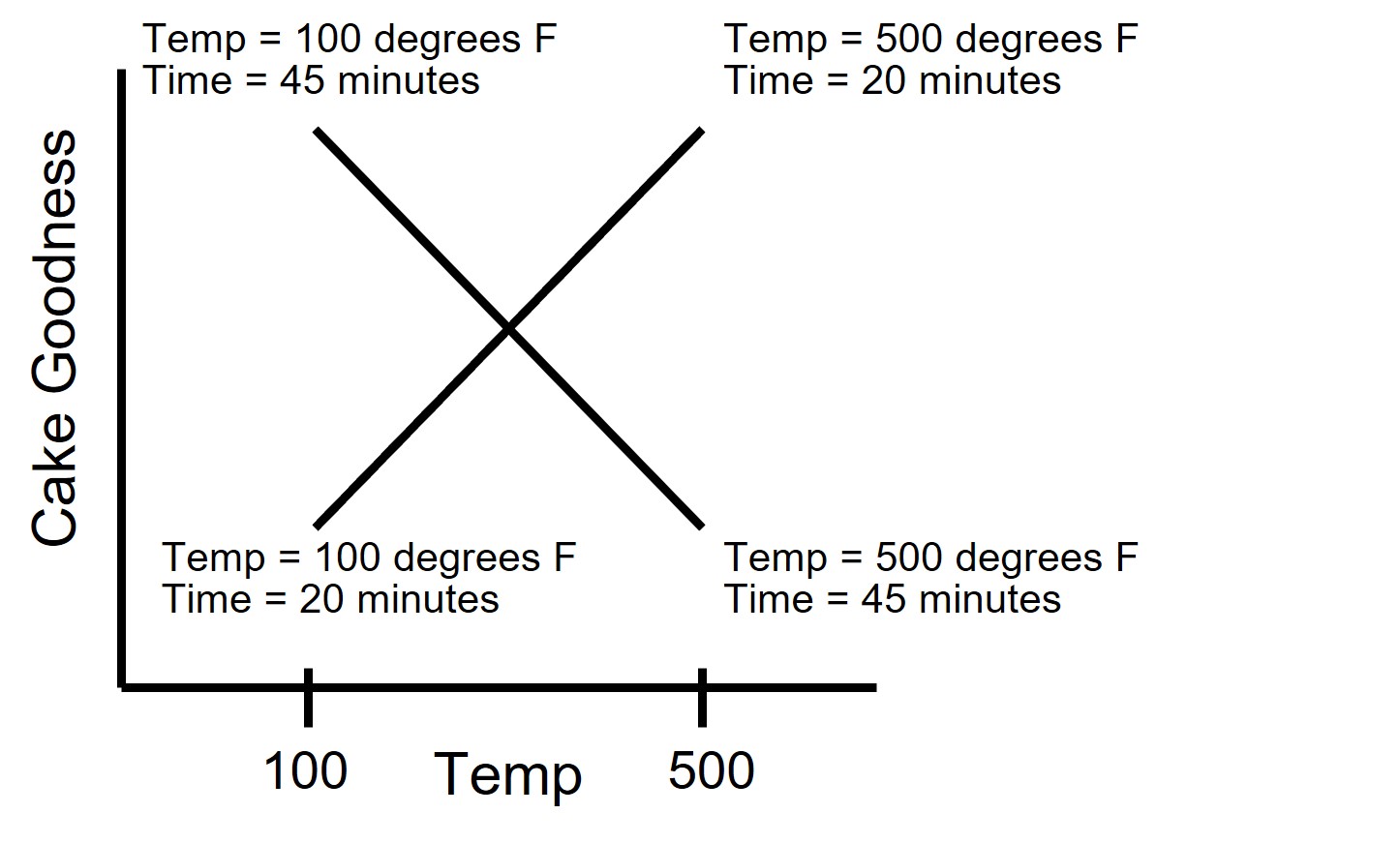
While understanding main effects is fundamental, it’s equally important in complex tech scenarios to distinguish them from “interaction effects.” An interaction effect occurs when the effect of one independent variable on the dependent variable changes depending on the level of another independent variable. Ignoring interactions can lead to misleading conclusions based solely on main effects.
When Variables Work Together
Consider an application where you’re testing two factors: (1) Notification frequency (daily vs. weekly) and (2) Content personalization (generic vs. personalized).
- A main effect might show that personalized content generally increases engagement, regardless of frequency.
- However, an interaction effect could reveal that personalized content only significantly boosts engagement when delivered weekly, but has little impact (or even a negative one) when delivered daily. In this case, the effect of content personalization depends on notification frequency.
For tech products, interaction effects are incredibly common. A new UI element might perform wonderfully on desktop but poorly on mobile, indicating an interaction between the UI element and the device type. An AI model parameter might only show its true benefit when combined with a specific optimization algorithm.
Why Both Are Essential for Deep Insights
To fully optimize tech products and AI models, both main and interaction effects must be considered.
- Main effects provide straightforward answers about individual variable impact, useful for initial hypotheses and simple optimizations.
- Interaction effects reveal the nuances, dependencies, and conditions under which certain variables are most effective. They uncover the “it depends” scenarios that often hold the key to truly sophisticated and context-aware solutions.
By understanding both, tech teams can move beyond surface-level observations to develop highly optimized systems that perform exceptionally well under specific conditions, leading to more intelligent features, robust architectures, and superior user experiences.
Implementing and Interpreting Main Effect Analysis
Applying the concept of main effects in technology requires methodical experimentation, statistical rigor, and careful interpretation.
Tools and Methodologies
Many tools and platforms facilitate the analysis of main effects:
- A/B Testing Platforms: Tools like Optimizely, VWO, or Google Optimize often provide built-in statistical analysis that highlights the main effect of your tested variations.
- Statistical Software: R, Python with libraries like SciPy, StatsModels, or pingouin, offer robust capabilities for performing ANOVA (Analysis of Variance) or regression analysis, which are standard methods for detecting main effects.
- Data Warehouses & BI Tools: Combining experimental data with analytical tools allows for deep dives into user behavior segmented by experimental groups, making it easier to visualize and interpret effects.
- Experimentation Frameworks: Internal experimentation platforms commonly built by large tech companies automate much of the setup, data collection, and analysis required for identifying main and interaction effects.
Making Data-Driven Decisions
The ultimate goal of identifying main effects is to inform decision-making. If a clear main effect is observed (e.g., a new button color consistently drives 5% more conversions with statistical significance), product teams can confidently roll out that change. Conversely, if no significant main effect is found, it indicates that the particular change might not be worth the development effort, or that more nuanced investigation (looking for interaction effects) is needed.

Avoiding Misinterpretation
Several pitfalls can lead to misinterpreting main effects:
- Ignoring Statistical Significance: A perceived difference might just be random noise. Always rely on p-values and confidence intervals to determine if an effect is statistically significant.
- Overlooking Practical Significance: An effect might be statistically significant but too small to be practically meaningful (e.g., a 0.01% increase in conversion).
- Confusing Correlation with Causation: Main effects are derived from controlled experiments designed to establish causation. However, in observational studies, an apparent main effect might merely be a correlation.
- Neglecting Interaction Effects: As discussed, a strong main effect might be misleading if it doesn’t hold true under specific conditions revealed by an interaction.
By meticulously conducting experiments, leveraging appropriate statistical tools, and carefully interpreting the results within the broader context of other variables, tech professionals can harness the power of main effects to build better, more effective, and more intelligent technology.
aViewFromTheCave is a participant in the Amazon Services LLC Associates Program, an affiliate advertising program designed to provide a means for sites to earn advertising fees by advertising and linking to Amazon.com. Amazon, the Amazon logo, AmazonSupply, and the AmazonSupply logo are trademarks of Amazon.com, Inc. or its affiliates. As an Amazon Associate we earn affiliate commissions from qualifying purchases.