
The concept of a courtesan in historical Japan, particularly during the Edo period (1603-1868), offers a fascinating and intricate case study in personal branding, strategic marketing, and the cultivation of an exclusive corporate identity. Far from being mere sex workers, the highest echelons of Japanese courtesans, known as oiran or tayū, were sophisticated artists, intellectuals, and entrepreneurs of their own personas, operating within a highly structured and competitive “market” for elite companionship and entertainment. Their existence was a masterclass in establishing and maintaining a premium brand in a society obsessed with aesthetics, ritual, and social hierarchy.

Crafting an Exquisite Persona: The Art of Personal Branding
At the heart of a courtesan’s success was her meticulously constructed personal brand. This was not a superficial facade but a deep cultivation of skills, intellect, and an almost unattainable allure designed to captivate and retain a discerning clientele.
Beyond Beauty: The Cultivation of Skill and Intellect
While physical attractiveness was a prerequisite, it was merely the entry point. The true value proposition of a high-ranking courtesan lay in her comprehensive mastery of various arts and sciences. This extensive training, often beginning in childhood, included proficiency in classical Japanese music (shamisen, koto), dance, poetry (composing and reciting), calligraphy, tea ceremony, flower arranging (ikebana), and literature. They were expected to be engaging conversationalists, well-versed in current events, philosophy, and gossip, capable of stimulating intellectual discourse as much as providing aesthetic pleasure.
This rigorous education served a dual purpose: it elevated their status above common entertainers and justified the exorbitant fees commanded by their presence. Their repertoire of skills was their product differentiator, allowing them to offer an experience far richer and more profound than mere physical intimacy. It built a reputation for refinement and cultural depth, establishing them as intellectual and artistic brands in their own right, highly sought after by wealthy merchants, samurai, and even daimyo.
Distinctive Identity: Naming and Presentation
Every aspect of a courtesan’s public image was carefully curated to establish a unique and memorable brand identity. Their professional names, often poetic and chosen to reflect their talents or aspirations, were central to their persona. These names became trademarks, instantly recognizable within the pleasure districts.
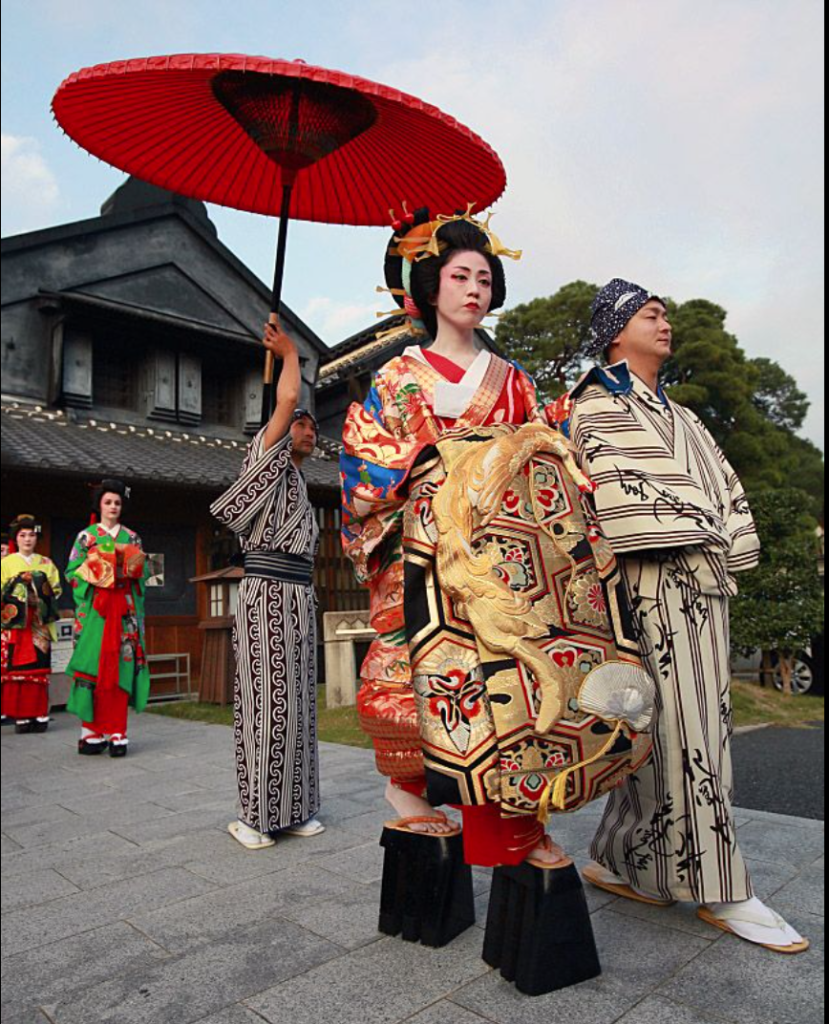
Their visual presentation was equally strategic and impactful. The elaborate kimonos, often weighing many pounds and costing fortunes, were not just garments but statements of status, wealth, and artistic taste. Each outfit was chosen to complement the occasion and the courtesan’s personal brand. The intricate hairstyles, adorned with numerous ornate hairpins (kanzashi), further exaggerated their distinctiveness, making them stand out in any gathering. The distinctive sashiko or oiran dōchū (procession walk) where an oiran moved with deliberate, slow steps, wearing towering geta (wooden clogs), was a public performance designed to showcase her grandeur and elevate her above the ordinary. This ceremonial presentation was a form of spectacular advertising, ensuring maximum visibility and reinforcing her elite status. It was a visual brand experience, unforgettable and aspirational.
The Allure of Exclusivity: Strategic Scarcity
A key element of their brand strategy was the deliberate creation of exclusivity and scarcity. High-ranking courtesans rarely engaged in casual encounters. Access to their company was a tiered process, requiring multiple expensive visits and demonstrations of genuine appreciation and patronage. This “courtship” period, where a patron might spend lavishly just to share conversation or a meal, without any guarantee of intimacy, amplified the perceived value of the courtesan.
This strategic scarcity fueled demand, transforming their presence into a highly coveted luxury good. Only the most affluent and persistent clients could hope to gain their full attention. This approach mirrored modern luxury branding, where limited availability and a high barrier to entry create an aura of desirability and prestige around a product or service. The more difficult and expensive it was to access a courtesan, the higher her perceived value and the stronger her brand.
The Okiya as a Corporate Entity: Managing Talent and Reputation
Courtesans did not operate in isolation. They were part of okiya (courtesan houses), which functioned remarkably like modern talent agencies or corporate entities. These establishments were responsible for identifying, developing, managing, and promoting their “talent.”
Talent Acquisition and Development
Okiya were constantly on the lookout for promising young girls, often from impoverished families, who could be groomed for the profession. This was a form of early-stage talent acquisition. Once acquired, these girls underwent years of intensive training, not unlike an elite educational institution or corporate training program. The okiya invested heavily in their education, covering costs for lessons, clothing, and sustenance. This investment was a strategic long-term play, with the expectation that these “trainees” would eventually become highly profitable assets, generating significant returns. The success of an okiya was directly tied to the caliber and reputation of its courtesans.
Reputation Management: Upholding Standards and Lineage

The name and reputation of an okiya were paramount. A house known for producing highly skilled, elegant, and sought-after courtesans commanded higher prices and attracted the most desirable clientele. This required strict adherence to standards of conduct, artistry, and aesthetic presentation. Any scandal or decline in quality could severely damage the okiya’s brand, affecting its ability to attract both new talent and patrons.
The “lineage” of a courtesan, meaning the okiya she belonged to and the senior courtesans who mentored her, was also a significant part of her brand. Being associated with a prestigious okiya lent her credibility and an instant stamp of quality, much like a reputable university or a well-known company brand.
Strategic Alliances and Network Building
Okiya and their top courtesans actively cultivated strategic alliances and networks. This involved relationships with influential patrons who could provide financial backing and social clout, as well as with artists, writers, and designers who contributed to the courtesan’s image and cultural prominence. By associating with leading figures in society, courtesans and their okiya enhanced their own brand prestige. These networks facilitated opportunities for patronage, promotion through art (e.g., ukiyo-e prints), and access to exclusive social circles, all vital for business growth and brand reinforcement.
Marketing the Elite: Strategies of Desire and Distinction
The marketing strategies employed by courtesans and their okiya were sophisticated, utilizing psychological principles of desire, status, and perceived value.
The Tiered System: Value-Based Segmentation
The pleasure quarters were not homogenous; they operated on a clear tiered system, from the lowest-ranking prostitutes to the highest-ranking tayū or oiran. This was a form of market segmentation, where each tier catered to different economic classes and expectations. The tayū and oiran occupied the pinnacle, serving an exclusive clientele willing to pay extraordinary sums for their company. This stratification allowed the market to cater to a broad spectrum of demand while maintaining the exclusivity and high pricing of the elite segment. Each tier effectively represented a different product line, with the oiran brand being the premium offering.
Performance as Promotion: Public Appearances and Artistry
Public appearances were crucial marketing events. The aforementioned oiran dōchū, a grand procession through the streets of the pleasure district, served as a highly visible advertisement. It was a spectacle designed to awe onlookers and reinforce the courtesan’s status and beauty. Similarly, artistic performances—whether at tea houses or private gatherings—were opportunities to showcase their unparalleled talents, further solidifying their reputation and drawing new patrons. These public displays were essentially brand activations, creating buzz and reinforcing the brand message of luxury, artistry, and exclusivity.
Word-of-Mouth and Patronage: Building Loyalty
In an era without mass media advertising, word-of-mouth was a powerful marketing tool. Satisfied patrons became invaluable brand ambassadors, sharing their experiences and recommendations within their social circles. Building strong, lasting relationships with clients was therefore paramount. Courtesans excelled at cultivating loyalty through personalized attention, discretion, and the memorable quality of their companionship. Repeat patronage was not just a source of revenue; it was a testament to the strength of their personal brand and the successful execution of their service. Long-term patrons were often treated with special deference, fostering an even deeper bond and further strengthening the courtesan’s professional network.
Legacy and Influence: A Timeless Brand Impact
The strategic branding efforts of Japanese courtesans had a profound and lasting impact on Japanese culture and art, extending their influence far beyond their immediate environment.
Cultural Iconography: Enduring Visual and Artistic Impact
Courtesans became muses for some of Japan’s most celebrated artists, particularly in the ukiyo-e woodblock print genre. Their images, captured in stunning detail, became ubiquitous, effectively transforming them into cultural icons. These prints were a form of mass media, disseminating their beauty and style throughout society, further solidifying their brand recognition and aesthetic influence. Their fashion, hairstyles, and mannerisms set trends that were emulated by women across different social strata. This cultural permeation ensured that the “brand” of the courtesan became an indelible part of Japan’s artistic and historical narrative, a testament to the power of a strong visual and cultural identity.
Strategic Independence (within limitations)
Despite operating within a restrictive social system, the most successful high-ranking courtesans often leveraged their powerful personal brands and the wealth they accumulated to achieve a remarkable degree of strategic independence. Some were able to purchase their freedom, establish their own businesses, or marry into prominent families. This ability to transcend their initial circumstances, largely through the strength of their personal brand and astute financial management, underscores their agency and entrepreneurial spirit. The story of the courtesan in Japan is, therefore, not just a historical curiosity but a profound illustration of how personal branding, strategic marketing, and reputation management can create value, influence, and even a pathway to autonomy, even in the most challenging environments.
aViewFromTheCave is a participant in the Amazon Services LLC Associates Program, an affiliate advertising program designed to provide a means for sites to earn advertising fees by advertising and linking to Amazon.com. Amazon, the Amazon logo, AmazonSupply, and the AmazonSupply logo are trademarks of Amazon.com, Inc. or its affiliates. As an Amazon Associate we earn affiliate commissions from qualifying purchases.