
In an increasingly competitive job market, understanding the various educational credentials available is crucial for making informed career and financial decisions. Among these, the college certificate stands out as a distinct and increasingly valuable pathway, offering focused skill development and a direct route to enhanced earning potential. Unlike a full degree, a certificate program provides specialized training in a particular field, designed to equip individuals with practical, in-demand skills in a shorter timeframe. From a financial perspective, a college certificate can be a highly strategic investment, designed to bridge skill gaps, accelerate career transitions, and directly impact an individual’s income and financial stability.
The Financial Rationale Behind Earning a College Certificate
The decision to pursue further education is almost always intertwined with financial aspirations. Whether it’s to secure a higher-paying job, transition into a more lucrative industry, or safeguard against economic shifts, the underlying motivation often points back to personal finance. College certificates, with their targeted curriculum and typically shorter duration, present a compelling financial proposition, offering a potentially high return on investment (ROI) for those seeking to quickly enhance their marketability and income.
Bridging Skill Gaps for Higher Earning Potential
The modern economy is characterized by rapid technological advancement and evolving industry demands. This creates frequent skill gaps—discrepancies between the skills workers possess and the skills employers need. College certificates are expertly designed to fill these gaps, providing focused training in specific competencies that are directly relevant to current job openings and future industry trends. By acquiring these targeted skills, individuals become more valuable assets to employers, which often translates into higher starting salaries, increased wages, and better opportunities for bonuses and promotions. For instance, a professional looking to enter the burgeoning field of data analytics might pursue a certificate in the subject, immediately becoming eligible for roles that command significantly higher salaries than their previous positions, without the multi-year commitment of a bachelor’s or master’s degree. This swift upskilling and subsequent salary bump can drastically improve an individual’s financial outlook in a relatively short period.
Accelerating Career Transitions and Promotions
For many, a college certificate is a strategic tool for career advancement or a complete career pivot. Employees seeking internal promotions often find that a specialized certificate can demonstrate their commitment to professional development and their readiness for increased responsibilities, leading to higher-level positions with corresponding salary increases. Similarly, individuals looking to transition into an entirely new industry—perhaps one with better growth prospects or higher average wages—can use a certificate to quickly gain foundational knowledge and industry-specific skills without having to start a lengthy degree program from scratch. This expedited path allows individuals to re-enter or advance within the workforce sooner, minimizing lost earning potential during the education period and accelerating their journey towards improved financial standing. The agility offered by certificates makes them an invaluable asset for navigating dynamic job markets and seizing lucrative opportunities.
A Cost-Effective Path to Specialized Knowledge
Compared to traditional associate’s, bachelor’s, or master’s degrees, college certificate programs generally require a lower financial investment in terms of tuition and fees. Their shorter duration also means less time out of the workforce (or less time juggling work and studies), reducing the opportunity cost associated with prolonged education. This lower entry barrier makes specialized education more accessible, allowing individuals to acquire high-value skills without accumulating significant student debt. By minimizing educational expenses while maximizing immediate employability and earning potential, certificates offer a compelling cost-benefit ratio, making them a financially prudent choice for many aspiring professionals. This cost-effectiveness allows for a quicker break-even point on the educational investment, leading to sooner financial returns.
Types of Certificates and Their Economic Impact
Certificates come in various forms, each designed to serve different educational and career goals. Understanding these distinctions is crucial for assessing their potential economic impact and aligning them with personal financial objectives.
Undergraduate Certificates for Entry-Level Advancement
Undergraduate certificates are typically designed for individuals who may or may not have a prior degree but are seeking to gain specific skills for entry-level positions or to enhance their qualifications for existing roles. These programs often focus on practical, vocational skills that are directly applicable to immediate job requirements. From a financial standpoint, an undergraduate certificate can be transformative for individuals looking to enter the workforce, secure their first professional role, or move out of minimum-wage jobs. For example, a certificate in medical billing and coding can quickly qualify someone for administrative roles in healthcare with a stable income, significantly improving their financial security compared to jobs requiring no specialized training. They provide a quicker pathway to financial independence and can serve as a foundation for future educational pursuits, incrementally building one’s financial capacity.
Graduate Certificates for Professional Specialization
Graduate certificates are designed for individuals who already hold a bachelor’s degree and are looking to specialize further within their field, pivot to a related discipline, or meet specific professional licensing requirements. These programs delve deeper into advanced topics and often require a higher level of prior academic achievement. The economic impact of a graduate certificate can be substantial, as it positions professionals for leadership roles, highly specialized positions, and significant salary increases. For instance, a project manager with a bachelor’s degree might pursue a graduate certificate in agile project management to qualify for more senior roles that command substantially higher salaries. These certificates often unlock access to top-tier positions and industries that offer premium compensation, thereby accelerating wealth accumulation and enhancing long-term financial stability.
Professional and Technical Certificates for Immediate Job Readiness
Beyond traditional academic settings, many colleges and universities offer professional and technical certificates focused on highly specialized, hands-on skills relevant to specific industries. These can range from cybersecurity analysis to culinary arts or automotive technology. The primary economic benefit of these certificates is their ability to provide immediate job readiness. Graduates are often prepared to step directly into skilled trades or technical roles that are in high demand and offer competitive wages. This direct link to employment and good earnings makes them incredibly valuable for individuals seeking rapid entry into a stable and well-paying career without the extensive time and cost of a full degree. They are a powerful tool for developing human capital in areas where labor shortages drive up salaries, ensuring a robust financial outlook.
Calculating the Return on Investment (ROI) of a Certificate
Evaluating the financial wisdom of any educational endeavor requires a careful consideration of its return on investment (ROI). For college certificates, this involves weighing the direct and indirect financial benefits against the initial costs and time commitment.
Direct Financial Benefits: Salary Increases and Bonuses
The most straightforward financial benefit of a college certificate is the potential for an immediate increase in salary. Studies consistently show that individuals with post-secondary credentials, including certificates, earn more than those with only a high school diploma. Furthermore, obtaining a specialized certificate can often qualify an individual for roles that offer a higher base salary, performance bonuses, or eligibility for overtime pay that was previously inaccessible. Quantifying this benefit involves comparing pre-certificate earnings with post-certificate earnings over several years, factoring in the potential for career progression that the certificate enables. This tangible increase in disposable income directly contributes to personal wealth accumulation, improved living standards, and the ability to achieve other financial goals like debt reduction or investment.
Indirect Financial Benefits: Job Security and Entrepreneurial Opportunities
Beyond direct salary bumps, certificates offer significant indirect financial benefits. Enhanced skill sets often lead to greater job security, as individuals with specialized training are typically more adaptable and valuable to employers, especially during economic downturns. This stability reduces financial stress and allows for more consistent financial planning. Moreover, the specialized knowledge gained through a certificate can be a springboard for entrepreneurial ventures. For instance, a certificate in digital marketing could empower an individual to start their own freelance consultancy, creating an online income stream and offering the potential for unlimited earning capacity. Similarly, a certificate in a trade like welding could lead to starting a specialized fabrication business. These indirect benefits contribute to long-term financial resilience and the potential for diversified income streams.
Comparing Certificates to Traditional Degrees
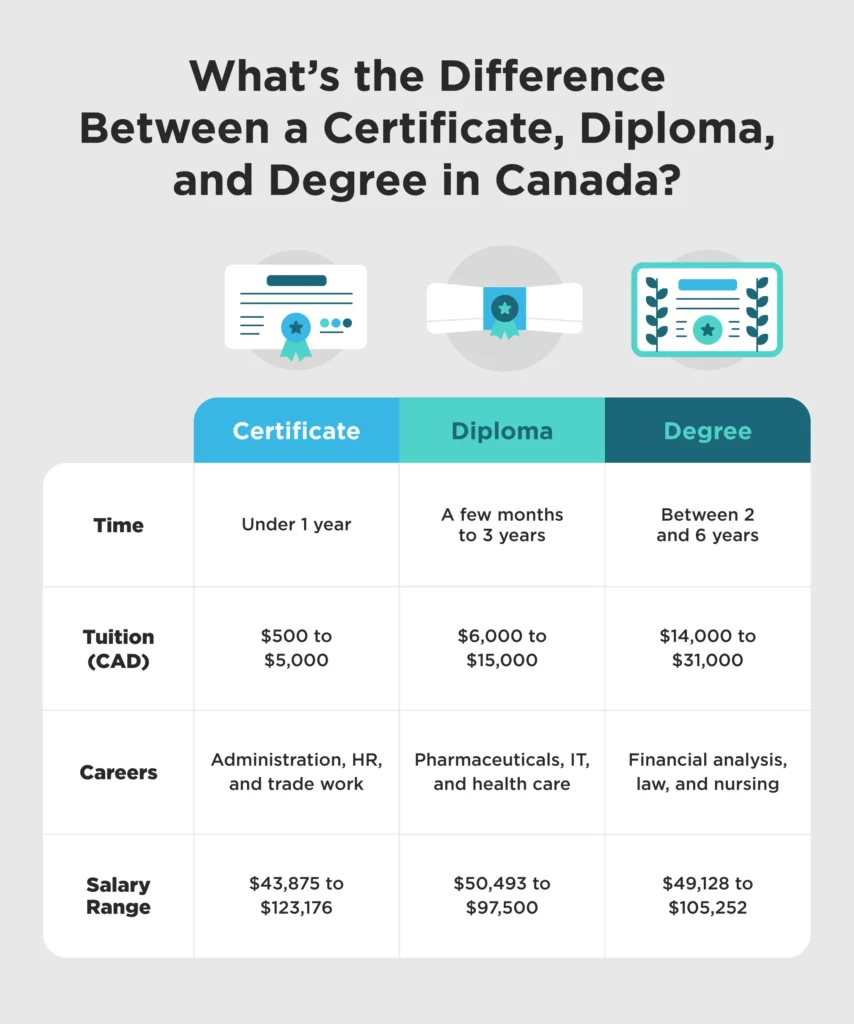
When considering educational investments, it’s essential to compare the financial ROI of certificates with that of traditional associate’s or bachelor’s degrees. While a bachelor’s degree often provides a broader foundation and may lead to higher lifetime earnings on average, a certificate offers a more targeted, faster, and often cheaper route to specialized employment. The “time to value” for a certificate is typically much shorter, meaning individuals can start recouping their educational investment and earning increased wages much sooner. For specific high-demand fields, a certificate might be just as effective as a degree in securing a well-paying job, but with a fraction of the cost and time. This makes certificates an excellent option for those prioritizing quick entry into a specific field or who need to minimize educational debt while maximizing immediate income.
Strategic Planning for Financial Growth with Certificates
Integrating college certificates into a broader financial and career strategy requires careful planning. Identifying the right program, understanding funding options, and committing to continuous learning are all key to maximizing the financial returns.
Identifying High-Demand, High-Paying Fields
The first step in leveraging a college certificate for financial growth is to research and identify fields with high demand and strong earning potential. Market analysis tools, labor statistics, and industry reports can reveal sectors experiencing growth and skill shortages, where certificates can make the biggest impact. For example, areas like healthcare technology, cloud computing, renewable energy, and specific trades often present robust salary prospects and numerous job openings. Choosing a certificate program aligned with these high-growth areas ensures that the acquired skills remain relevant and highly compensated, translating directly into better financial opportunities upon completion. Strategic alignment with economic trends is paramount for maximizing financial gain.
Leveraging Financial Aid and Funding Options
Even though certificates are generally less expensive than degrees, managing the cost is still an important part of maximizing ROI. Many certificate programs are eligible for various forms of financial aid, including federal student loans, grants, scholarships, and employer tuition reimbursement programs. Researching and applying for these funding options can significantly reduce out-of-pocket expenses, making the certificate even more financially accessible and improving its overall ROI. Exploring options like workforce development grants or state-specific aid for particular industries can further reduce the financial burden, allowing individuals to invest in their future without undue stress on their current finances.
Continuous Learning for Long-Term Financial Stability
The value of a certificate, particularly in rapidly evolving fields, isn’t a one-time transaction. To ensure long-term financial stability and continued career growth, individuals should embrace a mindset of continuous learning. This means staying updated with industry trends, potentially pursuing advanced certificates, or stacking multiple certificates over time to build a comprehensive and highly specialized skill set. In a dynamic economy, those who consistently adapt and acquire new skills remain more marketable, command higher salaries, and are better insulated against economic fluctuations. A certificate can be the first step in a lifelong journey of skill acquisition, paving the way for sustained financial prosperity and career longevity.
aViewFromTheCave is a participant in the Amazon Services LLC Associates Program, an affiliate advertising program designed to provide a means for sites to earn advertising fees by advertising and linking to Amazon.com. Amazon, the Amazon logo, AmazonSupply, and the AmazonSupply logo are trademarks of Amazon.com, Inc. or its affiliates. As an Amazon Associate we earn affiliate commissions from qualifying purchases.