
In the vast landscape of music production, composition, and consumption, understanding fundamental structural elements is paramount, especially as technology continues to reshape how we interact with sound. Among these bedrock concepts, the “bar line” stands as a seemingly simple vertical demarcation, yet its role is profoundly complex, particularly within digital music environments. Far from being a mere visual separator, a bar line is a critical organizational tool that delineates measures, orchestrates rhythmic flow, and serves as a fundamental grid point for countless software applications, from sophisticated Digital Audio Workstations (DAWs) to intricate music notation programs and even nascent AI composition tools. Understanding its function in these technological contexts is key to mastering digital music creation and analysis.
The Digital Foundation: Bar Lines in Music Notation Software
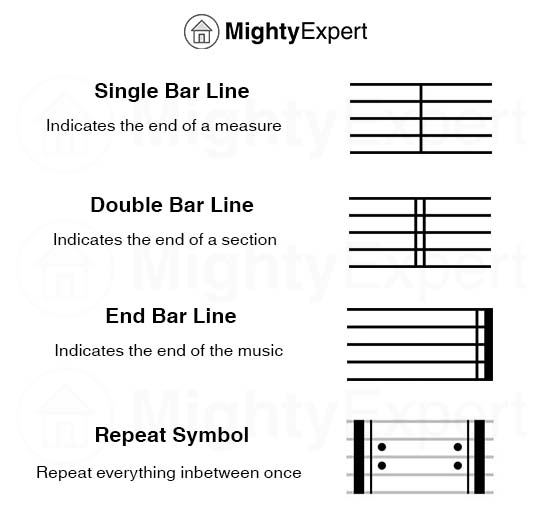
At its core, a bar line is a vertical line drawn through the staff to mark off measures (or bars), which are segments of music containing a specific number of beats as indicated by the time signature. In traditional music theory, it’s about organizing rhythm and meter. In the digital realm, this organizational principle is not just preserved but amplified, forming the backbone of digital music notation software. Programs like Sibelius, Finale, Musescore, and Dorico rely on bar lines as their primary structural unit for displaying, editing, and printing musical scores.
Precision in Digital Scores
Digital notation software utilizes bar lines to enforce metrical accuracy and visual clarity. When a composer inputs notes, the software automatically places bar lines according to the specified time signature. This automation ensures that each measure contains the correct number of beats, preventing errors that might occur in manual notation. For instance, if a piece is in 4/4 time, the software ensures that only four quarter notes (or their equivalent in other note values) fit between two bar lines. This precision is invaluable for complex orchestral scores where hundreds of individual parts must align perfectly. Furthermore, digital bar lines aren’t just static markers; they are intelligent objects that influence how the software handles playback, part extraction, and even transposition. Their accurate placement facilitates error checking and streamlines the proofreading process, making digital scores far more reliable than their handwritten counterparts.
Customization and Automated Features
Modern notation software offers extensive customization options for bar lines. Users can choose between single bar lines, double bar lines (indicating a sectional change or repeat), thin-thick bar lines (marking the end of a piece), or even dashed bar lines for ad-lib sections. Beyond visual customization, these digital tools leverage bar lines for powerful automated features. For example, if a section needs to be repeated, the software allows users to insert repeat bar lines, which automatically instruct the playback engine to loop a specific segment. This functionality extends to automatically numbering measures, ensuring correct alignment across multiple staves, and even dynamically adjusting spacing to prevent overcrowding – all features contingent on the fundamental definition provided by the bar line. Without these digital bar lines, the entire structure of a complex score would collapse into an unreadable jumble of notes.
Orchestrating Sound: Bar Lines in Digital Audio Workstations (DAWs)
While music notation software focuses on visual representation, Digital Audio Workstations (DAWs) like Ableton Live, Logic Pro, Pro Tools, and FL Studio apply the bar line concept to the temporal organization of audio and MIDI data. Here, bar lines are primarily visual grid lines on a timeline, serving as critical reference points for recording, editing, arranging, and mixing. They are fundamental to the rhythmic and structural integrity of any digitally produced track.
Visualizing Musical Time
In a DAW, the main arrangement window displays a horizontal timeline, where bar lines appear as prominent vertical markers, typically numbered sequentially. These visual cues correspond directly to the measures of the musical piece. They provide a clear, intuitive framework for composers, producers, and engineers to navigate their projects. When working with dozens or even hundreds of tracks, these bar lines allow for instantaneous identification of specific musical sections – the intro, verse, chorus, bridge, and outro – making the arrangement process far more manageable and efficient. They are the backbone of the grid, without which precise editing would be virtually impossible.
Quantization and Grid Alignment
Perhaps one of the most powerful applications of bar lines in DAWs is their role in quantization. Quantization is the process of automatically aligning recorded notes or audio events to the nearest beat or sub-beat on the musical grid. Bar lines define the major grid points, with subdivisions within each bar representing beats and smaller rhythmic values. When a musician records a MIDI performance that might be slightly off-tempo, quantization tools, guided by these underlying bar line structures, can snap the notes into perfect rhythmic alignment. This capability is invaluable for tightening performances, creating perfectly synchronized loops, and ensuring that all elements of a track groove together. Without the precise definition of measures provided by bar lines, the concept of a “quantization grid” would be meaningless, and achieving rhythmic precision digitally would be a laborious, manual process.

Loop and Arrangement Markers
Bar lines are also central to defining loops and arrangement markers in DAWs. Producers frequently work with loops – short musical phrases designed to repeat seamlessly. The exact start and end points of these loops are almost always defined by bar lines, ensuring that the loop begins and ends on a metrically stable point. Similarly, arrangement markers (e.g., “Verse 1,” “Chorus,” “Bridge”) are typically placed at the beginning of a new measure, as indicated by a bar line. This makes it easy to jump between sections, reorder parts, and build complex arrangements rapidly. Many DAWs even allow for “scene” or “clip” launching based on bar line divisions, enabling dynamic live performance and improvisational arrangements where entire sections of music can be triggered in perfect synchronization with the underlying tempo grid.
Beyond Notation: Bar Lines in AI and Algorithmic Composition
As artificial intelligence increasingly ventures into creative fields, understanding fundamental musical structures like bar lines becomes crucial for AI models that aim to compose, analyze, or even generate music. For AI, bar lines represent not just visual or temporal divisions, but algorithmic boundaries that define periodicity, phrase structure, and rhythmic patterns.
Teaching AI Musical Structure
For an AI to generate coherent and musically pleasing compositions, it must first understand the underlying grammar and structure of music. Training datasets for music-generating AI often include vast amounts of existing musical scores and audio. Bar lines in these datasets serve as explicit markers of meter and measure, allowing the AI to learn how phrases typically begin and end, how rhythmic patterns repeat, and how harmonic changes often align with metrical boundaries. Without the concept of a “bar,” an AI might produce an unending, amorphous stream of notes lacking any discernible rhythmic pulse or structural integrity. By understanding bar lines, AI can predict the most probable note or chord to follow based on its position within a measure and its relation to the overall time signature, leading to more human-like and structurally sound outputs.
Generative Music and Beat Divisions
In algorithmic composition and generative music systems, bar lines provide the foundational “tick” or pulse against which algorithms can operate. An algorithm might be programmed to generate a new melodic phrase every four bars, or to introduce a harmonic change at the beginning of every eight-bar section. These instructions are directly tied to the concept of the bar line. For instance, an AI might generate drum patterns that are perfectly cyclical over two or four bars, or create bass lines that emphasize the first beat of each measure, demonstrating an implicit understanding of metrical accent derived from the bar line’s function. The ability to manipulate and understand these divisions allows AI to create variations, develop themes, and construct entire pieces that adhere to established musical forms, rather than merely producing random sequences of sound.
Practical Applications and Troubleshooting
The digital embodiment of bar lines has profound practical implications for musicians, producers, and sound engineers. From facilitating remote collaboration to troubleshooting synchronization issues, their digital integration streamlines workflow and enhances creative possibilities.
Navigating Complex Rhythms Digitally
For compositions featuring complex or irregular time signatures (e.g., 5/4, 7/8) or polymeters, digital bar lines become indispensable. Notation software automatically manages the intricate beaming and grouping of notes within these unusual measures, freeing the composer from manual calculations. In DAWs, the ability to change the time signature at any bar line allows for dynamic shifts within a piece, automatically adjusting the grid to accommodate the new meter without disrupting previously recorded material. This flexibility empowers composers to explore rhythmic complexities that would be cumbersome, if not impossible, to manage manually.

Sync Issues and Bar Line Alignment
Despite their utility, misaligned bar lines can also be a source of frustration, particularly in collaborative projects or when importing files between different software. “Sync issues” often arise when the metrical grid of one track or DAW project doesn’t align perfectly with another, leading to audible flamming or rhythmic drift. This usually stems from incorrect tempo settings, inconsistent time signature changes, or improper bar line placement during recording or editing. Troubleshooting often involves meticulously checking bar line alignment across all tracks, ensuring that the project’s global tempo and time signature settings are accurate, and using quantization tools to realign any stray musical events back to the grid defined by the bar lines. For professionals, understanding how bar lines underpin the entire temporal structure of a digital project is crucial for maintaining tight, coherent productions.
In conclusion, while the humble bar line may appear to be a simple graphical element, its digital integration transforms it into a powerful tool for structure, precision, and creative manipulation across all facets of music technology. From guiding the most intricate notation to structuring vast DAW projects and even informing the intelligent algorithms of AI composition, the bar line remains a pivotal concept for anyone navigating the modern musical landscape.
aViewFromTheCave is a participant in the Amazon Services LLC Associates Program, an affiliate advertising program designed to provide a means for sites to earn advertising fees by advertising and linking to Amazon.com. Amazon, the Amazon logo, AmazonSupply, and the AmazonSupply logo are trademarks of Amazon.com, Inc. or its affiliates. As an Amazon Associate we earn affiliate commissions from qualifying purchases.