
Navigating the landscape of employer-sponsored retirement plans can be complex, yet it’s a critical step toward securing financial independence in later life. Among the myriad options, 401(a) and 403(b) plans stand out as significant vehicles for saving, particularly for employees in public service, education, and non-profit sectors. While both offer tax-advantaged growth and aim to help individuals accumulate wealth for retirement, their distinctions in eligibility, contribution mechanisms, and specific features are important to understand. Grasping these differences is essential for making informed decisions about your retirement savings strategy.
Understanding Employer-Sponsored Retirement Plans
Employer-sponsored retirement plans are cornerstone tools designed to help individuals save for retirement, often with favorable tax treatment. These plans, categorized broadly as defined contribution plans, allow employees and sometimes employers to contribute funds that grow tax-deferred until withdrawal in retirement. The primary benefit of these arrangements is the compounding growth of investments, often amplified by tax deductions on contributions and potential employer matching. Two prevalent forms, the 401(a) and 403(b), cater to specific employment demographics, each with its unique operational framework shaped by IRS regulations. Recognizing the foundational similarities—tax advantages, investment growth, and the goal of retirement security—is the first step before diving into their nuanced differences. Both types of plans offer a structured pathway to building a retirement nest egg, leveraging the power of consistent savings and professional management.

Delving into the 403(b) Plan
The 403(b) plan, often referred to as a “tax-sheltered annuity” or “TSA” plan, is a retirement savings plan specifically tailored for employees of public schools, colleges, universities, hospitals, and certain tax-exempt organizations (classified under IRS Code 501(c)(3)). It functions similarly to a 401(k) but is exclusively available to these specific types of employers. For many educators and healthcare professionals, the 403(b) represents their primary vehicle for workplace retirement savings.
Who is Eligible for a 403(b)?
Eligibility for a 403(b) is strictly defined by the employer’s tax status. This means if you work for a public elementary or secondary school, a state university, a religious organization, a non-profit hospital, or another 501(c)(3) tax-exempt organization, you are likely eligible to participate in a 403(b) plan offered by your employer. This broad eligibility covers a significant portion of the public service and non-profit workforce, providing them with a vital tool for long-term financial planning.
Key Features and Contribution Limits
A hallmark of the 403(b) plan is its flexibility in contribution types. Participants can make pre-tax contributions, which reduce current taxable income, allowing savings to grow tax-deferred. Many plans also offer a Roth 403(b) option, where contributions are made with after-tax dollars, but qualified withdrawals in retirement are entirely tax-free.
The annual elective deferral limit for 403(b) plans is set by the IRS and generally mirrors that of 401(k) plans (e.g., $23,000 for 2024). Individuals aged 50 or older can often make additional “catch-up” contributions (e.g., an extra $7,500 for 2024). Beyond these standard limits, 403(b) plans sometimes offer unique catch-up provisions for long-tenured employees. Employers may also contribute to a 403(b) plan, either through matching contributions (where the employer matches a percentage of the employee’s contribution) or non-elective contributions (where the employer contributes a certain amount regardless of employee contributions). The total contributions from all sources (employee and employer) are subject to a higher overall limit, typically aligning with the 415(c)(1)(A) limit (e.g., $69,000 for 2024, or $76,500 with catch-up contributions for those 50 and older).
Investment options within a 403(b) plan historically included annuities, which provide guaranteed income streams in retirement. However, modern 403(b) plans frequently offer a diverse selection of mutual funds, allowing participants to choose investments that align with their risk tolerance and financial goals.
Advantages of a 403(b)
The primary advantage of a 403(b) is its tax-deferred growth, allowing investments to compound without annual tax implications until retirement. The availability of Roth options provides valuable tax diversification. Many plans also include loan provisions, allowing participants to borrow against their account balance, which can be useful for short-term financial needs, though it’s crucial to understand the terms and potential impacts on retirement savings. Furthermore, 403(b) plans are typically portable, allowing participants to roll over funds into an IRA or another qualified retirement plan when changing jobs, preserving the tax-advantaged status of their savings.
Potential Drawbacks
While beneficial, 403(b) plans can have certain drawbacks. Historically, some plans have been criticized for offering a limited selection of investment options, sometimes heavily weighted towards annuities with higher fees or less transparency. While the investment landscape for 403(b)s has improved, it’s still crucial for participants to scrutinize the available options and associated fees. Also, while employer contributions are common, they may not always be as generous as those found in some 401(k) plans in the private sector. Understanding the specific plan’s fee structure and investment choices is paramount.
Exploring the 401(a) Plan
The 401(a) plan, unlike the more widely known 401(k) or 403(b), is generally a defined contribution plan established by governmental entities, municipalities, and certain non-profit organizations. It serves as a qualified retirement plan for their employees, often acting as a mandatory savings vehicle or a supplemental employer-funded plan. While it operates under the same IRS section that allows for defined benefit plans, its common usage as a direct comparison to a 403(b) implies its defined contribution structure, where an individual account is set up for each participant.
Who is Eligible for a 401(a)?
Eligibility for a 401(a) plan is typically confined to employees of state and local governments, public schools, public hospitals, and other governmental or quasi-governmental entities. In some cases, certain tax-exempt organizations may also offer 401(a) plans. These plans are often established to provide retirement benefits to specific groups of employees, such as civil servants, police officers, firefighters, or other public employees. Unlike 403(b) or 401(k) plans where employee elective deferrals are central, 401(a) plans frequently involve mandatory employee contributions or are funded predominantly, if not entirely, by the employer.
Key Features and Contribution Limits
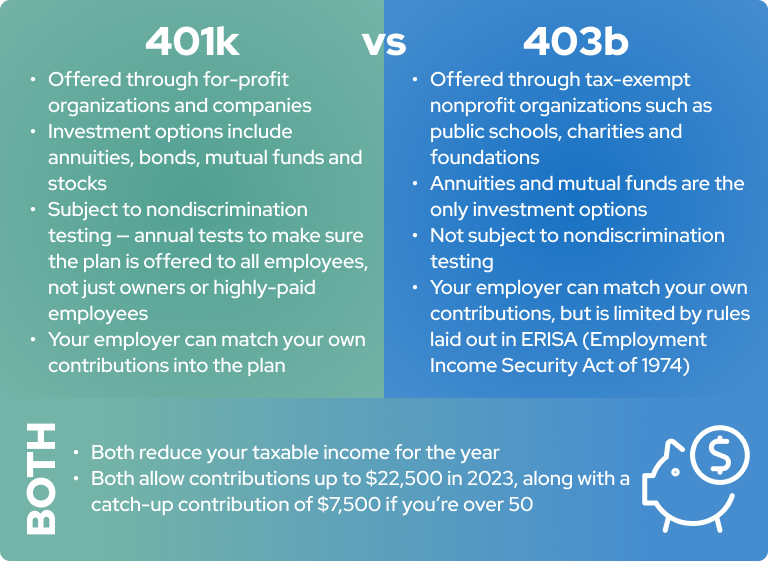
A distinguishing feature of the 401(a) is the emphasis on employer contributions. While some 401(a) plans may permit mandatory employee contributions, and less frequently voluntary ones, they generally do not involve the elective deferrals common to 401(k)s and 403(b)s where employees choose how much to contribute from their paycheck. Instead, the employer often contributes a specified percentage of the employee’s salary directly into the plan.
The contribution limits for a 401(a) are typically higher than the elective deferral limits for 403(b)s because they encompass the total contributions made to the account by both the employer and, if applicable, the employee. These limits align with the IRS 415(c)(1)(A) limit (e.g., $69,000 for 2024), which is the maximum amount that can be contributed to a defined contribution plan by all sources in a given year. This higher limit can allow for substantial employer-driven growth in the retirement account. Investment options within 401(a) plans are usually similar to those found in 401(k)s, offering a selection of mutual funds, index funds, and other diversified investment vehicles.
Advantages of a 401(a)
One of the most significant advantages of a 401(a) plan, particularly when employer-funded, is that it represents an additional benefit often provided without requiring direct employee elective contributions. This can significantly boost an employee’s retirement savings without impacting their take-home pay from voluntary deferrals. Like other qualified plans, 401(a) accounts benefit from tax-deferred growth, allowing investments to compound over many years without being subject to annual taxation. For employees, participation in a 401(a) ensures a structured approach to retirement savings, often with robust employer backing, contributing to a more secure financial future.
Potential Drawbacks
While beneficial, 401(a) plans generally offer less control over contributions for the employee compared to 403(b) or 401(k) plans. Since contributions are primarily employer-driven or mandatory, employees may not have the flexibility to adjust their savings rate based on personal financial circumstances. The investment options, while typically diversified, are determined by the plan administrator, and employees must choose from the predetermined menu. Additionally, depending on the specific plan design, withdrawal provisions and loan availability might be more restrictive than in other defined contribution plans.
Key Distinctions and Similarities
While both 401(a) and 403(b) plans serve as vital components of retirement planning for their respective eligible workforces, their structural and operational differences dictate how employees engage with them. Understanding these distinctions alongside their shared benefits is crucial for plan participants.
Employer and Eligibility Focus
The most pronounced distinction lies in the eligible employers and, consequently, the employee demographics they serve. The 403(b) plan is designed for public school systems, colleges, universities, hospitals, and specific 501(c)(3) non-profit organizations. Its target audience is primarily educators, healthcare workers, and employees of charitable organizations. In contrast, the 401(a) plan is typically offered by governmental entities, municipalities, and sometimes other non-profits for specific employee groups, often as a mandatory or employer-funded plan rather than a primary vehicle for employee elective deferrals.
Contribution Dynamics
Contribution dynamics represent another major differentiating factor. A 403(b) plan heavily emphasizes employee elective deferrals, allowing participants to choose how much to contribute from their salary on a pre-tax or Roth basis. Employer contributions, such as matching funds, are common but often supplemental to employee deferrals. For the 401(a), contributions are predominantly employer-driven. While some 401(a) plans might include mandatory employee contributions, they generally lack the elective deferral component seen in 403(b)s. The higher overall contribution limit for 401(a) plans (the 415(c)(1)(A) limit) reflects the inclusion of all employer and employee contributions, distinguishing it from the lower elective deferral limits of 403(b)s.
Investment Options
While both plan types offer a selection of investment options, there have been historical differences. 403(b) plans were traditionally associated with annuities, though they increasingly offer mutual funds. 401(a) plans, much like 401(k)s, typically provide a diverse range of mutual funds, index funds, and other diversified investment vehicles. Regardless of the plan type, participants should always scrutinize the investment menu, fees, and performance.
Tax Treatment
Both 401(a) and 403(b) plans share the fundamental benefit of tax-deferred growth, meaning earnings are not taxed until withdrawal in retirement. This allows investments to compound more aggressively over time. Furthermore, contributions to both plans (when pre-tax) reduce current taxable income. While Roth options are common for 403(b) plans, allowing for tax-free withdrawals in retirement, they are less common for 401(a) plans but can exist depending on the specific plan design.
Rollovers and Portability
Upon leaving employment, funds from both 401(a) and 403(b) plans can generally be rolled over into other qualified retirement plans, such as an IRA or a new employer’s 401(k) or 403(b), preserving their tax-advantaged status. This portability ensures that individuals can consolidate their retirement savings and maintain tax benefits throughout their career transitions.

Making the Most of Your Employer-Sponsored Plan
Regardless of whether you participate in a 401(a) or a 403(b), maximizing your retirement savings requires proactive engagement and informed decision-making. The first crucial step is to understand the specifics of your plan. Familiarize yourself with the contribution limits, the types of contributions allowed (pre-tax, Roth, employer contributions), and the vesting schedule for employer funds. Always strive to contribute at least enough to receive any employer match, as this is essentially free money that significantly boosts your retirement savings.
Beyond contributions, evaluate the investment options available within your plan. Assess the fees associated with each fund, understand their historical performance, and choose investments that align with your risk tolerance and timeline to retirement. Diversification is key to mitigating risk.
It’s also prudent to review your retirement plan periodically, especially as your financial situation or career stage changes. Consider increasing your contributions over time, particularly when you receive raises. For complex situations or if you feel overwhelmed by investment choices, consulting a qualified financial advisor can provide personalized guidance tailored to your specific goals and circumstances. Starting early and contributing consistently are the most powerful levers for achieving a robust retirement nest egg.
aViewFromTheCave is a participant in the Amazon Services LLC Associates Program, an affiliate advertising program designed to provide a means for sites to earn advertising fees by advertising and linking to Amazon.com. Amazon, the Amazon logo, AmazonSupply, and the AmazonSupply logo are trademarks of Amazon.com, Inc. or its affiliates. As an Amazon Associate we earn affiliate commissions from qualifying purchases.