
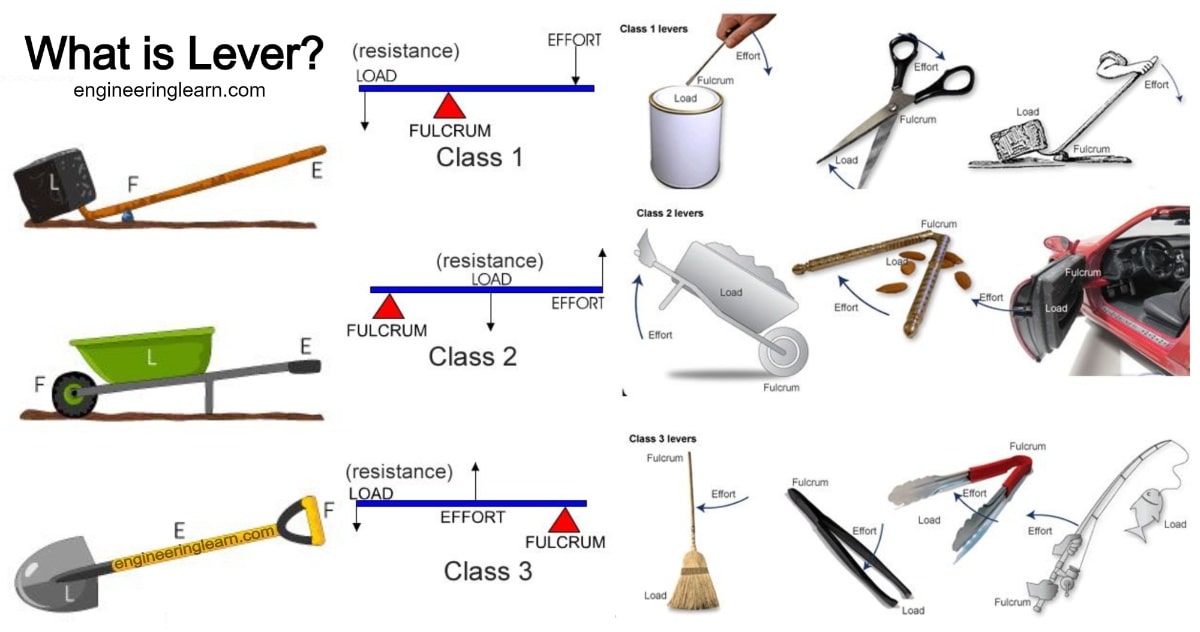
In the vast landscape of technology, from the simplest hand tools to complex robotic systems, the fundamental principles of mechanical engineering play an indispensable role. Among these foundational concepts, the lever stands out as one of humanity’s earliest and most impactful inventions. Levers are categorized into three classes based on the relative positions of the fulcrum, effort, and load (or resistance). This exploration delves into the specifics of the second class lever, a configuration renowned for its mechanical advantage and ubiquitous presence in countless technological applications. Understanding its mechanics is crucial for anyone involved in design, engineering, or simply appreciating the ingenious simplicity behind many everyday devices.

The Fundamental Mechanics of a Second Class Lever
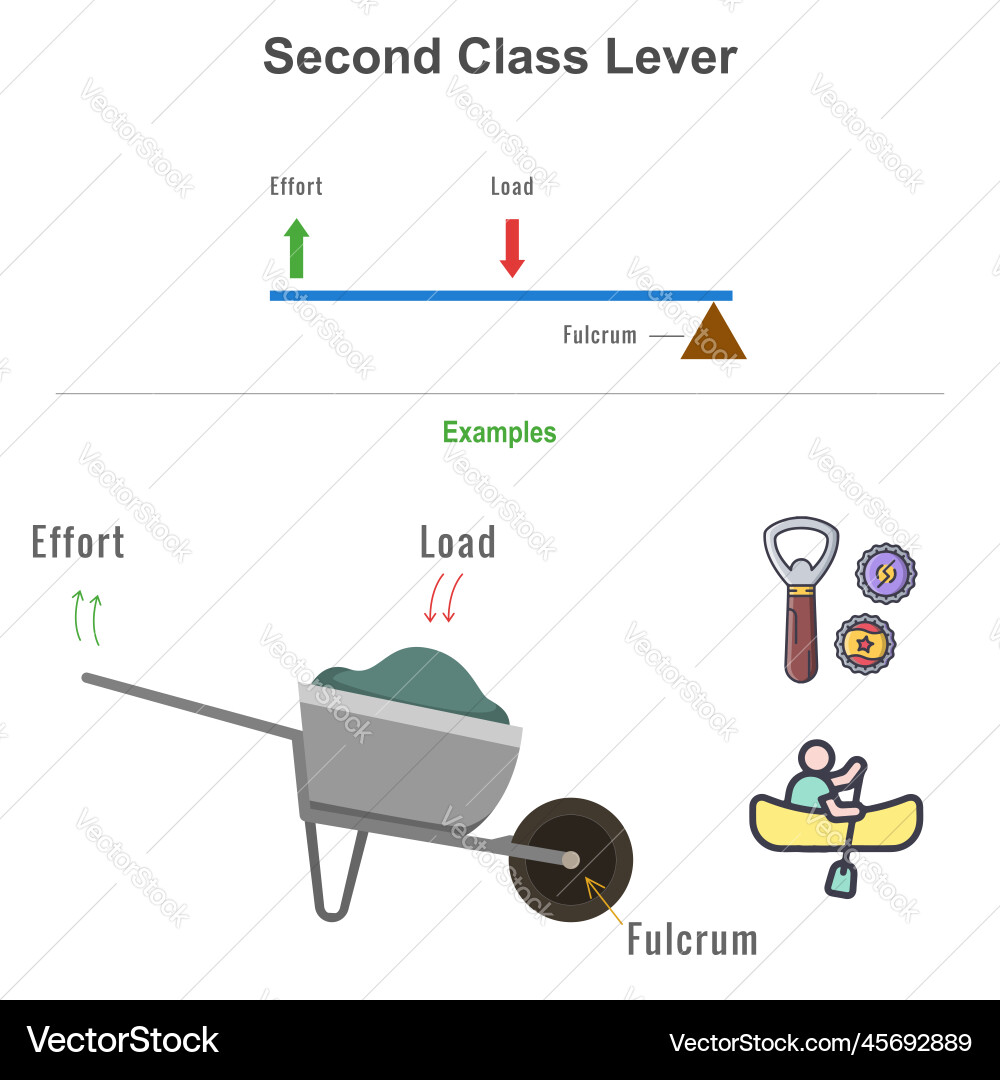
A second class lever is characterized by a specific arrangement of its three critical components: the fulcrum, the load (or resistance), and the effort. In this configuration, the load is situated between the fulcrum and the point where the effort is applied. This distinct setup grants the second class lever its unique operational characteristics, primarily its inherent mechanical advantage.
Components and Configuration
To fully grasp the essence of a second class lever, it’s vital to identify its constituent parts and their relative positions:
- Fulcrum: This is the pivot point around which the lever rotates. It’s the fixed point that provides support and allows for rotational motion. In a second class lever, the fulcrum is located at one end of the lever arm.
- Load (Resistance): The load is the force or weight that needs to be moved or overcome. In a second class lever, the load is positioned somewhere along the lever arm, between the fulcrum and the point where the effort is applied.
- Effort: The effort is the force applied to the lever to move the load. In a second class lever, the effort is applied at the opposite end of the lever arm from the fulcrum, beyond the load.
This configuration—Fulcrum-Load-Effort (FLE)—is what defines a second class lever. A classic example is a wheelbarrow: the wheel acts as the fulcrum, the contents in the tray are the load, and the handles where you lift are where the effort is applied. The distance from the fulcrum to the effort is always greater than the distance from the fulcrum to the load.
Understanding Mechanical Advantage
The primary characteristic that makes second class levers so valuable in technology is their inherent mechanical advantage. Mechanical advantage (MA) is a measure of the ratio of the output force (force on the load) to the input force (effort force). For a lever, it can also be calculated as the ratio of the effort arm length to the load arm length.
In a second class lever, because the effort is applied further away from the fulcrum than the load, the effort arm (distance from fulcrum to effort) is always longer than the load arm (distance from fulcrum to load). This geometric arrangement ensures that the mechanical advantage is always greater than one (MA > 1). This means that a smaller effort force can be used to move a larger load force. While it requires the effort to move a greater distance, the trade-off is a significant reduction in the force required to perform work. This principle is fundamental to designing tools and machines that amplify human or mechanical power, making tasks easier and more efficient.
Everyday Technology and Applications
The principles of the second class lever are not confined to theoretical physics textbooks; they are ingeniously integrated into a vast array of technological devices and systems we encounter daily. From simple household items to sophisticated industrial machinery, the mechanical advantage provided by this lever class is continually leveraged to enhance functionality and efficiency.
Wheeled Devices and Transport
Perhaps one of the most recognizable applications of a second class lever is the wheelbarrow. Here, the wheel acts as the fulcrum, the heavy contents within the tray constitute the load, and the handles represent the point of effort. This design allows a single person to transport loads significantly heavier than they could otherwise lift directly. Similarly, certain types of dollies, hand trucks, and even basic carts utilize this principle, allowing for the easy movement of heavy objects by converting a small lifting effort into the ability to overcome a much larger load. The common bottle opener, used to pry off caps, also operates as a second class lever: the fulcrum is the edge of the cap, the load is the point where the cap is lifted, and the effort is applied at the end of the opener handle.
Opening Mechanisms and Tools
Beyond transport, second class levers are foundational to many opening and cutting tools. Nutcrackers, for instance, are quintessential examples. The hinge is the fulcrum, the nut itself is the load positioned near the hinge, and the effort is applied at the handles. The mechanical advantage allows a user to apply a relatively small force to crack open a hard shell. Certain types of paper cutters, some staplers, and even specific types of door mechanisms employ the second class lever principle to provide leverage, making tasks that require concentrated force more manageable for the user. Even in modern kitchen gadgets, from can openers to specialized food processors, the subtle integration of lever mechanics often underpins their ease of use and effectiveness.
Beyond Simple Machines: Industrial and Robotic Contexts
While often exemplified by simple tools, the concept of the second class lever scales up significantly in complex technological systems. In industrial settings, conveyor belts often integrate lever systems to adjust tension or direct loads efficiently. Material handling equipment, such as certain types of forklifts or pallet jacks, incorporates sophisticated lever arrangements to lift and move heavy goods with minimal direct human force.
In robotics, understanding lever classes is crucial for designing end-effectors, grippers, and articulated limbs that need to exert significant force or manipulate objects precisely. A robotic arm designed to lift heavy components might incorporate linkages that function as second class levers to maximize torque and lifting capacity using smaller, more energy-efficient actuators. The principles inform the selection of motor size, gear ratios, and arm segment lengths to achieve desired strength and speed performance, directly impacting the robot’s utility and efficiency in automated manufacturing, logistics, and exploration.
Design Principles and Engineering Implications
The inherent mechanical advantage of second class levers makes them a cornerstone in engineering design, particularly where force amplification is a primary goal. Engineers leverage this principle to create efficient, robust, and ergonomically sound solutions across various sectors.
Optimizing for Force and Efficiency
When designing a system that incorporates a second class lever, engineers meticulously consider the lengths of the effort arm and the load arm. To maximize mechanical advantage, the effort arm must be significantly longer than the load arm. This translates directly into the ability to move heavier loads with less input force. However, this amplification comes with a trade-off: the point of effort must move a greater distance. Therefore, design optimization involves balancing the desired force amplification against the required range of motion and the practical constraints of space and materials. For example, a heavy-duty hydraulic jack employs complex internal mechanisms that ultimately derive their force amplification from leverage principles, often akin to a second class lever, ensuring that a relatively small input force can lift tons of weight. This efficiency in force transmission is paramount in energy-conscious design.
Integration into Complex Systems
In modern engineering, single levers rarely operate in isolation. Instead, they are often integrated into more intricate mechanical systems, forming compound levers or linkages that work in concert. A bicycle brake lever system, for instance, uses a form of lever (though often a third class) but it acts upon a caliper mechanism which, through its own leverage, amplifies the force applied to the brake pads. In automation, the precise control of robotic arms or machine tools often involves a series of interconnected levers and linkages, each contributing to the overall mechanical advantage and kinematic motion. Designing these systems requires a deep understanding of how individual lever characteristics combine to produce the desired output, including force, speed, and trajectory. Simulation software and advanced CAD tools are instrumental in modeling these complex interactions, allowing engineers to predict performance and refine designs before physical prototyping.
The Broader Impact on Innovation and Development
The seemingly simple concept of a second class lever continues to underpin innovation and technological advancement, serving as a fundamental building block for both established and emerging technologies. Its principles extend beyond mere mechanical advantage, influencing how we approach system design, efficiency, and resource allocation.
Foundations for Advanced Engineering
For aspiring engineers and innovators, a thorough grasp of lever mechanics is non-negotiable. It forms the basis for understanding more complex kinematic chains, gear systems, pulley arrangements, and hydraulic circuits. Every time a designer aims to reduce the effort required for a task, increase power output from a limited input, or create precision movement, the underlying principles of leverage, including those of the second class lever, are implicitly or explicitly considered. This foundational knowledge empowers engineers to analyze existing mechanisms, identify areas for improvement, and invent entirely new solutions that solve real-world problems more effectively. From aerospace landing gear to prosthetic limbs, the sophisticated application of these basic principles is evident.
Future of Mechanical Systems
As technology progresses, the demand for more efficient, compact, and powerful mechanical systems will only grow. Miniaturization, lightweight materials, and smart actuators are changing the face of mechanical design, but the core principles of leverage remain constant. Future innovations in robotics, drone technology, advanced manufacturing, and even biomechanics will continue to draw upon these fundamental concepts. Imagine self-assembling robots whose micro-grippers employ minute lever mechanisms for delicate manipulation, or advanced medical devices that use precision leverage to perform intricate surgeries. Understanding “what is a 2nd class lever” is not just about historical context; it’s about equipping oneself with the analytical tools to contribute to the next generation of technological marvels, where efficiency, power, and precise control are paramount.
aViewFromTheCave is a participant in the Amazon Services LLC Associates Program, an affiliate advertising program designed to provide a means for sites to earn advertising fees by advertising and linking to Amazon.com. Amazon, the Amazon logo, AmazonSupply, and the AmazonSupply logo are trademarks of Amazon.com, Inc. or its affiliates. As an Amazon Associate we earn affiliate commissions from qualifying purchases.