
The Federal Reserve, often simply called “the Fed,” stands as the central bank of the United States, wielding significant influence over the nation’s financial landscape. Among its most potent and often discussed tools is the purchase of bonds, a monetary policy strategy that has profound implications for interest rates, inflation, and the broader economy. Understanding this process, commonly known as quantitative easing (QE), is crucial for investors, businesses, and anyone seeking to grasp the undercurrents of the financial world.
Understanding Quantitative Easing (QE)
When the Fed buys bonds, it’s not merely a transactional exchange; it’s a deliberate strategy to inject liquidity into the financial system and influence economic activity. This process is typically employed when conventional monetary policy tools, such as adjusting the federal funds rate, are no longer sufficient to stimulate the economy, usually during periods of economic recession or stagnation.
The Federal Reserve’s Dual Mandate
The Fed operates under a dual mandate: to achieve maximum sustainable employment and to maintain stable prices (i.e., control inflation). When economic conditions deteriorate, unemployment rises, and inflation falls below target, the Fed may turn to unconventional measures like bond purchases to fulfill its objectives. By influencing credit conditions and market expectations, bond buying aims to kickstart growth and nudge inflation back towards its desired level.
How Bond Purchases Work
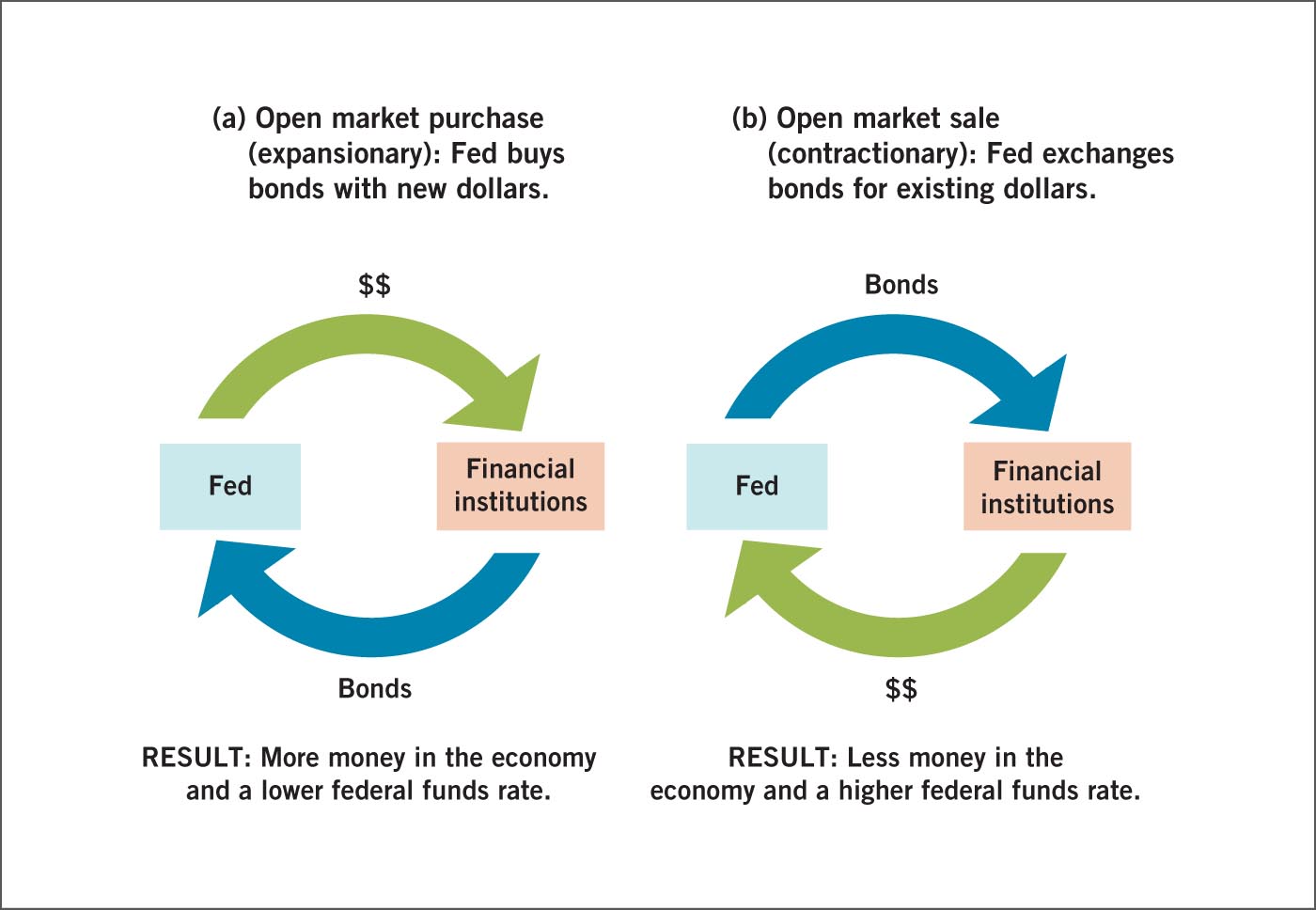
The mechanics of bond buying are relatively straightforward. The Fed primarily purchases two types of bonds: U.S. Treasury securities and mortgage-backed securities (MBS). It doesn’t buy these directly from the U.S. Treasury. Instead, it buys them from commercial banks and other financial institutions in the secondary market.
When the Fed buys bonds, it credits the reserve accounts of the selling banks at the Fed. This increases the total reserves in the banking system. These newly created reserves represent an increase in the money supply. Banks, now holding more reserves than they might need to meet regulatory requirements or customer withdrawals, are incentivized to lend these excess funds out, either to other banks (driving down interbank lending rates) or to businesses and consumers. This increased lending capacity is a core mechanism through which bond purchases aim to stimulate economic activity.
Impact on Interest Rates and Borrowing Costs
One of the most immediate and direct consequences of the Fed’s bond-buying program is its effect on interest rates, particularly longer-term rates.
Lowering Long-Term Rates
When the Fed purchases large quantities of U.S. Treasury bonds, especially those with longer maturities, it increases demand for these securities. An increase in demand for bonds leads to an increase in their price. Since bond prices and yields move inversely, an increase in bond prices translates to a decrease in their yields (interest rates). Similarly, by buying MBS, the Fed directly reduces the yield on these securities, which in turn influences mortgage rates.
Lower long-term interest rates are a critical objective of QE. For instance, a decrease in the yield on 10-year Treasury bonds can lead to lower rates on fixed-rate mortgages, corporate bonds, and other forms of long-term borrowing. This makes it cheaper for businesses to invest in new equipment, expand operations, or hire more staff, and more affordable for consumers to purchase homes or finance major expenses.
Stimulating Investment and Consumption
The reduction in borrowing costs acts as a powerful stimulus for both investment and consumption. Businesses face lower hurdles to finance expansion projects, leading to capital expenditures that can boost productivity and create jobs. Consumers, enjoying cheaper mortgages and other loans, may be more inclined to purchase big-ticket items like homes, cars, or appliances, further contributing to economic demand. This “transmission mechanism” is central to the Fed’s strategy, aiming to translate financial market actions into real economic benefits.
Effects on Financial Markets and Asset Prices
Beyond interest rates, the Fed’s bond purchases send ripples through various financial markets, influencing asset prices and investor behavior.
Equity Market Response
The impact on equity markets is multifaceted. Lower long-term interest rates reduce the discount rate used to value future corporate earnings, theoretically increasing the present value of stocks. Additionally, as bond yields fall, fixed-income investments become less attractive relative to equities, pushing investors to reallocate capital into the stock market in search of higher returns. This “portfolio balance effect” can drive up stock prices, creating a wealth effect.

Real Estate Implications
The housing market is particularly sensitive to the Fed’s actions. As noted, lower mortgage rates make homeownership more affordable, increasing demand for housing. This can lead to rising home prices, which, while beneficial for existing homeowners, can pose affordability challenges for new buyers. The increase in real estate values contributes to household wealth, potentially encouraging greater consumer spending.
The Dollar’s Value
When the Fed buys bonds, it expands the domestic money supply. All else equal, an increase in the supply of a currency can lead to its depreciation relative to other major currencies. A weaker dollar can make U.S. exports more competitive on the global market, boosting domestic industries that rely on international trade. Conversely, it makes imports more expensive, potentially contributing to domestic inflation. For international investors, a depreciating dollar can reduce the value of their U.S. dollar-denominated investments when converted back to their home currency.
Inflationary Pressures and Economic Growth
A primary goal of QE is to stimulate economic growth and steer inflation towards the Fed’s target, usually around 2%. However, the relationship is complex and not without risks.
Potential for Inflation
By injecting vast amounts of liquidity into the financial system, the Fed fundamentally increases the money supply. According to basic economic theory, an increase in the money supply, without a corresponding increase in the supply of goods and services, can lead to inflation – a general rise in prices. However, whether this inflation materializes depends on various factors, including the velocity of money (how quickly money changes hands) and the existence of slack in the economy. If the economy is operating well below its potential, increased money supply might first fuel demand and output before triggering significant price increases. If money velocity remains low (banks are not lending much, or consumers are not spending), the inflationary impact can be muted.
Boosting Economic Activity
The desired outcome of QE is a virtuous cycle: lower interest rates encourage borrowing and investment, leading to increased economic activity, job creation, and eventually, upward pressure on wages and prices. Businesses expand, consumers spend, and the overall economy grows. The “wealth effect” from rising asset prices (stocks, real estate) also plays a role, as individuals feel wealthier and are more likely to spend. This is the ideal scenario the Fed aims for when deploying bond purchases.
The Wealth Effect
The wealth effect refers to the idea that as people’s assets (like stocks and homes) increase in value, they feel wealthier and are more inclined to spend money. This increased consumer spending can further stimulate economic growth. While beneficial, critics argue that the wealth effect primarily benefits those who already own significant assets, potentially exacerbating wealth inequality.
Risks and Criticisms of Bond Buying
Despite its intended benefits, bond buying is not without its detractors and potential downsides. The sheer scale of these operations, often involving trillions of dollars, raises concerns about long-term economic stability.
Asset Bubbles
One significant criticism is the potential for bond buying to inflate asset bubbles. By driving down interest rates and pushing investors into riskier assets, QE can lead to overvaluation in stock markets, real estate, or other investment vehicles. When these bubbles eventually burst, the resulting economic fallout can be severe, as witnessed during the 2008 financial crisis. Critics argue that artificially low interest rates distort market signals and encourage excessive risk-taking.
Income Inequality
Another common critique is that QE disproportionately benefits the wealthy. Those with significant investments in stocks, bonds, and real estate see their net worth increase due to rising asset prices. In contrast, individuals whose primary income source is wages, and who own fewer financial assets, may not experience the same direct benefits. In fact, if inflation does materialize without commensurate wage growth, their purchasing power could diminish, exacerbating income and wealth disparities.

Exit Strategy Challenges
Once the economy recovers, the Fed faces the complex challenge of unwinding its bond holdings. This “quantitative tightening” (QT) typically involves either allowing bonds to mature without reinvesting the proceeds or outright selling bonds from its balance sheet. Both actions reduce the money supply and put upward pressure on interest rates. The risk lies in timing and execution: withdrawing liquidity too quickly could trigger a recession, while doing it too slowly could allow inflation to spiral out of control. Managing this delicate balance requires careful judgment and can be a source of market volatility. The sheer size of the Fed’s balance sheet after prolonged QE periods makes the exit strategy a monumental task.
aViewFromTheCave is a participant in the Amazon Services LLC Associates Program, an affiliate advertising program designed to provide a means for sites to earn advertising fees by advertising and linking to Amazon.com. Amazon, the Amazon logo, AmazonSupply, and the AmazonSupply logo are trademarks of Amazon.com, Inc. or its affiliates. As an Amazon Associate we earn affiliate commissions from qualifying purchases.