
Annuities serve as a critical component of many retirement and financial planning strategies, offering a guaranteed income stream, often for life. However, the question of what happens to these financial instruments upon the death of the annuitant or owner can be complex, depending on the annuity’s specific structure, beneficiary designations, and applicable tax laws. Understanding these mechanisms is crucial for both annuity holders and their potential heirs to ensure that assets are distributed according to intent and with optimal tax efficiency.
Understanding Annuity Types and Beneficiary Designations
The default outcome for an annuity after death is heavily influenced by how it was structured and, most importantly, who was named as a beneficiary. Unlike some other assets that pass through probate, annuities, like life insurance policies, typically bypass this lengthy legal process if a beneficiary is properly designated.
The Role of Beneficiaries
A beneficiary is the person or entity designated to receive the benefits of the annuity upon the death of the annuitant or owner. Proper designation is paramount. Without a named beneficiary, the annuity’s value may fall into the deceased’s estate, subjecting it to probate and potential delays, legal fees, and distribution according to state intestacy laws, which may not align with the deceased’s wishes. Multiple beneficiaries can be named, often with specific percentages of the benefit allocated to each. It’s also possible to name contingent beneficiaries who would receive the benefits if the primary beneficiaries predecease the annuitant or owner.
Annuitant vs. Owner vs. Beneficiary
It’s important to distinguish between these roles:
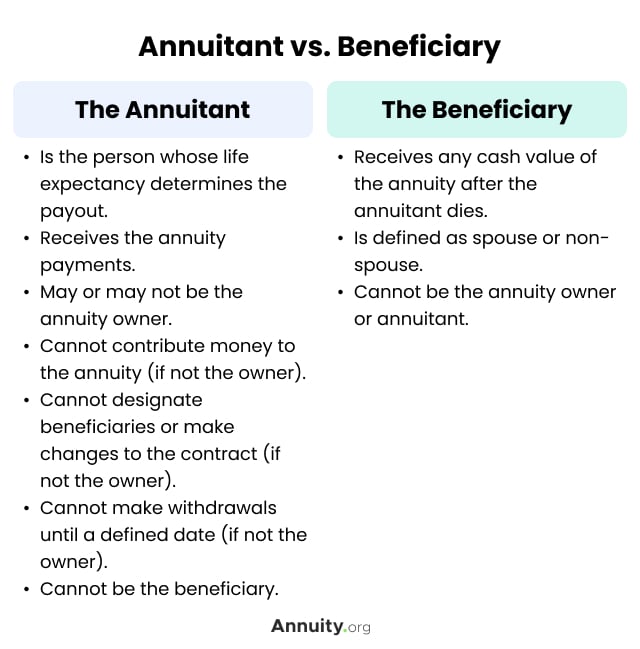
- Owner: The individual or entity who purchases the annuity contract and has all rights under the contract, including naming beneficiaries and making withdrawals.
- Annuitant: The person whose life expectancy determines the payout period of the annuity. The annuity payments are typically based on the annuitant’s life. The owner and annuitant are often the same person but don’t have to be.
- Beneficiary: The individual or entity who receives the annuity’s remaining value or death benefit upon the death of the owner or annuitant, depending on the contract’s terms.
When the owner and annuitant are the same, the annuity’s death benefit provisions usually trigger upon their death. If the owner dies but the annuitant is still alive, the new owner (often the beneficiary) takes over the contract. If the annuitant dies but the owner is still alive, the owner can typically name a new annuitant or surrender the contract.
Different Annuity Structures and Their Impact on Death Payouts
The specific terms of the annuity contract dictate what happens upon death.
- Single Life Annuities (Income Phase): These annuities provide payments for the lifetime of a single annuitant. If the annuitant dies without any remaining guarantee period, payments typically cease, and there is no remaining value for beneficiaries. This structure aims to maximize income during the annuitant’s life and usually carries the highest payout rate for a given premium.
- Joint & Survivor Annuities (Income Phase): Designed for couples, these annuities provide payments for the lives of two annuitants. Upon the death of the first annuitant, payments continue, often at a reduced rate (e.g., 100%, 75%, or 50% of the original payment), for the lifetime of the surviving annuitant. Beneficiaries would only receive a death benefit if both annuitants die and there’s a remaining guarantee period.
- Period Certain Annuities (Income Phase): These annuities guarantee payments for a specific number of years (e.g., 10 or 20 years), even if the annuitant dies before the period ends. If the annuitant dies within the “period certain,” the remaining guaranteed payments are typically paid to the named beneficiary. If the annuitant outlives the period certain, payments continue for their lifetime, but cease upon death thereafter.
- Deferred Annuities (Accumulation Phase): During the accumulation phase, a deferred annuity grows tax-deferred. If the owner dies during this phase, the death benefit, which is usually the greater of the contract’s accumulated value or the total premiums paid less withdrawals, is paid to the named beneficiaries. Some contracts may offer an enhanced death benefit rider for an additional fee.
Payout Options for Beneficiaries
When an annuity owner or annuitant dies, the named beneficiaries generally have several options for receiving the death benefit, depending on the annuity contract and their relationship to the deceased.
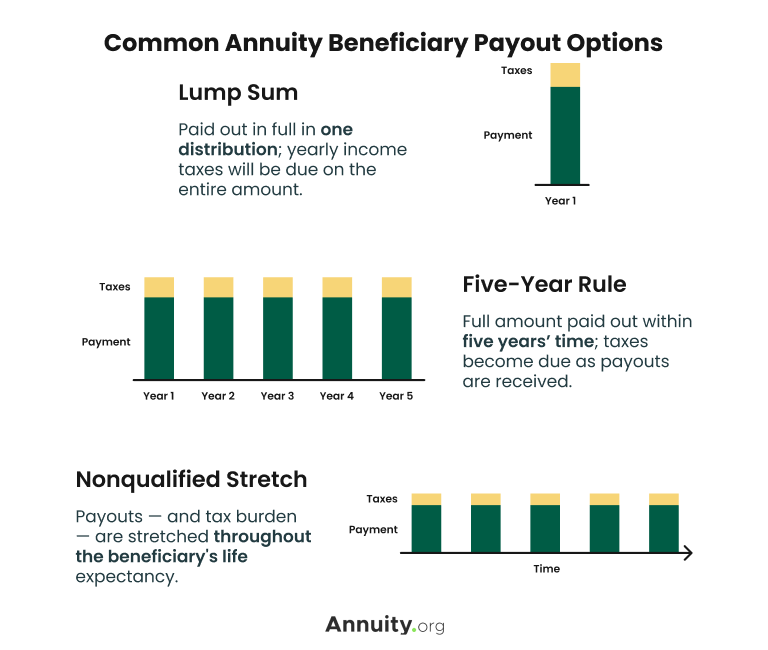
Lump Sum Distribution
Beneficiaries can choose to take the entire remaining value of the annuity in a single payment. While this offers immediate access to funds, it can have significant tax implications, as all accumulated gains are typically taxable as ordinary income in the year received. This can push the beneficiary into a higher tax bracket.
Annuitization (Spreading Payments Over Time)
Beneficiaries, particularly a surviving spouse, may have the option to annuitize the death benefit, turning it into a series of regular payments over their own lifetime or a specified period. This allows the beneficiary to defer taxes on the gains until payments are received, effectively spreading the tax burden over several years. This option can also provide a stable income stream, similar to what the original annuitant might have received.
Five-Year Rule (for Non-Spouse Beneficiaries)
For non-spouse beneficiaries of a deferred annuity, the IRS generally requires that the entire interest in the annuity be distributed within five years of the owner’s death. This means the beneficiary must either take a lump sum within five years or liquidate the account through a series of payments within that timeframe. There is an exception for “stretch” provisions in some annuities, where beneficiaries can stretch out distributions over their life expectancy if payments begin within one year of the owner’s death. This option allows for continued tax-deferred growth for a longer period.
Spousal Continuation
A surviving spouse typically has the most flexible options. They can often choose to continue the annuity contract as if they were the original owner. This means the annuity continues to grow tax-deferred, and the spouse can choose when to begin taking distributions, potentially even naming new beneficiaries. This is often the most advantageous option from a tax-deferral perspective.
Taxation Implications for Beneficiaries
The tax treatment of annuity death benefits is a critical consideration for beneficiaries and can significantly impact the net amount received.
Ordinary Income Tax on Gains

The most important tax rule for annuities is that the gain portion of any distribution is taxed as ordinary income, not capital gains. This applies whether the beneficiary takes a lump sum or receives payments over time. For non-qualified annuities (those purchased with after-tax dollars), only the earnings are taxed. The original principal (cost basis) is returned tax-free. For qualified annuities (those held within an IRA, 401(k), or other tax-advantaged retirement accounts), all distributions, including both principal and gains, are generally taxed as ordinary income because the original contributions were often pre-tax or tax-deductible.
Non-Qualified Annuities
Upon the death of the owner, the earnings portion of a non-qualified annuity is subject to ordinary income tax when distributed to beneficiaries. If a beneficiary takes a lump sum, all accumulated untaxed gains become taxable in that year. If they annuitize, the exclusion ratio determines how much of each payment is taxable (gain) and how much is non-taxable (return of basis).
Qualified Annuities (IRAs, 401(k)s)
When an annuity is held within a qualified retirement plan (like a traditional IRA or 401(k)), all distributions to beneficiaries are typically taxed as ordinary income, as contributions were generally pre-tax or tax-deductible. The rules for required minimum distributions (RMDs) for beneficiaries of qualified accounts also apply, influenced by the SECURE Act. The SECURE Act generally requires most non-spouse beneficiaries to fully distribute the inherited qualified account within 10 years of the original owner’s death, eliminating the “stretch” IRA for many.
Estate Tax Considerations
While annuity death benefits are subject to income tax on the gains, the entire value of the annuity is also included in the deceased’s taxable estate for estate tax purposes. However, due to high federal estate tax exemptions, most estates do not owe federal estate tax. Some states have lower estate tax thresholds, which could make annuities subject to state estate tax.
Step-Up in Basis (and why it generally doesn’t apply to annuities)
Unlike assets such as real estate or stocks, which typically receive a “step-up in basis” to their market value on the date of death (meaning capital gains accrued before death are erased), annuities generally do not receive this benefit. The embedded gains within an annuity remain taxable to the beneficiary. This is a crucial distinction and why careful planning is essential for annuities.
Strategies for Estate Planning with Annuities
Effective planning can help ensure that annuity assets are transferred efficiently and in alignment with the owner’s wishes, minimizing tax burdens for beneficiaries.
Naming Contingent Beneficiaries
Always name both primary and contingent beneficiaries. If primary beneficiaries predecease the annuitant or owner, the contingent beneficiaries will receive the benefit, avoiding probate. Regularly review and update these designations, especially after major life events such as marriage, divorce, birth of a child, or death of a beneficiary.
Trusts as Beneficiaries
Naming a trust as a beneficiary can offer greater control over how and when assets are distributed, particularly useful for minor children, beneficiaries with special needs, or if you want to provide for multiple generations. However, this strategy introduces complexities. The trust itself must often follow the five-year rule for distributions, potentially negating some tax deferral advantages. Consulting with an estate planning attorney is essential to understand the implications of this approach.
Reviewing Beneficiary Designations Regularly
Life circumstances change, and so should your financial designations. A beneficiary designation form supersedes a will. If your will states one thing but your annuity beneficiary form states another, the annuity will be paid according to the form. Regular reviews, at least every 3-5 years or after significant life events, are critical to ensure your beneficiaries are up-to-date and your wishes are honored.
Professional Guidance
The intricacies of annuity taxation and estate planning warrant professional advice. A qualified financial advisor, along with an estate planning attorney, can help structure annuities optimally within your broader estate plan, advise on beneficiary designations, and help navigate the complex tax landscape to achieve your financial and legacy goals.
Common Misconceptions and Key Takeaways
Dispelling common myths and reinforcing core principles can help annuity owners and their beneficiaries prepare for the future.
Annuities vs. Life Insurance
A common confusion exists between annuities and life insurance. While both can provide a death benefit, their primary functions differ. Life insurance is designed to provide a death benefit, with income replacement as its core purpose. Annuities are primarily for accumulation and income generation during retirement. While some annuities have death benefits, they are not typically designed as primary estate liquidity tools like life insurance.
The Importance of Documentation
Maintain meticulous records of your annuity contracts, including policy numbers, issuing company, contract terms, and beneficiary designations. Informing trusted family members or your executor about the existence and location of these documents can significantly ease the burden on beneficiaries during a difficult time.
In summary, what happens to an annuity upon death is not a one-size-fits-all answer. It hinges on the type of annuity, the phase it’s in (accumulation or payout), and most importantly, the clarity and currency of its beneficiary designations. Proactive planning, informed decision-making, and professional guidance are invaluable in ensuring that your annuity assets serve your beneficiaries as intended, while navigating the complex landscape of taxation and estate planning.
aViewFromTheCave is a participant in the Amazon Services LLC Associates Program, an affiliate advertising program designed to provide a means for sites to earn advertising fees by advertising and linking to Amazon.com. Amazon, the Amazon logo, AmazonSupply, and the AmazonSupply logo are trademarks of Amazon.com, Inc. or its affiliates. As an Amazon Associate we earn affiliate commissions from qualifying purchases.