
The Harlem Renaissance, a profound flourishing of Black intellectual, artistic, and cultural life centered in Harlem, New York, represented far more than a mere historical period; it was a potent collective brand. This “brand” embodied a unified vision of racial pride, artistic innovation, and social commentary, effectively marketing a new identity for African Americans on both national and international stages. Its “ending,” therefore, can be analyzed not as an abrupt collapse, but as a complex process of market saturation, strategic reorientation, and the inevitable evolution of a cultural identity, akin to a brand transitioning through its lifecycle.

The Genesis and Strategic Positioning of a Cultural Brand
To understand its eventual transformation, one must first appreciate the initial strategic positioning of the Harlem Renaissance as a brand. At its core, the movement crafted a distinctive brand identity around the “New Negro”—an individual who was educated, sophisticated, and assertive, challenging prevailing racist stereotypes. This identity was meticulously curated through various “marketing channels” and “product offerings.”
Defining the Renaissance’s “Brand Identity”
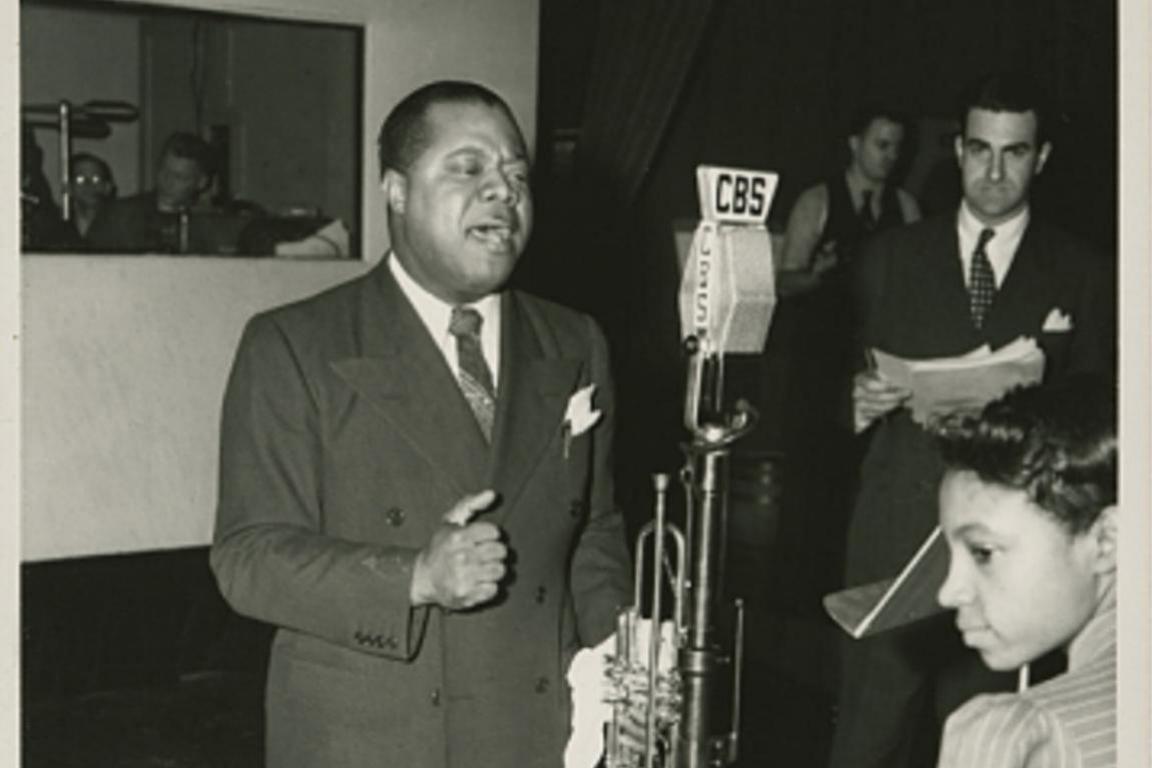
The brand identity of the Harlem Renaissance was multifaceted, built on pillars of creative expression and social uplift. Art, literature, music, and performance served as its core “products,” each designed to articulate the unique experiences and aspirations of African Americans. Poets like Langston Hughes and Claude McKay delivered narratives that were both intensely personal and universally resonant, establishing a clear “voice” for the brand. Artists such as Aaron Douglas employed distinct visual language, creating “brand assets” that communicated pride and heritage. Musicians, from Duke Ellington to Bessie Smith, provided the “soundtrack” to this cultural identity, reaching broad audiences and further cementing the brand’s emotional connection. This cohesive output formed a powerful, recognizable brand image that promised enlightenment, entertainment, and empowerment.
Early “Marketing” and Audience Engagement
The Harlem Renaissance employed sophisticated, albeit informal, “marketing strategies” to build awareness and engagement. Publishing houses, often led by figures like Charles S. Johnson, acted as critical “distribution channels,” amplifying the voices of Black authors. Literary magazines such as Opportunity and The Crisis functioned as “brand platforms,” curating content and fostering a sense of community among “brand loyalists” and aspiring creators. Intellectual salons and social gatherings served as “networking events” where artists, patrons, and critics could interact, discussing new works and reinforcing the movement’s intellectual capital. White patrons, many of whom were drawn to the exoticism and artistic vitality of Harlem, became essential “investors” and “influencers,” providing financial support and expanding the brand’s reach into mainstream circles. This dual-audience strategy, appealing to both Black and white consumers, was key to its initial widespread recognition.
External Market Disruptions and Brand Erosion
Despite its robust initial positioning, even the most successful brands are susceptible to external market forces. The Harlem Renaissance, as a cultural brand, faced significant challenges that disrupted its “market” and ultimately eroded its centralized identity. These disruptions were not isolated events but rather a confluence of socio-economic shifts that altered the landscape within which the brand operated.
The Great Depression: A “Market Correction”
The most significant external shock was the onset of the Great Depression in 1929. This economic downturn functioned as a massive “market correction,” severely impacting the “investment capital” that fueled the Renaissance. Patronage, which had been a vital “funding source” for artists, dwindled dramatically as wealthy benefactors faced their own financial crises. Publishing houses, struggling with reduced consumer spending on non-essential goods like books and magazines, scaled back their “production” and “distribution” efforts. Art galleries and music venues, the primary “retail outlets” for cultural products, saw sharply declining attendance and sales. For many artists and intellectuals, the immediate need for survival eclipsed the pursuit of artistic endeavors, forcing a “re-prioritization” of personal and professional “strategies.” This economic constraint effectively cut off the “marketing budget” and “operational funds” of the Renaissance, making it difficult to sustain the level of concentrated artistic output and intellectual discourse that had defined its brand. The focus shifted from cultural uplift to economic survival, fragmenting the collective identity.

Shifting Social and Political “Landscapes”
Beyond economic turmoil, the social and political landscape underwent significant transformations that challenged the Renaissance’s strategic focus. The widespread internal migration of African Americans continued, dispersing the “consumer base” that had been concentrated in Harlem. As Black communities grew in other urban centers, the singular focus on Harlem as the epicenter of Black cultural production began to diffuse. Moreover, the nature of civil rights activism began to evolve. While the Renaissance had focused on cultural expression as a means of challenging racism, the deepening economic crisis and persistent systemic inequalities spurred a more direct, politically-oriented approach to activism. Organizations like the NAACP and the Urban League, while supportive of cultural achievements, increasingly concentrated their “advocacy strategies” on legal challenges and economic justice. This shift in “stakeholder priorities” meant that the “brand message” of the Harlem Renaissance, while still relevant, no longer occupied the central position in the broader struggle for racial equality. The “market demand” for purely cultural affirmation, separate from direct political action, waned, leading to a re-evaluation of the brand’s utility and impact.
Internal Challenges to Brand Cohesion
Just as external forces reshaped its environment, internal dynamics within the movement also contributed to the transformation of the Harlem Renaissance brand. Like any successful enterprise, sustained growth requires a unified vision and adaptable leadership; when these elements fragment, the brand’s cohesion suffers.
Divergent Artistic “Strategies” and Voices
As the movement matured, the once-relatively cohesive artistic “strategy” began to diversify. Individual artists, having found their voices and established their reputations, naturally pursued new creative directions. Some, like Zora Neale Hurston, deepened their exploration of folk culture and Southern Black traditions, moving conceptually away from the urban “New Negro” archetype. Others embraced more radical political themes or experimented with avant-garde forms that pushed beyond the initial aesthetic boundaries. This artistic evolution, while indicative of creative freedom and growth, resulted in a less unified “brand messaging.” The “product lines” became more diverse, but the overarching “campaign” lost some of its singular focus. Without a centralized “creative director” or a unifying “brand manifesto” to guide these disparate voices, the collective brand identity became more diffuse, celebrated for its individual contributions rather than its singular, defining spirit.
The “Evolution” of Key “Influencers”
The leading figures and “influencers” who had been instrumental in shaping and promoting the Harlem Renaissance brand also began to evolve in their roles and locations. Many moved out of Harlem, seeking new opportunities, academic positions, or simply a change of scenery. Langston Hughes traveled extensively, continuing his literary work but often far from the Harlem epicenter. W.E.B. Du Bois shifted his focus, engaging more directly with international Pan-African movements. Alain Locke, a key “brand strategist” and editor of The New Negro anthology, continued to advocate for Black art but within a broader academic and philosophical context. This dispersal of “leadership” meant that the “brand management team” that had nurtured the movement’s early growth was no longer concentrated. The “thought leadership” became less localized and more fragmented, impacting the capacity for sustained, collective brand-building efforts.
Lack of a Unified “Business Model”
The Harlem Renaissance, while culturally rich, never developed a truly unified and self-sustaining “business model.” It largely relied on a combination of individual talent, philanthropic patronage, and the burgeoning, but still limited, commercial market for Black cultural products. This dependence meant that when external funding sources (patrons) dried up and consumer demand (due to the Depression) waned, there was no robust internal economic engine to sustain the brand. Unlike a corporate entity with diverse revenue streams, the cultural production of the Renaissance lacked the financial infrastructure to withstand severe economic shock. The “investment strategy” was primarily cultural rather than strictly financial, making it vulnerable to market volatility. The absence of a strong, institutionalized “corporate identity” or “financial planning” meant that when the “market conditions” deteriorated, the collective endeavor lacked the resilience to continue in its original concentrated form.
The Legacy as a “Transformed Brand”
Ultimately, the “ending” of the Harlem Renaissance was not an extinction but a profound transformation—a “rebranding” and “market adaptation.” The distinct brand of the “New Negro” and the cultural movement it represented did not vanish; rather, its influence diffused, evolved, and was integrated into the broader American cultural landscape and the ongoing struggle for civil rights.
The Renaissance’s End as a “Rebranding”
The perceived “end” of the Harlem Renaissance around the mid-1930s marked a transition from a concentrated geographical and temporal brand phenomenon to a more pervasive cultural influence. The ideas, aesthetics, and themes championed by the Renaissance underwent a “rebranding” process, becoming less about a specific location and time, and more about enduring principles of racial pride, artistic autonomy, and social critique. Its “market presence” shifted from a highly visible, centralized movement to a foundational current influencing subsequent generations of artists, writers, and activists. The concentrated “campaign” of the 1920s gave way to a more integrated “strategy,” where the principles of the Renaissance became part of the cultural fabric rather than a distinct, separate entity.
Enduring “Brand Equity” and Influence
The enduring “brand equity” of the Harlem Renaissance is undeniable. Its impact on subsequent movements, art forms, and the broader understanding of African American identity continues to resonate. Its literature laid the groundwork for future generations of Black writers, its visual arts influenced new artistic expressions, and its music became a global phenomenon. The movement’s original “brand promise”—to articulate and celebrate Black identity—was fundamentally fulfilled, even if the methods and concentrations changed. The Harlem Renaissance taught the world that Black culture was not a periphery but a vital center of American life, establishing an indelible “corporate identity” for African American artistic and intellectual contributions. While the specific brand “packaging” of the 1920s dissolved, the core “values” and “messaging” it established continue to inform cultural discourse and shape identity, demonstrating that truly impactful brands do not die, but rather evolve and permeate.
aViewFromTheCave is a participant in the Amazon Services LLC Associates Program, an affiliate advertising program designed to provide a means for sites to earn advertising fees by advertising and linking to Amazon.com. Amazon, the Amazon logo, AmazonSupply, and the AmazonSupply logo are trademarks of Amazon.com, Inc. or its affiliates. As an Amazon Associate we earn affiliate commissions from qualifying purchases.