
The concept of “reversal” is a potent and multi-faceted term within the financial world, carrying significant implications for investors, businesses, and personal financial management. At its core, a reversal signifies a change in direction, an undoing, or a significant shift from a previous state or trend. In finance, this can manifest in various forms, from the rectification of a mistaken transaction to the fundamental shift in market sentiment or economic trajectory. Understanding these different dimensions of reversal is crucial for navigating the complexities of financial markets and making informed decisions.
The Nuances of Financial Reversals
Financial reversals can be broadly categorized into transactional reversals, which deal with the mechanics of money movement, and market/economic reversals, which pertain to broader trends and cycles. Each carries its own set of characteristics and consequences.
Transactional Reversals
Transactional reversals involve the undoing or correction of a financial transfer. These are typically initiated to correct errors, prevent fraud, or comply with specific regulations.
Chargebacks and Voids
One of the most common forms of transactional reversal is a chargeback. This occurs when a cardholder disputes a transaction with their bank, leading the bank to reclaim funds from the merchant. Chargebacks are often initiated due to fraudulent activity, unauthorized transactions, non-delivery of goods or services, or significant discrepancies between what was promised and what was received. For merchants, chargebacks can be costly, involving not only the loss of revenue but also additional fees and potential damage to their payment processing reputation.
Voids, on the other hand, are simpler and typically occur before a transaction has been fully settled or processed. If a customer changes their mind immediately after a purchase, or if an error is detected at the point of sale, a merchant can “void” the transaction. This prevents the funds from ever leaving the customer’s account and incurring the associated processing fees, making it a less impactful form of reversal than a chargeback.
ACH Reversals
Automated Clearing House (ACH) transactions, which facilitate direct deposits, bill payments, and other electronic fund transfers, also have mechanisms for reversal. An ACH reversal is typically initiated to correct an erroneous transaction, such as an incorrect amount, a duplicate entry, or a transfer to the wrong account. There are strict rules governing ACH reversals, requiring them to be initiated within a specific timeframe (often 5 banking days) and for legitimate reasons. Unauthorized or fraudulent ACH transactions can also be reversed, offering a layer of protection for consumers and businesses.
Impact on Businesses and Consumers
For businesses, frequent chargebacks or ACH reversals can lead to increased operational costs, strained relationships with payment processors, and even account termination. Implementing robust fraud detection systems, clear customer service policies, and efficient dispute resolution processes are essential to minimize their occurrence. For consumers, understanding their rights regarding transactional reversals provides a critical safety net against fraud and merchant non-compliance.
Market Reversals and Trends
Beyond individual transactions, the concept of reversal takes on a macroeconomic and market-specific dimension, referring to significant shifts in price trends, market sentiment, or broader economic conditions.
Identifying Trend Shifts
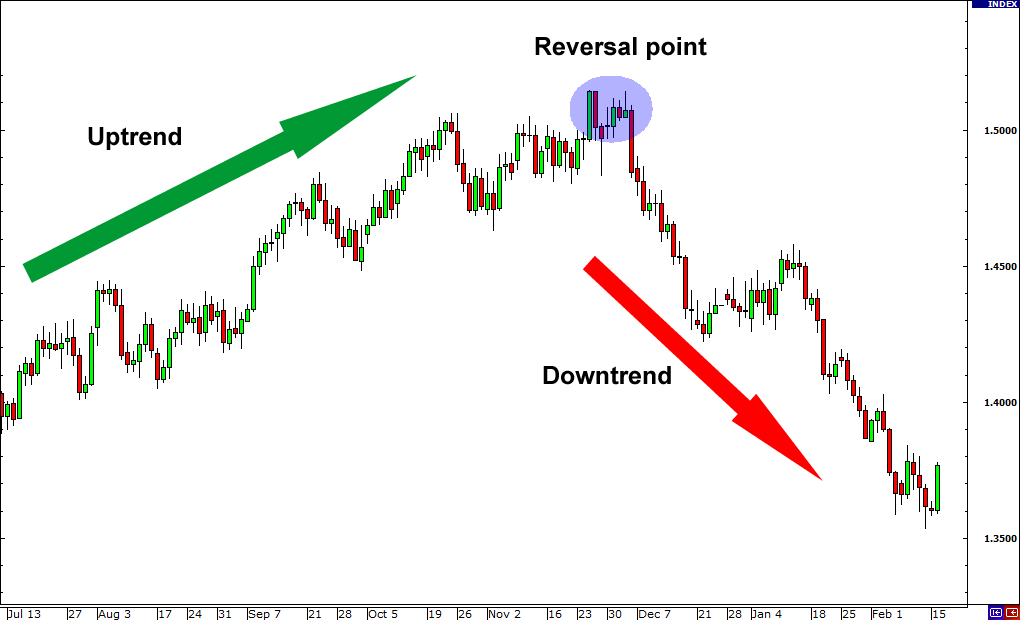
In financial markets, a market reversal signifies a change in the dominant price direction of an asset, commodity, or an entire market. For instance, a prolonged uptrend (bull market) might reverse into a downtrend (bear market), or vice versa. Identifying these trend shifts early is paramount for investors and traders, as it dictates strategy adjustments from accumulation to distribution or from shorting to buying.
Bullish and Bearish Reversals
A bearish reversal occurs when an asset’s price, after an extended period of upward movement, begins to decline. This often signals that buying pressure is weakening and selling pressure is taking over. Conversely, a bullish reversal happens when an asset’s price, having experienced a downtrend, starts to move upwards, indicating that sellers are losing control and buyers are stepping in. These reversals are often accompanied by specific chart patterns and indicators that technical analysts study meticulously.
Economic Cycle Reversals
On a broader scale, economic cycle reversals refer to the transition points between different phases of the economic cycle—from expansion to recession, or from recession to recovery. These macro reversals are driven by a complex interplay of factors, including interest rates, consumer spending, business investment, inflation, and government policy. Central banks often play a critical role in attempting to influence these reversals through monetary policy adjustments, aiming to stabilize the economy and foster sustainable growth.
Reversal Patterns in Technical Analysis
Technical analysis, a methodology for forecasting the direction of prices through the study of past market data, heavily relies on identifying reversal patterns. These are specific formations on price charts that suggest an impending change in the prevailing trend.
Key Reversal Formations
Traders and analysts look for a variety of patterns that signal a potential reversal:
Head and Shoulders (Top and Bottom)
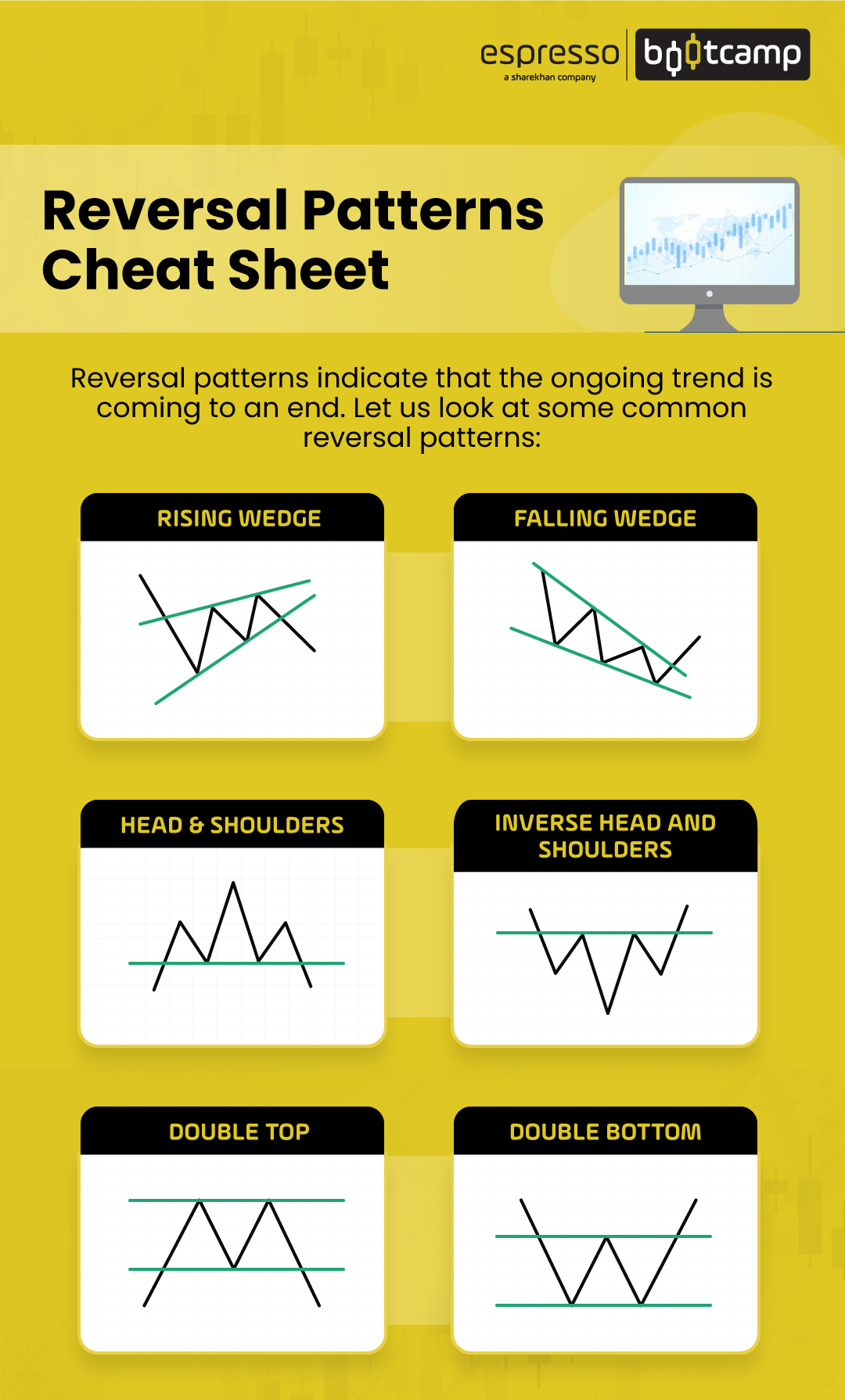
The Head and Shoulders top is a classic bearish reversal pattern appearing after an uptrend. It consists of three peaks: a left shoulder, a higher head, and a lower right shoulder. The neckline, drawn across the lows between these peaks, serves as a critical support level. A decisive break below the neckline, typically on increased volume, confirms the reversal. The inverted Head and Shoulders (bottom) is its bullish counterpart, appearing after a downtrend, signaling a potential upward reversal.
Double Tops and Bottoms
A Double Top is another bearish reversal pattern occurring after an uptrend, characterized by two distinct peaks at approximately the same price level, separated by an intermediate trough. It suggests that buyers tried twice to push prices higher but failed, indicating strong resistance. A break below the trough’s support level confirms the reversal. The Double Bottom is a bullish reversal pattern, featuring two troughs at roughly the same level, indicating strong support and a potential upward move.
Triple Tops and Bottoms
Similar to double patterns, Triple Tops and Triple Bottoms involve three distinct peaks or troughs at roughly the same price level. These patterns suggest an even stronger level of resistance or support has been tested multiple times, and a break through these levels can lead to a more significant reversal.
Engulfing Patterns (Candlestick Analysis)
Candlestick charts offer more granular reversal signals. A bearish engulfing pattern occurs when a large bearish (down) candle completely covers the body of the previous bullish (up) candle during an uptrend, signaling a potential reversal. A bullish engulfing pattern is its inverse, appearing during a downtrend, with a large bullish candle engulfing the prior bearish candle, indicating a potential upward reversal.
Hammer and Hanging Man (Candlestick Analysis)
The Hammer is a bullish reversal candlestick pattern forming after a downtrend. It has a small body, a long lower shadow (at least twice the length of the body), and little or no upper shadow, suggesting buyers are stepping in to push prices up from their lows. The Hanging Man is a bearish reversal pattern, identical in shape to the Hammer but appearing after an uptrend, indicating selling pressure might be increasing.
Volume and Confirmation
While these patterns provide visual cues, volume plays a crucial role in confirming reversals. A reversal signal is generally considered stronger if it occurs on increasing volume in the direction of the new trend. For instance, a break below the neckline of a Head and Shoulders top accompanied by heavy selling volume significantly strengthens the bearish reversal signal. Traders also look for confirmation signals from other technical indicators, such as momentum oscillators (e.g., RSI, MACD), to validate potential trend changes and reduce the risk of false signals.
Strategic Reversals in Investing and Personal Finance
The concept of reversal extends beyond market mechanics to encompass strategic shifts in how individuals manage their investments and personal finances.
Reversing Investment Strategies
Investors often make strategic reversals in their portfolios:
Cutting Losses (Stop-Loss)
A common defensive reversal strategy is to cut losses by selling a position that has moved against an investor’s expectations. This is often automated using a stop-loss order, which triggers a sell if the price falls below a predetermined level. This strategic reversal prevents minor losses from escalating into significant portfolio damage.
Taking Profits
Conversely, taking profits involves selling an asset that has performed well. While it might feel counterintuitive to sell a winning investment, a strategic reversal to lock in gains protects against potential future downturns and allows capital to be redeployed.
Portfolio Rebalancing
Portfolio rebalancing is a periodic strategic reversal where an investor adjusts the allocation of assets in their portfolio back to its original target weights. If stocks have significantly outperformed bonds, for example, an investor might sell some stocks and buy bonds to restore the desired risk profile. This prevents the portfolio from drifting too far from its intended allocation due due to market performance.
Personal Financial Reversals
Individuals also implement reversals in their personal financial habits and goals:
Debt Payoff Strategies
A significant personal financial reversal involves shifting from accumulating debt to aggressively paying it off. Strategies like the debt snowball (paying off smallest debts first) or debt avalanche (paying off highest interest debts first) represent a conscious reversal of spending and repayment habits to achieve financial freedom.
Budgeting and Spending Habit Reversals
Many individuals initiate a reversal of unsustainable spending habits by creating and adhering to a budget. This often means saying no to impulse purchases, reducing discretionary spending, and prioritizing savings and investments over immediate gratification. It’s a fundamental shift in financial behavior.
Shifting Financial Goals
Life circumstances often necessitate a reversal in financial goals. An individual saving aggressively for early retirement might reverse course if family needs or new career opportunities arise, re-prioritizing savings for a down payment, education, or starting a business. These strategic reversals ensure financial plans remain aligned with evolving life stages and aspirations.
The Psychology and Risk of Reversals
While understanding reversals is vital, the human element introduces complexity and risk.
The Lure of Predicting Reversals
The allure of accurately predicting market reversals is strong, as it offers the promise of buying at the bottom and selling at the top. However, this is one of the most challenging aspects of trading and investing.
Risk of False Signals
Reversal patterns and indicators are not infallible. False signals—where a pattern suggests a reversal that ultimately fails to materialize—are common. Acting on these false signals can lead to significant losses. This emphasizes the need for confirmation from multiple indicators and a disciplined approach.
Emotional Biases and Decision Making
Fear of missing out (FOMO) and the desire to be proven right can lead investors to jump into or out of positions prematurely, or to ignore clear reversal signals. Emotional biases often cloud judgment, preventing objective assessment of market conditions and leading to poor strategic reversals or a failure to act when needed.
Managing Risk During Reversals
Effective risk management is paramount when dealing with potential reversals.
Diversification
A well-diversified portfolio is less susceptible to the impact of a single asset’s reversal. By spreading investments across different asset classes, sectors, and geographies, investors can mitigate the concentrated risk of a sharp downturn in any one area.
Risk Management Techniques
Utilizing tools like stop-loss orders, setting clear entry and exit points, and position sizing (determining how much capital to allocate to a single trade or investment) are critical risk management techniques. These help automate disciplined responses to market reversals and limit potential downside.

Patience and Discipline
Perhaps the most crucial aspect is patience and discipline. Waiting for clear confirmation of a reversal, rather than reacting to every flicker of price movement, reduces exposure to false signals. Adhering to a pre-defined strategy, even when emotions are high, ensures that decisions are based on analysis rather than impulsive reactions, allowing investors to effectively navigate the ever-changing tides of financial reversals.
aViewFromTheCave is a participant in the Amazon Services LLC Associates Program, an affiliate advertising program designed to provide a means for sites to earn advertising fees by advertising and linking to Amazon.com. Amazon, the Amazon logo, AmazonSupply, and the AmazonSupply logo are trademarks of Amazon.com, Inc. or its affiliates. As an Amazon Associate we earn affiliate commissions from qualifying purchases.