
In the intricate tapestry of modern technology, waves are the invisible couriers, the silent architects of communication, and the tireless transporters of energy. Far from merely being natural phenomena observed in oceans or sound, waves, in a technological context, represent a fundamental mechanism for transferring information, signals, and power across vast distances without the physical movement of matter. They are the backbone of our interconnected world, enabling everything from real-time global communication to precise medical diagnostics and the potential for ubiquitous wireless power.
The Invisible Couriers: Electromagnetic Waves and Data Transfer
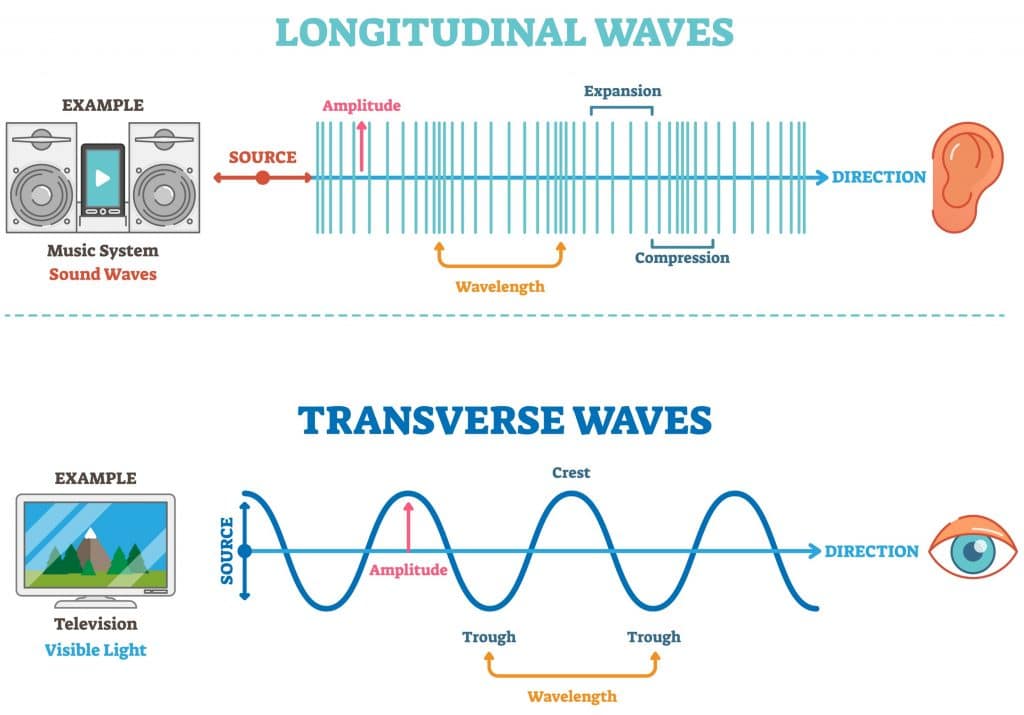
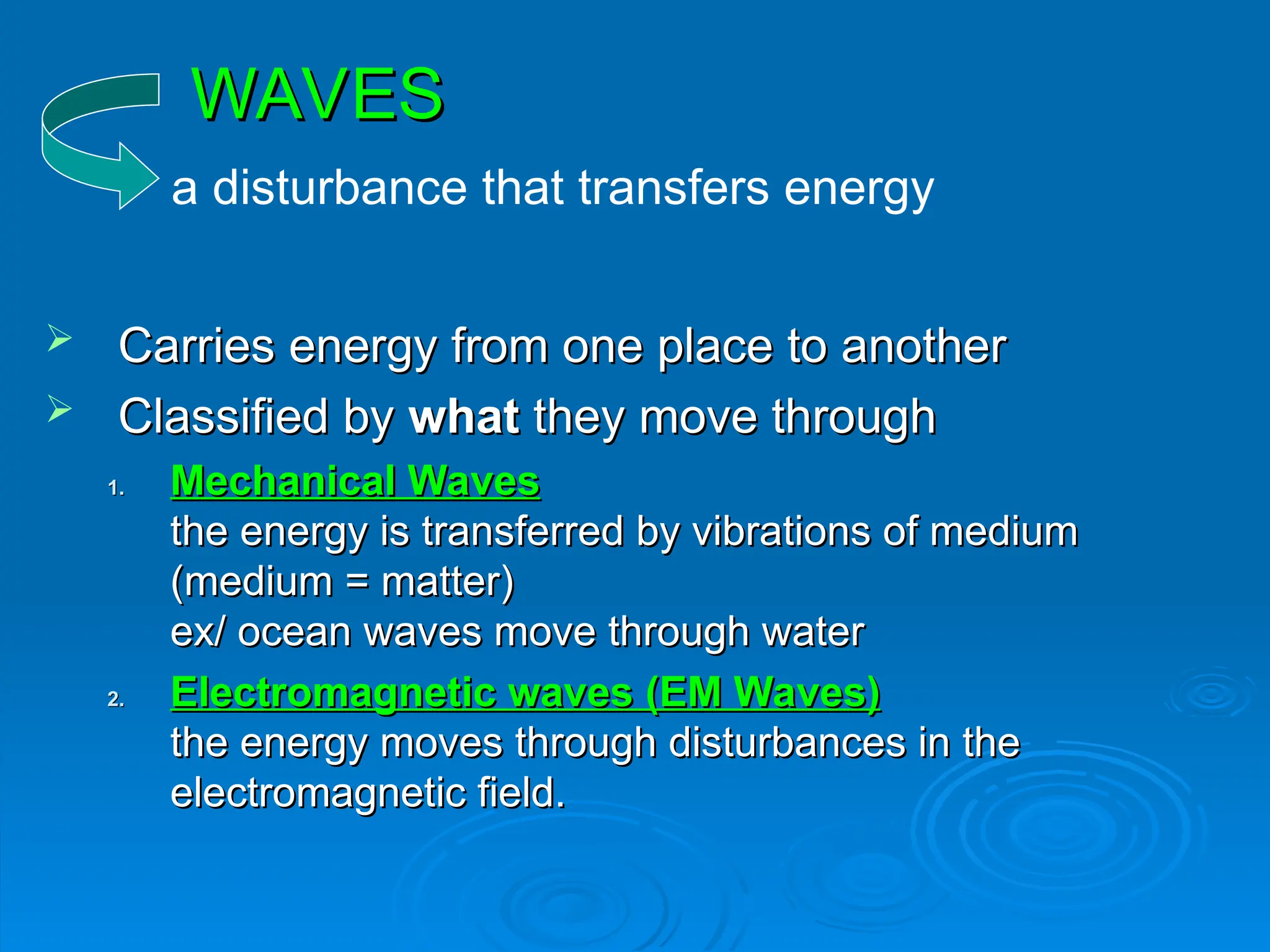
At the heart of nearly all modern digital infrastructure are electromagnetic (EM) waves. These oscillations of electric and magnetic fields propagate at the speed of light, requiring no medium, making them ideal for interplanetary communication and terrestrial wireless networks alike. What they carry is not matter, but rather encoded information—bits and bytes transformed into varying frequencies, amplitudes, or phases.
The Backbone of Wireless Communication: Radio and Microwaves
Radio waves, a segment of the EM spectrum with longer wavelengths, are the workhorses of broadcasting, cellular networks, Wi-Fi, and satellite communication. When you stream music, make a phone call, or browse the internet wirelessly, radio waves are carrying your data. Transmitters convert electrical signals into radio waves, which propagate through the air. Receivers then capture these waves and convert them back into electrical signals, allowing us to decode the original information—whether it’s an audio signal, a video stream, or a packet of internet data.
Microwaves, with shorter wavelengths than radio waves, play a crucial role in higher-bandwidth applications. They are essential for point-to-point communication links, radar systems, and are a core component of satellite television and global positioning systems (GPS). The higher frequency of microwaves allows them to carry more information per unit of time, making them suitable for transmitting large volumes of data over long distances with minimal interference, especially when line-of-sight is maintained.
Light Waves: Fiber Optics and High-Speed Data
Moving further up the electromagnetic spectrum, light waves, particularly in the infrared region, are revolutionizing data transmission through fiber optics. Unlike radio or microwaves that traverse air, optical fibers guide pulses of light encoded with digital information. Each pulse represents data, traveling at incredible speeds with minimal signal loss over vast distances. A single optical fiber can carry thousands of gigabits per second, supporting the immense data demands of the internet’ backbone, data centers, and high-speed local area networks.
The advent of fiber optics has dramatically increased the capacity and speed of global communication, effectively creating an almost limitless highway for information transfer. This technology underpins the rapid loading of webpages, instantaneous video conferencing, and the seamless operation of cloud services, demonstrating how precisely controlled light waves are the ultimate carriers of digital content.
The Digital Symphony: Encoding and Decoding Information
The magic of waves carrying data lies in the sophisticated processes of encoding and decoding. Information, whether it’s text, images, or audio, is first converted into a digital format—a sequence of binary digits (0s and 1s). This digital stream then modulates a carrier wave. Modulation involves altering a characteristic of the wave, such as its amplitude (Amplitude Modulation – AM), frequency (Frequency Modulation – FM), or phase (Phase Modulation – PM), to represent the binary data. At the receiving end, demodulators reverse this process, extracting the original information from the modified wave. This continuous cycle of encoding, transmission, and decoding transforms abstract physical phenomena into tangible digital experiences, embodying the core principle of what waves carry: actionable information.
Sound Waves: From Communication to Sensing
While electromagnetic waves dominate wireless data, sound waves, which are mechanical waves requiring a medium for propagation, hold a unique and critical place in technology. They carry energy through vibrations of particles, and this energy can be harnessed for diverse applications beyond just audible communication.
Audio Transmission and Real-time Interaction
The most obvious function of sound waves in technology is the transmission of audible information. Microphones convert sound waves into electrical signals, which can then be amplified, recorded, or transmitted (often via EM waves in wireless systems) and eventually converted back into sound waves by speakers. This process enables voice communication in telephones, video calls, and voice-controlled smart devices. Real-time interaction with AI assistants, voice biometrics, and sophisticated audio processing for entertainment and professional use all rely on the precise capture and reproduction of sound waves.
Ultrasonic Waves in Medical Imaging and Industrial Sensing
Beyond human hearing, ultrasonic waves—sound waves with frequencies above the audible range—are incredibly versatile carriers. In medicine, diagnostic ultrasound uses high-frequency sound waves to create images of internal body structures. These waves are transmitted into the body, reflect off tissues and organs, and the echoes are then detected and processed to form a real-time image. What the waves carry here is not data in the digital sense, but information about the physical properties of the medium they traverse, allowing for non-invasive insights into biological systems.
Industrially, ultrasonic waves are used for non-destructive testing, detecting flaws in materials, measuring thickness, and even for cleaning delicate instruments. Sonar (Sound Navigation and Ranging) systems use underwater sound waves to map ocean floors, detect submarines, and locate fish, demonstrating how waves can carry crucial environmental and positional data.
The Internet of Things (IoT) and Acoustic Sensing
Acoustic sensing is becoming increasingly important in the Internet of Things (IoT). Microphones in smart homes or industrial settings can detect specific sound signatures—a breaking window, a leaky pipe, or abnormal machinery vibrations. These sound waves carry data about events or conditions, which can then be processed by AI algorithms to trigger alerts or automated responses. This application highlights how sound waves serve as environmental data carriers, contributing to smarter, more responsive technological ecosystems.
The Power of Propagation: Waves as Energy Carriers
Beyond information, waves are also formidable carriers of energy. While visible light from the sun brings vast amounts of energy to Earth, technological applications harness various wave types for specific energy transfer purposes, paving the way for a truly wireless future.
Wireless Power Transfer (Inductive and Resonant)
The concept of wireless power transfer, though not yet ubiquitous, is gaining traction. Inductive charging, based on electromagnetic induction, allows devices like smartphones or electric toothbrushes to charge by simply placing them on a pad. Here, electromagnetic waves (specifically alternating magnetic fields) generated by a coil in the pad carry energy to a coil in the device, inducing an electric current.
More advanced resonant inductive coupling allows for energy transfer over slightly larger distances, even through obstacles. This technology could enable rooms where devices are continuously charged without cables, or electric vehicles that charge wirelessly while parked. In these scenarios, the waves are not carrying data, but the raw electrical energy itself, transformed into propagating electromagnetic fields.
RF Energy Harvesting for Low-Power Devices
Radio frequency (RF) energy harvesting is an emerging technology where ambient RF waves (from Wi-Fi routers, cellular signals, broadcast towers, etc.) are captured and converted into usable electrical energy. While the power density of ambient RF is typically low, it can be sufficient to power ultra-low-power IoT sensors, wearables, or other small electronic devices, extending their battery life or even enabling battery-less operation. In this context, stray or purposeful RF waves are carrying residual energy that can be “harvested” to power miniature electronics, reducing the need for traditional power sources and wiring.
The Future of Energy Distribution through Waves
Looking further ahead, research into focused beam energy transfer, potentially using microwaves or lasers, aims to transmit significant amounts of power over long distances—from solar satellites to Earth, or to remote locations. While technically challenging, these concepts envision a future where energy can be precisely delivered through waves, transforming how power is generated, distributed, and consumed, making waves the ultimate energy pipeline.
Advancements and the Next Frontier in Wave Technology
The exploration of wave phenomena continues to push the boundaries of technology, with ongoing research revealing new ways for waves to carry information and energy.
Quantum Waves and Quantum Computing/Communication
In the realm of quantum mechanics, particles exhibit wave-like properties. Quantum computing and quantum communication leverage these quantum waves (often photons or entangled particles) to carry information in fundamentally new ways. Superposition and entanglement allow quantum bits (qubits) to carry exponentially more information than classical bits, promising breakthroughs in processing power and unbreakable encryption. What these quantum waves carry is not just data, but quantum information, enabling novel computational and communication paradigms.
Terahertz Waves: Bridging the Gap
Terahertz (THz) waves occupy the gap between microwaves and infrared light in the electromagnetic spectrum. Often referred to as “T-rays,” they have unique properties, including the ability to penetrate many non-conducting materials without causing ionization. This makes them ideal for applications like security screening (carrying information about hidden objects), non-destructive material inspection, and potentially ultra-high-speed, short-range wireless communication—carrying immense data loads far beyond current Wi-Fi speeds.

Metamaterials and Wave Manipulation
Metamaterials, engineered materials with properties not found in nature, are opening new avenues for manipulating waves. By precisely structuring materials at scales smaller than the wavelength of interest, scientists can control how waves propagate, reflect, and refract. This allows for technologies like “invisibility cloaks” (by bending light waves around an object), super-lenses for imaging beyond the diffraction limit, and highly efficient antennas. Here, the material itself is designed to interact with and steer waves, allowing them to carry information or energy more effectively or in novel ways.
In essence, whether it’s the simple binary pulses traversing a fiber optic cable, the complex echoes forming an ultrasound image, or the potential for wireless energy delivery across a room, waves are the silent, ubiquitous, and indispensable carriers that power our technological world. They transport the essence of connectivity and progress, continually evolving to meet the escalating demands of an increasingly digital and interconnected future.
aViewFromTheCave is a participant in the Amazon Services LLC Associates Program, an affiliate advertising program designed to provide a means for sites to earn advertising fees by advertising and linking to Amazon.com. Amazon, the Amazon logo, AmazonSupply, and the AmazonSupply logo are trademarks of Amazon.com, Inc. or its affiliates. As an Amazon Associate we earn affiliate commissions from qualifying purchases.