
Tire treads are far more than mere aesthetic patterns on rubber. They represent a sophisticated feat of engineering and material science, meticulously designed to perform a multitude of critical functions that directly impact a vehicle’s safety, performance, and efficiency. At their core, tire treads are the interface between your vehicle and the road, dictating how power is transmitted, how friction is managed, and how control is maintained under various driving conditions. Understanding their role is essential for appreciating the technological advancements inherent in modern automotive design.
The Fundamental Role of Tire Treads in Vehicle Dynamics
The primary objective of tire treads is to optimize the contact patch between the tire and the road surface, ensuring maximum grip and control. This seemingly simple goal is achieved through intricate designs that address a range of complex physical challenges.
Grip and Traction: The Core Function
Traction is the force that allows a vehicle to move forward, turn, and stop. Tire treads are engineered to provide the necessary mechanical grip by conforming to the microscopic irregularities of the road surface. The block patterns and varying depths create biting edges that interlock with the asphalt, concrete, or even loose terrain. On dry roads, the tread blocks flex and distort slightly, maximizing the surface area in contact with the road, thereby enhancing friction. This mechanical interlock is crucial for transmitting engine power to the road for acceleration and resisting motion during braking. Without robust tread patterns, tires would simply slip, rendering vehicles uncontrollable.
Water Evacuation and Hydroplaning Prevention
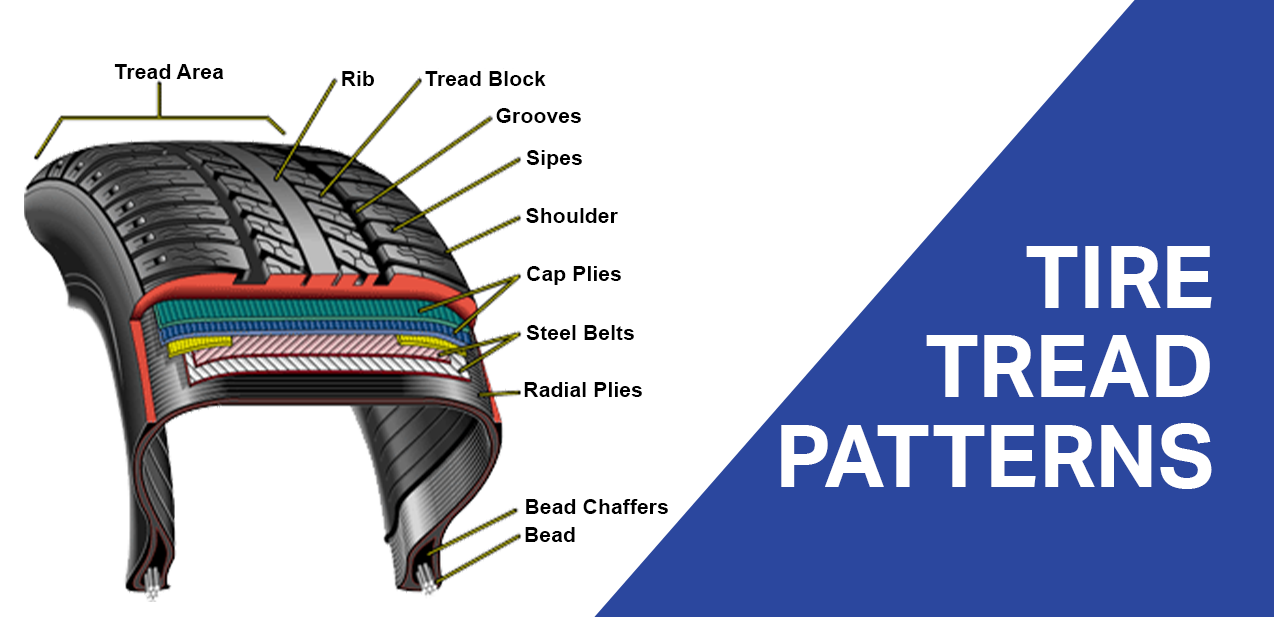
One of the most critical functions of tire treads is to manage water on the road. Wet surfaces significantly reduce the friction coefficient, making driving hazardous. The intricate network of grooves, sipes (small slits), and channels within the tread pattern is specifically designed to evacuate water from beneath the tire’s contact patch. As the tire rolls over a wet surface, these channels funnel water away, allowing the rubber to maintain direct contact with the road.
Without effective water evacuation, a phenomenon known as hydroplaning can occur. This happens when a layer of water builds up between the tire and the road, causing the tire to lose contact and effectively “float” on the water. The deeper and wider the grooves, generally, the better a tire’s ability to resist hydroplaning, though design complexity plays a significant role in optimizing this function without sacrificing dry grip. This engineering challenge requires a delicate balance, as excessive grooving can reduce the rubber surface area available for dry traction.
Braking and Acceleration Performance
The effectiveness of a vehicle’s braking system is heavily reliant on the tires’ ability to generate friction. Tread patterns are engineered to provide maximum grip under braking forces, allowing for shorter stopping distances. The edges of tread blocks dig into the road surface, resisting the forward momentum of the vehicle. Similarly, during acceleration, the treads must efficiently transfer the engine’s torque to the road without excessive slippage. Specialized high-performance tires often feature larger, stiffer tread blocks to maximize this power transfer and maintain stability during rapid acceleration and aggressive cornering. The precise arrangement and stiffness of these blocks are critical for both immediate responsiveness and sustained performance.
Engineering Innovation: A Look at Tread Patterns and Their Purpose
The diversity in tire tread designs is a testament to the sophisticated engineering required to meet varied driving demands. Each pattern is a specialized solution to a specific set of environmental and performance challenges, leveraging advanced computational fluid dynamics and material science.
Symmetrical Treads: Balanced Performance
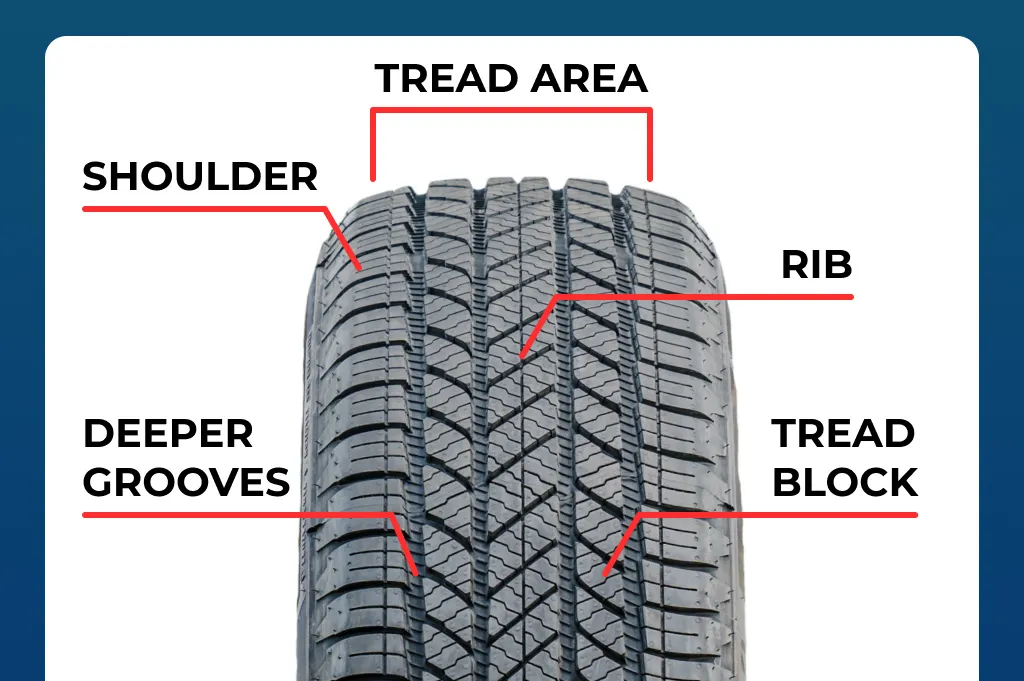
Symmetrical tread patterns feature a consistent design across the entire face of the tire. The inner and outer halves of the tread are identical, offering a predictable and often quieter ride. These tires are typically non-directional, meaning they can be mounted and rotated in any direction without affecting performance. Symmetrical patterns are common on standard passenger vehicles, providing a good balance of dry grip, wet traction, and tread life. Their simplicity often translates to lower manufacturing costs and greater flexibility in tire rotation, which can help extend the tire’s lifespan.
Asymmetrical Treads: Optimized for Varied Conditions
Asymmetrical tread patterns incorporate different designs on the inner and outer halves of the tire. The outer shoulder often features larger, stiffer tread blocks for enhanced dry grip and cornering stability, as this part of the tire bears more load during turns. The inner shoulder, conversely, typically has more sipes and channels designed for improved water evacuation and wet traction. This “best of both worlds” approach allows asymmetrical tires to excel in a wider range of conditions, making them popular for performance vehicles and many modern sedans. Proper mounting (ensuring the “outside” of the tire faces outwards) is crucial for these tires to perform as intended.
Directional Treads: Specialization for Wet and Snow
Directional tread patterns are designed to rotate in only one direction, indicated by an arrow on the sidewall. These patterns often feature V-shaped or arrow-like grooves that are highly effective at channeling water or slush away from the contact patch. This design provides superior hydroplaning resistance and excellent traction in wet and snowy conditions. Directional tires are particularly common in high-performance applications where wet weather grip is paramount, and on winter tires where maximum snow and ice traction are required. Their rotational dependency means specific mounting and rotation guidelines must be followed.
The Role of Sipes and Grooves
Beyond the main block patterns, the smaller features within the tread are equally vital.
- Grooves: These are the large channels running circumferentially and laterally across the tire. They are primarily responsible for evacuating water and reducing heat buildup.
- Sipes: These are thin, razor-like slits cut into the tread blocks. While they don’t remove large volumes of water, sipes dramatically increase the number of biting edges on the tire. On wet or icy surfaces, sipes open up and create additional points of contact, providing enhanced grip without sacrificing the stability of the larger tread blocks. In snowy conditions, sipes also act to trap snow, as snow-on-snow friction is actually better than rubber-on-snow friction. The density and design of sipes are a critical differentiator, especially in all-season and winter tires.

Material Science and Tread Longevity
The performance of tire treads is not solely dependent on their pattern; the composition of the rubber compound plays an equally critical role. Advanced material science is integral to creating treads that offer grip, durability, and efficiency.
Compound Chemistry and Durability
Tire manufacturers invest heavily in developing sophisticated rubber compounds. These compounds are a complex mixture of natural and synthetic rubbers, carbon black, silica, and various chemical additives. Each component contributes to specific performance characteristics. For instance, silica is often used to improve wet grip and reduce rolling resistance without compromising tread life. The curing process and the ratio of these ingredients determine the tread’s hardness, elasticity, and resistance to abrasion. A softer compound typically provides better grip but wears faster, while a harder compound offers greater longevity but might have reduced grip. Engineers carefully balance these trade-offs to meet specific performance targets.
Heat Dissipation and Performance
During operation, tires flex and deform, generating heat. Excessive heat can lead to accelerated wear, reduced grip, and even tire failure. The tread design and rubber compound are engineered to manage and dissipate this heat effectively. Grooves and sipes not only evacuate water but also help to ventilate the tire, preventing heat buildup. The thermal properties of the rubber compound itself are optimized to withstand high temperatures without degrading performance or structural integrity, ensuring consistent grip and durability even under strenuous driving conditions.
The Impact of Tread Design on Vehicle Safety and Efficiency
The direct benefits of meticulously engineered tire treads extend significantly into fundamental aspects of vehicle operation: safety and economic efficiency. These are not merely secondary benefits but core pillars of modern tire technology.
Reducing Stopping Distances
A vehicle’s ability to stop quickly is paramount for safety. Tire treads are the sole point of contact responsible for converting kinetic energy into friction. The optimized grip provided by advanced tread patterns and rubber compounds directly translates to shorter stopping distances, potentially preventing accidents. In emergency braking situations, the tread’s ability to maintain maximum contact and friction with the road surface is the difference between a near miss and a collision. Innovations in tread block stiffness and siping technology have dramatically improved this critical safety metric over the decades.
Enhancing Stability and Handling
Beyond straight-line performance, tire treads are crucial for a vehicle’s dynamic stability and handling characteristics. During cornering, the lateral forces exerted on the tires are immense. Tread blocks must be stiff enough to resist deformation and maintain their shape, ensuring predictable steering response and stable cornering. Asymmetrical and directional tread patterns, in particular, are engineered to optimize the distribution of forces across the tire’s width during turns, allowing drivers to maintain control and precision even at higher speeds or during evasive maneuvers. The interaction between the tread design and the suspension system is finely tuned to provide a cohesive and responsive driving experience.
Fuel Efficiency Considerations
While often overlooked, tire treads also play a role in a vehicle’s fuel efficiency. Rolling resistance is the force resisting a tire’s motion. A tire with high rolling resistance requires more energy from the engine to maintain speed, thus consuming more fuel. Modern tread designs, especially those with low-rolling-resistance compounds and optimized patterns, are engineered to minimize energy loss due to friction and deformation. This is achieved by reducing the flexing of the tread blocks and using compounds that generate less heat. While there can sometimes be a trade-off with ultimate grip, advancements in material science allow manufacturers to create tires that offer both good grip and improved fuel economy, contributing to lower operating costs and reduced emissions.
The Future of Tire Tread Technology
The evolution of tire tread technology is far from over. As vehicles become more advanced, incorporating electric powertrains, autonomous capabilities, and sophisticated driver-assistance systems, so too will the demands on tire treads. The future promises even more intelligent and adaptive solutions.
Smart Tires and Sensor Integration
The advent of smart tires is already underway, integrating sensors directly into the tire structure, sometimes within the tread itself. These sensors can monitor vital statistics such as tire pressure, temperature, tread depth, and even road conditions. This real-time data can be relayed to the vehicle’s onboard systems, allowing for predictive maintenance alerts, optimized performance adjustments, and enhanced safety features. For instance, a smart tire could alert the driver to critically low tread depth or even communicate with the vehicle’s stability control system to proactively adjust handling parameters based on detected road surface changes.
Self-Healing and Adaptive Treads
Research is ongoing into self-healing rubber compounds that could automatically repair minor punctures or cuts in the tread, extending tire life and enhancing safety. Beyond this, adaptive treads represent a truly revolutionary concept. Imagine a tread pattern that can dynamically change its configuration based on real-time driving conditions – deploying deeper sipes for wet roads or retracting them for dry, high-performance driving. While complex, early prototypes and conceptual designs hint at a future where tires actively optimize their contact patch for grip, efficiency, and comfort on the fly, perhaps through electromechanical or shape-memory material actuation.
Sustainable Materials and Manufacturing
The automotive industry is under increasing pressure to adopt more sustainable practices. This extends to tire manufacturing, with a focus on developing eco-friendly materials for tread compounds. Researchers are exploring alternatives to traditional fossil fuel-derived rubber components, investigating renewable resources, recycled materials, and bio-based polymers. The goal is to produce tires that are not only high-performing and durable but also have a significantly reduced environmental footprint throughout their lifecycle, from production to disposal. This includes developing treads that wear more evenly and last longer, reducing the frequency of tire replacement.
aViewFromTheCave is a participant in the Amazon Services LLC Associates Program, an affiliate advertising program designed to provide a means for sites to earn advertising fees by advertising and linking to Amazon.com. Amazon, the Amazon logo, AmazonSupply, and the AmazonSupply logo are trademarks of Amazon.com, Inc. or its affiliates. As an Amazon Associate we earn affiliate commissions from qualifying purchases.