
The ancient art of Dungeons & Dragons, while rooted in imagination and communal storytelling, has embraced the digital age with remarkable enthusiasm. While the iconic click-clack of polyhedral dice remains a cherished aspect for many, the landscape of dice rolling has significantly evolved, offering a spectrum of technological solutions that cater to convenience, immersion, and analytical precision. Understanding “what dice you need” in the contemporary D&D sphere often means exploring beyond physical plastic, delving into software, applications, and specialized gadgets designed to enhance gameplay.
The Digital Revolution of Dice Rolling
The advent of digital technologies has profoundly transformed how players interact with dice in D&D. From integrated virtual tabletops to standalone applications, the digital dice roller has become an indispensable tool for many Dungeon Masters (DMs) and players alike, offering convenience, speed, and often, enhanced features.

Virtual Tabletop (VTT) Integration
Modern D&D often takes place on Virtual Tabletops (VTTs) like Roll20, Fantasy Grounds, Foundry VTT, or Owlbear Rodeo. These platforms are not merely shared canvases for maps and tokens; they integrate sophisticated dice rolling engines directly into the game environment. When a character makes an attack roll, a saving throw, or an ability check, players can often click a button on their digital character sheet, and the VTT automatically rolls the appropriate dice, applies modifiers, and announces the result to the entire group. This eliminates the need for physical dice, manual calculations, and potential disputes over interpretation, streamlining gameplay considerably.
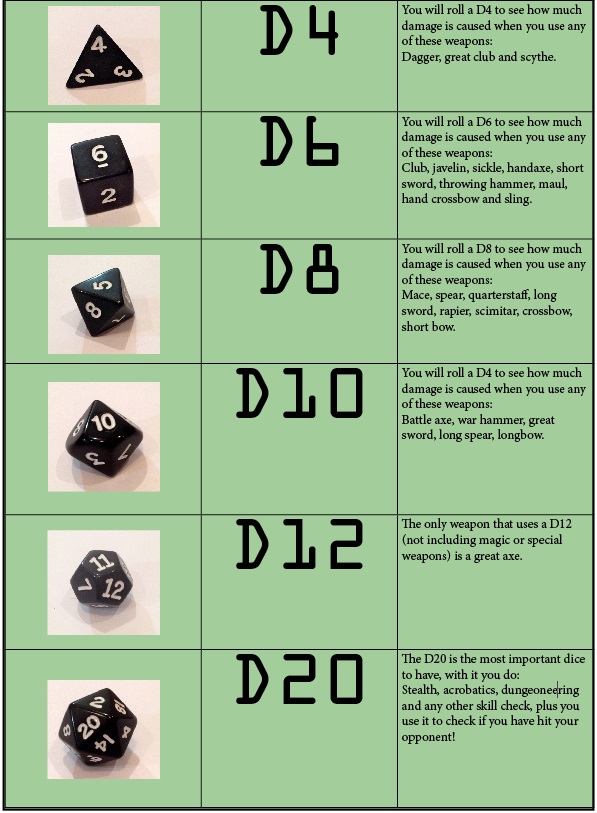
VTTs commonly support all standard D&D dice types: d4, d6, d8, d10, d12, d20, and the percentile d100 (often rolled as two d10s). Many also allow for complex dice expressions, such as 2d8+3 or 4d6 drop the lowest, which are common in character creation or spell effects. The underlying technology typically involves a pseudo-random number generator (PRNG) for dice outcomes, often with visual animations mimicking physical rolls to maintain immersion. Some advanced VTTs even allow for custom dice faces, explosion mechanics, and specific dice physics simulations.
Dedicated Dice Rolling Applications
Beyond integrated VTT solutions, a myriad of standalone applications and websites exist purely for dice rolling. These apps, available on smartphones, tablets, and web browsers, provide a portable and often highly customizable digital dice experience. They range from simple interfaces that display a rolled number to elaborate simulations featuring realistic 3D dice models, sound effects, and haptic feedback.
Many dedicated dice apps allow users to save common dice rolls (e.g., a rogue’s sneak attack dice, a wizard’s fireball damage) for quick access, apply advantage/disadvantage, and track multiple rolls simultaneously. Some even include features like probability calculators, dice statistics, and the ability to share roll results with others in a remote game. The technology underpinning these apps prioritizes user experience, focusing on intuitive interfaces, responsive animations, and reliable random number generation. For players who prefer physical play but need a digital backup or a quick roll, these applications serve as a versatile and often free-to-use tech solution.
Online Calculators and Simulators
While less about “rolling” and more about “analyzing,” online calculators and simulators represent another technological facet of D&D dice. These tools allow players and DMs to explore the probabilities and statistical distributions of various dice combinations. For instance, a DM might use a simulator to understand the average damage output of a monster’s multi-attack or a player might analyze the chances of success for a specific ability check with different modifiers. This category of tech isn’t about the act of rolling but about the data derived from rolls. It uses mathematical algorithms and statistical modeling to provide insights, helping players make informed strategic decisions and DMs to balance encounters. While not directly “rolling dice,” they provide critical analytical support, driven by computational power.
Gadgets and Electronic Dice: A Tangible Tech Solution
Bridging the gap between the digital and the physical, electronic dice and specialized gadgets offer a unique technological approach to dice rolling. These devices aim to retain the tactile satisfaction of physical dice while integrating the convenience and advanced features of digital solutions.
Smart Dice Connectivity
The most prominent example in this category is “smart dice,” such as those offered by brands like Wyrmwood (with their “Connected Dice”) or similar Kickstarter projects. These are physical polyhedral dice embedded with tiny accelerometers and Bluetooth low energy (BLE) transmitters. When rolled, the dice detect their final orientation and wirelessly transmit the result to a paired smartphone app or VTT.
The technology here is sophisticated, combining micro-electronics, wireless communication, and software integration. The dice are designed to look and feel like high-quality traditional dice, but they eliminate the need for manual reading and input. This allows for instant, verified results directly within a digital game interface, minimizing errors and speeding up play, particularly in hybrid games where some players are remote and others are in-person. The embedded technology requires careful calibration to ensure accurate readings and robust wireless connectivity to prevent dropped signals during critical rolls.
Interactive Dice Trays and Peripherals
Beyond the dice themselves, some technological innovations focus on the dice rolling environment. Interactive dice trays, for instance, might integrate sensors or cameras to automatically detect the results of physical dice rolls. These trays can then display the result on an integrated screen, log it in a companion app, or even broadcast it to a VTT.
Other peripherals include digital score trackers or specialized buttons that integrate with gaming software. While not as widespread as smart dice, these gadgets exemplify the trend of enhancing the physical D&D experience with integrated technology. The engineering challenge lies in creating reliable and non-intrusive sensor systems that can accurately read various dice types and colors, often in varying lighting conditions, and seamlessly communicate with other digital platforms.
The Algorithmic Heart: Ensuring Fair Play
Regardless of whether a player chooses a VTT, a dedicated app, or smart dice, the underlying random number generation (RNG) is paramount. In a game like D&D, where outcomes are heavily influenced by chance, the fairness and perceived randomness of dice rolls are critical for player trust and enjoyment.
Random Number Generation (RNG) in Digital Dice
Most digital dice solutions rely on pseudo-random number generators (PRNGs). A PRNG is an algorithm that produces a sequence of numbers that approximates the properties of random numbers. While true randomness is difficult to achieve in a deterministic computer system, advanced PRNGs, such as the Mersenne Twister or cryptographically secure PRNGs (CSPRNGs), are designed to produce sequences that are statistically unpredictable and uniformly distributed across the desired range.
The effectiveness of a digital dice roller hinges on the quality of its PRNG. A poorly implemented PRNG might exhibit patterns, biases, or correlations that could subtly influence game outcomes, leading to a perception of unfairness. Developers of reputable D&D platforms and apps invest significant effort into ensuring their RNGs are robust, unbiased, and transparent, often employing industry-standard algorithms.
Auditing and Transparency
For many players, the “magic” of rolling physical dice feels inherently more random and trustworthy. To counter skepticism about digital dice, some platforms and apps offer transparency features. These might include:
- Roll History Logs: Detailed records of every digital roll, including the dice type, modifiers, and the raw random number generated before any calculations.
- Seed Information: For PRNGs that use a “seed” (an initial value that determines the entire sequence of numbers), some systems might allow DMs or players to view or even provide the seed, though this is less common due to security implications.
- Statistical Analysis Tools: Built-in features that analyze a user’s roll history, displaying distributions and averages to demonstrate the uniformity of the rolls over time.
These transparency measures leverage data logging and analytical technology to build user confidence in the fairness and integrity of the digital dice rolling experience.
Optimizing Your Digital Dice Experience
Choosing and utilizing the right technological dice solution involves more than just picking an app; it’s about optimizing the experience to fit your playstyle, preferences, and technical environment.
Customization and Aesthetics
Digital dice offer unparalleled customization. Many apps and VTTs allow users to change dice colors, textures, sound effects, and even 3D models. This aesthetic flexibility allows players to personalize their digital dice, mirroring the desire for unique physical dice sets. From futuristic glowing dice to ancient runic designs, the digital realm offers an endless palette, leveraging advanced graphics rendering and user interface design to enhance visual engagement.
Performance and Device Compatibility
A crucial technical consideration is the performance of the chosen dice solution across different devices. A high-fidelity 3D dice roller might run smoothly on a powerful gaming PC but lag on an older smartphone. Developers must optimize their applications for a wide range of hardware, balancing visual richness with computational efficiency. Compatibility with various operating systems (iOS, Android, Windows, macOS, Linux) and web browsers is also essential for a seamless user experience, ensuring that “what dice you need” is accessible to everyone at the table, virtual or otherwise.

Security and Data Privacy
In the context of VTTs and online dice apps, security and data privacy are increasingly important. Players share game data, chat logs, and sometimes even personal information. Secure platforms employ encryption for data transmission, robust authentication mechanisms, and strict privacy policies to protect user data. For dice rollers specifically, this means ensuring that roll data is transmitted securely and that the integrity of the RNG cannot be compromised by external actors. These digital security considerations are a vital, albeit often invisible, part of the technological infrastructure supporting modern D&D dice.
In conclusion, “what dice you need for D&D” is no longer a simple question with a single answer. The technological advancements have introduced a rich array of digital, electronic, and integrated solutions that offer convenience, customization, and analytical depth. From sophisticated VTT integrations to smart physical dice, the choice often comes down to balancing tactile preference with the powerful capabilities that technology brings to the table, ensuring that the spirit of adventure thrives in the digital age.
aViewFromTheCave is a participant in the Amazon Services LLC Associates Program, an affiliate advertising program designed to provide a means for sites to earn advertising fees by advertising and linking to Amazon.com. Amazon, the Amazon logo, AmazonSupply, and the AmazonSupply logo are trademarks of Amazon.com, Inc. or its affiliates. As an Amazon Associate we earn affiliate commissions from qualifying purchases.