
Blacklight, often synonymous with ultraviolet (UV) light, unveils a hidden spectrum of vibrant colors that remain invisible under normal lighting conditions. This fascinating phenomenon, known as fluorescence, is not merely a party trick but a sophisticated technological principle with wide-ranging applications in security, science, industry, and entertainment. Understanding which colors glow and, more importantly, why they glow under blacklight requires delving into the science of light and matter interaction, revealing the ingenuity behind UV-reactive technologies.
The Science Behind UV Fluorescence
At its core, the glowing effect observed under blacklight is a quantum mechanical process where specific materials absorb higher-energy ultraviolet photons and re-emit them as lower-energy visible light. This transformation is key to the distinctive glow.

Understanding Blacklight (UV-A)
Blacklight refers primarily to long-wave ultraviolet light, specifically UV-A, which spans wavelengths from approximately 315 to 400 nanometers. Unlike more energetic UV-B and UV-C radiation, UV-A is relatively safe and does not cause immediate sunburn. It is also largely invisible to the human eye. A blacklight lamp typically emits a small amount of visible violet light, which is why it appears purple, but its primary output is in the UV-A spectrum. When this invisible UV-A light strikes certain materials, it initiates the process of fluorescence.
The Mechanism of Fluorescence
Fluorescence occurs when a substance, known as a fluorophore, absorbs photons of a specific wavelength (in this case, UV-A) and transitions its electrons to a higher energy state. This excited state is transient. Almost immediately, the electrons drop back to a lower energy state, releasing the absorbed energy. Crucially, during this process, some energy is lost, typically as heat, meaning the emitted photons have less energy and thus longer wavelengths than the absorbed UV photons. Since longer wavelengths correspond to visible light (e.g., blue, green, yellow, orange, red), the material appears to glow. This re-emission of light stops almost instantaneously once the UV source is removed, distinguishing fluorescence from phosphorescence, where light continues to be emitted for a period after the excitation source is removed.
Common Fluorescent Colors and Materials
Many natural and synthetic substances exhibit fluorescence, producing a diverse palette of glowing colors. The specific color emitted depends on the chemical structure of the fluorophore, as different molecules have distinct energy levels for electron transitions.
Natural Fluorescent Substances
Nature itself is a trove of fluorescent materials. Several biological compounds and minerals naturally fluoresce under UV light:
- Chlorophyll: The green pigment in plants often fluoresces a deep red, a subtle effect that reveals the energy conversion processes occurring within plant cells.
- Certain Proteins and Amino Acids: Tryptophan, tyrosine, and phenylalanine found in many organisms can fluoresce, typically in the blue to green spectrum. This property is exploited in biological research.
- Vitamins: Vitamin B2 (riboflavin) glows a bright yellow-green. Vitamin A and B12 also exhibit fluorescence.
- Minerals: A wide variety of minerals, including fluorite, calcite, willemite, and uranium-bearing minerals, display spectacular fluorescence in a range of colors from green, yellow, orange, to red, depending on their impurities and crystalline structure.
- Scorpions: The exoskeletons of scorpions contain chemicals that fluoresce a vibrant blue-green under UV light, making them easy to spot in the dark.
- Jellyfish and Corals: Many marine organisms possess fluorescent proteins (like GFP – Green Fluorescent Protein) that glow in various colors, a phenomenon crucial for their survival and studied extensively in biotechnology.
Synthetic Fluorescent Pigments and Dyes
The majority of “glowing” colors encountered in manufactured products come from synthetic fluorophores designed for specific applications. These compounds are engineered for vibrant emission and stability.
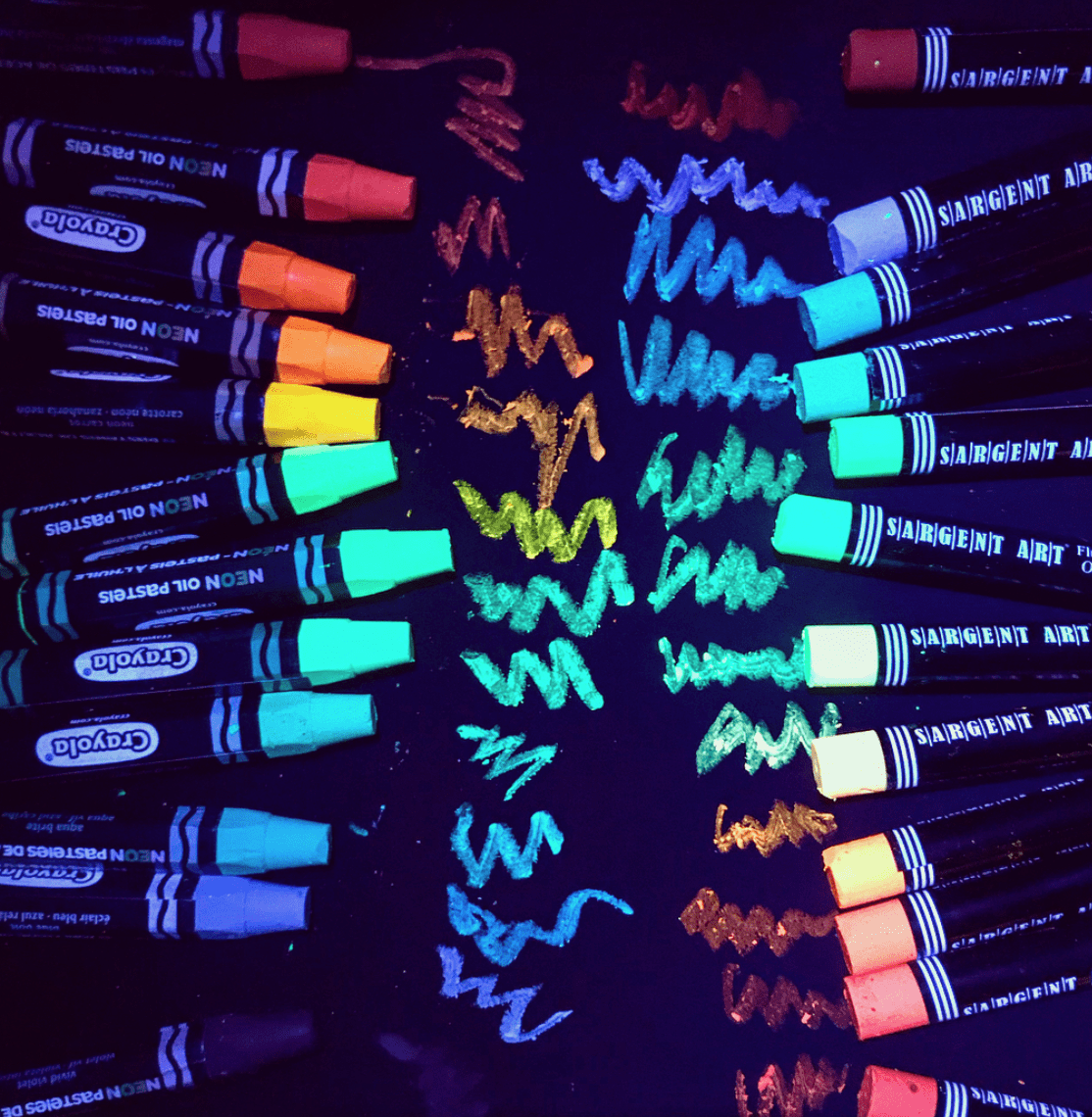
- Bright Greens and Yellows: These are among the most common and potent fluorescent colors. Many industrial dyes, highlighters, and safety vests utilize compounds that emit in these wavelengths, offering high visibility.
- Pinks and Oranges: Often used in textiles, cosmetics, and artistic mediums, these colors provide eye-catching luminescence. Rhodamine dyes are a prominent example.
- Blues and Purples: While blacklight itself is often perceived as purple, specific dyes can emit blues and violets. Laundry detergents, for instance, contain optical brighteners (fluorescent whitening agents) that absorb UV light and re-emit blue light, making whites appear whiter and brighter by counteracting yellowing.
- Invisible Fluorescent Inks: A remarkable application involves inks that are completely invisible under normal light but glow intensely in various colors (red, green, blue, yellow) under UV-A. These inks are formulated with specialized fluorophores and are crucial for security applications.
- Glow-in-the-Dark Materials (Phosphorescent): While distinct from purely fluorescent materials, some products combine fluorescent pigments with phosphorescent ones to achieve an initial bright glow under UV light, followed by a sustained, dimmer glow after the light source is removed.
Technological Applications of Blacklight Reactive Materials
The precise and controllable nature of UV fluorescence has led to its integration into numerous advanced technological fields, extending far beyond novelty items.
Security and Anti-Counterfeiting
One of the most critical applications of blacklight reactive materials is in security features designed to prevent counterfeiting and fraud.
- Currency and Documents: Banknotes worldwide incorporate fluorescent fibers, planchettes, and security threads that glow in specific colors under UV light. Passports and identification cards often feature complex fluorescent patterns and images that are invisible to the naked eye, serving as a primary defense against forgery.
- Product Authenticity: Luxury goods, pharmaceuticals, and high-value electronics frequently embed fluorescent tags or inks in their packaging or directly on products. These invisible markers allow manufacturers, retailers, and consumers to verify authenticity and combat the illicit trade of counterfeit goods.
- Event Ticketing: Tickets for concerts, sporting events, and theme parks often use UV-reactive inks or stamps to prevent unauthorized entry and duplication.
Medical and Forensic Science
Fluorescence plays an indispensable role in diagnostic imaging, laboratory analysis, and crime scene investigation.
- Biomedical Imaging: Fluorescent dyes and proteins are used as labels in microscopy and medical imaging to highlight specific cells, tissues, or biological processes. For example, fluorescent angiography uses a fluorescent dye injected into the bloodstream to visualize blood flow in the retina.
- Forensic Analysis: Crime scene investigators use UV lights to detect biological fluids (like blood, semen, and saliva) that might fluoresce, sometimes faintly, or to reveal latent fingerprints treated with fluorescent powders. Certain fibers or residues may also exhibit characteristic fluorescence patterns, aiding in evidence collection.
- Pathogen Detection: Specific fluorescent probes can bind to DNA or RNA sequences of pathogens, allowing for rapid and sensitive detection of bacteria or viruses in clinical samples.
Entertainment and Artistic Displays
While technologically driven, the application of UV fluorescence in entertainment underscores its power to transform visual experiences.
- Theatrical and Event Lighting: Blacklights are essential for creating dramatic effects in theaters, nightclubs, and theme parks. UV-reactive paints, costumes, and props glow vividly, immersing audiences in surreal and dynamic environments.
- Art and Murals: Artists utilize fluorescent paints to create captivating works that appear one way under visible light and completely transform under UV light, offering a dual viewing experience.
- Special Effects: In film and television, blacklight technology assists in chroma keying and creating otherworldly visual effects, adding a layer of depth and illusion that traditional lighting cannot achieve.
Industrial Inspection and Quality Control
UV fluorescence provides a non-destructive method for detecting flaws, leaks, and contaminants in various industrial settings.
- Non-Destructive Testing (NDT): Fluorescent penetrant inspection (FPI) is a widely used NDT method to detect surface-breaking defects (cracks, pores) in non-porous materials. A fluorescent dye is applied, allowed to penetrate cracks, and then a UV light reveals the glowing defects.
- Leak Detection: Fluorescent dyes are added to fluids (e.g., refrigerants, hydraulic oil, water) in industrial systems. A UV lamp quickly highlights any leaks, even minor ones, making it invaluable for maintenance and troubleshooting.
- Cleanliness Verification: In manufacturing, particularly in electronics and food processing, UV-reactive tracers or simply natural fluorescence can be used to verify the thoroughness of cleaning processes, ensuring no residues remain.
Choosing and Utilizing UV-Reactive Technologies
Effective deployment of UV-reactive technology requires careful consideration of material properties, light sources, and environmental factors.
Material Selection and Durability
The choice of fluorescent material is critical. Factors like color intensity, lightfastness (resistance to fading from UV exposure), thermal stability, and chemical compatibility with the base material (paint, plastic, ink) must be evaluated. For outdoor applications or those exposed to prolonged UV, specialized pigments with enhanced durability are often necessary to maintain their fluorescent properties over time.
Optimal Blacklight Specifications
Not all UV lights are created equal. The effectiveness of a blacklight setup depends on its power output, wavelength distribution, and beam uniformity. For industrial and security applications, precise UV-A sources are used to ensure maximum fluorescence without significant visible light interference. LED blacklights offer advantages in energy efficiency, longevity, and control over specific UV wavelengths compared to traditional fluorescent or mercury vapor lamps.

Emerging Trends in UV-Reactive Tech
Research continues to push the boundaries of fluorescence. Advances include the development of upconverting nanomaterials that absorb lower-energy light (e.g., infrared) and re-emit visible light, offering new possibilities for bio-imaging and security. Quantum dots are also being explored for their highly tunable and stable fluorescent properties, promising breakthroughs in display technology, solar cells, and advanced sensors. The integration of smart, responsive fluorescent materials that change their emission based on environmental stimuli (temperature, pH, presence of specific chemicals) represents another exciting frontier, offering dynamic applications in sensing and smart packaging.
The hidden world revealed by blacklight is a testament to the intricate interplay of light and matter. As technology evolves, so too will our ability to harness these invisible wavelengths, unlocking new frontiers in safety, detection, and human experience.
aViewFromTheCave is a participant in the Amazon Services LLC Associates Program, an affiliate advertising program designed to provide a means for sites to earn advertising fees by advertising and linking to Amazon.com. Amazon, the Amazon logo, AmazonSupply, and the AmazonSupply logo are trademarks of Amazon.com, Inc. or its affiliates. As an Amazon Associate we earn affiliate commissions from qualifying purchases.