
The question of whether certain car colors are more prone to accidents is a long-standing fascination for many, often fueled by anecdotal evidence and urban legends. While it’s tempting to seek a simple answer – “black cars are dangerous” or “white cars are safest” – the reality is far more nuanced, particularly when viewed through the lens of financial risk and management. For individuals and businesses alike, understanding the true drivers of accident rates, and their subsequent financial fallout, is paramount, far outweighing the marginal impact of a vehicle’s hue.
Dispelling Myths: The Complex Relationship Between Car Color and Accident Risk
The idea that a specific car color directly causes more accidents is largely a myth. While some statistical correlations might appear in raw data, attributing causation solely to color overlooks a multitude of far more influential factors. Driver behavior, environmental conditions, road infrastructure, time of day, and even the sheer prevalence of certain colors on the road all play a significantly larger role in accident frequency.

For instance, if black, white, and silver cars constitute 70% of all vehicles on the road, they will naturally be involved in a higher absolute number of accidents simply due to their ubiquity, even if their individual risk factor per vehicle is lower than a rarer color. The financial implications of an accident, therefore, rarely boil down to the paint job but rather to the array of risks that prudent financial planning seeks to mitigate.
The Financial Ripple Effect of Car Accidents
Regardless of the car’s color, involvement in an accident triggers a cascade of financial consequences that can significantly impact personal wealth, business profitability, and long-term financial stability. These costs extend far beyond immediate repairs, touching upon insurance premiums, diminished asset value, and potential legal and medical expenses.
Insurance Premiums: A Direct Hit
One of the most immediate and tangible financial impacts of an accident is on insurance premiums. Even if you are not at fault, an accident claim on your record can lead to increased rates. Insurers assess risk based on numerous factors, including your driving history, the type of vehicle, where you live, and crucially, your claims history. While car color is generally a very minor, if any, factor in premium calculations (far less significant than the vehicle’s make, model, year, and safety features), the accident itself is a red flag. A higher premium translates directly into increased monthly or annual outflows, eating into disposable income or business operating budgets. For fleet managers, a higher accident rate across their vehicles, regardless of color, can dramatically increase commercial insurance costs, impacting profitability.
Repair Costs and Vehicle Depreciation
An accident inevitably leads to repair costs, which can range from minor dents to extensive structural damage. These costs can quickly deplete emergency funds or strain business finances, especially if the vehicle is not adequately insured or the deductible is high. Beyond the immediate repair bill, an accident also diminishes the vehicle’s resale value. Even perfectly repaired vehicles typically fetch a lower price on the secondary market compared to those with a clean accident history. This “diminished value” represents a direct financial loss upon sale, impacting a key asset’s long-term worth. For businesses, this can mean a lower return on investment when upgrading or selling off fleet vehicles.
Medical and Legal Expenses: The Hidden Burdens
Often overlooked in the initial aftermath are the potential medical and legal expenses. Injuries sustained in an accident can lead to significant medical bills, rehabilitation costs, and lost wages due to time off work. Even seemingly minor injuries can accumulate substantial expenses. Furthermore, if liability is disputed or if injuries are severe, legal fees can quickly escalate. Lawsuits, settlements, and court costs can stretch over years, draining financial resources and causing immense stress. These hidden burdens can turn a seemingly straightforward incident into a prolonged financial nightmare, highlighting the critical importance of comprehensive insurance coverage and a deep understanding of financial risk.
Visibility vs. Statistics: What the Data Really Suggests
While a direct causal link between car color and accident rates is weak, some studies do explore the relationship between vehicle color and visibility, and by extension, accident involvement. These studies tend to focus on conspicuity – how easily a vehicle is detected against its surroundings – rather than an inherent “danger” of a color.
The Science of Visibility: Perception and Contrast
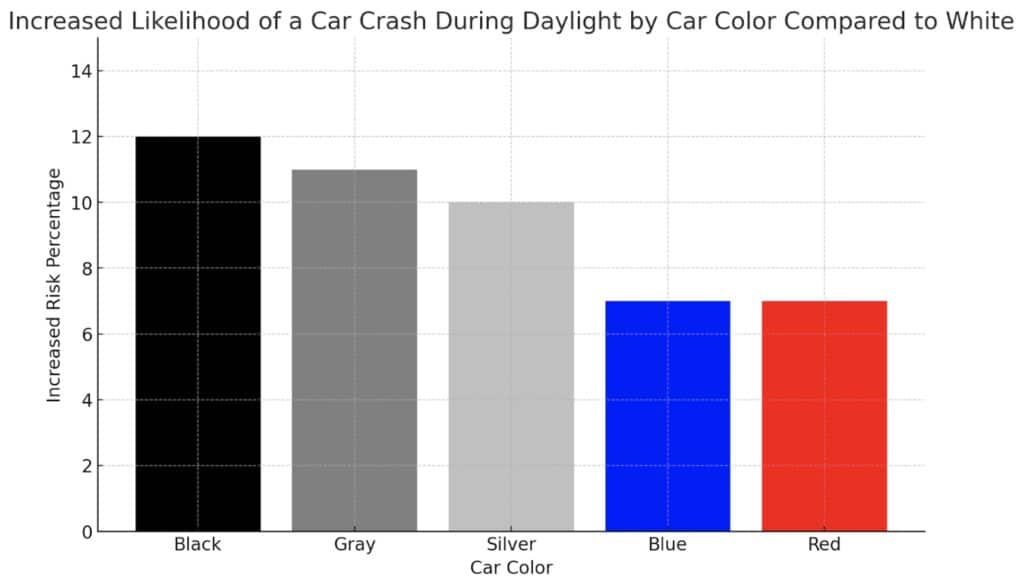
The theory behind color and visibility centers on how the human eye perceives objects against different backgrounds and in varying light conditions. Colors like white, yellow, and bright orange are generally considered to be more visible than darker colors such as black, dark blue, grey, and green. This is because lighter colors offer a greater contrast against most road environments, especially during dawn, dusk, or in inclement weather conditions like rain or fog.
Studies, often conducted by traffic safety organizations or insurance institutes, have sometimes indicated that white or lighter-colored cars might have a marginally lower accident rate compared to black or darker-colored vehicles, particularly in daylight hours. The reasoning is that a more easily spotted vehicle allows other drivers more time to react, potentially avoiding collisions. However, it’s crucial to understand that these differences are often statistically small and can be heavily influenced by how the data is collected and controlled for other variables.
Deeper Dive into Data: Beyond Superficial Correlations
When researchers delve deeper, controlling for factors like driver age, experience, vehicle type, geographical location, and even the time of day, the direct influence of car color often diminishes significantly. For example:
- Driver Demographics: Certain colors might be more popular among specific demographic groups (e.g., younger drivers, who statistically have higher accident rates, might favor certain flashy colors; or commercial fleets, which log more miles and thus have higher exposure to risk, predominantly use white vehicles). Without controlling for these, a superficial correlation can be misleading.
- Environmental Factors: A black car might be harder to see at night, but a white car might blend into a snowy background. Visibility is context-dependent.
- Prevalence: As mentioned, the sheer number of popular colored cars on the road means they will naturally be involved in more accidents. Statistical analysis needs to consider accident rates per vehicle of that color rather than absolute numbers.
Ultimately, while visibility is a component of road safety, its influence via car color is often overshadowed by human behavior and other physical factors. The focus for financial planning should remain on mitigating the higher-impact risks rather than speculating on marginal color-based differences.
Mitigating Risk: Beyond Just Color
For those concerned about the financial repercussions of accidents, focusing on factors that genuinely and significantly influence risk is far more productive than fixating on car color. Prudent financial management related to vehicle ownership involves smart insurance choices, responsible driving habits, and diligent vehicle maintenance.
Smart Insurance Choices
The first line of defense against the financial devastation of an accident is comprehensive insurance coverage. This means more than just meeting minimum legal requirements. Investing in collision, comprehensive, uninsured/underinsured motorist, and personal injury protection (PIP) coverage can create a robust financial shield. Regularly reviewing policies, comparing quotes from different providers, and understanding deductibles are crucial steps. Discounts for safe driving, defensive driving courses, bundling policies, and vehicle safety features can significantly reduce premiums, making robust coverage more affordable. For businesses, this translates to thorough risk assessment and tailored commercial auto policies that protect assets and employees.
Driving Habits and Defensive Driving
By far the most impactful strategy for avoiding accidents and their associated financial burdens is responsible driving. This includes adhering to speed limits, avoiding distractions (especially mobile devices), refraining from driving under the influence of alcohol or drugs, and always wearing seatbelts. Practicing defensive driving – anticipating potential hazards, maintaining safe following distances, and being aware of surroundings – significantly reduces the likelihood of being involved in a collision. These habits directly translate into fewer claims, lower insurance premiums over time, and most importantly, the preservation of financial assets and personal well-being.

Vehicle Safety Features and Maintenance
Modern vehicles come equipped with an array of active and passive safety features designed to prevent accidents or mitigate their severity. Automatic Emergency Braking (AEB), lane-keeping assist, blind-spot monitoring, adaptive cruise control, and robust airbag systems are examples of technologies that demonstrably reduce accident risk and associated costs. When purchasing a vehicle, prioritizing these features is a sound financial decision.
Equally important is regular vehicle maintenance. Properly functioning brakes, healthy tires with adequate tread, correctly aligned steering, and working lights are critical for safe operation. Neglecting maintenance can lead to mechanical failures that contribute to accidents, resulting in unexpected repair costs and potential liability. Investing in routine service is not just about keeping your car running; it’s a direct investment in preventing costly accidents and maintaining the vehicle’s long-term financial value.
In conclusion, while the question of car color and accidents is intriguing, the financial implications of such incidents are real and severe. Focusing on proven risk mitigation strategies – smart insurance, responsible driving, and diligent maintenance – offers far more substantial financial protection than any perceived advantage or disadvantage of a vehicle’s hue.
aViewFromTheCave is a participant in the Amazon Services LLC Associates Program, an affiliate advertising program designed to provide a means for sites to earn advertising fees by advertising and linking to Amazon.com. Amazon, the Amazon logo, AmazonSupply, and the AmazonSupply logo are trademarks of Amazon.com, Inc. or its affiliates. As an Amazon Associate we earn affiliate commissions from qualifying purchases.