
Brake fluid, an often-overlooked yet critically vital component of any vehicle, serves as the lifeblood of its stopping power. Far from a mere lubricant, this specialized hydraulic fluid is a marvel of chemical engineering, designed to transmit force from the brake pedal to the calipers or wheel cylinders with precision and reliability. Understanding its properties, particularly its visual indicators like color, is not just a matter of basic maintenance but a crucial aspect of automotive technology diagnostics, ensuring the safety and performance of complex braking systems. In an era where automotive technology continues to advance, the humble brake fluid remains a foundational element, and recognizing its health through its appearance is a fundamental technical skill.

The Core Function: A Technical Imperative
At its heart, brake fluid’s primary function is a testament to the principles of hydraulics: to be incompressible. When you press the brake pedal, the force is amplified and transmitted through the brake fluid to the brake calipers (disc brakes) or wheel cylinders (drum brakes), forcing the pads or shoes against the rotors or drums. This flawless transmission of force is what allows a multi-ton vehicle to halt safely and effectively. Any compromise in the fluid’s integrity directly impacts this crucial process, potentially leading to brake fade or complete failure.
Modern vehicles employ different types of brake fluids, categorized by their Department of Transportation (DOT) ratings: DOT 3, DOT 4, DOT 5, and DOT 5.1. The most common are glycol-ether based (DOT 3, 4, 5.1), which are hygroscopic, meaning they absorb moisture from the air over time. DOT 5, in contrast, is silicone-based and non-hygroscopic. Each type has specific dry and wet boiling points, a critical technical specification. A high boiling point is paramount because braking generates immense heat; if the fluid boils, it creates compressible vapor bubbles (vapor lock), leading to a spongy pedal and a drastic reduction in stopping power—a severe safety hazard. The evolution of these fluids, incorporating advanced additives for corrosion inhibition and lubrication, reflects ongoing technological efforts to enhance vehicle safety and longevity.
The Spectrum of States: Interpreting Brake Fluid Color
The color of brake fluid is a powerful, yet often underestimated, diagnostic tool. It offers a visual snapshot of the fluid’s chemical health and, by extension, the integrity of the braking system itself. Observing its hue is a quick, initial technical assessment that can preempt more significant problems.
New Fluid: The Baseline
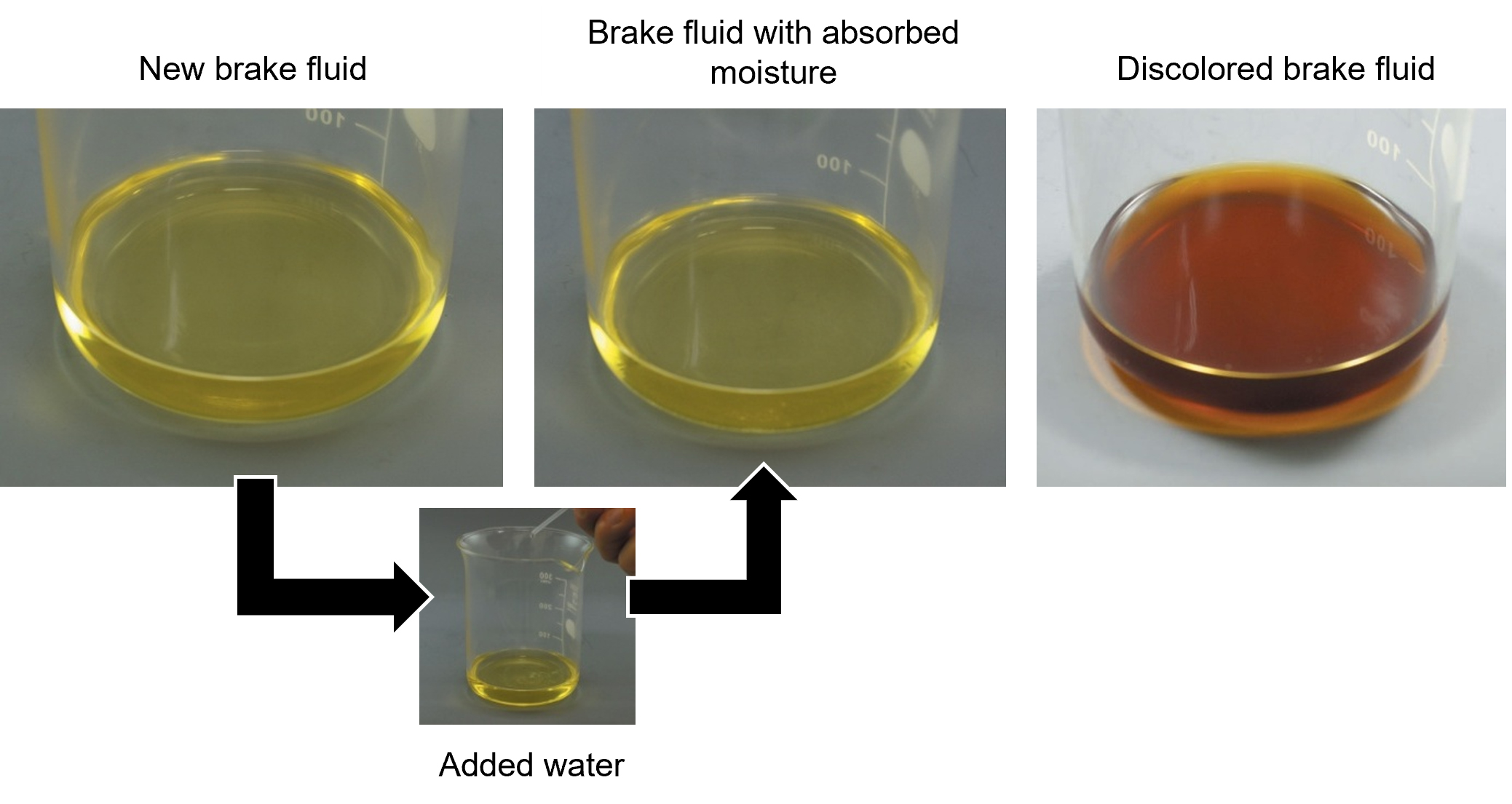
When new and fresh from a sealed container, glycol-ether based brake fluid (DOT 3, DOT 4, DOT 5.1) typically exhibits a clear to very light straw or pale amber color. Its transparency should be high, allowing light to pass through without cloudiness or visible particulate matter. This pristine appearance signifies optimal chemical composition, maximum dry boiling point, and the full effectiveness of its corrosion inhibitors. Silicone-based DOT 5 fluid, on the other hand, is usually purple. Establishing this baseline is crucial, as any deviation from this clear, light hue indicates a level of degradation or contamination.
The Gradient of Degradation: Amber to Brown
As glycol-ether based brake fluid ages, its color gradually deepens. The first noticeable change is often a shift from light straw to a darker amber, eventually progressing to a light brown. This transition is primarily due to the fluid’s hygroscopic nature. It absorbs moisture from the atmosphere through microscopic pores in brake lines, hoses, and seals. Water contamination significantly lowers the fluid’s boiling point, increasing the risk of vapor lock. Furthermore, absorbed moisture initiates internal corrosion within the brake system components, and the resulting rust particles contribute to the darkening. Oxidation, a chemical reaction with oxygen, also plays a role, breaking down the fluid’s additives and further contributing to the color change and a reduction in overall performance. This amber-to-brown progression signals that the fluid has absorbed a significant amount of water and is beginning to lose its effectiveness, necessitating replacement.

Danger Signs: Dark Brown or Black
A dark brown or even black appearance in brake fluid is a critical warning sign and indicates severe degradation or contamination. This ominous color typically points to several potential issues. Firstly, it signifies extreme water absorption, pushing the fluid’s wet boiling point dangerously low. Secondly, it can indicate extensive internal corrosion within the brake lines, master cylinder, or calipers, shedding rust and metal particles into the fluid. Thirdly, excessive heat exposure can cause the fluid to break down thermally, charring it and turning it dark. Finally, internal component wear, particularly from rubber seals or hoses, can introduce particulate matter and cause severe discoloration. Dark fluid compromises the entire braking system’s integrity, potentially clogging lines, damaging ABS components, and significantly increasing the risk of brake failure. Such a discovery demands immediate attention and a thorough brake system flush and inspection.
Beyond Visuals: Advanced Diagnostics and Future Tech
While visual inspection of brake fluid color is a fundamental diagnostic technique, the evolving landscape of automotive technology offers more precise and sophisticated methods for assessing fluid health. These advanced tools move beyond subjective observation to provide quantitative data, crucial for predictive maintenance and optimal system performance.
Electronic Sensors and Predictive Maintenance
The reliance on visual cues alone can be limited. Brake fluid testers, common in professional workshops, utilize electronic sensors to measure either the fluid’s boiling point directly or its electrical conductivity (as water increases conductivity). These tools provide a definitive reading of the fluid’s condition, removing guesswork. In modern vehicles, particularly those equipped with advanced driver-assistance systems (ADAS) or integrated vehicle health monitoring, there’s a growing trend towards incorporating brake fluid quality sensors. These nascent technologies could potentially provide real-time data to the vehicle’s ECU, enabling predictive maintenance alerts based on actual fluid degradation rather than just mileage or time. This integration into the Internet of Things (IoT) for connected cars promises a future where vehicles self-diagnose fluid health, alerting drivers or service centers before problems manifest.
The Chemical Science Behind the Change
The shift in brake fluid color is a direct manifestation of complex chemical processes. The hygroscopic nature of glycol-ether fluids is key; water molecules, once absorbed, initiate hydrolysis, breaking down the fluid’s chemical structure. This not only lowers the boiling point but also creates acidic byproducts that accelerate corrosion of metal components. Oxidation further degrades the base fluid and its protective additives. Additives, such as corrosion inhibitors, pH buffers, and antioxidants, are meticulously blended into brake fluid to maintain its properties. As these additives are consumed or break down, the fluid’s ability to protect the system diminishes, leading to the visible discoloration. The development of synthetic fluids with enhanced stability, higher boiling points, and improved resistance to water absorption represents a continuous push in automotive chemical engineering to create more robust and longer-lasting braking system components.
Proactive Maintenance: Safeguarding Automotive Technology
Maintaining brake fluid health is not merely a task; it’s a critical aspect of safeguarding sophisticated automotive technology. Regular inspection and timely replacement are paramount to ensuring the reliability and longevity of braking systems, especially those integrated with advanced electronic aids like ABS (Anti-lock Braking System), ESC (Electronic Stability Control), and traction control. These systems rely on precise hydraulic pressure and responsive fluid to function correctly.
A simple visual check of the brake fluid reservoir should be part of routine under-hood inspections, ideally every few months or during oil changes. If the fluid appears darker than its original clear/light amber state, it warrants further investigation. Most vehicle manufacturers recommend a brake fluid flush and replacement every 2 to 5 years, regardless of appearance, due to the inherent hygroscopic nature of DOT 3/4/5.1 fluids. This service involves completely draining the old fluid and refilling the system with fresh, new fluid, thereby restoring its optimal boiling point and protective properties. For the DIY enthusiast, simple test strips or electronic fluid testers are available to provide a more objective assessment. However, professional workshops have specialized equipment for a thorough flush and can identify any underlying issues within the braking system. It is also imperative to always use the correct DOT-rated fluid specified by the vehicle manufacturer, as mixing incompatible fluids can lead to severe system damage and compromise safety. By understanding the technical indicators like fluid color and adhering to a proactive maintenance schedule, drivers can ensure their vehicle’s braking technology performs optimally, providing peace of mind and unwavering safety on the road.
aViewFromTheCave is a participant in the Amazon Services LLC Associates Program, an affiliate advertising program designed to provide a means for sites to earn advertising fees by advertising and linking to Amazon.com. Amazon, the Amazon logo, AmazonSupply, and the AmazonSupply logo are trademarks of Amazon.com, Inc. or its affiliates. As an Amazon Associate we earn affiliate commissions from qualifying purchases.