
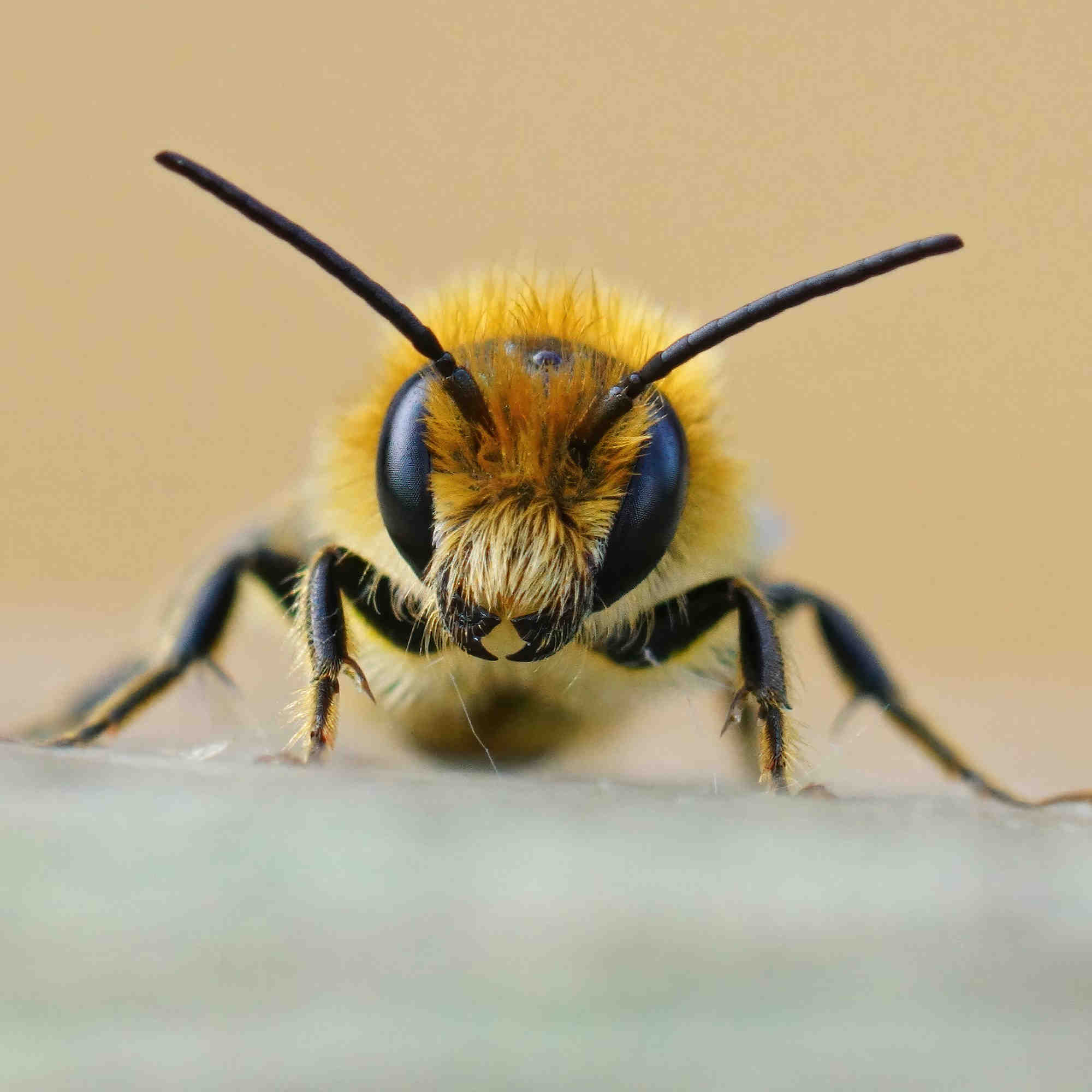
The seemingly simple question, “What color are bees?” belies a complex world of biological diversity and technological ingenuity. While our immediate answer might be “yellow and black stripes,” the reality is far more nuanced, encompassing a spectrum of hues, patterns, and even light perceptions beyond human vision. In the age of rapid technological advancement, understanding these visual characteristics has transcended mere observation. Tech innovations, from advanced AI-powered computer vision to sophisticated spectral imaging, are now instrumental in unraveling the true visual identity of bees, impacting everything from ecological research to conservation efforts. This article delves into how technology is revolutionizing our understanding of bee coloration, turning a basic biological inquiry into a frontier of digital exploration.

The Technological Lens: Unpacking Bee Color with AI and Vision Systems
Identifying bee species accurately is crucial for ecological studies, agricultural health, and conservation strategies. With over 20,000 known species globally, and many more yet to be discovered, manual identification by human experts is time-consuming, prone to error, and requires specialized training. This is where advanced artificial intelligence (AI) and computer vision systems emerge as game-changers, offering unprecedented precision and efficiency in classifying bees based on their distinct color patterns and morphological features.
Computer Vision for Species Identification
Computer vision, a field of AI that enables computers to “see” and interpret visual data, is rapidly transforming entomology. Researchers are developing sophisticated algorithms trained on vast datasets of bee images, allowing systems to recognize minute differences in coloration, hair patterns, wing venation, and body shape that are critical for species differentiation. For instance, while many bees exhibit shades of yellow, black, brown, and even metallic green or blue, their specific arrangement, intensity, and texture of these colors form unique identifiers.
- Feature Extraction and Classification: AI models, particularly convolutional neural networks (CNNs), are adept at automatically extracting relevant features from images. This includes the exact shade of yellow on a bee’s abdomen, the width and intensity of black stripes, the distribution of hairs (pilosity), and even subtle reflections off their exoskeletons. These features are then used to classify bees into specific species or even subspecies with remarkable accuracy, often surpassing human expert capabilities in speed and consistency.
- Overcoming Environmental Variables: One of the challenges in identifying bees in the wild is the variability in lighting, background clutter, and image quality. Computer vision algorithms are being developed with robustness in mind, employing techniques like image normalization and augmentation to ensure reliable identification even under suboptimal conditions. This allows for automated monitoring systems that can operate continuously in diverse natural environments.
Data-Driven Entomology: From Pixels to Preservation
The application of AI in bee identification isn’t just about classifying existing images; it’s about generating actionable data for preservation. Large-scale data collection, powered by automated image analysis, provides insights into population dynamics, habitat preferences, and the spread of invasive species.
- Population Monitoring: By deploying automated camera traps equipped with AI recognition software, scientists can continuously monitor bee populations in specific areas. The AI identifies and counts individual bees, tracking changes over time. This data is invaluable for understanding the impact of environmental changes, pesticide use, and climate change on bee biodiversity and numbers, allowing for timely conservation interventions.
- Citizen Science Integration: Tech platforms are leveraging AI to empower citizen scientists. Mobile applications allow individuals to upload photos of bees they encounter. The app’s integrated AI analyzes the image, providing an instant preliminary identification. This not only educates the public but also feeds crucial real-world data into large databases, supplementing professional research efforts and expanding the geographical scope of bee monitoring. Such initiatives are vital for filling data gaps, especially in under-researched regions, and fostering a global community committed to bee conservation.
Beyond the Human Eye: Spectral Imaging and Bee Biology
Our perception of “what color are bees” is inherently limited by the trichromatic vision of humans, which primarily detects red, green, and blue light. However, many insects, including bees, possess tetrachromatic vision, allowing them to see ultraviolet (UV) light, which is invisible to us. Advanced spectral imaging technologies are now enabling scientists to peer into the bee’s world, revealing colors and patterns that play critical roles in their behavior and survival.
Unveiling UV Patterns
For bees, UV patterns are not just an aesthetic feature; they are a language. Many flowers display intricate UV patterns that act as “nectar guides,” directing bees to pollen and nectar sources. Similarly, the colors and patterns on bees themselves, including those in the UV spectrum, can serve various biological functions.
- Mating Signals: In some bee species, specific UV reflective patterns on the male’s body or wings act as visual cues for females during courtship. These patterns, often invisible to predators that lack UV vision, help in species recognition and mate selection. Spectral imaging allows researchers to capture and analyze these hidden signals, providing insights into bee reproductive strategies.
- Camouflage and Mimicry: While some bees use bold colors as a warning (aposematism), others rely on camouflage. UV patterns can contribute to both, either enhancing visibility in certain contexts or blending into the background from the perspective of a UV-sensitive predator or prey. Understanding these patterns through spectral analysis offers a more complete picture of how bees interact with their environment.
Multispectral Analysis in Ecological Monitoring
Multispectral and hyperspectral imaging technologies capture light across numerous narrow bands, extending beyond the visible spectrum into UV and infrared (IR) ranges. This capability offers a powerful tool for ecological monitoring, providing a more comprehensive understanding of bee coloration and its ecological significance.
- Habitat Assessment: By analyzing the spectral signatures of flora in bee habitats, researchers can identify specific plants that attract different bee species. The interaction between flower UV patterns and bee UV vision can be studied directly, revealing optimal foraging grounds and aiding in habitat restoration efforts.
- Bee Health Diagnostics: Changes in a bee’s color or spectral reflectance might indicate stress, disease, or nutritional deficiencies. Early research is exploring whether multispectral imaging could serve as a non-invasive diagnostic tool, detecting subtle physiological changes before they become outwardly visible to the human eye. This could lead to proactive interventions to protect bee colonies from threats.
Smart Apiculture: Leveraging Tech for Bee Health and Observation
The application of technology to understand bee color extends directly into beekeeping practices, known as apiculture. Modern beekeeping is increasingly adopting smart technologies to monitor colony health, optimize honey production, and ensure the well-being of these vital pollinators. Visual data, including bee coloration, is a key component of these advanced systems.
Sensor Networks and Drone Surveillance
Today’s beekeepers are moving beyond traditional methods, integrating sensor networks and drone technology to gain unprecedented insights into their colonies. These tools often rely on visual data, directly or indirectly related to bee appearance.
- Hive Monitoring: Smart hives are equipped with internal sensors that monitor temperature, humidity, and acoustics. While not directly “color” related, the health metrics they provide can be cross-referenced with visual observations captured by external cameras. For instance, a decrease in colony activity, visually observed as fewer bees entering and exiting or changes in flight patterns, might be correlated with sensor data indicating a drop in hive temperature.
- Drone-Based Colony Assessment: Drones equipped with high-resolution cameras, and sometimes multispectral cameras, can survey apiaries from above. They can quickly identify hives with reduced activity or detect early signs of pest infestations or disease outbreaks, which might manifest as visual cues on the bees themselves or their immediate surroundings. For example, drones can monitor the color and density of pollen being brought into the hive, indicating the diversity and quality of forage available, which directly impacts bee health and color vibrancy.
Citizen Science Apps: Bridging Observation and Technology
For hobbyist beekeepers and nature enthusiasts, citizen science apps provide a powerful platform to contribute to scientific understanding while enhancing their own observational skills. These apps often leverage visual identification.
- Interactive Bee Guides: Many apps offer comprehensive guides that help users identify bee species based on uploaded photos. Users input visual characteristics, including primary body color, stripe patterns, hair color, and size. The app then uses AI to suggest potential species, providing detailed information about each one. This interactive learning experience helps users appreciate the subtle visual distinctions between different bee types.
- Mapping Pollinator Activity: By allowing users to log observations of specific bee species at particular locations and times, these apps contribute to vast databases that map pollinator activity and distribution. This collective data, often visualized on interactive maps, helps identify critical foraging areas, track migratory patterns, and monitor the spread of diseases or invasive species, all dependent on accurate visual identification of the bees involved.
The Future of Bee-Tech: Innovation in Conservation and Research
The intersection of bee biology and technological innovation is a dynamic field with immense potential for future advancements. As technology continues to evolve, so too will our capacity to understand, protect, and even mimic the intricate world of bees, with their diverse colors serving as a key to unlocking deeper insights.
AI-Powered Predictive Analytics
Beyond identification, future AI systems will move towards predictive analytics. By continuously monitoring bee coloration, behavior, and environmental factors through sensor networks and drone imagery, AI could predict potential health crises in colonies before they manifest. For example, subtle shifts in the spectral signature of a bee’s exoskeleton might indicate early stages of a parasitic infection or nutritional stress, triggering alerts for beekeepers to intervene proactively.

Augmented Reality for Educational Engagement
Imagine a future where you point your smartphone at a bee, and an augmented reality (AR) overlay instantly identifies its species, highlights its UV patterns, and explains its ecological role. AR technology holds immense promise for educational engagement, making the complex world of bee coloration and biology accessible and interactive for everyone. This could transform how we teach about biodiversity, fostering a new generation of bee enthusiasts and conservationists.
In conclusion, the question “what color are bees?” is no longer a simple biological query. Through the lens of cutting-edge technology—from AI-driven computer vision and spectral imaging to smart apiculture tools and citizen science platforms—we are gaining an unprecedented understanding of the diverse and often hidden visual characteristics of these vital pollinators. This technological revolution is not just about identifying hues; it’s about safeguarding the future of our planet’s most industrious insects.
aViewFromTheCave is a participant in the Amazon Services LLC Associates Program, an affiliate advertising program designed to provide a means for sites to earn advertising fees by advertising and linking to Amazon.com. Amazon, the Amazon logo, AmazonSupply, and the AmazonSupply logo are trademarks of Amazon.com, Inc. or its affiliates. As an Amazon Associate we earn affiliate commissions from qualifying purchases.