
Understanding BTU: The Heart of Cooling Capacity
Selecting the right air conditioner is a critical decision that impacts comfort, energy consumption, and the longevity of the unit. At the core of this choice lies the British Thermal Unit, or BTU, a fundamental metric that dictates an air conditioner’s cooling power. Understanding BTU is the first step toward making an informed purchase, ensuring your living or working space remains comfortably cool without overspending on energy or underpowering your cooling needs.
What is a BTU?
A British Thermal Unit is a traditional unit of heat. Specifically, one BTU is the amount of energy required to raise the temperature of one pound of water by one degree Fahrenheit at sea level. In the context of air conditioning, BTU refers to the amount of heat an AC unit can remove from a room per hour. Therefore, an air conditioner with a higher BTU rating has greater cooling capacity. For instance, a 12,000 BTU air conditioner can remove 12,000 BTUs of heat from a space in one hour, which is roughly equivalent to one ton of cooling capacity (1 ton = 12,000 BTU/hr).
Why BTU Matters for Air Conditioners
The primary reason BTU matters is efficiency and effectiveness. An air conditioner that is too small (low BTU) for a given space will struggle to cool the room adequately. It will run continuously, consuming more energy without reaching the desired temperature, leading to higher electricity bills and premature wear on the compressor. Conversely, an air conditioner that is too large (high BTU) for a room presents its own set of problems. While it might cool the room quickly, it will cycle on and off too frequently (short-cycling). This rapid cooling prevents the unit from running long enough to effectively dehumidify the air, resulting in a clammy, uncomfortable feeling even at a cool temperature. Short-cycling also puts unnecessary strain on the compressor and can lead to less energy efficiency than a properly sized unit. The goal is to find the “just right” BTU rating that balances cooling power with optimal dehumidification and energy use.
Common Misconceptions
One common misconception is that “more BTUs are always better.” As discussed, oversizing can lead to discomfort and inefficiency. Another misconception is relying solely on square footage. While square footage is a primary factor, it’s far from the only one. Many other environmental and structural elements significantly influence the actual cooling load required for a space, making a one-size-fits-all approach to BTU calculation inadequate. Ignoring these additional factors often leads to suboptimal performance and buyer’s remorse.
Factors Influencing BTU Calculation for Optimal Cooling
Determining the precise BTU requirement for an air conditioner goes beyond a simple rule of thumb. A multitude of factors contribute to the heat gain within a space, and a comprehensive assessment of these elements is crucial for selecting an appropriately sized unit. Overlooking any of these can lead to an inefficient cooling system.
Room Size and Layout
The foundational element for BTU calculation is the square footage of the room. Larger spaces naturally require more cooling power. However, it’s not just about square footage; the layout also plays a role. Rooms with open floor plans or those connected to other unconditioned spaces might demand more cooling capacity than a fully enclosed room of the same square footage. A general guideline often suggests approximately 20 BTU per square foot, but this is a starting point, not a definitive answer.
Climate and Sunlight Exposure
The geographic location and orientation of a room significantly impact its heat load. Homes in hotter climates, such as the desert Southwest, will require more cooling power than those in temperate zones. Furthermore, rooms that receive direct sunlight for extended periods, especially those with south- or west-facing windows, absorb considerable solar heat. These rooms will need an upward adjustment in BTU capacity to counteract the increased thermal load. The intensity and duration of sunlight can necessitate an increase of 10-20% in the calculated BTU.
Insulation Quality and Window Types
The building envelope plays a critical role in heat transfer. Well-insulated walls, attics, and roofs significantly reduce heat gain from the outside. Conversely, poor insulation allows more heat to penetrate, demanding higher BTU ratings. Window types are also crucial. Single-pane windows are notorious for heat transfer, while double-pane, low-emissivity (Low-E) windows with argon gas filling offer superior insulation. Rooms with many or large windows, especially if they are older or less efficient, will require a higher BTU capacity to maintain comfort. Shading from external structures or landscaping can also reduce heat gain through windows.
Occupancy and Heat-Generating Appliances
Every person in a room generates body heat, contributing to the overall thermal load. On average, each occupant adds approximately 400 BTUs per hour to a space. Therefore, rooms designed for multiple occupants, such as living rooms or offices, need a BTU adjustment. Similarly, electronic devices and appliances, from televisions and computers to kitchen appliances like ovens and refrigerators, emit heat. A kitchen, for example, will typically require a higher BTU air conditioner than a bedroom of similar size due to the heat generated by cooking and appliances.
Ceiling Height and Open Floor Plans
While square footage accounts for length and width, ceiling height dictates volume. Rooms with unusually high ceilings (e.g., cathedral ceilings or ceilings over 8 feet) have a larger air volume to cool, thus requiring more BTUs than a standard 8-foot ceiling room of the same square footage. Open floor plans, where multiple areas (living, dining, kitchen) are connected without walls, often present a challenge. While they are technically one large space, heat from one area can easily migrate to another. Such layouts often necessitate a more powerful, centrally located unit or multiple smaller units, and their BTU calculation should consider the entire interconnected area rather than individual zones.
The Formula for Sizing Your AC: A Practical Guide
Calculating the correct BTU capacity for your air conditioner involves a systematic approach, starting with a baseline and then making adjustments based on the various factors influencing heat load. While professional HVAC technicians use sophisticated software for precise load calculations, homeowners can make a highly accurate estimate using a simplified, yet effective, methodology.
Baseline Calculation: Square Footage Method
The most common starting point for BTU estimation is the room’s square footage.
- Measure the Room: Determine the length and width of the room in feet. Multiply these two figures to get the total square footage.
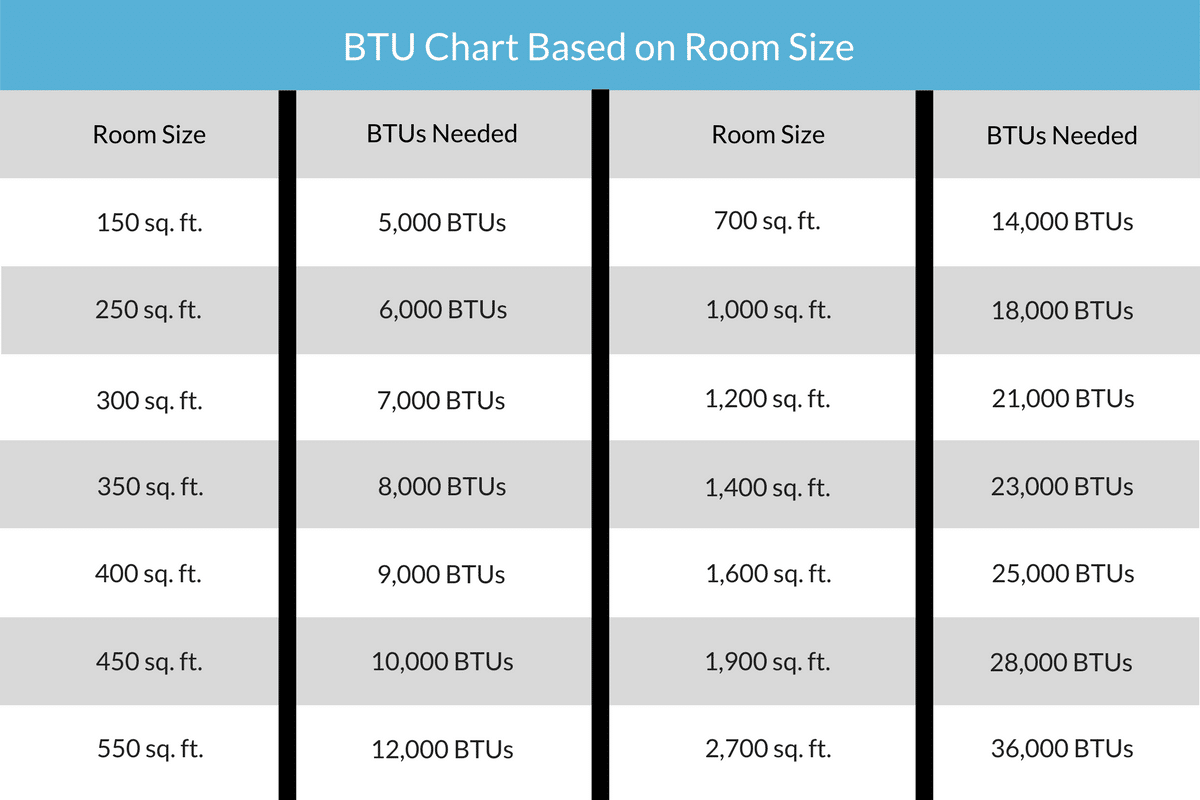
- Apply a General Guideline: A widely accepted general rule of thumb suggests approximately 20 BTUs per square foot for average ceiling heights (8 feet) and typical insulation.
- For example, a 150 sq ft room would need approximately 3,000 BTUs (150 sq ft * 20 BTU/sq ft).
- A 400 sq ft room would need approximately 8,000 BTUs.
- A 700 sq ft room would need approximately 14,000 BTUs.
This baseline provides a fundamental number, but it rarely represents the final required BTU.
Adjusting for Environmental Factors
Once the baseline is established, adjustments must be made based on the factors discussed previously:
- Sunlight Exposure:
- For very sunny rooms, increase the BTU capacity by 10-15%.
- For heavily shaded rooms, decrease the BTU capacity by 10%.
- Occupancy:
- Add 600 BTUs for each person regularly occupying the room beyond the first two. (The first two are often implicitly accounted for in general guidelines).
- Heat-Generating Appliances:
- For kitchens, increase the BTU capacity by approximately 4,000 BTUs due to heat from cooking and appliances. Other rooms with multiple electronics might require a smaller adjustment.
- Ceiling Height:
- For ceilings higher than 8 feet, you’ll need to calculate the room’s cubic footage (length x width x height) and then adjust the BTU/sq ft guideline accordingly, or simply increase the baseline BTU by 10-20% for every additional foot of ceiling height over 8 feet.
- Insulation and Windows:
- Rooms with poor insulation or many old, inefficient windows may require an increase of 10-20% in BTU capacity. Conversely, a newly constructed, well-insulated home with modern windows might allow for a slight decrease or keep the baseline BTU.
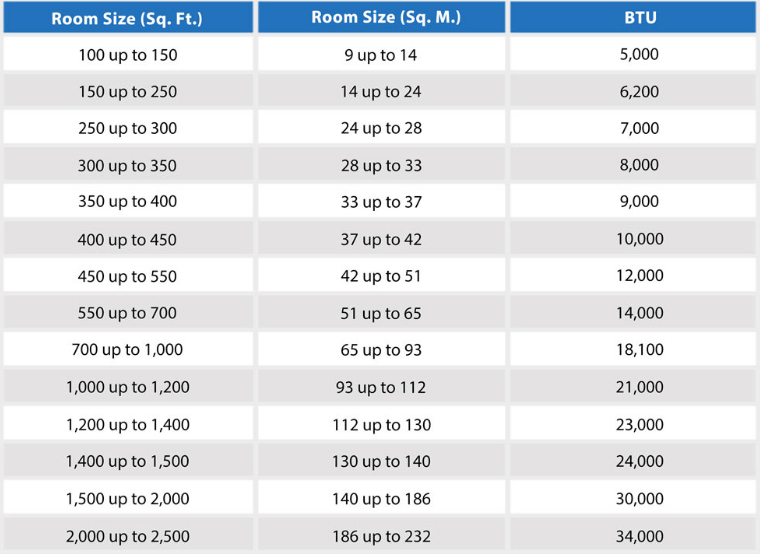
After making these adjustments, sum up all increases and decreases to arrive at a more tailored BTU estimate.
Advanced Considerations: Load Calculators and Professional Assessment
While the manual calculation method offers a strong estimate, it’s still a simplification. For highly accurate sizing, especially for whole-home central air conditioning systems or complex spaces, professional load calculations are indispensable. HVAC technicians use specialized software that performs a “Manual J” calculation. This rigorous assessment takes into account every detail of the building envelope, including:
- Wall R-values (insulation effectiveness)
- Window U-factors and Solar Heat Gain Coefficients (SHGC)
- Door types and materials
- Local climate data (average temperatures, humidity)
- Ductwork efficiency and layout
- Specific appliance loads and lighting loads
These calculations ensure optimal system performance, maximum energy efficiency, and sustained comfort. For smaller, single-room units, the adjusted square footage method is usually sufficient. However, if you are investing in a larger, more permanent cooling solution, consulting with a qualified HVAC professional for a Manual J load calculation is always recommended to avoid costly mistakes and ensure peak performance.
Types of Air Conditioners and Their BTU Ranges
The market offers a diverse range of air conditioning units, each designed for different applications and spaces. Understanding their typical BTU ranges and suitability can help narrow down your options once you have a target BTU figure.
Window Units
Window air conditioners are self-contained units designed to be installed in a window frame or through a wall. They are ideal for cooling single rooms or small apartments.
- Typical BTU Range: 5,000 BTU to 24,000 BTU.
- Pros: Relatively inexpensive, easy to install for DIY enthusiasts, highly portable (though heavy).
- Cons: Can block window light and views, noisy for some, security concerns, less aesthetically pleasing than other options.
- Best For: Bedrooms, small living rooms, home offices, or dorm rooms.
Portable Air Conditioners
Portable AC units are also self-contained but sit on the floor and typically vent hot air through a hose out a window or wall opening. They offer flexibility for those who cannot install window units or need temporary cooling.
- Typical BTU Range: 8,000 BTU to 15,000 BTU.
- Pros: No permanent installation required, easily moved between rooms (though typically heavy), good for renters.
- Cons: Less efficient than window units (due to hose heat and negative pressure), take up floor space, often noisier than window units, generally require higher BTU for same cooling effect due to inefficiency.
- Best For: Situations where window or split units are not feasible, temporary cooling, small to medium-sized rooms.
Split Systems (Mini-Splits)
Mini-split air conditioners consist of an outdoor compressor/condenser unit and one or more indoor air-handling units, connected by a conduit containing refrigerant lines and electrical wiring. They do not require ductwork and are highly versatile.
- Typical BTU Range: Single-zone units from 9,000 BTU to 36,000 BTU. Multi-zone systems can combine units to provide much higher total BTUs.
- Pros: Highly efficient, quiet operation, zone cooling capabilities (each indoor unit can be controlled independently), aesthetic flexibility (various indoor unit styles).
- Cons: Higher initial cost than window or portable units, professional installation required.
- Best For: Additions to homes, renovated spaces, homes without existing ductwork, targeted cooling in specific zones, energy-conscious homeowners.
Central Air Conditioning Systems
Central air conditioning provides whole-home cooling through a network of ducts. It consists of an outdoor condensing unit and an indoor evaporator coil and air handler, which is typically integrated with a furnace.
- Typical BTU Range: Measured in “tons” of cooling, where 1 ton = 12,000 BTU. Residential systems typically range from 1.5 tons (18,000 BTU) to 5 tons (60,000 BTU) or more.
- Pros: Consistent, uniform cooling throughout the entire home, unobtrusive (components are largely hidden), high comfort levels, superior air filtration.
- Cons: Highest initial installation cost, requires existing ductwork or significant renovation, less efficient for cooling single zones than mini-splits.
- Best For: Whole-house cooling in homes with existing ductwork or new construction, maximum comfort and convenience.
Beyond BTU: Energy Efficiency and Smart Features
While BTU is paramount for sizing, an air conditioner’s overall value and performance are also heavily influenced by its energy efficiency ratings and integrated smart technologies. Investing in an efficient, feature-rich unit can lead to long-term savings and enhanced comfort.
SEER and EER Ratings Explained
Two key metrics quantify an air conditioner’s energy efficiency:
- SEER (Seasonal Energy Efficiency Ratio): This rating measures the cooling output over a typical cooling season divided by the total electric energy input during the same period. A higher SEER rating indicates greater energy efficiency. Most modern AC units have SEER ratings between 13 and 26. A unit with a SEER of 16, for example, is significantly more efficient than one with a SEER of 13. While a higher SEER typically means a higher upfront cost, it translates to substantial savings on electricity bills over the unit’s lifespan.
- EER (Energy Efficiency Ratio): This rating is similar to SEER but measures cooling efficiency at a single outdoor temperature (95°F). EER is particularly useful for comparing efficiency in consistently hot climates. A higher EER also denotes better efficiency.
When comparing units of the same BTU, always opt for the one with the highest SEER (and EER, if applicable) that fits your budget.
Variable-Speed Compressors and Inverter Technology
Traditional air conditioners typically use single-stage compressors that are either fully on or fully off. This “all or nothing” operation can lead to temperature swings and less efficient energy use. Modern advancements like variable-speed compressors, often utilizing inverter technology, offer a much more sophisticated approach.
- Variable-Speed Compressors: These compressors can adjust their speed and output to precisely match the cooling demand of the room. Instead of cycling on and off, they can run at lower speeds for longer durations, maintaining a more consistent temperature, providing superior dehumidification, and consuming significantly less energy.
- Inverter Technology: This technology is key to variable-speed operation, allowing the compressor motor to operate at various speeds by converting the incoming AC current to DC and then back to variable-frequency AC. This precise control results in greater efficiency, quieter operation, and reduced wear and tear on components.
Units with variable-speed compressors and inverter technology are often more expensive upfront but offer considerable long-term savings and superior comfort due to their ability to finely control temperature and humidity.
Smart Thermostats and Connectivity
The integration of smart technology has revolutionized how we interact with our air conditioning systems.
- Smart Thermostats: These devices learn your preferences, can be controlled remotely via smartphone apps, and offer features like geofencing (adjusting temperature based on your proximity to home), scheduling, and energy usage reports. They can optimize your AC’s operation, leading to further energy savings and enhanced convenience.
- Connectivity: Many modern AC units, especially mini-splits and central systems, come with Wi-Fi connectivity, allowing seamless integration with smart home ecosystems (e.g., Google Assistant, Amazon Alexa). This enables voice control, automation routines, and remote monitoring, providing a higher level of control and ease of use.
These smart features not only elevate the user experience but also contribute to a more optimized and energy-efficient cooling strategy by preventing unnecessary operation and allowing for more precise control.

Maintenance and Longevity Tips
Regardless of the BTU or technological sophistication, proper maintenance is crucial for the longevity and efficiency of any air conditioner.
- Regular Filter Changes: Clogged air filters restrict airflow, reduce efficiency, and can lead to coil freeze-up. Check and clean or replace filters monthly during peak cooling season.
- Coil Cleaning: Annually, have evaporator and condenser coils professionally cleaned. Dirty coils reduce heat transfer efficiency.
- Clear Outdoor Unit: Ensure the outdoor condenser unit is free from debris, leaves, and overgrown vegetation to maintain proper airflow.
- Annual Professional Tune-up: Schedule a yearly inspection and tune-up by a qualified HVAC technician. They can check refrigerant levels, electrical connections, and overall system performance, catching potential issues before they become major problems.
By considering all these aspects – the right BTU for the space, high energy efficiency ratings, advanced compressor technology, smart features, and consistent maintenance – you can ensure your investment in an air conditioner provides optimal comfort and value for years to come.
aViewFromTheCave is a participant in the Amazon Services LLC Associates Program, an affiliate advertising program designed to provide a means for sites to earn advertising fees by advertising and linking to Amazon.com. Amazon, the Amazon logo, AmazonSupply, and the AmazonSupply logo are trademarks of Amazon.com, Inc. or its affiliates. As an Amazon Associate we earn affiliate commissions from qualifying purchases.