
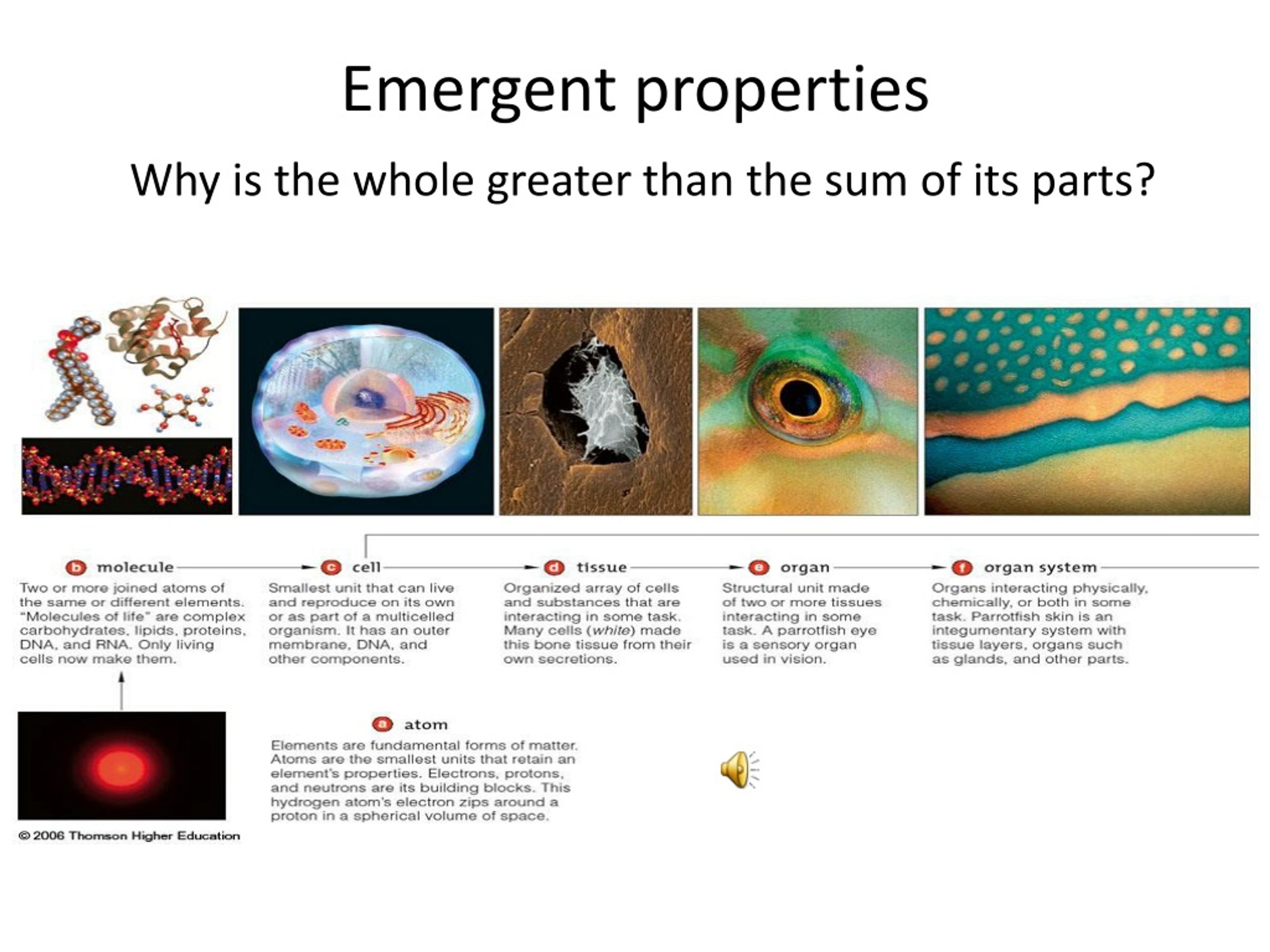
The concept of emergent properties, while rooted in the study of complex biological systems, offers profound insights into the design, behavior, and evolution of technology, particularly in fields like artificial intelligence, software engineering, and distributed computing. At its core, an emergent property is a characteristic of a system that is not present in its individual components, but rather arises from the interactions between those components. It’s the quintessential idea that the whole is greater than, or at least different from, the sum of its parts.
In biology, examples abound: the consciousness of a human brain, which arises from the intricate network of billions of neurons; the intricate patterns of a bird flock, not dictated by any single leader but by simple rules of individual interaction; or the complex adaptive behavior of an ant colony, despite the limited intelligence of any single ant. These phenomena cannot be predicted or understood by simply examining individual neurons, birds, or ants in isolation. Instead, they emerge from the dynamic interplay and feedback loops within the system. Understanding these principles, first observed and theorized in biological contexts, provides a critical framework for comprehending and engineering the increasingly complex technological systems that define our digital age.

From Biological Complexity to Computational Design
The journey from understanding emergent properties in biology to applying them in technology is one of abstraction and principle transfer. Biologists study how simple components, following local rules, can give rise to sophisticated global behaviors. Technologists, especially those working with AI and complex software, face a similar challenge: how to design systems where desired, intelligent, or resilient behaviors emerge from the interaction of simpler, well-defined modules.
Defining Emergence: Beyond the Sum of Parts
An emergent property is fundamentally non-reducible. It cannot be fully explained by analyzing the individual parts alone. For instance, a single protein molecule might have a specific function, but the coordinated action of thousands of proteins within a cell leads to cellular life, a property far beyond any single protein. Similarly, in a distributed computing system, individual servers perform defined tasks, but the system’s overall reliability, scalability, or ability to withstand failures (its “resilience”) is an emergent property of their collective architecture and communication protocols. These properties are often unexpected, sometimes even undesired, from the perspective of the individual component designers, highlighting the unpredictable nature of complex interactions.
The Relevance of Biological Principles to AI
The human brain, perhaps the most complex biological system we know, is a prime example of emergent properties in action. Consciousness, memory, and learning are not localized to a single neuron but arise from the vast network of neuronal connections and their dynamic signaling. This understanding has profoundly influenced the development of artificial intelligence, particularly neural networks and deep learning. AI researchers seek to create computational structures that, like biological brains, can exhibit intelligent behavior, pattern recognition, and adaptive learning not through explicit programming of every rule, but through the emergent capabilities of interconnected processing units learning from data. The very quest for “general AI” is, in many ways, a quest for a system capable of novel, emergent intelligence.
Emergence in Artificial Intelligence and Machine Learning
The field of artificial intelligence is a crucible for emergent phenomena. As AI models grow in complexity, with billions of parameters and intricate architectures, their behavior increasingly transcends simple input-output mappings, revealing capabilities that were not explicitly programmed.
Unexpected Behaviors in Neural Networks
Modern deep learning models, especially large language models (LLMs) and generative AI, frequently exhibit emergent behaviors. For example, LLMs, trained on vast datasets, demonstrate an ability to perform tasks they were not explicitly designed for, such as summarization, translation, or even creative writing, simply by predicting the next token. These capabilities are not pre-coded features; they arise from the statistical regularities and hierarchical representations learned across massive datasets, distilled into the network’s parameters. This emergent understanding of semantics and context is a direct parallel to how complex cognitive functions arise in biological brains. Similarly, in reinforcement learning, agents often discover novel strategies to achieve goals, sometimes demonstrating behaviors akin to curiosity or complex planning that were not explicitly hardcoded into their reward functions.
Self-Organization in Multi-Agent Systems
Beyond single, monolithic AI models, multi-agent systems (MAS) provide another fertile ground for studying emergence. In MAS, multiple autonomous AI agents interact within a shared environment, each following simple local rules. From these local interactions, complex global behaviors can emerge. Consider a swarm robotics system where individual robots, programmed with basic rules for movement and obstacle avoidance, collectively form complex patterns, explore an unknown area more efficiently, or cooperatively transport objects. No single robot possesses the “map” or the “plan” for the collective behavior; it emerges from their decentralized, rule-based interactions, mirroring the flocking behavior of birds or the coordinated hunting strategies of animal packs. This self-organization is a powerful paradigm for designing resilient and adaptive AI systems that can operate effectively in dynamic and unpredictable environments.
Software Architectures and System Resilience
Emergent properties are not confined to the exotic realms of AI; they are deeply relevant to the practicalities of software engineering, especially in the design of large-scale, distributed, and highly interactive systems.
Distributed Systems and Unforeseen Dynamics
Modern software applications are increasingly built as distributed systems, composed of numerous microservices, containers, and cloud functions interacting across networks. While individual services are designed with specific functionalities, the overall behavior of the entire system can exhibit emergent properties that are difficult to predict. For instance, network latency spikes in one part of the system might cascade into performance degradation across unrelated services, or a small bug in a dependency can trigger widespread failures. Understanding these emergent failure modes is crucial for designing robust systems. Engineers must anticipate that the collective behavior of thousands of interconnected components will inevitably lead to complex, sometimes chaotic, dynamics that cannot be fully grasped by analyzing each component in isolation. Observability tools, monitoring, and chaos engineering practices are attempts to uncover and manage these emergent system behaviors.
Cybersecurity and Adaptive Threats
In the realm of digital security, emergent properties manifest in both defensive and offensive strategies. Advanced persistent threats (APTs) and sophisticated malware often exhibit emergent capabilities, adapting their attack vectors or propagation methods based on the network environment and defensive measures encountered. The threat landscape itself is an emergent phenomenon, constantly evolving from the interplay of attackers, defenders, and technological advancements. On the defensive side, security information and event management (SIEM) systems and security orchestration, automation, and response (SOAR) platforms attempt to detect emergent attack patterns by correlating seemingly disparate events across vast networks, recognizing a coordinated threat that no single log entry would reveal. The resilience of a secure system, its ability to withstand and recover from attacks, is an emergent property derived from the holistic implementation of security practices, technologies, and human vigilance.
Leveraging Emergent Properties for Innovation
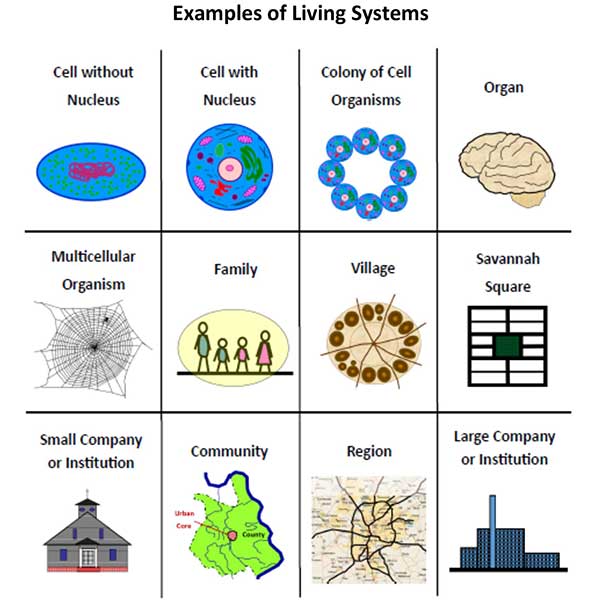
The recognition of emergent properties shifts the paradigm from purely top-down, explicit control to one that embraces bottom-up, self-organizing dynamics. For tech innovators, this understanding is not merely academic but offers a powerful framework for building more adaptive, resilient, and intelligent systems.
Designing for Desired Emergence
Instead of trying to program every single behavior, engineers can design systems with simple rules and local interactions, expecting that desired complex functionalities will emerge. This approach, often seen in genetic algorithms, evolutionary computation, and certain types of AI architectures, involves setting up the right environmental conditions, incentives (reward functions), and interaction protocols, then letting the system self-organize towards a more optimal state. For instance, in an adaptive user interface, individual components might react to user input, and from these local reactions, a personalized, context-aware user experience might emerge that no designer could have fully predicted or hardcoded. The challenge lies in carefully crafting the foundational rules to steer emergence towards beneficial outcomes, mitigating the risk of undesired or chaotic behaviors.
The Future of Adaptive Tech
As technology continues its trajectory towards increasing complexity and autonomy, the study of emergent properties will only become more critical. The future of tech envisions highly adaptive systems that can learn, evolve, and self-heal in dynamic environments – capabilities that are inherently emergent. From autonomous vehicles navigating unpredictable urban landscapes to self-optimizing cloud infrastructure and AI systems capable of genuine creativity, these advancements will rely on designing for, rather than against, emergent phenomena. This requires a shift in engineering mindset: embracing uncertainty, fostering interdisciplinary collaboration between fields like biology, physics, and computer science, and developing new tools to observe, analyze, and control the often-unpredictable yet powerful forces of emergence in our digital creations. Understanding what emerges from the interactions of components is key to unlocking the next generation of intelligent, resilient, and truly innovative technological solutions.
aViewFromTheCave is a participant in the Amazon Services LLC Associates Program, an affiliate advertising program designed to provide a means for sites to earn advertising fees by advertising and linking to Amazon.com. Amazon, the Amazon logo, AmazonSupply, and the AmazonSupply logo are trademarks of Amazon.com, Inc. or its affiliates. As an Amazon Associate we earn affiliate commissions from qualifying purchases.