
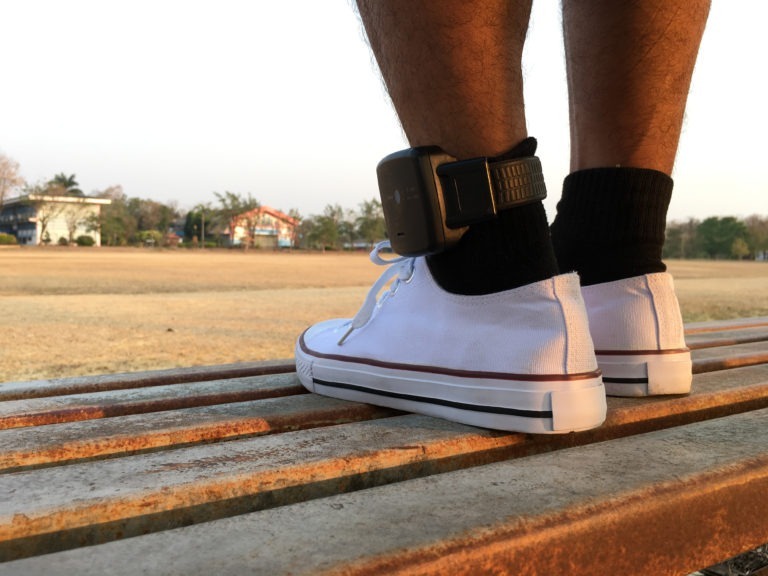
Ankle monitors represent a significant application of wearable technology, primarily recognized for their role in the judicial and correctional systems. Far more than simple trackers, these devices are sophisticated electronic gadgets designed to facilitate continuous surveillance and ensure compliance with various legal directives. Their purpose extends beyond mere location tracking, encompassing a suite of functionalities that leverage advanced digital security and communication protocols to manage individuals outside traditional incarceration. Understanding their utility requires an exploration into the underlying technological framework and their diverse applications across several critical sectors.
The Technological Core of Electronic Monitoring Systems
At their heart, ankle monitors are compact, durable electronic devices built for continuous, often long-term, operation on an individual’s person. Their efficacy hinges on a complex interplay of hardware and software, designed for reliability and precision. The core technologies involved ensure constant connectivity, accurate data capture, and robust security features against tampering or circumvention.

GPS and RF Tracking Systems
The primary function of an ankle monitor is location tracking, achieved through a combination of Global Positioning System (GPS) and Radio Frequency (RF) technologies. GPS modules embedded within the device receive signals from satellites, triangulating the wearer’s precise coordinates in real-time. This data is then transmitted to a central monitoring station, providing a constant digital footprint. GPS tracking is crucial for monitoring movements within specified zones (geofencing), verifying adherence to curfews, and ensuring individuals do not enter prohibited areas, such as a victim’s residence or school zones.
RF technology, on the other hand, is often used for shorter-range monitoring, particularly when an individual is within a designated home confinement area. A stationary RF transmitter/receiver unit is installed at the wearer’s residence. The ankle monitor communicates with this base unit via radio signals, confirming the wearer’s presence within a defined perimeter, typically within the home. Should the wearer move out of range, the base unit sends an alert to the monitoring center. This hybrid approach allows for both expansive outdoor tracking via GPS and precise indoor verification via RF, optimizing battery life and ensuring continuous coverage across diverse environments.
Communication Protocols and Data Transmission
Data generated by ankle monitors, including location coordinates, tamper alerts, and device status, must be reliably transmitted to monitoring centers. This communication typically occurs over cellular networks, similar to how a smartphone transmits data. The devices incorporate embedded SIM cards and cellular radios that connect to available mobile networks. This enables real-time data streaming and the instantaneous relay of alerts, which is critical for swift responses to potential violations.
Beyond cellular, some advanced systems may utilize Wi-Fi or Bluetooth for localized data offloading or connecting to auxiliary sensors, though cellular remains the primary backbone for remote monitoring. The data transmitted is often encrypted to ensure security and privacy, protecting sensitive location information from unauthorized access during transmission. Robust data management systems at the monitoring centers process this influx of information, flagging anomalies and presenting actionable insights to supervising officers.
Battery Life and Durability Challenges
Given their requirement for continuous operation, battery life is a paramount design consideration for ankle monitors. Modern devices typically employ rechargeable lithium-ion batteries capable of lasting for extended periods, often several days, between charges. Wearers are responsible for recharging the devices regularly, and the system often sends automated alerts to remind them and to notify monitoring staff if a battery level drops below a critical threshold.
Durability is another significant engineering challenge. Ankle monitors must withstand daily wear and tear, exposure to various weather conditions, and potential attempts at circumvention. They are typically encased in robust, tamper-resistant materials that are water-resistant and designed to be difficult to remove without triggering an alert. Accelerometers and other sensors detect unusual movements or attempts to cut, break, or otherwise manipulate the device, immediately signaling a potential violation. The combination of extended battery life and high durability ensures that the technology remains effective and reliable throughout the monitoring period.
Applications and Use Cases in Digital Security and Surveillance
The capabilities of ankle monitors make them invaluable tools across several domains that require precise tracking, compliance verification, and heightened security. While primarily associated with criminal justice, their utility is expanding into other areas where remote oversight is beneficial.
Criminal Justice System: Probation, Parole, Pre-Trial Release
The most prevalent application of ankle monitors is within the criminal justice system. They serve as a crucial alternative to incarceration, allowing individuals to remain in their communities while still under strict supervision.
- Probation and Parole: For offenders released on probation or parole, ankle monitors ensure adherence to release conditions. These conditions often include curfews, restrictions on travel, and prohibitions from entering specific locations. The technology provides probation and parole officers with verifiable data regarding the individual’s compliance, enhancing public safety without the high costs of incarceration.
- Pre-Trial Release: Ankle monitors are increasingly used for individuals awaiting trial. Instead of being held in jail, defendants can be released on electronic monitoring, reducing overcrowding in correctional facilities and allowing them to maintain employment and family connections. This also minimizes the financial burden on taxpayers while ensuring court appearance rates remain high.
- Specialized Programs: They are also vital in drug court programs, domestic violence cases (for offender monitoring), and specialized diversion programs, offering a structured environment for rehabilitation and accountability. The ability to monitor sobriety through integrated alcohol detection sensors in some devices further enhances their utility in these contexts.
Victim Protection and Restraining Orders
Ankle monitors play a critical role in enhancing victim safety, particularly in cases involving domestic violence or stalking. When a restraining order is issued, an ankle monitor can be placed on the respondent, creating a “exclusion zone” around the protected party’s home, workplace, or other specified locations. If the monitored individual breaches this geofenced area, an immediate alert is sent to both law enforcement and, in some systems, directly to the victim via a separate mobile app or device. This proactive warning system provides a crucial layer of protection, allowing victims to take immediate action and law enforcement to intervene swiftly, potentially preventing harm.
Immigration Enforcement
In immigration enforcement, ankle monitors are utilized to track individuals awaiting deportation proceedings or asylum hearings. This use case leverages the technology to ensure compliance with reporting requirements and prevent absconding, offering a less restrictive alternative to detention. The monitoring systems help authorities manage caseloads more efficiently and ensure individuals appear for their scheduled hearings, thereby maintaining the integrity of the immigration process while reducing the human and financial costs associated with prolonged detention.
Advancements and Future Trends in Wearable Tracking Devices
The field of electronic monitoring is not static; it continuously evolves with innovations in wearable technology, data science, and artificial intelligence. Future ankle monitors and similar tracking devices are poised to become even more sophisticated, offering enhanced capabilities, improved user experience, and deeper insights.
Miniaturization and Enhanced Battery Technology
Ongoing research aims to make ankle monitors significantly smaller, lighter, and less conspicuous. Advances in microelectronics and battery chemistry are key to achieving this. Smaller form factors reduce stigma and improve comfort for wearers, while more efficient power management and higher-density batteries will extend operational times between charges, reducing maintenance burdens and potential points of failure. The goal is to make the device less intrusive while maintaining its robust tracking capabilities.
Integration with Biometric Sensors and AI
The next generation of wearable trackers is likely to integrate various biometric sensors. This could include heart rate monitors, galvanic skin response sensors, or even non-invasive glucose monitors, transforming them into comprehensive health and behavioral monitoring platforms. Coupled with artificial intelligence (AI) and machine learning algorithms, these devices could analyze biometric data to detect stress levels, predict potential self-harm or violent outbursts, or even monitor for substance abuse, providing a more holistic picture of an individual’s well-being and risk factors. AI could also refine location tracking by learning an individual’s routine and flagging deviations more accurately, reducing false positives.
Data Analytics and Predictive Monitoring
As ankle monitors collect vast amounts of data—from movement patterns and location history to potential biometric indicators—advanced data analytics will become indispensable. Machine learning models can process this data to identify trends, predict high-risk behaviors, or forecast potential violations with greater accuracy. This shifts monitoring from reactive (responding to a breach) to proactive (identifying and mitigating risk before it materializes). Such predictive capabilities can optimize resource allocation for supervising officers, allowing them to intervene more strategically and effectively, potentially leading to better outcomes for both the monitored individual and public safety.
Ethical Considerations and Privacy in Digital Tracking
With increasing technological sophistication comes a heightened need to address ethical considerations and privacy concerns. As devices collect more intimate data, questions regarding data ownership, storage, security, and potential misuse become paramount. Future developments will need to prioritize robust encryption, anonymization techniques, and clear regulatory frameworks to protect individual privacy while still enabling effective monitoring. The balance between surveillance, rehabilitation, and individual rights will remain a critical area of discourse as these technologies advance.
The Impact and Effectiveness of Electronic Monitoring Systems
The deployment of ankle monitors has had a profound impact on criminal justice, public safety, and resource management. Their effectiveness is measured not only by their technological reliability but also by their contribution to broader societal goals.
Reducing Recidivism and Improving Compliance
A primary objective of electronic monitoring is to reduce recidivism—the tendency of a convicted criminal to reoffend. By providing constant supervision and immediate alerts for non-compliance, ankle monitors act as a powerful deterrent. Knowing that their every move is logged and that violations will be swiftly detected encourages individuals to adhere to their conditions. Studies often indicate that individuals under electronic monitoring exhibit lower rates of re-offense compared to those released without such supervision, contributing to safer communities and more successful rehabilitation outcomes.
Cost-Effectiveness vs. Incarceration
From a financial perspective, electronic monitoring offers a highly cost-effective alternative to incarceration. Housing an individual in a correctional facility incurs significant daily expenses for food, lodging, medical care, and staffing. Ankle monitoring programs, while requiring initial investment in technology and ongoing operational costs, are generally a fraction of the cost per day. This economic advantage allows justice systems to allocate resources more efficiently, freeing up funds for rehabilitation programs, mental health services, or other community-based initiatives that address the root causes of crime.

Technical Limitations and Potential Loopholes
Despite their sophistication, electronic monitoring systems are not without limitations. Signal interference, dead zones in cellular coverage, or environmental factors can occasionally disrupt GPS accuracy or communication. While robust, devices can sometimes be damaged or, in rare instances, sophisticated attempts to tamper or circumvent the technology may occur. Vigilant monitoring, prompt response protocols, and continuous technological upgrades are essential to mitigate these vulnerabilities. Furthermore, human factors, such as the wearer failing to charge the device, remain a constant operational challenge requiring consistent oversight and communication from monitoring agencies. Continuous innovation in tamper detection and signal reliability aims to close these potential loopholes and enhance the overall integrity of the systems.
aViewFromTheCave is a participant in the Amazon Services LLC Associates Program, an affiliate advertising program designed to provide a means for sites to earn advertising fees by advertising and linking to Amazon.com. Amazon, the Amazon logo, AmazonSupply, and the AmazonSupply logo are trademarks of Amazon.com, Inc. or its affiliates. As an Amazon Associate we earn affiliate commissions from qualifying purchases.