
Navigating the global financial landscape requires a deep understanding of local nuances, and few are as fundamental as the calendar system that underpins a nation’s economic rhythm. For those engaging with Iran, whether through investment, business operations, or personal finance, asking “what year in Iran” is more than a simple query about a date; it’s an essential gateway to comprehending its financial timelines, reporting cycles, and market dynamics. Iran operates on the Solar Hijri calendar, a system distinct from the widely used Gregorian calendar, and this difference carries significant implications for financial planning and strategic decision-making.

Understanding Iran’s Unique Calendar System
To grasp the financial implications, one must first understand the calendar itself. The Solar Hijri calendar (often referred to as the Persian calendar) is the official calendar of Iran and Afghanistan. Its origin dates back to the migration of Prophet Muhammad from Mecca to Medina in 622 CE, similar to the start of the Islamic calendar, but it is a solar calendar, meaning its years are based on the Earth’s orbit around the Sun, resulting in approximately 365-day years and a fixed start date relative to the vernal equinox.
The Solar Hijri Calendar Explained
The Solar Hijri calendar begins its year on the vernal equinox, marking Nowruz, the Persian New Year, which typically falls on March 20th or 21st of the Gregorian calendar. Each year is designated by a number that is currently over 1400. For instance, as of early 2024 in the Gregorian calendar, Iran is in the Solar Hijri year 1402, which commenced on March 21, 2023. The transition to the new year, 1403, will occur on March 20, 2024. This consistent start date, linked to a natural astronomical event, ensures the calendar remains synchronized with the seasons, which has historical agricultural and cultural significance that also subtly influences economic cycles. The months are typically 30 or 31 days, with the last month having 29 or 30 days depending on whether it’s a leap year.
Key Differences from the Gregorian Calendar
The most apparent difference is the year number, currently lagging the Gregorian calendar by approximately 621 years. This chronological divergence is not merely symbolic; it dictates legal and financial documentation, contractual agreements, and official reporting. Furthermore, the varying start date for the new year means that fiscal quarters, annual reports, and project timelines will not align directly with standard Gregorian Q1, Q2, Q3, and Q4. A business operating on a Gregorian fiscal year might find its Iranian counterparts’ fiscal year spanning across two of its own, creating a complex overlay for financial analysis and consolidation. Understanding this temporal disjunction is paramount for accurate financial interpretation and forecasting.
Financial Implications for Businesses and Investors
For any entity or individual involved in the Iranian economy, the calendar system is not a minor detail but a critical structural element impacting financial operations, reporting, and investment strategy.
Fiscal Years and Reporting Cycles
In Iran, fiscal years are structured around the Solar Hijri calendar. Most Iranian companies, including publicly traded ones, typically close their fiscal year on Esfand 29 (or 30 in a leap year), which corresponds to March 19th or 20th of the Gregorian calendar. This means that financial statements, annual reports, and quarterly disclosures follow this timeline. International investors accustomed to a December 31st or June 30th fiscal year-end must adjust their analytical frameworks to accommodate this difference.
Failing to account for the Solar Hijri fiscal year can lead to misinterpretations of financial performance, cash flow analysis, and comparative studies. When reviewing an Iranian company’s “first quarter” results, for example, one must remember that this refers to the first three months after Nowruz, which would roughly span March 20th to June 20th in the Gregorian calendar, not January 1st to March 31st. This timing difference affects everything from budgeting and expense accruals to revenue recognition and dividend distribution schedules. Strategic financial planning, therefore, necessitates a dual-calendar approach to ensure accuracy and avoid costly errors in market assessment.
Market Analysis and Economic Data Interpretation
Economic data released by Iranian institutions, such as the Central Bank of Iran or the Statistical Center of Iran, is almost exclusively presented using the Solar Hijri calendar. This includes crucial indicators like inflation rates, GDP growth figures, unemployment statistics, and trade balances. For foreign analysts and investors, translating these dates and understanding their context within the Solar Hijri framework is vital for accurate macroeconomic analysis.
Attempting to overlay Gregorian-based global economic models onto Iranian data without appropriate calendar conversion can lead to distorted views of trends and cycles. For instance, seasonal economic activities tied to Nowruz (e.g., increased consumer spending, holiday-related production slowdowns) would naturally align with the start of the Solar Hijri year, not the Gregorian New Year. Therefore, understanding the “what year in Iran” question becomes crucial for correctly identifying seasonal patterns, interpreting quarterly economic shifts, and making informed investment decisions based on locally generated data. Any comprehensive financial model for Iran must integrate this calendar system into its core calculations to yield reliable insights.
Navigating Business Operations and Planning
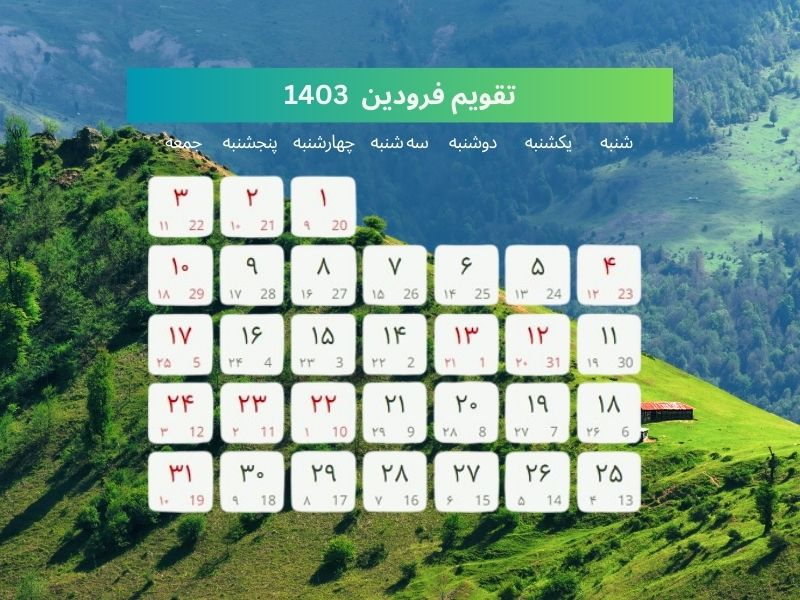
Beyond financial reporting, the Solar Hijri calendar impacts daily business operations, project timelines, and contractual agreements. Deliverables, payment schedules, and operational deadlines are often stipulated according to the local calendar. For international businesses operating in Iran or partnering with Iranian entities, a robust system for calendar conversion and management is indispensable.
Supply chain management, for example, needs to factor in Iranian national holidays and work weeks, which also differ from many Western nations (e.g., Friday is the weekly holiday). Misalignment can lead to missed deadlines, delayed shipments, and strained business relationships. Legal contracts often require dates to be specified in both calendars to prevent ambiguity. Consequently, effective business planning requires not just knowing “what year in Iran” but also meticulously integrating the Solar Hijri calendar into every operational aspect, from human resources scheduling to production cycles and market launch strategies.
Personal Finance and International Transactions
The impact of Iran’s calendar extends to personal financial management and international money movements, particularly for individuals living in or interacting with Iran.
Managing Personal Financial Timelines
For expatriates working in Iran or Iranian citizens managing international finances, reconciling personal financial timelines across different calendar systems is a practical challenge. Tax deadlines, salary payment dates, bill due dates, and investment maturity periods need careful tracking. A salary paid monthly on the 25th of each Solar Hijri month, for instance, will not align perfectly with the 25th of each Gregorian month, creating slight shifts in payment cycles. This can affect budgeting, cash flow management, and the timing of international transfers.
Furthermore, cultural and religious holidays, which are based on either the Solar Hijri or Lunar Hijri (Islamic) calendars, can impact banking hours, market closures, and the availability of financial services. Understanding these nuances is critical for avoiding late fees, ensuring timely payments, and optimizing personal financial liquidity.
Considerations for Expatriates and Cross-Border Finance
Expatriates dealing with cross-border financial planning, such as retirement savings, mortgage payments in their home country, or tuition fees abroad, must consistently convert dates and plan accordingly. The disconnect in year numbering and month alignment can complicate long-term financial projections and create administrative hurdles.
For international remittances, whether sending money to or from Iran, transaction processing times might be affected by the differing calendar cycles and holiday schedules of both countries. Banking holidays in Iran, tied to its own calendar, might not coincide with international banking holidays, potentially causing delays or necessitating advance planning for critical transactions. Therefore, anyone involved in cross-border finance with Iran needs to integrate “what year in Iran” into their operational and strategic thinking to ensure smooth and timely financial interactions.
Strategic Considerations for Engagement
Integrating the Solar Hijri calendar into financial planning is not merely a compliance issue; it’s a strategic imperative for successful engagement with the Iranian market.
Adapting Financial Models and Software
Businesses and financial institutions looking to operate or invest in Iran must ensure their financial modeling tools and accounting software are equipped to handle the Solar Hijri calendar. This may involve custom configurations, specialized plugins, or the development of internal tools to facilitate accurate date conversions and financial reporting in the local context. Reliance on purely Gregorian-centric systems will inevitably lead to errors and inefficiencies, compromising the integrity of financial analysis and decision-making. Accounting software must accurately record transactions, manage payables and receivables, and generate reports according to the Solar Hijri fiscal year, enabling seamless integration with local regulatory requirements.

Due Diligence in a Different Chronological Framework
Conducting financial due diligence on Iranian companies or assets requires a thorough understanding of their financial statements as presented within the Solar Hijri calendar. This includes carefully reviewing historical performance, projecting future cash flows, and valuing assets based on timelines that originate from the Persian New Year. Analysts must be adept at converting dates and understanding the temporal context of various financial events. Furthermore, regulatory filings, permits, and licenses will all bear Solar Hijri dates, necessitating a diligent approach to verification and compliance within this framework. For any serious financial engagement, recognizing “what year in Iran” and its profound implications is the first step towards accurate assessment and sound investment.
In conclusion, the question “what year in Iran” unravels a crucial layer of understanding required for effective financial engagement with the country. From fiscal reporting and market analysis to personal financial management and strategic business planning, the Solar Hijri calendar plays an integral role. Acknowledging and actively integrating this distinct chronological framework into financial operations is not merely a matter of cultural sensitivity, but a fundamental requirement for precision, compliance, and ultimately, success in the unique Iranian economic environment.
aViewFromTheCave is a participant in the Amazon Services LLC Associates Program, an affiliate advertising program designed to provide a means for sites to earn advertising fees by advertising and linking to Amazon.com. Amazon, the Amazon logo, AmazonSupply, and the AmazonSupply logo are trademarks of Amazon.com, Inc. or its affiliates. As an Amazon Associate we earn affiliate commissions from qualifying purchases.