
Hydroplaning, also known as aquaplaning, is a perilous phenomenon where a layer of water builds up between a vehicle’s tires and the road surface, leading to a loss of traction. This effectively turns the car into a sled, rendering steering and braking ineffective. While driver skill and awareness are paramount, modern automotive technology plays an increasingly critical role in both preventing hydroplaning and assisting drivers during such an event. Understanding how these systems work and how to interact with them is key to navigating wet conditions safely.
The Technological Battle Against Hydroplaning
The fight against hydroplaning begins long before a vehicle ever encounters standing water. It’s embedded in the very engineering of the car, particularly in tire design and advanced sensor systems. These technologies are foundational in mitigating the risks associated with wet roads.
Advanced Tire Design and Water Displacement
Tires are the sole contact point between a vehicle and the road, making their design crucial for wet weather performance. Modern tire technology employs sophisticated engineering to combat hydroplaning:
- Tread Patterns: Contemporary tires feature intricate tread patterns, including circumferential grooves and lateral sipes (small, thin slots), specifically engineered to channel water away from the contact patch. The depth, width, and arrangement of these grooves are optimized through fluid dynamics simulations to maximize water expulsion efficiency.
- Rubber Compounds: The material science behind tire rubber compounds has advanced significantly. Specialized silica-infused compounds maintain flexibility at lower temperatures and enhance grip on wet surfaces, preventing the rubber from hardening and losing adhesion. These compounds are designed to interact with the road surface at a molecular level, even through a thin film of water.
- Hydrodynamic Design Principles: Tire manufacturers utilize computational fluid dynamics (CFD) to model water flow and tire deformation under various conditions. This allows for the design of treads that not only displace water but also maintain the tire’s shape and rigidity, ensuring the maximum amount of rubber remains in contact with the road.
Sensor Systems for Proactive Safety
While external weather sensors are common, the real-time monitoring of road conditions and tire performance is increasingly integrated into vehicle systems:
- Tire Pressure Monitoring Systems (TPMS): Maintaining correct tire pressure is fundamental. Under-inflated tires deform more at speed, reducing the effectiveness of tread grooves and increasing the risk of hydroplaning. TPMS, mandatory in many regions, provides real-time alerts, prompting drivers to correct pressure and ensuring tires maintain their optimal shape and water-channelling capabilities.
- Rain Sensors and Automatic Wiper Systems: While not directly preventing hydroplaning, these sensors contribute to driver visibility, which is crucial for identifying potential hazards like standing water. By automatically adjusting wiper speed, they allow the driver to focus more on the road and less on manual adjustments.
- Future Road Surface Condition Sensors: Emerging technologies include radar or optical sensors capable of detecting water depth on the road surface. These systems, still largely in development or high-end luxury applications, could eventually provide proactive warnings to drivers or even inform vehicle control systems to adjust driving dynamics before hydroplaning occurs.
Leveraging Onboard Vehicle Technology During a Hydroplane Event
When hydroplaning occurs, the immediate response from the driver is critical. However, modern vehicle electronics are designed to assist, often imperceptibly, to help regain control. Understanding how these systems intervene is crucial for a driver to work with the technology, rather than against it.
Electronic Stability Control (ESC) and Traction Control Systems (TCS)
These are perhaps the most vital electronic aids during a loss of traction event like hydroplaning.
- How They Work: ESC and TCS continuously monitor wheel speed, steering angle, and vehicle yaw rate (rotation around its vertical axis). If the system detects a discrepancy between the driver’s intended path (indicated by steering wheel input) and the vehicle’s actual movement (indicated by wheel speed sensors and gyroscopes), it intervenes.
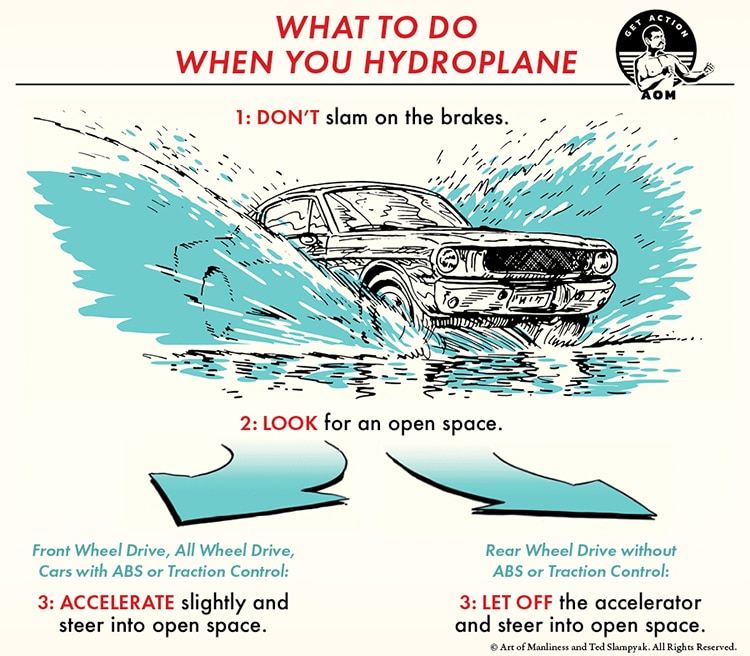
- Intervention During Hydroplaning: If one or more wheels lose traction due to hydroplaning, TCS will reduce engine power to those wheels and/or apply braking force to specific wheels to help them regain grip. ESC goes a step further by selectively applying individual wheel brakes and/or reducing engine power to help steer the vehicle in the intended direction, counteracting oversteer or understeer caused by hydroplaning.
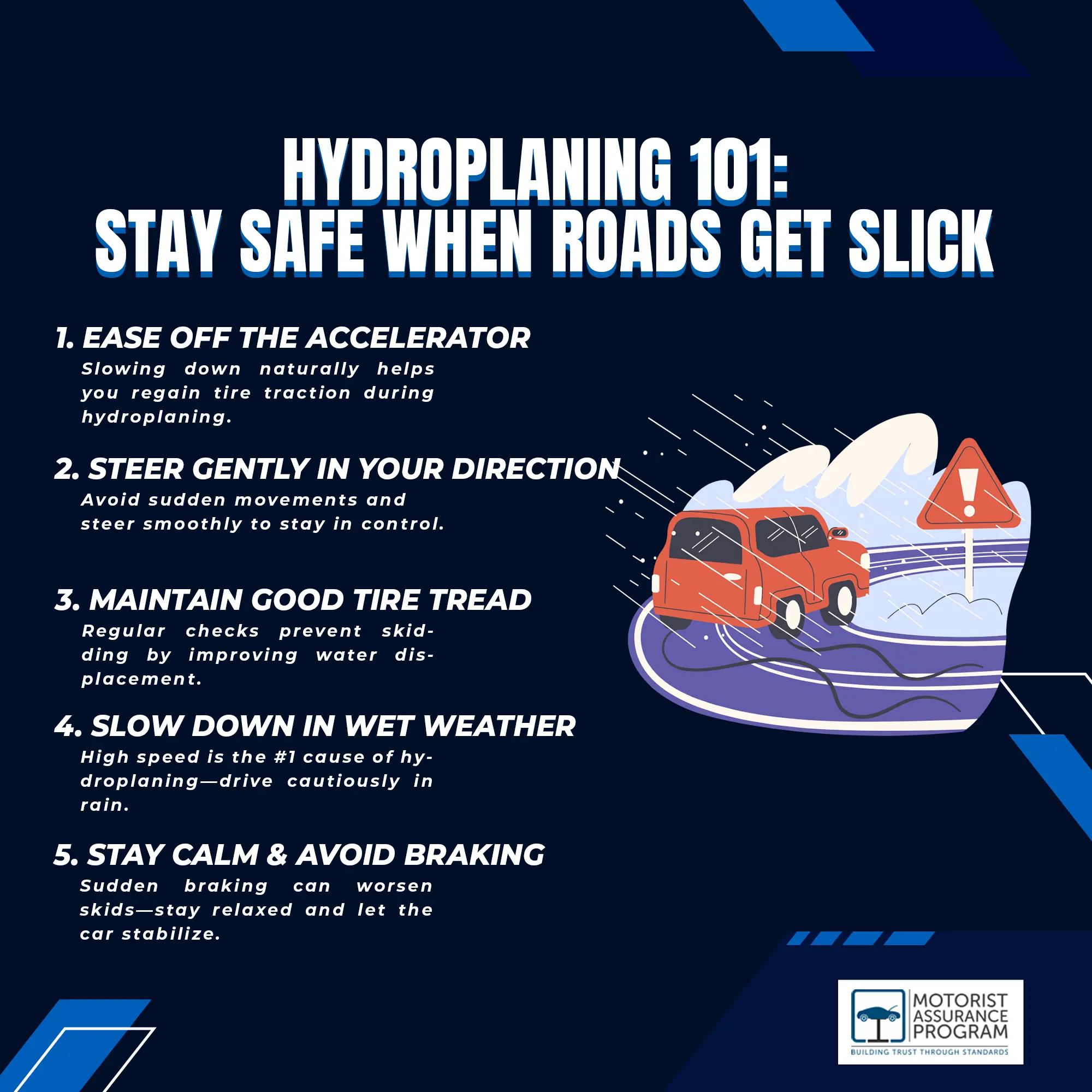
- Driver Interaction: The key for the driver is to remain calm, avoid abrupt steering inputs, and allow the system to work. If hydroplaning occurs, gently ease off the accelerator. Do not slam on the brakes or make sudden, sharp turns, as this can overwhelm the ESC/TCS systems and worsen the situation. The technology needs smooth, predictable inputs to effectively assist.
Anti-lock Braking Systems (ABS)
Hydroplaning makes braking exceptionally difficult, as conventional braking can cause wheels to lock up, leading to a complete loss of steering control.
- ABS Functionality: ABS prevents wheel lock-up by rapidly modulating brake pressure to each wheel independently. This allows the wheels to continue rotating, even if slowly, preserving directional stability.
- During Hydroplaning: If you need to brake while hydroplaning, apply steady, firm pressure to the brake pedal. Do not pump the brakes. ABS will engage, and you may feel a pulsing sensation through the pedal and hear some noise – this is normal and indicates the system is working. ABS will help maintain some degree of steering capability, allowing you to try and steer clear of obstacles while braking.

Advanced Driver-Assistance Systems (ADAS) and Adaptive Cruise Control
While primarily designed for different purposes, some ADAS features can indirectly contribute to safer driving in wet conditions:
- Lane Keeping Assist (LKA) and Lane Centering: These systems utilize cameras and sensors to detect lane markings. While they aren’t designed for hydroplaning, their gentle steering corrections can help maintain the vehicle’s path, potentially mitigating minor drifts caused by patchy water. However, drivers should be aware that these systems may be less effective or even disengage if lane markings become obscured by heavy rain or standing water, or if extreme traction loss occurs.
- Adaptive Cruise Control (ACC): By maintaining a set distance from the vehicle ahead, ACC can help ensure appropriate following distances, which are critical in wet conditions where braking distances are significantly increased. Some advanced ACC systems also integrate with navigation data and weather forecasts, potentially reducing speed proactively in anticipated adverse conditions.
- Forward Collision Warning (FCW) and Automatic Emergency Braking (AEB): These systems use radar and cameras to detect obstacles and can warn the driver or even initiate braking. While AEB’s effectiveness can be reduced on very slippery surfaces, the early warning from FCW can give the driver crucial extra seconds to react and potentially avoid a collision, even if full braking is compromised by hydroplaning.
Proactive Technological Approaches to Hydroplaning Prevention
Beyond immediate intervention, technology is evolving to prevent hydroplaning by anticipating risks and optimizing vehicle performance in challenging conditions.
Smart Tire Technology and Predictive Maintenance
The next generation of tires integrates more intelligence directly into the rubber and wheel assembly:
- Embedded Sensors: Future tires may contain sensors that monitor not just pressure, but also tread depth, temperature, and even the tire’s grip level in real-time. This data could be transmitted to the vehicle’s central computer, providing highly granular information about tire performance and wear.
- Predictive Analytics: By analyzing data from smart tires alongside road condition information, vehicles could predict when tires are approaching their hydroplaning threshold, alerting the driver to slow down or even automatically adjusting vehicle parameters like suspension stiffness or torque distribution.
Connected Car Data and Infrastructure Integration
The “Internet of Things” for vehicles promises a future where cars communicate with each other and with road infrastructure:
- Real-time Road Condition Sharing: Vehicles that detect slippery conditions (e.g., through frequent ESC/TCS activation) could anonymously share this data with a central network. This information could then be relayed to other approaching vehicles, warning drivers of hazardous areas or even automatically adjusting speed limits on smart roadways.
- Intelligent Infrastructure: Smart roads could integrate sensors that detect standing water and communicate directly with vehicles, providing localized warnings or dynamic speed recommendations. This goes beyond general weather forecasts to provide precise, real-time ground-level information.
Driver Interaction with Vehicle Technology: A Synergistic Approach
Ultimately, no amount of technology can fully replace a vigilant, skilled driver. The most effective approach to hydroplaning is a synergy between human judgment and technological assistance.
Understanding Technological Limits
Drivers must understand that while systems like ESC and ABS are powerful, they have limits. They can’t defy the laws of physics or create traction where none exists. Extremely deep water, worn tires, or excessive speed can overwhelm even the most advanced systems. Knowing these limits empowers drivers to make conservative decisions in adverse conditions.
Smooth Inputs for Optimal System Performance
When a vehicle starts to hydroplane, the best course of action remains to ease off the accelerator, avoid sudden braking, and steer gently in the direction you want to go. This “soft touch” allows the vehicle’s electronic systems the best chance to detect the loss of traction, regain control, and apply their sophisticated algorithms to stabilize the vehicle. Abrupt inputs only confuse these systems or push them beyond their designed capabilities.
By understanding the intricate technologies woven into modern vehicles, drivers are better equipped not only to react appropriately when hydroplaning occurs but also to leverage these innovations to proactively prevent such dangerous situations, ensuring a safer journey for all.
aViewFromTheCave is a participant in the Amazon Services LLC Associates Program, an affiliate advertising program designed to provide a means for sites to earn advertising fees by advertising and linking to Amazon.com. Amazon, the Amazon logo, AmazonSupply, and the AmazonSupply logo are trademarks of Amazon.com, Inc. or its affiliates. As an Amazon Associate we earn affiliate commissions from qualifying purchases.