
The acronym “DOE” frequently appears in job postings, often leaving job seekers puzzled about the potential salary for a role. Far from being a deliberate obfuscation, “DOE” — which stands for “Depends On Experience” — is a strategic choice by employers to maintain flexibility, attract a broader range of talent, and negotiate competitive compensation packages based on individual qualifications. Understanding what DOE truly means and how to approach it is crucial for both employers seeking talent and candidates aiming to secure fair compensation within the Money niche.
Decoding “DOE”: The Meaning Behind “Depends On Experience”
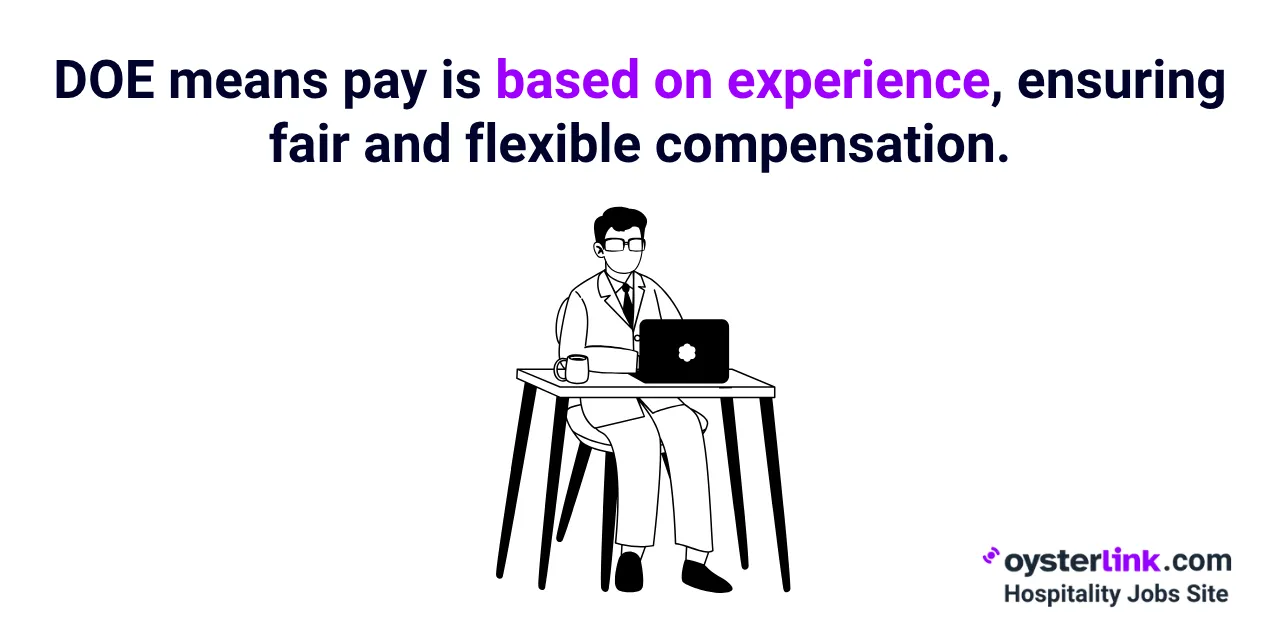
At its core, “DOE” signals that an employer has not set a fixed salary figure for a position. Instead, they intend to tailor the compensation offer based on the candidate’s specific experience level, skill set, relevant achievements, and other qualifications. This approach contrasts sharply with job descriptions that list a definitive salary range or a specific figure.

The use of “DOE” is an implicit invitation to negotiate. It suggests that the hiring organization values the unique contributions and proven track record a candidate brings to the table, and they are prepared to offer a salary commensurate with that value. While it might initially seem vague, it opens a dialogue where both parties can determine a mutually beneficial financial arrangement.
Historically, “DOE” has been a common practice, particularly in specialized fields or senior leadership roles where candidates’ backgrounds can vary widely. While increasing transparency in salary discussions and new pay transparency laws are leading some employers to specify ranges, “DOE” remains prevalent in many sectors, requiring job seekers to be prepared to advocate for their financial worth.
The Employer’s Perspective: Why Companies Opt for DOE
From an employer’s viewpoint, using “DOE” is often a deliberate and strategic decision driven by several factors that offer significant advantages in talent acquisition and budget management.
Flexibility in Budgeting and Candidate Pool
One of the primary reasons companies opt for DOE is the inherent flexibility it provides. A single job posting can attract candidates with vastly different levels of experience, from a highly skilled mid-career professional to an executive with decades of industry leadership. By not publishing a specific range, employers avoid alienating highly qualified candidates who might perceive a stated salary as too low, or attracting a deluge of underqualified applicants who might be solely drawn by a high published figure. This flexibility allows them to consider a wider talent pool without needing multiple job descriptions for the same role at different seniority levels.
Strategic Talent Acquisition and Customized Offers
DOE allows companies to make more competitive and tailored offers. In a dynamic labor market, the “right” salary for a role can fluctuate based on demand for specific skills, industry trends, and the scarcity of talent. With DOE, an employer can assess a candidate’s unique value proposition – their specific skills, previous accomplishments, leadership potential, and market demand – and craft an offer that genuinely reflects that individual’s worth to the organization. This prevents both overpaying for less experienced candidates and underpaying for highly sought-after individuals, ultimately securing the best talent at a fair market rate.
Market Responsiveness and Competitive Edge
The labor market is constantly evolving. Salary benchmarks can shift rapidly due to economic changes, technological advancements, or increased competition for specific roles. Listing “DOE” allows an employer to remain agile and responsive to these market fluctuations without having to constantly revise job postings. It gives them the leeway to adjust salary offers based on real-time market conditions, ensuring their compensation packages remain competitive and attractive, especially in sectors with fierce competition for skilled professionals.
Internal Equity Management
While it might seem counterintuitive, using DOE can also help manage internal salary structures. By engaging in individual negotiations, employers can slot new hires into existing frameworks more smoothly, ensuring that new employees’ salaries align with current employees’ compensation levels for similar roles, accounting for experience and performance. This careful balancing act helps maintain a sense of fairness and prevents potential internal discord over pay disparities.
When DOE is Most Common
DOE is particularly common in:
- Highly specialized roles: Positions requiring unique expertise where the pool of qualified candidates is small and varied in experience.
- Senior leadership and executive positions: Where the impact of the individual can significantly affect company performance.
- Niche industries: Where market benchmarks are less standardized or fluctuate rapidly.
- Startups or smaller businesses: Which might have less formalized HR and compensation structures and rely more on individual negotiations.
Navigating a DOE Salary Offer as a Job Seeker
Encountering “DOE” in a job description shouldn’t be a deterrent; rather, it should be seen as an opportunity. Successfully navigating a DOE offer requires thorough preparation, self-awareness, and strategic negotiation.
The Research Imperative
Your first step upon seeing a “DOE” listing is intensive research. This is where you arm yourself with data to understand the potential value of the role.
- Industry Standards: Utilize reliable salary aggregation websites (e.g., Glassdoor, LinkedIn Salary, Salary.com, Indeed Salary Guide) and government labor statistics (e.g., Bureau of Labor Statistics in the U.S.). Search for similar job titles, responsibilities, and industries.
- Company Specifics: Research the company’s size, financial health, and typical compensation philosophy. Larger, established companies often have more structured pay scales, while startups might offer more equity and a slightly lower base.
- Geographic Location: Salaries vary significantly by location due to cost of living and regional market demand. Factor this into your research, especially for remote roles where the company’s location might influence the offer.
Self-Assessment: Knowing Your Worth
Before you can ask for a salary, you must understand your own value.
- Experience Level and Quality: Go beyond years. Quantify your relevant experience, highlighting specific projects, responsibilities, and achievements. How did you add value in previous roles? Did you lead teams, manage budgets, or drive revenue?
- Skill Set: Identify your unique, in-demand, and specialized skills. Do you have certifications (e.g., PMP, AWS, specific software proficiencies) or advanced degrees that set you apart?
- Impact and Achievements: Be ready to articulate your past successes using numbers. “Increased sales by 20%,” “reduced operational costs by $50,000,” or “managed a portfolio of 10 key clients” are far more impactful than vague statements.
The Negotiation Process
When engaging with a DOE role, be prepared to discuss salary early, but strategically.
- Initial Inquiry: During early screening calls, it’s acceptable to politely ask for a salary range to ensure alignment. If pressed for your expectations, provide a broad, well-researched range rather than a single number, and emphasize that your flexibility depends on the full scope of responsibilities and the total compensation package.
- The Offer Stage: Once you receive a job offer, you have leverage. Reiterate your value, specific skills, and how your experience directly addresses the company’s needs. Be prepared to justify your desired salary based on your research and self-assessment.
- Consider Total Compensation: Remember that salary is just one component. Look at the entire package: benefits, bonuses, equity, PTO, and professional development opportunities.
Pitfalls to Avoid
- Underselling Yourself: Don’t be afraid to ask for what you’re worth based on your research and qualifications.
- Lack of Research: Going into salary discussions unprepared is a major disadvantage.
- Inflexibility: While knowing your desired range is important, be open to discussing the full compensation package.
- Focusing Only on Base Salary: Overlooking the value of benefits, bonuses, and equity can lead to accepting a less favorable overall package.
Key Factors Influencing Your DOE Salary
Numerous elements converge to determine the final DOE salary offer. A holistic understanding of these factors empowers both employers and job seekers.
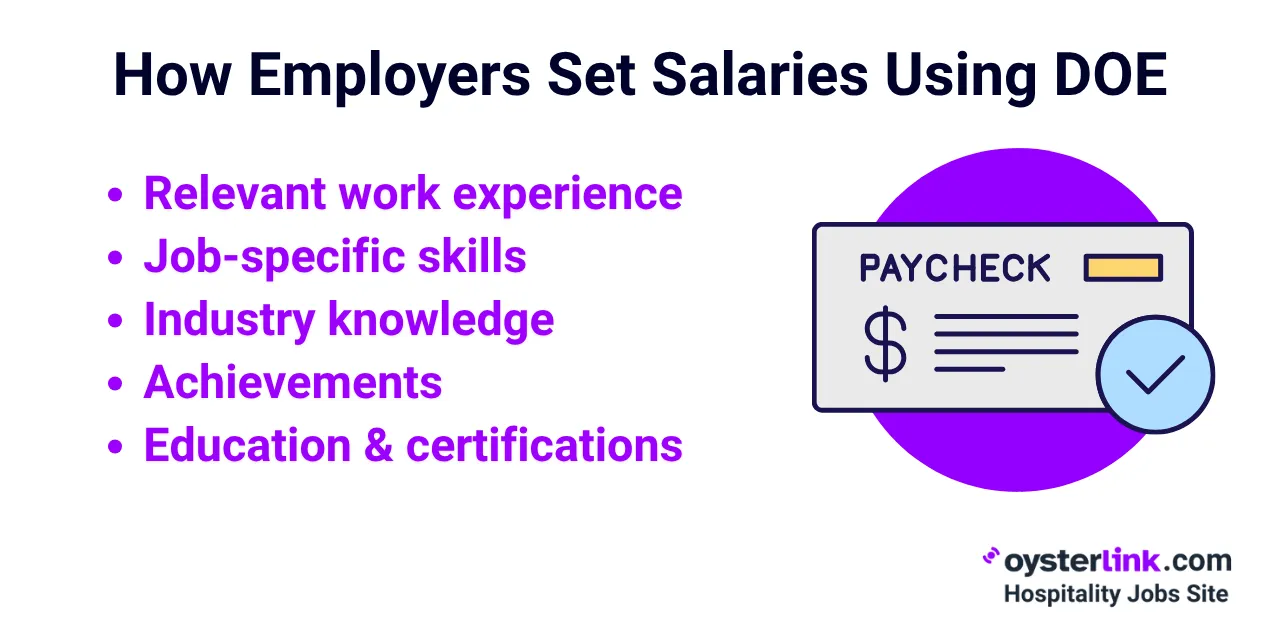
- Experience Level & Quality: This is paramount. More years of relevant, high-impact experience generally command higher salaries. It’s not just about tenure, but the depth and breadth of your contributions.
- Skill Set & Specialization: In-demand, rare, or highly specialized skills are significant salary enhancers. Certifications, niche technical proficiencies, or fluency in critical languages can elevate your earning potential.
- Industry & Company Size: High-growth industries (e.g., tech, biotech) often offer more competitive salaries. Larger, more established corporations typically have robust compensation packages, while startups might offer lower base salaries but higher equity potential.
- Geographic Location: The cost of living and the local market demand for your skills in a particular city or region heavily influence salary ranges. Roles in major metropolitan hubs like New York City or San Francisco often pay significantly more than those in smaller towns, even for similar positions.
- Role Responsibilities & Scope: The actual duties and the level of impact you’re expected to have are critical. Roles involving management, budgetary oversight, strategic planning, or significant client interaction typically warrant higher compensation.
- Market Demand: When your skills are in high demand and the supply of qualified professionals is low, your negotiation power, and thus your potential salary, increases considerably.
The Role of “Soft Skills”
Beyond technical prowess, “soft skills” such as communication, leadership, problem-solving, adaptability, and emotional intelligence are increasingly valued. Demonstrating these can differentiate you and influence a higher compensation package, particularly in roles requiring collaboration and influence.
Beyond Base Salary: Understanding the Full Compensation Package
When navigating a DOE offer, it’s crucial to look beyond the base salary to the entire compensation package. The total value of an offer often significantly outweighs the cash salary component alone.
- Benefits: Comprehensive health insurance (medical, dental, vision), life insurance, and disability coverage are substantial financial assets that reduce your out-of-pocket expenses.
- Retirement Plans: Employer-sponsored plans like a 401(k) with matching contributions are effectively free money and critical for long-term financial security. Some companies also offer pension plans.
- Bonuses & Incentives: These can include performance bonuses, sign-on bonuses, retention bonuses, or referral bonuses, significantly boosting your annual earnings.
- Equity/Stock Options: Common in startups and publicly traded companies, equity (stock options, Restricted Stock Units (RSUs), or Employee Stock Purchase Plans (ESPPs)) provides a direct stake in the company’s growth and can be a major wealth generator.
- Paid Time Off (PTO): Generous vacation days, sick leave, federal holidays, and parental leave policies contribute to work-life balance and represent tangible financial value.
- Professional Development: Tuition reimbursement, training programs, certifications, and conference attendance opportunities are investments in your career growth, enhancing your future earning potential.
- Work-Life Balance Perks: Flexible work hours, remote work options, subsidized wellness programs, and employee assistance programs contribute to overall job satisfaction and well-being, though not directly cash.
In essence, “DOE salary” is not a roadblock but a pathway to a bespoke financial agreement. By understanding its implications, conducting thorough research, and confidently articulating your value, both employers and job seekers can achieve mutually beneficial and competitive outcomes in the complex world of compensation.
aViewFromTheCave is a participant in the Amazon Services LLC Associates Program, an affiliate advertising program designed to provide a means for sites to earn advertising fees by advertising and linking to Amazon.com. Amazon, the Amazon logo, AmazonSupply, and the AmazonSupply logo are trademarks of Amazon.com, Inc. or its affiliates. As an Amazon Associate we earn affiliate commissions from qualifying purchases.