
The seemingly simple question of bottled water’s shelf life carries significant financial implications, often overlooked by consumers and businesses alike. Beyond the immediate concern for potability, understanding how long bottled water remains optimal directly impacts personal budgets, emergency preparedness investments, and the profitability of enterprises dealing with packaged goods. Ignoring these nuances can lead to unnecessary waste, depleted emergency reserves, and avoidable financial losses.
The Financial Impact of “Best By” Dates and Water Degradation
While water itself does not “spoil” in the traditional sense, bottled water does have a shelf life dictated by the container and storage conditions, not the water itself. The “best by” date, mandated in many regions, is primarily a recommendation for optimal taste and quality, not a hard expiration of safety. However, this distinction has a tangible financial cost.
Deconstructing “Best By”: A Matter of Value Retention
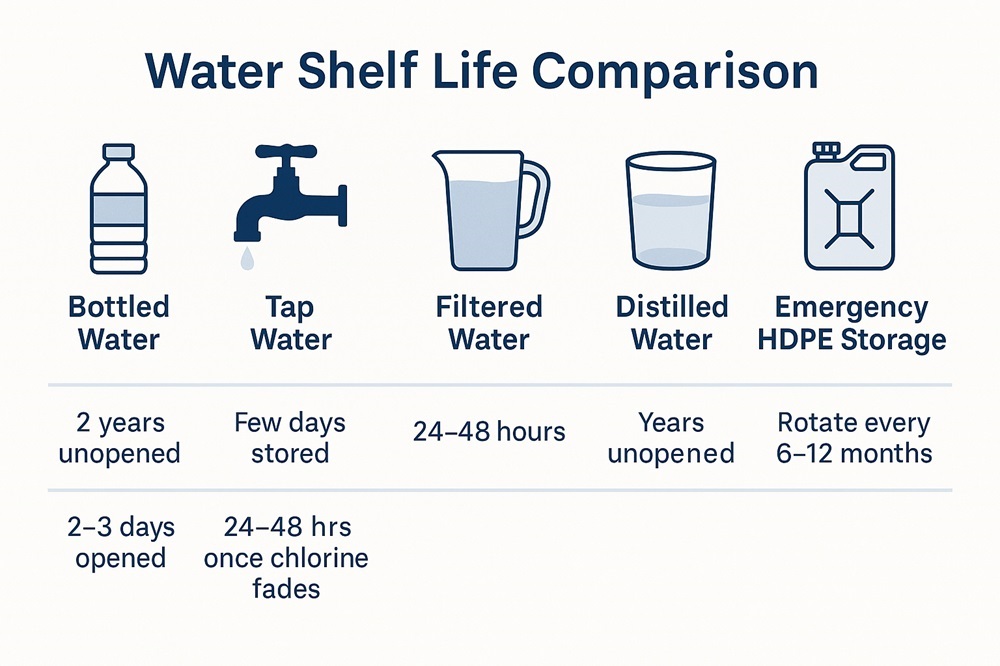
For most commercially bottled water, especially that packaged in PET (polyethylene terephthalate) plastic, the “best by” date typically ranges from one to two years. This date signifies the period during which the product is expected to maintain its peak taste profile and chemical purity, largely unaffected by its container. Beyond this date, while the water may remain microbiologically safe to drink, its sensory qualities can degrade. Plastic polymers can leach into the water, particularly when exposed to heat or direct sunlight, altering its flavor and potentially introducing trace chemicals.
From a financial perspective, a bottle of water past its “best by” date represents a diminished asset. Consumers who purchase water for its pure taste may find the experience unsatisfactory, effectively losing value on their initial investment. For businesses, selling or serving water beyond its prime can lead to customer dissatisfaction, brand damage, and ultimately, a loss of future revenue. The cost here isn’t just the price of the water, but the erosion of customer trust and perceived quality.
The Hidden Costs of Poor Inventory Rotation
Whether in a household pantry or a large retail warehouse, bottled water represents an inventory asset. Without proper understanding and management of shelf life, this asset can quickly turn into a liability. A lack of diligent “first-in, first-out” (FIFO) rotation means older stock sits dormant, inching closer to or past its “best by” date.
For individuals, this translates to wasted money when older bottles are discarded due to concerns about taste or safety, or simply because they’ve been forgotten. Imagine purchasing cases of water for an emergency fund, only to realize years later that half of it is past its recommended consumption date, necessitating repurchase. This recurring expense effectively doubles the initial investment for the same long-term security.
For businesses, the financial implications are amplified. Retailers face direct losses from unsalable inventory. The cost includes not only the wholesale price of the water but also the labor involved in handling, storing, and eventually disposing of expired products. Furthermore, the opportunity cost of shelf space occupied by aging stock that could otherwise hold faster-moving, more profitable items cannot be ignored. Efficient inventory management, driven by shelf life awareness, is therefore a critical component of financial health.
Maximizing Your Investment: Smart Purchasing and Preparedness
Understanding bottled water’s shelf life allows for more strategic purchasing and a more financially sound approach to emergency preparedness. It shifts the perspective from a simple commodity purchase to a calculated investment in health, safety, and convenience.
Bulk Buying: A Financial Advantage with a Shelf Life Caveat
Purchasing bottled water in bulk often yields significant per-unit savings, making it an attractive option for both households and businesses. However, this financial advantage is directly tied to the ability to consume the water within its optimal shelf life. A bulk purchase that leads to excessive waste due to expiration is not a saving; it’s a loss.
Savvy consumers will calculate their average consumption rate and purchase only what can reasonably be used before the “best by” date. For emergency stockpiles, which are inherently long-term, this means factoring in rotation schedules and opting for products known for longer stability (e.g., specific packaging or brands) if available, despite potentially higher upfront costs. The slightly higher price for extended longevity can be a financially sound decision when considering the cost of premature replacement.
Businesses must master the balance between quantity discounts and inventory turnover. Overstocking to gain a deeper discount on a product with a finite shelf life can quickly erode profit margins if sales projections are not met. Financial analysis must integrate not just purchase price, but also projected sales velocity, storage costs, and the risk of obsolescence.
Emergency Preparedness: A Prudent Financial Investment
Building an emergency water supply is a fundamental aspect of personal and community financial resilience. Natural disasters, infrastructure failures, or other emergencies can disrupt access to safe drinking water, rendering a household or business vulnerable. Bottled water serves as a vital component of this preparedness.
Considering bottled water as an investment for emergency scenarios highlights the importance of its shelf life. A well-stocked emergency supply, rotated correctly, ensures that the initial financial outlay provides continuous protection. Conversely, an outdated or inadequately maintained supply means the initial investment fails to deliver its intended return when it’s most needed. The cost of not having potable water during a crisis can far outweigh the cost of proactive, shelf-life-aware stocking. This can include health emergencies, disruption to business operations, or the need to purchase overpriced, last-minute alternatives during a crisis.
Financial planning for preparedness should include a line item for water rotation and replenishment, viewing it not as an ongoing expense, but as maintaining the value of an essential safety asset. Some emergency water products are specifically designed for extended shelf life (up to 5 years), often with thicker packaging and higher prices, representing a premium investment for long-term security.
Business Finance: Inventory as a Liquid Asset
For businesses, bottled water inventory is a liquid asset that needs careful financial management. The shelf life directly impacts inventory valuation, potential write-offs, and cash flow.
Effective financial management practices for bottled water inventory include:

- Accurate Cost Accounting: Tracking the cost of goods sold (COGS) based on actual purchase prices and incorporating potential losses from expired stock.
- Optimal Stock Levels: Using demand forecasting and shelf life data to determine ideal reorder points and quantities, minimizing capital tied up in slow-moving or expiring inventory.
- Budgeting for Spoilage: Anticipating a certain percentage of waste due to shelf life and incorporating this into financial projections and pricing strategies.
- Supplier Relationships: Negotiating favorable terms that consider shelf life, such as return policies for unsold goods or staggered delivery schedules to manage inventory flow.
These practices ensure that bottled water, whether sold in a convenience store, used in an office, or offered in a hospitality setting, contributes positively to the bottom line rather than becoming a source of financial drain.
Factors Influencing Longevity and Your Financial Decisions
Several factors influence bottled water’s actual shelf life, and understanding them allows for more informed purchasing and storage decisions, directly affecting the long-term financial viability of your water supply.
Packaging Materials: A Cost-Benefit Analysis
The material of the bottle itself is a primary determinant of shelf life.
- PET Plastic: Most common, affordable, and lightweight. However, PET is semi-permeable, allowing small amounts of air to seep in over time, which can affect taste. It’s also susceptible to leaching chemicals (like antimony) when exposed to heat, altering the water’s taste and purity. This typically gives a “best by” date of 1-2 years. The financial benefit is low initial cost, but the trade-off is shorter optimal longevity and higher sensitivity to storage.
- Glass: Inert and impermeable, glass does not leach chemicals into the water, even when exposed to heat. This makes it ideal for maintaining water purity and taste indefinitely. Glass-bottled water often lacks a “best by” date related to the container. The financial cost is higher upfront, increased weight for transport, and fragility. However, for premium markets or those prioritizing purity above all, the long-term value retention can offset the initial expense.
- Other Plastics (e.g., HDPE): Used for larger jugs (e.g., 5-gallon dispensers), these plastics are generally more robust and less prone to leaching than PET, but still have a finite life.
Choosing the right packaging is a financial decision balancing initial cost, storage requirements, perceived quality, and desired shelf life.
Storage Conditions: Protecting Your Investment
Improper storage is the most common cause of premature degradation of bottled water and, consequently, financial loss.
- Temperature: Heat is the enemy of bottled water. High temperatures accelerate the leaching of plastic compounds into the water, diminishing taste and potentially purity. Storing water in hot garages, direct sunlight, or car trunks significantly reduces its optimal shelf life. Cooler storage prolongs the “best by” period.
- Light Exposure: Direct sunlight, especially UV light, can also degrade plastic and potentially promote microbial growth if any contaminants were present, though this is rare in sealed, purified water.
- Proximity to Chemicals: Storing bottled water near gasoline, paint, cleaning supplies, or other strong-smelling chemicals can result in the water absorbing their odors and tastes through the plastic, rendering it unpalatable.
Proper storage, therefore, is not merely a logistical consideration but a financial imperative. It protects the integrity and value of your purchased water, ensuring that your initial investment yields its expected return.
Water Source and Processing: Intrinsic Value and Shelf Life
While packaging and storage are paramount, the intrinsic quality of the water itself also plays a subtle role. Highly purified water (e.g., distilled or reverse osmosis) starts with fewer dissolved solids and contaminants, making it inherently more stable. Spring water, with its natural mineral content, might be slightly more susceptible to subtle changes over long periods, though commercial bottling processes are designed to mitigate this.
For consumers, understanding the source and processing can inform decisions when prioritizing long-term storage for emergency use versus everyday consumption. While price differences can be marginal, the peace of mind and assurance of purity for a long-term asset can be a valuable financial consideration.
Minimizing Waste and Maximizing Return on Investment
Proactive strategies can effectively extend the useful life of your bottled water supply and ensure that your financial outlay is fully utilized.
Implementing a First-In, First-Out (FIFO) System
This simple inventory management principle is crucial for both households and businesses. When storing multiple cases or bottles, always place newer purchases behind older stock. When retrieving water, always take from the front. This ensures that the oldest water is consumed first, minimizing the risk of bottles sitting past their “best by” date. Implementing FIFO is a zero-cost strategy with significant financial benefits in waste reduction.
Repurposing Water Beyond its “Best By” Date
If bottled water has passed its “best by” date but has been stored properly and shows no signs of contamination (e.g., unusual odor, cloudiness), it is generally still safe for consumption, though taste may be compromised. However, for those uncomfortable drinking it, it can be repurposed for non-potable uses.
- Household Use: Watering plants, cleaning, filling pet bowls, or for general hygiene purposes.
- Emergency Non-Drinking: Flushing toilets, washing hands, or general cleaning during a water outage.
This approach ensures that the initial financial investment is not completely lost, even if the primary intended use changes. It converts what might have been a complete write-off into a usable resource, providing at least partial value recovery.

Considering Long-Term Alternatives: Water Filtration as an Investment
For long-term preparedness, especially for off-grid scenarios or extended emergencies, investing in water filtration and purification systems can be a more financially sustainable solution than perpetually stocking and rotating bottled water.
- Water Filters (e.g., gravity filters, pump filters): Allow access to safe drinking water from natural sources. Initial investment, but minimal ongoing cost.
- Rainwater Harvesting Systems: Collect and store rainwater for various uses, reducing reliance on municipal supplies and bottled water.
- Well Systems: A significant upfront investment for independent water access.
While these systems represent a larger initial capital expenditure, their indefinite “shelf life” (with proper maintenance and filter replacements) and ability to provide a continuous supply can offer a superior long-term return on investment compared to the recurring cost and logistical challenges of bottled water rotation for extreme longevity. This strategic shift moves from consuming a packaged product with a finite life to owning an infrastructure that provides an ongoing resource.
In conclusion, the shelf life of bottled water is far more than a simple quality indicator; it is a critical variable in personal finance, emergency planning, and business profitability. Understanding its nuances empowers individuals and organizations to make financially sound decisions, minimize waste, and ensure the continued value of their water investments.
aViewFromTheCave is a participant in the Amazon Services LLC Associates Program, an affiliate advertising program designed to provide a means for sites to earn advertising fees by advertising and linking to Amazon.com. Amazon, the Amazon logo, AmazonSupply, and the AmazonSupply logo are trademarks of Amazon.com, Inc. or its affiliates. As an Amazon Associate we earn affiliate commissions from qualifying purchases.